
Surgical Robots Market - Industry Structure Evaluation, Demand Drivers Analysis, Regional Growth Analysis and Identification, Competitive Positioning Review & Global Market Size Forecast to 2030
Overview
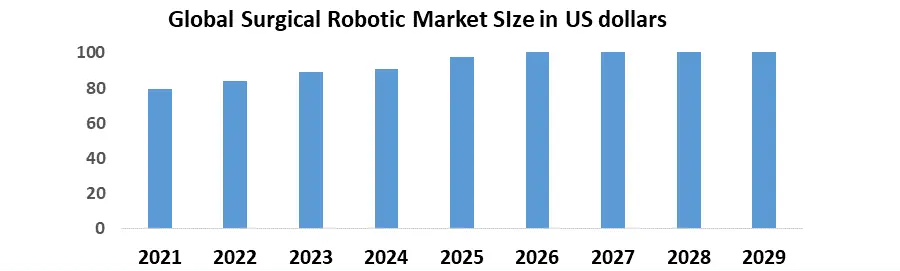
The Surgical Robots Market size was valued at USD 14.06 Billion in 2025 and the total Insulation revenue is expected to grow by 13.8% From 2026 to 2032, reaching nearly USD 34.75 Billion.
Surgical robot is a self powered, computer controlled device that are programmed to aid in the positioning and manipulation of the surgical instruments, enabling the surgeons to carry out more complex tasks. Robotic surgery has effectively overcome the drawbacks of conventional laparoscopic and thoracoscopic techniques, enabling the completion of intricate and advanced surgical operations with higher precision and a smaller incision.
The operating surgeon is given a 3-dimensional vision that improves depth perception in place of the flat, 2-dimensional image received by the standard laparoscopic camera; camera motion is steadily and conveniently controlled by the operating surgeon using voice-activated or manual master controls. Surgical robots are one of the growing sectors of the medical devise industry.The most popular Robotic application in medical services are durgical. From organ transplants to gastrointestinial surgeries to urological operations are performed using surgical robots.
 To know about the Research Methodology :- Request Free Sample Report
Surgical Robotics industry sees great potential in both industrial collaborations with the new players intending to enter the market and in opportunities to further deepen its partnership with existing players. About 65% of the worlds surgical robots are installed in the US.Fuerthermore many medical device companies have business models whereby earnings correlate with the extent to which the product is used.
In addition to the key players mentioned in the report, another 20 robotic surgery companies exist with the different niches in the terms of their geographies and application. At the forefront of the technology the robotic surgery is bridging between laproscopy and digital surgery.
Scope of the Report:
In order to identify potential investment pockets, this report gives an analytical representation of the Surgical Robots industry together with current trends and future forecasts. The report includes a thorough analysis of the market share for Surgical Robots as well as data on important drivers, restraints, and opportunities. In addition, Porter's five forces study demonstrates the market power of both buyers and providers. The research offers a thorough analysis of the worldwide Surgical Robots market based on the level of competition and how it will develop over the forecast period.
Surgical Robots Market Dynamics:
Broadened customer base of Surgical Robot Market
The new groups of companies are holding a very strong position as the world leader in simulation for robotic surgery in the terms of both market share and technology. In the year 2025 several cpmpany’s goals of expanding the value content to the customner base, primarily in robotic surgery grew in Educational products during challenging times and were able to make several acquisitions according to the startegies. The offerings made by several Surgical Robot Market channels within implimatations in several hospitals are holding the strongest pillars in expanding the market. Additionaly hardware industry were characterized by the news from the largest medical devices suppling companies regarding continued major investments in robotic surgery and has contributed towards the growth of the Robotic Surgery market.
Orthopaedics Franchise in Surgical Robotics Market
Companies are having Orthapaedics franchise, which includes innovative range of knee and hip implants used to replace diseased,damaged or worn joints,surgical-robotics are assisting and enabling the technologies that are empowering surgeons and trauma products which are widely used to stabilize fractures and correct bone fractures and deformalities. This Franchise are continuously enhancing the knee portfolio pipeline of innovation.For Instance, in 2025 Smith + Nephew have paired with Retail intelligence suite of enabling technology solutions and the next generation robotic platform, CORI system.It is forecasted that a number of industrial strategic initiatives by leading worldwide firms is expected to speed up market growth of Surgical Robots over time. For instance, in 2019, the Johnson & Johnson subsidiary Ethicon purchased the robotic technology platform developer Auris Health. The goal of this acquisition is to boost the development of Ethion's digital surgical portfolio in order to fight lung cancer. Additionally, OrthoSpace, Ltd. was acquired by Stryker Corporation in 2019; this helped to expand the company's line of surgical supplies. Therefore, it is anticipated that such industrial initiatives would accelerate the uptake of robots and the market's expansion.
The Recent FDA (Food and Drug Administration) warnings caution against using robotic surgery to treat cervical and breast cancer. The communication concerns regarding the epidemiologic data describing the application of robotic surgery in actual clinical settings and current projections based solely on single-center studies, device makers' financial statements, claims data, and poor claims coding are restraining the Surgical Robotic Market. The expense of robot maintenance is close to US $1,25,000 per year, which adds to the already steep expenditure of robotic surgery. The average price of a robotic surgical operation ranges from US $3,000 to US $6,000. As a result of the rising cost of procedures related to the usage of robotic systems, the surgical robots market is likely to hamper during the forecast period.
The Robotic surgical device manfacturers financial statements procedure volumes are rapidly increasing with the largest and fastest growing contributor being the field of general surgery.According to MMR findings the clinical footprint for the robotic surgery will continue to increase in the forecasted period.Miniature in vIvo robots, are one of the novel approach with the whole MIS surgical platform being interested into the peritoneal cavity.New types of robots emerging in the fields of medicines for performing various types of surgeries are crating the growth opportunites for the surgical robot market.
Surging Adoption of Surgical Robots In ASCs
Ambulatory surgery centers (ASCs) are outpatient surgical, diagnostic, and preventative procedures that do not require hospitalization. Authorities, third-party payers, and patients all benefit from the cost-effectiveness of ASCs. According to research published by Healthcare BlueBook - a provider of healthcare data and HealthSmart - a provider of health plans for self-funded employers, ASCs reduced the cost of outpatient surgery by US $38 billion annually by offering a cheap site of care than hospitalized outpatient departments. Each year, Medicare and its beneficiaries save more than US $2.6 billion by paying much less for treatments performed in ASCs than for the identical procedures conducted in hospitals. When patients receive care in an ASC, their co-payments are also much lower. Because of the cost savings, the number of surgical procedures performed in ASCs and outpatient settings has increased rapidly, while hospital in-patient stays have decreased.
Robotic surgery is a cutting-edge method that provides notable outcomes in a range of surgical operations. A combination of technological advancements, including the use of more efficient motors, compact and light materials, power backup, sophisticated controls, and safety mechanisms, as well as more affordable versions, have led to a rapid rise in the adoption of robotic surgery for minimally invasive procedures. Robotic surgery's high level of precision aids in precise implant placing and lowers the possibility of damaging nearby tissues. Less post-operative discomfort, bleeding, and hospital readmissions all benefit patients.
Innovations in surgical robotic systems are driving the market for minimally invasive surgery to new heights. Due to the expanding complexity of operations to treat challenging diseases, robots are also playing a bigger role in the field of minimally invasive surgery. In the United States, over 900,000 treatments were carried out in 2020, and around 5,000 robotic platforms were installed in hospitals all over the nation.
Surgical Robots Market Segment Analysis:
Based on Offering, the market is segmented into the Instruments & Accessories, Robotics Systems and Services. Instruments & Accessories is expected to dominate the Surgical Robots Market during the forecast period. Instruments such as robotic arms, surgical tools, and disposable accessories including drapes and trocars are crucial components that must be replaced or sterilized after use, driving consistent revenue generation. As robotic surgeries become more common across various specializations such as gynecology, urology, orthopedics, and general surgery the demand for these instruments continues to rise.
Surgeons rely on these precise, minimally invasive tools to enhance dexterity and control during complex procedures, thereby increasing patient safety and improving surgical outcomes. The versatility of these instruments to perform multiple types of surgeries further cements their dominance Surgical Robots Market. The technological advancements in surgical tools, including the introduction of 3D imaging capabilities and enhanced instrument control, contribute to the growth of this segment.
By End User, the market is categorized into Hospitals, Ambulatory Surgical Centers (ASCs) and Specialty Clinics. Hospitals are better equipped to invest in and maintain these high-cost robotic systems because they generally have larger budgets and greater access to financing compared to Ambulatory Surgical Centers (ASCs) and specialty clinics. The complexity of surgeries performed in hospitals such as cardiac, neurosurgery, and multi-organ procedures necessitates using advanced technologies such as surgical robots to enhance precision, minimize invasiveness, and improve patient outcomes. Hospitals tend to cater to a broader patient base and perform a higher volume of surgeries, ensuring that robotic systems are used frequently, thus justifying the significant upfront investment. The hospitals are expected to integrate surgical robots into various departments, including general surgery, orthopedics, gynecology, and urology, increasing the utilization of these systems.
Surgical Robots Market Regional Insights:
North America dominated the largest Surgical Robots Market share in 2025 and is expected to continue its dominance over the forecast period. The region has an advanced healthcare infrastructure, high adoption rates of cutting-edge medical technologies, and a strong presence of Surgical Robots key players. The United States, in particular, is a hub for innovation in surgical robotics, with prominent companies such as Intuitive Surgical, Medtronic, and Stryker spearheading research, development, and commercialization of robotic systems.
North America's well-established healthcare reimbursement policies encourage hospitals and surgical centers to invest in high-cost surgical robots, driving Surgical Robots Market growth. A significant factor in the region's dominance is the high prevalence of chronic diseases such as cancer, cardiovascular conditions, and obesity-related disorders, which require frequent surgical interventions. This drives the demand for advanced robotic systems, especially for complex cardiac, gynecological, and orthopedic surgeries. North American patients are increasingly aware of the benefits of robotic-assisted surgeries, influencing healthcare providers to adopt these technologies to meet patient expectations for safer, more efficient surgeries.
Recent Developments:
1. In January 2022, OrthoSensor and its Verasense intraoperative sensor technology were bought by Stryker to improve the Mako robots.
2. In January 2022, TransEnterix's Intelligent Surgical Unit, which adds AI-based capabilities and enables machine vision capabilities to TransEnterix's Senhance robotic surgery system, has achieved CE Mark clearance.
3. In January 2022, In Japan, Sytrker Corporation's Mako robotic surgery system gained regulatory approval for partial knee indication.
Surgical Robots Market Scope: Inquire before buying
| Surgical Robots Market | |||
|---|---|---|---|
| Report Coverage | Details | ||
| Base Year: | 2025 | Forecast Period: | 2026-2032 |
| Historical Data: | 2020 to 2025 | Market Size in 2025: | 14.06 USD Billion |
| Forecast Period 2026-2032 CAGR: | 13.8% | Market Size in 2032: | 34.75 USD Billion |
| Segments Covered: | by Offering | Instruments & Accessories Robotics Systems Laparoscopic Robotic System Orthopedic Robotic System Neurosurgical Robotic System Others Services |
|
| by Control Mechanism | Remote Controlled Robotic Arm Controlled Computer Assisted |
||
| by Application | Neurology Urology Gynecology Orthopedics Others |
||
| by End User | Hospitals Ambulatory Surgical Centers (ASCs) Specialty Clinics |
||
Surgical Robots Market, by Region
North America (United States, Canada and Mexico)
Europe (UK, France, Germany, Italy, Spain, Sweden, Austria, Turkey, Russia and Rest of Europe)
Asia Pacific (China, India, Japan, South Korea, Australia, ASEAN and Rest of APAC)
Middle East and Africa (South Africa, GCC, Egypt, Nigeria and Rest of ME&A)
South America (Brazil, Argentina, Columbia and Rest of South America)
Key Players / Competitores Proflies Coverd Surgical Robots Market Report in Strategic Perspective
1. Intuitive Surgical (US)
2. Stryker Corporation (US)
3. Medtronic (US)
4. Auris Health(US)
5. Medrobotics Corporation(US)
6. Think Surgical(US)
7. Verb Surgical(US)
8. OMNIlife Science(US)
9. Zimmer Biomet (US)
10. Asensus Surgical(US)
11. Corindus Vascular Robotics(US)
12. Renishaw(UK)
13. CMR Surgical (UK)
14. Smith & Nephew(UK)
15. China National Scientific Instruments and Materials Corporation(China)
16. Microsure(Netherlands)
17. Preceyes BV (Netherlands)
18. Titan Medical (Canada)
19. Avateramedical Gmbh ( Germany)
20. Medicaroid Corporation(Japan)
21. Others