
Global Smart Home Security Market – Industry Structure Evaluation, Demand Drivers Analysis, Regional Growth Analysis and Identification, Competitive Positioning / Landscape Review & Global Market Size Forecast to 2032
Overview
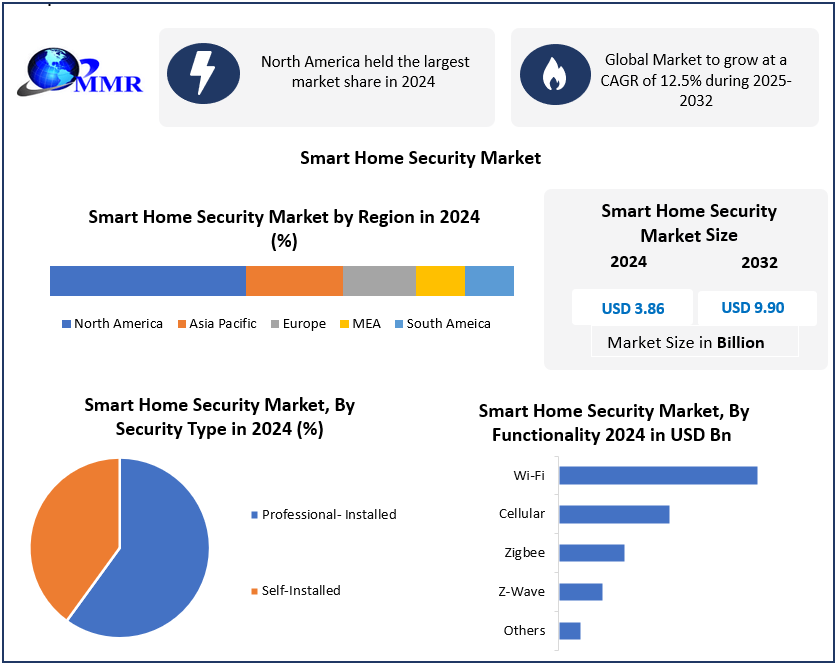
The Smart Home Security Market was valued at USD 3.86 Bn in 2024, and total global Smart Home Security Market revenue is expected to grow at a CAGR of 12.5% and reach nearly USD 9.90 Bn from 2025 to 2032.
Smart Home Security Market Overview
Smart Home Security refers to the integration of advanced technologies into residential security systems to enhance safety and monitoring. The market growth as homeowners seeks convenient, connected solutions. Key applications include smart cameras, doorbell cameras, motion sensors, and smart locks, all accessible and controllable through mobile devices. The market is driven by the rising awareness of home safety, the proliferation of IoT devices, and the convenience of remote monitoring. As technology continues to evolve, the Smart Home Security market is poised for further growth, with innovations such as AI-driven analytics and integration with voice assistants contributing to its ongoing development.
 To know about the Research Methodology:-Request Free Sample Report
Honeywell Nucleus is a smart home solution designed to be the core of your living space, providing convenience and control. Inspired by the complexity of genetic material, Nucleus transforms homes into personalized environments. With a sleek design, neutral colors, and progressive functionality, it offers familiarity through innovative use cases. The device enables users to control their entire home remotely, managing scenes, devices, and energy usage from anywhere in the world. The solution employs a mesh network for efficient signal transmission. Experience smart living with Honeywell Nucleus, where form meets function for a magical and connected home experience.
Smart Home Security Market Dynamics: Drivers, Opportunities, Trends and Restraining Factors
Rising Awareness and Concerns for Home Security to Drive the Market Growth
The escalating awareness and heightened concerns surrounding home security propel the growth of the Smart Home Security Market. With crime rates posing an ongoing threat, homeowners are actively seeking robust security measures to safeguard their residences. This surge in awareness is a direct response to the pressing need for real-time monitoring and instant alerts, prompting individuals to embrace advanced smart home security systems. A smart home involves connecting various devices to the Internet, creating an Internet of Things (IoT) ecosystem.
This includes items like voice-controlled light bulbs and security cameras. Smart home features offer convenience through voice commands and automation, such as adjusting thermostats when the security system is armed. Notable 2024 smart home devices include the Amazon Smart Plug, Nest Wi-Fi Router, Vivint Smart Home Security System, Amazon Echo Show 5, and more. These products cater to diverse needs, from security to health tracking. Integration with popular voice assistants like Alexa and Google Assistant enhances user experience, making smart homes accessible and efficient.
The evolving landscape of threats, ranging from burglaries to unauthorized intrusions, has underscored the necessity for proactive security solutions. Homeowners are increasingly inclined towards investing in technologies that provide not only a sense of immediate protection but also continuous vigilance. As a result, the Smart Home Security Market thrives on addressing these concerns, offering a comprehensive and technologically advanced array of solutions that align with the growing demand for enhanced residential security.
Integration of Artificial Intelligence (AI) and IoT to Boost the Market
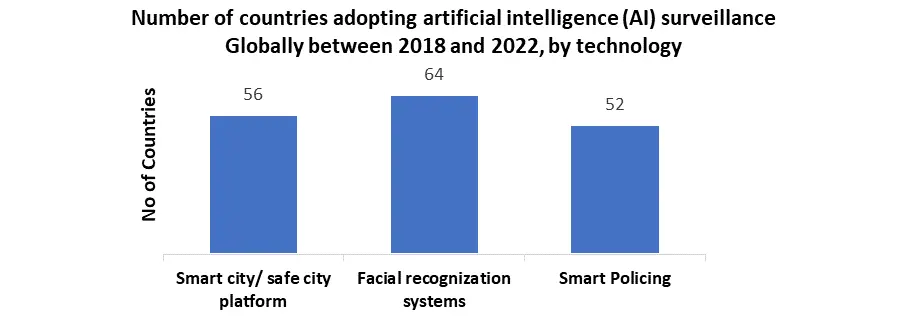
The integration of Artificial Intelligence (AI) and Internet of Things (IoT) technologies is a pivotal growth driver. Smart home security systems leverage AI algorithms for advanced threat detection, facial recognition, and predictive analytics. The seamless connectivity provided by IoT ensures a comprehensive and responsive security ecosystem, enhancing the overall effectiveness of home security solutions. The evolution of video surveillance technology is a key growth driver of the Smart Home Security Market. High-resolution cameras, coupled with advanced analytics, empower homeowners with intelligent monitoring capabilities. Features like facial recognition, motion detection, and automated alert systems contribute to the growing popularity of smart home security, providing users with a proactive approach to safeguarding their homes.
Integration with Smart Home Ecosystems to Create Lucrative Opportunity for Market Growth
The integration of smart home security systems with broader smart home ecosystems represents a key growth opportunity for Smart Home Security Market growth. As smart homes become more interconnected, consumers seek seamless integration between security solutions and other smart devices. Offering compatibility with popular smart home platforms and devices enhances the overall user experience and convenience. By fostering interoperability, smart home security providers capitalize on the trend toward comprehensive home automation, positioning themselves at the forefront of the evolving smart home landscape.
The IOT (Internet of Things) trend continues to dominate the home automation sector, and new products are springing up daily. Here are a few hot statistics on home automation. Smart security systems continue to grow. Security systems that are controlled and viewed from mobile devices continue to gobble up market share. It is predicted that by 2023 they reach nearly 25% of the smart home market. The adoption of Smart home devices and rising tech trends influence the home automation Smart Wiring Devices Market.
There are more than 175 million smart homes in the world. A smart home is classified as a modern home that is connected with smart wiring devices and/or appliances that are controlled remotely via the internet or apps. Smart thermostats still dominate. The smart thermostat industry is projected to top a value of $12 billion in the next few years.
Privacy Concerns and Data Security to Challenge the Market
A significant growth restraint for the Smart Home Security Market is the escalating concern over privacy and data security. As these systems collect and process sensitive information, users are increasingly apprehensive about the potential misuse of their data. The risk of unauthorized access or data breaches raises significant challenges for market players. Consumers, wary of potential privacy infringements, are expected to hesitate to adopt or fully engage with smart home security solutions. Overcoming these concerns necessitates stringent data protection measures, transparent privacy policies, and robust encryption protocols. Failure to address these issues adequately is expected to restrain the market growth, limiting the widespread adoption of smart home security technologies.
High Initial Costs and Affordability Barriers to Restrain the Market
The Smart Home Security Market faces a growth constraint due to the relatively high initial costs associated with implementing comprehensive security systems. Affordability remains a significant barrier for many potential consumers, particularly in price-sensitive markets. The upfront expenses for purchasing and installing smart security devices, coupled with subscription fees for monitoring services, are expected to drive budget-conscious individuals to embrace these solutions. To overcome this challenge, market players need to focus on cost-effective product development, explore innovative pricing models, and educate consumers about the long-term value and benefits of smart home security. Addressing affordability concerns is crucial for expanding market penetration and fostering widespread adoption.
Smart Home Security Market Segment Analysis
Based on Product Type, the market is segmented into Smart Cameras & Video Surveillance, Smart Locks & Access Control, Smart Alarms & Sensors, Smart Doorbells, and Others. Smart cameras and video surveillance is expected to dominate the market due to increasing demand for real-time remote monitoring, AI-based analytics, and integration with mobile apps. Smart locks and access control systems are witnessing strong growth driven by keyless entry and biometric authentication features. Smart alarms and sensors, including motion, fire, and glass-break detectors, offer proactive security solutions for residential and commercial users. Smart doorbells are becoming popular in urban households due to convenience and cost-effectiveness. The “others” category includes integrated home security hubs and additional devices that enhance automation and centralized control.
Based on Communication Technology, the market is segmented into Cellular, Wi-Fi, Zigbee, Z-Wave, and Others. Wi-Fi-based systems dominate due to widespread internet availability and compatibility with smartphones and home networks. Cellular systems are critical for continuous monitoring where internet connectivity is unstable or for high-security applications requiring redundancy. Zigbee and Z-Wave are widely used in smart home automation, offering low-power, secure mesh networks for sensors and alarms. The “others” segment includes emerging protocols and hybrid communication technologies that enable interoperability between devices. Overall, communication technology selection drives system reliability, scalability, and user convenience.
Smart Home Security Market Regional Insight
North America held the largest Smart Home Security Market share in 2023. The surge in investments directed towards cutting-edge technologies like cloud-based services, artificial intelligence (AI), machine learning (ML), business analytics solutions, and the Internet of Things (IoT) is poised to drive the expansion of the smart home security market. However, during the forecast period, the Asia-Pacific region is anticipated to witness the most substantial growth. This growth is expected to the escalating prevalence of digitalization and the widespread adoption of advanced autonomous technologies, presenting lucrative growth prospects for the market in this geographical area.
Arm provides comprehensive AI/ML resources for developers, focusing on IoT development with solutions tailored for ML workloads at the edge. Developers can access toolchains, frameworks, and case studies to enhance their projects. Examples include Grovety's AI-powered trail camera with object detection, Sensory's voice assistant using natural language processing in a memory-constrained device, and an open-source IoT-enabled artificial nose. Arm's ecosystem accelerates ML development with Cortex-M processors, Helium for ML and signal processing, and Ethos NPUs for edge efficiency.
Smart Home Security Market Scope: Inquire before buying
| Global Smart Home Security Market | |||
|---|---|---|---|
| Report Coverage | Details | ||
| Base Year: | 2024 | Forecast Period: | 2025-2032 |
| Historical Data: | 2019 to 2024 | Market Size in 2024: | USD 3.86 Bn. |
| Forecast Period 2025 to 2032 CAGR: | 12.5% | Market Size in 2032: | USD 9.90 Bn. |
| Segments Covered: | by Component | Hardware Software Services |
|
| by Product Type | Smart Cameras & Video Surveillance Smart Locks & Access Control Smart Alarms & Sensors Smart Doorbells Others |
||
| by Security Type | Professional Installed Self-Installed |
||
| by Communication Technology | Cellular Wi-Fi Zigbee Z-Wave Others |
||
| by End User | Residential Homes Commercial Buildings Government & Public Infrastructure |
||
Global Smart Home Security Market, by Region
North America (United States, Canada and Mexico)
Europe (UK, France, Germany, Italy, Spain, Sweden, Austria and Rest of Europe)
Asia Pacific (China, South Korea, Japan, India, Australia, Indonesia, Malaysia, Vietnam, Taiwan, Bangladesh, Pakistan and Rest of APAC)
Middle East and Africa (South Africa, GCC, Egypt, Nigeria and Rest of ME&A)
South America (Brazil, Argentina Rest of South America)
Smart Home Security Key Players by Region:
North America
1. ADT: United States
2. Alphabet: United States
3. Apple: United States
4. Johnson Controls: United States
5. Honeywell: United States
6. Ingersoll Rand: United States
7. LiveWatch Security: United States
8. United Technologies: United States
9. Alarm.com: United States
10. Control4: United States
11. Vivint, Inc: United States
12. SimpliSafe, Inc. - USA
13. Frontpoint Security Solutions, LLC - USA
14. Brinks Home Security - USA
15. iSmart Alarm, Inc. - USA
16. Skylinkhome -Canada
Europe
1. Robert Bosch: Germany
2. Legrand: France
3. ASSA ABLOY: Sweden
4. Allegion: Ireland
5. Mors: Turkey
Asia Pacific
1. HANGZHOU HIKVISION DIGITAL TECHNOLOGY: China
2. SECOM: Japan
3. Godrej & Boyce: India
4. Other
Frequently Asked Questions:
1] What is the growth rate of the Global Smart Home Security Market?
Ans. The Global Smart Home Security Market is growing at a significant rate of 12.5% during the forecast period.
2] Which region is expected to dominate the Global Smart Home Security Market?
Ans. North America is expected to dominate the Smart Home Security Market during the forecast period.
3] What is the expected Global Smart Home Security Market size by 2032?
Ans. The Smart Home Security Market size is expected to reach USD 9.90 Bn by 2032.
4] Which are the top players in the Global Smart Home Security Market?
Ans. The major top players in the Global Smart Home Security Market are ADT, Alphabet and others.
5] What are the factors driving the Global Smart Home Security Market growth?
Ans. Growing awareness among consumers about the importance of home security and safety has led to increased adoption of smart home security systems.
6] Which country held the largest Global Smart Home Security Market share in 2024?
Ans. The United States held the largest Smart Home Security Market share in 2024.