
Small Cell Networks Market Size by Type, Distribution Channel, Operating environment, Vertical, End-User, Region – Revenue Pool Analysis, Margin Structure Assessment, Capital Flow Trends, Competitive Benchmarking & Forecast to 2030
Overview
The Small Cell Networks Market size was USD 1.50 Billion in 2023 and is predicted to grow with a CAGR of 35.2 % by generating a revenue of USD 12.39 Billion by 2030
The small cell network represents a novel wireless infrastructure characterized by a dense array of numerous antennas strategically placed within residential and commercial areas. These antennas, akin to miniature versions of traditional cell towers known as macrocells, serve the same purpose at a smaller scale functioning as base stations to manage cellular signals for both voice and data transmission. Designed to address the challenges posed by 5G's increased capacity demands, small cell networks employ a multitude of miniaturized base stations or nodes. The primary objective is to enhance network efficiency, manageability, and cost-effectiveness compared to conventional cell towers. By deploying these compact nodes, operators aim to optimize network performance while minimizing infrastructure costs. Small cells play a pivotal role in enhancing coverage within a designated area by augmenting the capacity of macro communication networks.
They facilitate the provision of high-speed wireless broadband services in more locations, thereby enabling the delivery of new services and an enhanced user experience (UX). Leveraging the spectrum across low, mid, and high bands, small cells utilize diverse spectral frequencies to optimize network bandwidth, data transfer rates, and overall speed. The range of small cells typically spans from 10 meters to 2 kilometers, offering flexibility in deployment. Moreover, small cells exhibit a wide range of shapes, sizes, form factors, and power levels tailored to specific applications. For instance, in urban outdoor settings, mobile operators deploy larger small cell units, whereas smaller units are utilized indoors. This deployment versatility ensures that small cells are effectively utilized across various environments to meet the specific coverage and capacity needs of different locations, thus driving the growth of the Small Cell Networks Market.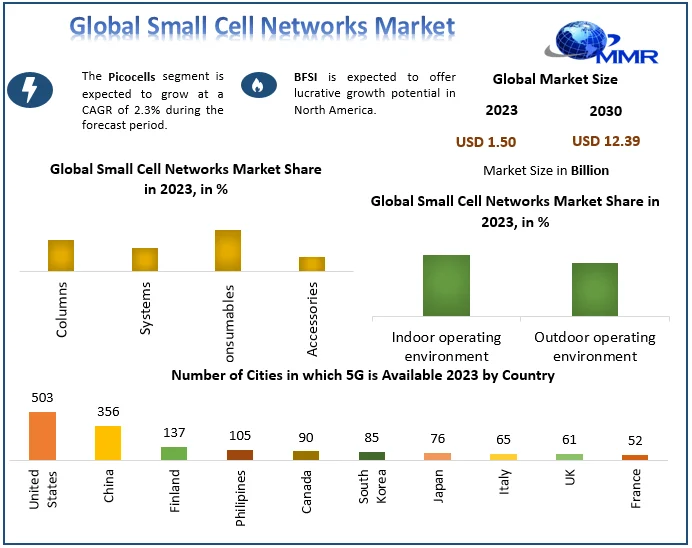 To know about the Research Methodology :- Request Free Sample Report
Small Cell Networks Market Dynamics:
The increasing demand for mobile data, fueled by the rise of streaming services, social media platforms, and IoT devices, has led to a surge in network traffic. This heightened demand necessitates the deployment of small cell networks to alleviate congestion and ensure seamless connectivity, particularly in urban areas. Furthermore, the rollout and adoption of 5G technology play a pivotal role in driving the expansion of small cell networks. Telecom companies worldwide are investing in small cell deployments to complement macro networks and unlock the full potential of 5G connectivity, enabling transformative applications such as augmented reality and autonomous vehicles.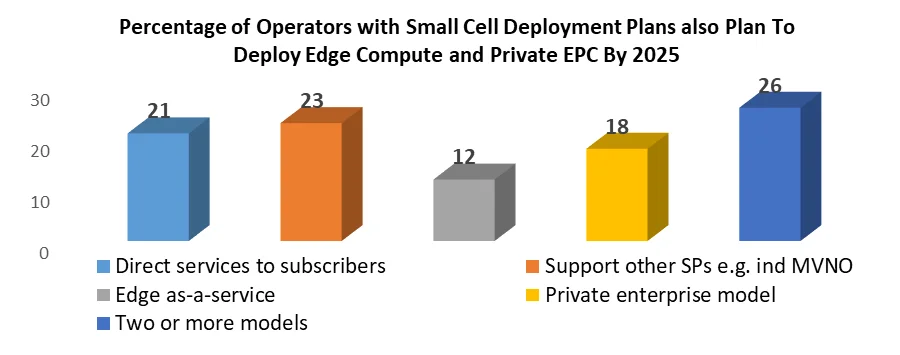 Additionally, the proliferation of IoT devices across various industries drives the need for reliable and low-latency connectivity, further bolstering the demand for small cell networks. Smart city initiatives worldwide leverage small cell technology to support IoT applications, smart transportation systems, and public safety initiatives, enhancing urban livability and sustainability. Moreover, businesses across sectors require high-speed, reliable wireless connectivity to support their operations, leading to increased adoption of small cell networks in enterprise environments.
Small cell networks also play a crucial role in bridging the digital divide by providing connectivity in underserved rural areas, contributing to economic development and improving quality of life. Additionally, they enhance network resilience by providing redundancy and backup connectivity options, ensuring continuous communication during emergencies and natural disasters. As emerging markets invest in infrastructure modernization, small cell deployments are poised to expand further, driving connectivity, economic growth, and innovation on a global scale which boost Small Cell Networks Market experiencing significant growth
For instance, Schneider Electric, Capgemini, and Qualcomm Technologies collaborate on a 5G-enabled automated hoisting solution at Schneider Electric’s Grenoble lab. The solution replaces wired connections with wireless, simplifying digital technology deployment across industrial sites. Automated hoisting systems, crucial in supply chain and manufacturing operations, benefit from 5G's low latency and reliability, enhancing productivity and safety. Capgemini's expertise in 5G and Edge computing complements Schneider Electric's industrial automation know-how, while Qualcomm Technologies' innovations streamline deployment and management of private networks. The end-to-end 5G solution optimizes performance, accelerates time to market, and enables new digital use cases.
| Solution | Description | Technology | Users | Cell Radius |
| DAS | Typically fed by a macro or micro base station. High power, multi-frequency, multi-carrier. | UMTS HSPA+ LTE | Up to 1,800 users per base station | Up to 3 miles |
| WI-Fi | A wireless access point connects a group of wireless devices to an adjacent wired LAN. | 802.11b 802.11g 802.11n | Up to 200 users per a 3-radio access point | 65 Feet |
| Microcell | The short-range base station used for enhancing indoor and/or outdoor coverage. | UMTS HSPA | 32 to 200 users | Up to 1 miles |
| Materocell | High-capacity, low power device that fills in coverage holes within buildings. | UMTS HSPA | 16 to 32 users | 10000-20000 square feet |
| Picocell | Typically used for indoor applications such as office buildings, airports, and malls. | UMTS | 32 users | Up to 750 Feet |
| Femtocell | A small, low-power cellular base station is typically used for a home or small business. | UMTS | 4-6 users | Up to 40 Feet |
Tools and Methodologies for Success is Restraining Small Cell Networks Market Growth
The Small Cell Networks Market faces several challenges as it endeavors to deploy thousands of small cell projects across nations or continents. One significant challenge is the heightened level of organization and governance required to navigate the complexities associated with working across numerous municipalities, complying with diverse regulations, engaging with various infrastructure partners, and integrating new technology vendors. This creates a web of requirements and expectations that necessitates robust organizational processes and governance structures.
The proliferation of small cell deployments also introduces additional burdens in managing equipment, logistics, and data. With a denser coverage footprint, operational functions such as maintenance and troubleshooting become more intricate, requiring efficient coordination and collaboration among stakeholders. Existing organizational processes and infrastructure may not be equipped to handle the intricacies of managing a large-scale small cell expansion, posing a challenge for carriers.
Number of Internet of Things (IoT) Connected Devices Worldwide 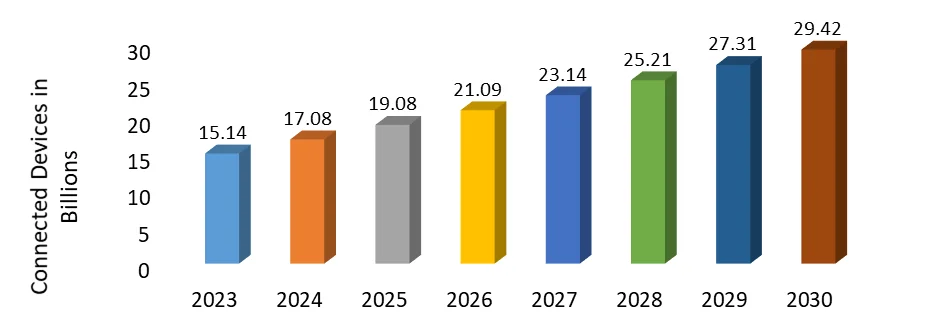 The emergence of small cell solutions demands the development and refinement of a diverse set of organizational capabilities. This includes process automation, project cost baselines, workforce management technologies, mobile apps for field workers, regulatory compliance processes, vendor certification, real-time performance monitoring, analytics, and reporting frameworks. Achieving seamless coordination and integration of these capabilities is essential for successful small cell deployment and operations. Real-time monitoring and analysis of networks also present challenges for the Small Cell Networks Market. While some companies excel in this area, there is always room for improvement, particularly in ensuring the timely detection and resolution of issues to maintain network reliability and performance.
The right tools and methodologies, such as repeatable templates, standardized blueprints, and procedures tailored for the small cell model, can help address these challenges. Automation and standardization of activities can accelerate deployment timelines, minimize manual intervention, and enhance overall productivity. For example, companies like Ericsson and Nokia offer comprehensive small cell solutions that include advanced management and automation tools to streamline deployment and operations. These tools enable real-time monitoring, proactive maintenance, and efficient resource allocation, addressing the challenges associated with managing large-scale small cell deployments. The deployment of small cell networks presents significant opportunities for enhanced connectivity, it also brings forth various challenges related to organization, governance, operations, and technology. Overcoming these challenges requires a concerted effort from industry stakeholders to develop and deploy innovative solutions that streamline processes, enhance efficiency, and ensure the seamless integration of small cell technology into existing networks which drives Small Cell Networks Market trend.
Number of internet Connections in Rural and Urban areas of India from
the Financial Year 2018 to 2023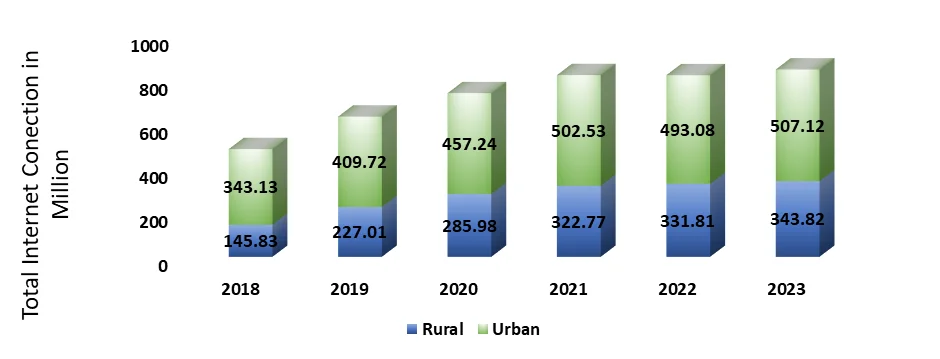
Small Cell Networks in the Connected Vehicle Landscape Driving Innovation Small Cell Networks Market
The emergence of small cell networks promises a paradigm shift in wireless connectivity, presenting numerous opportunities for innovation across various fronts within the Small Cell Networks Market. These opportunities extend beyond the core technology itself to encompass the broader network ecosystem and the services enabled by more robust connectivity. One significant area of innovation lies in the enhancement of small-cell technology itself. Vendors and researchers are continuously exploring ways to improve the form factor, performance, and efficiency of small cells.
For example, advancements in antenna design and signal processing algorithms can lead to smaller, more powerful small-cell units capable of delivering enhanced coverage and capacity in diverse environments. Moreover, innovations in the broader network ecosystem are expected to drive growth and transformation in the Small Cell Networks Market. As new vendors enter the market, there is potential for the development of innovative business models and collaborative partnerships. For instance, companies specializing in network optimization tools and services can offer solutions to optimize signal strength and hardware placement, improving the overall performance of small-cell deployments to propel the small-cell Cell Networks Market.
The densification of networks facilitated by small cells opens up new opportunities for location-based services and applications. With better triangulation of user locations, businesses can deliver personalized, location-aware services to consumers. For example, retail stores can leverage small cell networks to offer targeted promotions and advertisements based on a customer's proximity to the store. Furthermore, the proliferation of small cells creates opportunities for the expansion of over-the-top (OTT) services and partnerships. OTT providers can leverage the increased network density to deliver content more efficiently to consumers.
For instance, streaming platforms can partner with mobile operators to ensure seamless content delivery across densely populated areas, enhancing the user experience and driving subscriber growth. In the realm of connected vehicles, small cell networks enable innovative applications and services that leverage real-time data and connectivity. For example, automotive manufacturers can utilize small cell technology to support vehicle-to-infrastructure (V2I) communication, enabling features such as traffic management, remote diagnostics, and enhanced navigation capabilities. Moreover, the deployment of small cell networks presents opportunities for vertical integration and ecosystem collaboration. Mobile operators, infrastructure providers, and technology vendors can work together to deploy and optimize small cell deployments, driving innovation and efficiency across the ecosystem boost Small Cell Networks Market.
Scope of the Global Small Cell Networks Market: Inquire before buying
| Global Small Cell Networks Market | |||
|---|---|---|---|
| Report Coverage | Details | ||
| Base Year: | 2023 | Forecast Period: | 2024-2030 |
| Historical Data: | 2018 to 2023 | Market Size in 2023: | US $ 1.50 Bn. |
| Forecast Period 2024 to 2030 CAGR: | 35.2% | Market Size in 2030: | US $ 12.39 Bn. |
| Segments Covered: | by Type | Femtocell Picocell Microcell Metrocell |
|
| by Distribution Channel | Professional Services Installation and integration Services Network planning and design Services Maintenance and support Services |
||
| by Operating environment | Indoor operating environment Outdoor operating environment |
||
| by Vertical | BFSI IT and Telecommunications Healthcare Retail Energy and Utilities Transportation Others |
||
| by End-User | Consumers and single office/home office (SOHO) Small and Medium Business (SMB) Large enterprises |
||
Small Cell Networks Market, by Geographies:
North America (United States, Canada and Mexico)
Europe (UK, France, Germany, Italy, Spain, Sweden, Austria and Rest of Europe)
Asia Pacific (China, South Korea, Japan, India, Australia, Indonesia, Malaysia, Vietnam, Taiwan, Bangladesh, Pakistan and Rest of APAC)
Middle East and Africa (South Africa, GCC, Egypt, Nigeria and Rest of ME&A)
South America (Brazil, Argentina Rest of South America)
Small Cell Networks Market Key Players are:
Major Contributors in the Small Cell Networks Market in North America:
1. Cisco Systems, Inc. (San Jose, California, USA)
2. CommScope Holding Company, Inc. (Hickory, North Carolina, USA)
3. Airspan Networks Inc. (Boca Raton, Florida, USA)
4. ip.access Limited (Cambridge, United Kingdom)
5. Mavenir Systems, Inc. (Richardson, Texas, USA)
6. Parallel Wireless, Inc. (Nashua, New Hampshire, USA)
7. Radisys Corporation (Hillsboro, Oregon, USA)
8. Qualcomm Technologies, Inc. (San Diego, California, USA)
9. SpiderCloud Wireless, Inc. (Milpitas, California, USA)
10. Corning Incorporated (Corning, New York, USA)
Major Leading Player in the Small Cell Networks Market in Europe:
1. Ericsson (Stockholm, Sweden)
2. Nokia Corporation (Espoo, Finland)
3. Nokia Solutions and Networks (Espoo, Finland)
4. TE Connectivity Ltd. (Schaffhausen, Switzerland)
5. Alpha Wireless Limited (Portlaoise, Ireland)
Major Leading Player in the Small Cell Networks Market in Asia Pacific:
1. Huawei Technologies Co., Ltd. (Shenzhen, China)
2. Samsung Electronics Co., Ltd. (Suwon, South Korea)
3. ZTE Corporation (Shenzhen, China)
4. Baicells Technologies Co., Ltd. (Hangzhou, China)
5. NEC Corporation (Tokyo, Japan)
FAQ:
1] What segments are covered in the Small Cell Networks Market report?
Ans. The segments covered in the Small Cell Networks Market report are based on Product, Distribution Channel, and Region.
2] Which region is expected to hold the highest share in the Global Small Cell Networks Market?
Ans. North America region is expected to hold the highest market share in the Small Cell Networks market.
3] What is the market size of the Global Small Cell Networks Market by 2030?
Ans. The market size of the Small Cell Networks Market by 2030 is expected to reach USD 12.39 Billion.
4] What is the forecast period for the Global Small Cell Networks Market?
Ans. The forecast period for the Small Cell Networks Market is 2024-2030.
5] What was the market size of the Global Small Cell Networks Market in 2023?
Ans. The market size of the Small Cell Networks Market in 2023 was valued at USD 1.50 Billion.