
Printed & Flexible Sensors Market - Industry Structure Evaluation, Demand Drivers Analysis, Regional Growth Analysis and Identification, Competitive Positioning Review & Global Market Size Forecast to 2032
Overview
The Printed & Flexible Sensors Market size was valued at USD 12.53 Billion in 2024 and the total Printed & Flexible Sensors revenue is expected to grow at a CAGR of 7.6% from 2025 to 2032, reaching nearly USD 22.51 Billion.
Printed & Flexible Sensors Market Overview:
Printed & Flexible Sensors Market is expected to reach US$ 18.09 Bn. The Internet of Things and the production of smart devices and objects rely heavily on printed sensors as their basic building blocks. They make it possible to monitor anything from pressure and motion to temperature and moisture. Flexible sensors have the ability to be applied effortlessly to soft, asymmetrical surfaces like human skin or textile textiles. This is advantageous for applications that depend on conformability, such as soft robotics, smart tattoos, and artificial skin. This report focuses on the different segments of the Printed & Flexible Sensors market (Product Type, Printing Technology, Application, and Region).
This report offers a detailed analysis of the top industry participants and geographic regions (North America, Asia Pacific, Europe, Middle East & Africa, and South America). It offers a thorough examination of the phenomenal modern-era growth in the many sectors. Figures, graphics, and slideshows emphasise the essential data analysis from 2019 to 2024. The market drivers, restraints, opportunities, and challenges for Printed & Flexible Sensors are examined in this report. The MMR report's investment suggestions are based on a thorough examination of the current competitive environment in the Printed & Flexible Sensors market. To know about the Research Methodology :- Request Free Sample Report
Printed & Flexible Sensors Market Dynamics:
The market for printed and flexible sensors now has new prospects for revenue generation due to the advent of digital growth across major industries. Market suppliers have a wide range of growth potential due to the popularity of smart watches, mobile phones, and solar cells. To generate new revenue streams, a number of market participants are leveraging the unmet demands of the electronics sector. A huge amount of opportunities for market growth have also been opened up by the demand for digital maturity in the healthcare, banking, and education sectors.
The market for printed and flexible sensors has been affected by the introduction of technologies like as artificial intelligence, automation, and facial recognition. A number of flexible sensor manufacturers help end users become more familiar with touch and facial recognition technologies. Additionally, the adoption of printable and flexible sensors to promote security and safety throughout commercial and industrial facilities has also benefited market growth. There is a wide range of growth potential available to the top manufacturers of printed and flexible sensors.
Most current methods of detecting pH are either unreliable or subjective (universal indicator paper), or they are quite expensive (electronic probes with a reference electrode). Accensors, a German company, has recently invented a technology for printing pH sensors that allows for the creation of an inexpensive and straightforward sensor using just one nanoliter of a specialized substance. To provide precise readings, these pH sensors typically come with a printed temperature sensor (since pH is a function of temperature). Prototype wound monitoring patches have been created with printed pH and temperature sensor arrays.
A printable thin-film sensor that can detect moisture has been created by the Swedish company InviSense. A moisture-absorbing substance is coated on a printed RFID antenna coil. The capacitance connected to the coil likewise changes when moisture is absorbed, altering the resonant frequency. An RFID reader can then remotely detect this. The main benefit of this method is that testing can be done without causing any damage due to the thin film format of the sensor, which allows it to be installed behind bathroom tiles.
Organic light emitting diode (OLED) displays and conductive ink printing are just two examples of technological challenges limiting the market growth for printed and flexible sensors. The present generation of 3D printers also has drawbacks such as high energy consumption, poor cost-effectiveness, and gas emissions.
Health Care Use of Printed Sensors
A significant customer of printed and flexible sensors is the healthcare sector. Manufacturers' priorities have changed as a result of the introduction of digital technologies, agile processes, and seamless techniques in healthcare. These manufacturers increasingly choose software-based sensors over hardware sensors, which take up more space. Additionally, the healthcare sector has experienced a rapid integration of new machinery and technologies into its design. The majority of these gadgets have printed sensors that are imprinted on the interface. Demand for new technologies is expected to be driven by the existence of a healthy healthcare industry that is adaptable to their implementation.
Use of Printed Sensors in the Production of Sustainable Energy
The energy industry has seen the rise of several new systems and technologies. Innovation and science have a lot of options due to the focus on renewable energy and the need for environmental sustainability. The development of adaptable tools and equipment that may be applied in the renewable energy industry has proven successful for a number of research organizations. The use of printable and flexible sensors gives these gadgets their agility and nimbleness. A number of industrial applications also make use of flexible sensors. These sensors take up very little room and are more useful to the end customers.
Printed & Flexible Sensors Market Segment Analysis:
Based on the Product Type, the market is segmented into Biosensors, Capacitive sensors, Piezoresistive sensors, Piezoelectric sensors, Optical sensors, Temperature sensors, Humidity sensors, and Gas sensor. Biosensors segment is expected to hold the largest market share of xx% by 2032. The strong demand for glucose test strips, which are the most developed type of printed sensors and are used for diabetes monitoring, is responsible for the significant market share of printed biosensors. The market for printed biosensors is also expected to increase at a significant rate due to the quick development of technology, rising need for home-based point-of-care devices and rising demand for glucose monitoring in diabetic patients. Additionally, the market for printed biosensors has a significant market share due to the increasing use of biosensors in consumer electronics and environmental monitoring applications.
Based on the Printing Technology, the market is segmented into Inkjet Printing, Screen Printing, Flexographic Printing, and Others. Flexographic Printing segment is expected to grow rapidly at a CAGR of xx% during the forecast period 2025-2032. A positive mirrored master of the needed image is generated as a three-dimensional relief in a rubber or polymer substance to produce a flexographic print. Digital and analogue platemaking techniques can both be used to generate flexographic plates. On the rubber or polymer plate, the image areas are elevated above the non-image areas. Flexographic printing has a reputation for being quick. Once the basic setup is finished, the use of automation and quick-drying inks produces extremely high performance.
Additionally, this method enables you to pre-set the amount of ink utilised while printing. The doctor blade chamber helps to minimise ink consumption, conserve resources, and lower process costs by applying only the appropriate amount of ink uniformly to the printing plate. Compared to other printing techniques, flexography printing offers reduced operational expenses. This is because the printing process requires fewer steps, the ink is less expensive, and replacement plates are inexpensive. Additionally, the plates are durable and survive for millions of impressions, which reduces labour costs.
Flexography offers the necessary instruments to handle this growing issue because the printing industry is frequently criticised for its harmful impact on the environment. As a matter of fact, this technique minimizes the need for solvent-based inks, platemaking solutions, and cleaning products. Considering that solvent-based inks are being outlawed in many parts of the world, the ability to produce printing of a high calibre utilising water-based inks is a benefit that cannot be understated.
Printed & Flexible Sensors Market Regional Insights:
Asia-Pacific region is expected to dominate the Printed & Flexible Sensors Market during the forecast period 2025-2032. The Asia-Pacific region is expected to hold the largest market share of xx% by . The presence of several top consumer electronics producers, the region's rapid industrialization, the rise in production of commercial and non-commercial vehicles with driver assistance systems and touch infotainment systems, and the rising prevalence of lifestyle diseases like diabetes are all factors contributing to the Asia-Pacific Printed & Flexible Sensors market high growth.
The market for printed or flexible electronics is rising quickly in Asia-Pacific. This is leading to an increase in foreign company investments in the region. A distribution contract was just signed between a Chinese firm, CymMetrik, and American firm Thin Film Electronics ASA. The agreements seek to increase sales, especially in China, Taiwan, India, and other Asia-Pacific countries. Due to the increased manufacturing of consumer electronics on the continent, the printed electronics industry is in high demand and is expected to grow significantly during the forecast period.
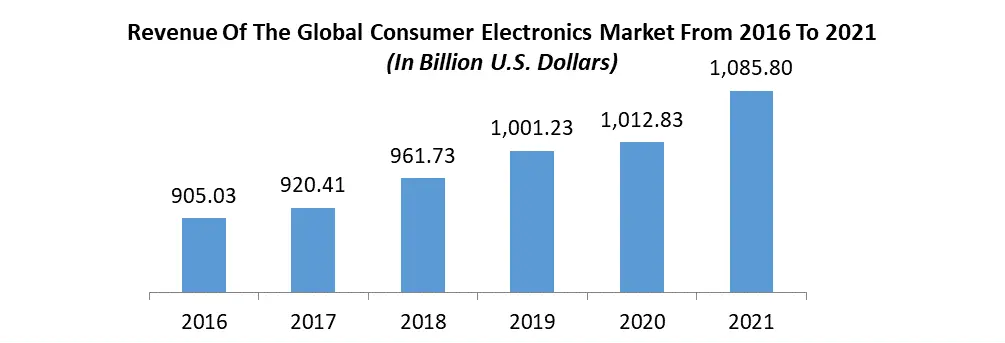
The objective of the report is to present a comprehensive analysis of the Global Printed & Flexible Sensors Market to the stakeholders in the industry. The past and current status of the industry with the forecasted market size and trends are presented in the report with the analysis of complicated data in simple language. The report covers all the aspects of the industry with a dedicated study of key players that include market leaders, followers, and new entrants.
PORTER, PESTEL analysis with the potential impact of micro-economic factors of the market has been presented in the report. External as well as internal factors that are supposed to affect the business positively or negatively have been analyzed, which will give a clear futuristic view of the industry to the decision-makers.
The reports also help in understanding the Global Printed & Flexible Sensors Market dynamic and structure by analyzing the market segments and projecting the Global Printed & Flexible Sensors Market size. Clear representation of competitive analysis of key players by Distribution Channel, price, financial position, product portfolio, growth strategies, and regional presence in the Printed & Flexible Sensors Market make the report investor’s guide.
Printed & Flexible Sensors Market Scope: Inquire before buying
| Global Printed & Flexible Sensors Market | |||
|---|---|---|---|
| Report Coverage | Details | ||
| Base Year: | 2024 | Forecast Period: | 2025-2032 |
| Historical Data: | 2019 to 2024 | Market Size in 2024: | USD 12.53 Bn. |
| Forecast Period 2025 to 2032 CAGR: | 7.6% | Market Size in 2032: | USD 22.51 Bn. |
| Segments Covered: | by Product Type | Biosensors Capacitive sensors Piezoresistive sensors Piezoelectric sensors Optical sensors Temperature sensors Humidity sensors Gas sensor |
|
| by Printing Technology | Inkjet Printing Screen Printing Flexographic Printing Others |
||
| by Application | Automotive Consumer Electronics Industrial Medical Others |
||
Printed & Flexible Sensors Market, by Region
North America (United States, Canada and Mexico)
Europe (UK, France, Germany, Italy, Spain, Sweden, Austria, Turkey, Russia and Rest of Europe)
Asia Pacific (China, India, Japan, South Korea, Australia, ASEAN and Rest of APAC)
Middle East and Africa (South Africa, GCC, Egypt, Nigeria and Rest of ME&A)
South America (Brazil, Argentina, Columbia and Rest of South America)
Printed & Flexible Sensors Market, Key Players are
1.Canatu Oy
2. Fujifilm Holding
3. ISORG
4. Interlink Electronics
5. KWJ Engineering
6. Peratech Holdco
7. Synkera Technologies
8. T+Ink, Inc.
9. Tekscan
10. Thin Film Electronics ASA
11. Vista Medical
12. Meggitt A/S
13. PST Sensors
14. BeBop Sensors
15. DropSens
16. Plastic Electronic GmbH
Frequently Asked Questions:
1] Which region is expected to hold the highest share in the Printed & Flexible Sensors Market?
Ans. The Asia-Pacific region is expected to hold the highest share in the Printed & Flexible Sensors Market.
2] Who are the top key players in the Printed & Flexible Sensors Market?
Ans. Canatu Oy, Fujifilm Holding, ISORG, Interlink Electronics, KWJ Engineering, Peratech Holdco, and Synkera Technologies are the top key players in the Printed & Flexible Sensors Market.
3] Which segment is expected to hold the largest market share in the Printed & Flexible Sensors Market by 2032?
Ans. Biosensors segment is expected to hold the largest market share in the Printed & Flexible Sensors Market by 2032.
4] What is the market size of the Printed & Flexible Sensors Market by 2032?
Ans. The market size of the Printed & Flexible Sensors Market is expected to reach USD 22.51 Bn. by 2032.
5] What was the Global Printed & Flexible Sensors Market size in 2024?
Ans: The Global Printed & Flexible Sensors Market size was USD 12.53 Billion in 2024.