
Polylactic Acid Market by Application and Region – Global Market Size Estimation, Industry-Wide Analysis, Competitive Landscape Assessment & Long-Term Forecast to 2030
Overview
Polylactic Acid Market was valued at USD 1.68 Bn in 2023 and expected to reach US$ 5.74 Bn by 2030, at a CAGR of 19.2% during the forecast period.
The report includes the analysis of the impact of COVID-19 lockdown on the revenue of market leaders, followers, and disruptors. Since the lockdown was implemented differently in various regions and countries; the impact of the same is also seen differently by regions and segments. The report has covered the current short-term and long-term impact on the market, and it would help the decision-makers to prepare the outline and strategies for companies by region.
olylactic acid (PLA) is a bio-degradable and bioactive thermoplastic aliphatic polymer produced from lactic acid using various crops like corn, sugarcane, tapioca, etc. as a raw material. Polylactic acid is prepared by direct condensation of lactic acid monomers. It can also be prepared by ring-opening polymerization of lactide, with various metal catalysts in solution, melt, or suspension.
Polylactic acid demand is expected to increase, due to the scarcity and volatility of prices of fossil fuels. Bio-based plastics have the potential to reduce consumption and dependence on petroleum-based feedstock, and lessen the negative impact on the environment, by reducing carbon footprints.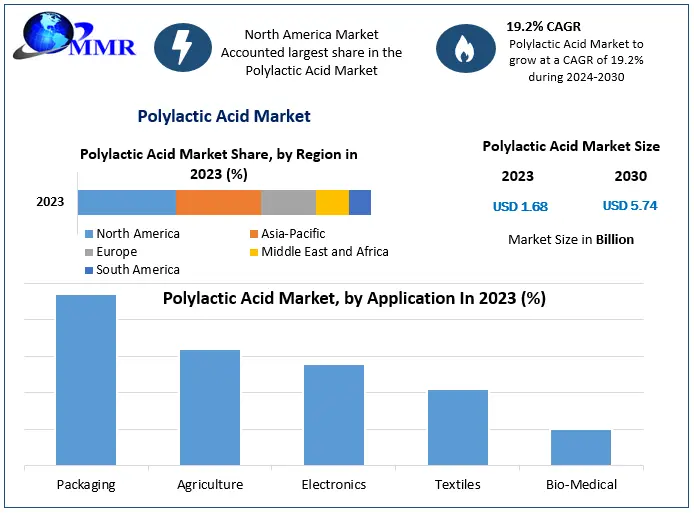 To know about the Research Methodology :- Request Free Sample Report
Based on the application, the market has been segmented into Packaging, Agriculture, Electronics, Textiles, and Bio-Medical. The packaging industry captures a major share of the application. Polylactic acid is preferred in the food packaging industry due to increasing awareness about environmental concerns possess by the use of conventional plastics packaging.
The textile industry is one of the important sectors with high growth and penetration rate of polylactic acid as it offers smooth 7 pleasant fabrics. In addition, increased usage of plastic in cosmetic products and their packaging is fueling the market demand for Polylactic acid.
Factors majorly driving the global market demand are: Increasing use of Polylactic acid in personal care products (creams, shampoos, and other body care products), and growing consumer awareness about sustainability, recyclability, and green packaging is expected to drive the market.
The problems such as fluctuating crude oil prices and limited fossil fuel resources contribute to the rising demand as plastics are mostly manufactured using resources. Increasing consumer awareness, government incentives, and easy availability of raw materials are the major factors driving the market growth. The market faces few challenges, such as price competitiveness and availability of cheaper alternatives, and difficulty in the disposal of Polylactic acid.
North America is the largest consumer market for Polylactic acid & expected to dominate the global Polylactic acid market in terms of the revenue generated. The Asia-Pacific will be the fastest-growing market during this period. In China, raw materials are found in abundance; thus manufacturers can take advantage of this to make a profit. Furthermore, the European polylactic acid market is also expected to be the prospective growth market for the forecast period.
The key market players operating in the global polylactic acid market are BASF SE, Bayer, Total-Corbion, Dow-DuPont, Eastman Chemicals, Henen Jindan Lactic Acid Technology, Mitsubishi Chemical, Nature Works, SULZER, Teijin, Wei Mon Industry, Corbion, and Danimer Scientific.
The report covers the total market for the polylactic acid market has been analyzed based on the Porter's five forces model. The impact of the different market factors, such as drivers, restraints, and opportunities, challenges key issues SWOT analysis, and technology forecasting is also illustrated in the report. This gives an idea about the key drivers, such as high growth and demand in emerging economies countries.
Polylactic Acid Market Scope: Inquire before buying
| Polylactic Acid Market | |||
|---|---|---|---|
| Report Coverage | Details | ||
| Base Year: | 2023 | Forecast Period: | 2024-2030 |
| Historical Data: | 2018 to 2023 | Market Size in 2023: | USD 1.68 Bn. |
| Forecast Period 2024 to 2030 CAGR: | 19.2% | Market Size in 2030: | USD 5.74 Bn. |
| Segments Covered: | by Application | Packaging Agriculture Electronics Textiles Bio-Medical |
|
Polylactic Acid Market, by Region
North America (United States, Canada and Mexico)
Europe (UK, France, Germany, Italy, Spain, Sweden, Austria and Rest of Europe)
Asia Pacific (China, South Korea, Japan, India, Australia, Indonesia, Malaysia, Vietnam, Taiwan, Bangladesh, Pakistan and Rest of APAC)
Middle East and Africa (South Africa, GCC, Egypt, Nigeria and Rest of ME&A)
South America (Brazil, Argentina Rest of South America)
Polylactic Acid Market Key Players
1. BASF SE
2. Bayer
3. Total-Corbion
4. Dow-DuPont
5. Eastman Chemicals
6. Henen Jindan Lactic Acid Technology
7. Mitsubishi Chemical
8. Nature Works
9. Corbion Purac
10. Hisun Biomaterials
11. SULZER
12. Teijin
13. Wei Mon Industry
14. Corbion
15. Danimer Scientific
Frequently Asked Questions:
1. Which region has the largest share in Global Polylactic Acid Market Market?
Ans: North America region holds the highest share in 2023.
2. What is the growth rate of Global Polylactic Acid Market Market?
Ans: The Global Polylactic Acid Market Market is growing at a CAGR of 19.2% during forecasting period 2024-2030.
3. What is scope of the Global market report?
Ans: Global Polylactic Acid Market Market report helps with the PESTEL, PORTER, COVID-19 Impact analysis, Recommendations for Investors & Leaders, and market estimation of the forecast period.
4. Who are the key players in Global market market?
Ans: The important key players in the Global Polylactic Acid Market Market are – BASF SE, Bayer, Total-Corbion, Dow-DuPont, Eastman Chemicals, Henen Jindan Lactic Acid Technology, Mitsubishi Chemical, Nature Works, Corbion Purac, Hisun Biomaterials, SULZER, Teijin, Wei Mon Industry, Corbion, and Danimer Scientific
5. What is the study period of this market?
Ans: The Global market Market is studied from 2023 to 2030.