
Luxury Cruise Tourism Market Size by Cruising Type, Services, Duration, Age, Booking Mode, Target audience and Region - Segment-Level Market Assessment, Growth Opportunity Analysis, Competitive Mapping & Forecast to 2032
Overview
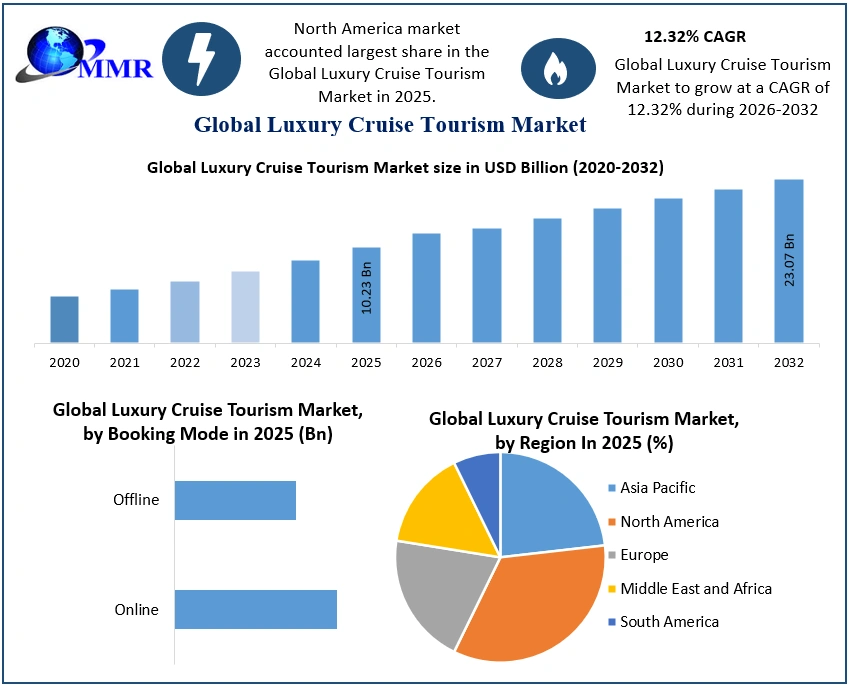
The Luxury Cruise Tourism Market size was valued at USD 10.23 Billion in 2025 and the total Luxury Cruise Tourism revenue is expected to grow at a CAGR of 12.32% from 2026 to 2032, reaching nearly USD 23.07 Billion by 2032.
Luxury Cruise Tourism Definition:
Luxury cruise tourism is a segment of the tourism industry. It offers opulent experiences on extended voyages to exotic destinations to high-net-worth individuals. is it true sentence. Luxury cruise tourism is offering the highest standards of service, amenities, and accommodations. It is a lavish form of travel, which is designed for those who seek an exclusive vacation at sea. Luxury cruise lines operate smaller ships, which accommodate fewer passengers, and helps to create a more intimate and personalized experience.
To know about the Research Methodology :- Request Free Sample Report
Luxury Cruise Tourism Market Overview:
The luxury cruise market is transforming and becoming more active and adventurous. Luxury cruise tourism offering entree to new exotic destinations and providing service and quality for on brand innovative well-designed and cultured purpose-built ships. As luxury cruising becoming more mainstream, cruisers are moving to entry in the luxury cruise market. The Carnival, Norwegian and Royal Caribbean have started with the mass market cruise lines and then shifted to the premium lines like Holland America and Celebrity. They are focusing to deploy standard level of service, elevated cuisine, better quality, and a sophisticated cruise experience. luxury cruises are evolving to match the desires of a new generation of traveller. In the price analysis, Savvy cruisers are discovering that the price gap between premium and luxury lines are not high. The entry-level luxury cruises cost is comparable in cost to premium cruise line suites, when we consider the total vacation cost.
Luxury lines are redefining the cruise experience for a younger generation. Brand new expedition ships offer exciting itineraries tailored to a younger, more adventurous crowd. Today's luxury cruisers are in their 40s and 50s, successful and well-traveled. They crave unique experiences and exotic destinations, and seeking the kind of in-depth exploration. Luxury cruises provide a chance to mingle with like-minded individuals who share their passions for travel and discovery. luxury cruise lines are ordering new custom-built luxury and luxury adventure or expedition ships. An increase in disposable income, especially in developing countries is leading to a bigger pool of potential high-paying cruisers luxury lines. Growing popularity of small ship cruises and luxury yachts are expected to grow revenue of the luxury cruise tourism market. The industry is expected to benefit from the increasing demand for unique and ultra-luxury travel experiences.
Changing consumer preference and increasing buying power of consumers for luxury services and goods have augmented the ship sizing mentality. Increasing leisure cruising and innovative technologies in the ship building and automation industries are the key factors driving the size criteria of the ship to a greater extent. Moreover, many ship building and leisure cruise companies are racing towards the largest ship manufacturing, and the companies' huge resources are dedicated to creating spacious, more advanced, and full of amenities ships for customer satisfaction and luxury.
The luxury cruise market is a competitive, with established players and new entrant’s players. The established brands offer a classic, opulent experience with spacious suites, impeccable service, and grand public spaces. The luxury cruise market boasts a range of established and innovative companies, each vying to provide the ultimate getaway. Traditional lines providers often stick to popular destinations, while new age lines providers are expected to explore off-the-beaten-path locations. Traditional lines have larger ships, while new age lines are expected to operate smaller ships with a more intimate feel. Viking Ocean Cruises are embracing a scandinavian-inspired design with a focus on cultural enrichment and an adult-oriented atmosphere, perfect for those who appreciate a sophisticated travel experience. Azamara offers mid-sized ships with a focus on destination immersion and cultural experiences. Oceania cruises provide a sophisticated and relaxed atmosphere with a focus on culinary experiences, featuring gourmet dining options onboard.
Luxury Cruise Tourism Market: Research Approach
Supply Side Research Approach:
The supply side research approach phase of the project included crowdsourced data collection across five region like North America, Europe, Asia Pacific, Middle East & Africa and South America for 25 online luxury cruise tourism service websites (5-10 websites per market). The data has been also collected from cruise players: major luxury cruise tourism service providers.
Demand Side Research Approach:
Demand side research approach phase was included an in-depth survey of some questions related to consumer attitudes and behaviours, experience on luxury cruise. The some of the survey questions covered major areas their spending and interest for vocation at sea and online booking user experience and checkout preferences.
Luxury Cruise Tourism Market Dynamics:
Luxury Cruise Tourism Market Trends:
The trend of compact luxury cruise ships is emerging in the Marine Industry.
Passengers are expecting a more personalized experience on cruises. Compact ships with fewer passengers allow for a more intimate atmosphere, with better staff-to-guest ratios and a greater sense of community onboard. The smaller ships can navigate shallower waters and access ports that larger vessels can't reach. It is expected to open up exciting new itineraries to explore remote destinations and hidden gems. Large ships are notorious for their environmental footprint. Smaller ships are generally more fuel-efficient and have a lower environmental impact, which is appealing to eco-conscious travelers. The compact luxury cruise offers a more unique and personalized experience and operate with a lower environmental impact. Millennials are entering the luxury cruise tourism market and looking for experiences that are both luxurious and adventurous. With a smaller passenger capacity, compact ships foster a more intimate atmosphere. It translates to a better staff-to-guest ratio, allowing for exceptional, personalized service and a relaxed, catered-to experience. Compact luxury cruise ships are equipped with high-end facilities like gourmet dining, spa services, and elegant accommodations, which is ensuring a luxurious experience. Sea Cloud Cruises, silversea cruises and emerald cruises are some of the companies, which are leading the charge in compact luxury cruises. Sea Cloud Cruises have three ships, Sea Cloud, Sea Cloud II, and Sea Cloud Spirit, which holds a maximum of 136 guests and feature a majestic sail. Silversea cruises are known for their global itineraries and offers a range of ships with capacities around 400-600 passengers. Emerald Cruises line focuses on small ships with a maximum of 100 guests, who is catering to upscale experiences in Europe and Asia. The compact luxury cruise service offering a new dimension to luxury travel at sea.
An increase in focus on wellness and sustainability is one of the notable trends in the Luxury Cruise Tourism Market
An increased focus on wellness and sustainability is a major trend driving the Luxury Cruise Tourism Market. travelers are looking for experiences that go beyond just luxury amenities. They want to feel good and contribute to a healthy planet while they travel. Health-conscious travelers are demanding wellness-oriented amenities like yoga studios, juice bars, and spas with personalized treatments. Additionally, sustainability is becoming a priority, with lines implementing eco-friendly practices and highlighting shore excursions that promote cultural preservation. Cruise lines are partnering with celebrity chefs to curate exceptional onboard dining experiences. Cruise lines are responding by offering wellness programs, healthy dining options, and sustainable practices onboard. Many cruise lines are differentiating themselves in a crowded market by prioritizing wellness and sustainability features. They are focusing to attract a new generation of environmentally conscious and health-focused travelers. Environmental regulations are becoming stricter, pushing luxury cruise lines to adopt cleaner technologies and reduce their environmental footprint. The luxury cruise lines are expected to ensure a healthy future for their business and the environment by catering to the growing demand for wellness and sustainability.
Luxury Cruise Tourism Market Drivers:
New Luxury Cruise Lines Are Adopting an Underdog Strategy that drive a Luxury Cruise tourism market
New luxury cruise lines are adopting a strategic approach, which is expected to disrupt the traditional cruise market and propel the luxury segment forward. An operating smaller ship is driving growth in luxury cruise tourism. Sustainability is a major concern for many luxury travelers. Smaller ships generally have a lower environmental footprint compared to giant cruise lines. Travelers are increasingly seeking to escape the crowds and long lines synonymous with mega-ships. An eco-conscious approach positions them well to attract a growing segment of travellers who prioritize responsible tourism. The smaller luxury cruise lines are attracting a new generation of discerning travellers by offering a more unique, personalized, and environmentally conscious experience. The underdog strategy is expected to be a major driver of growth in the luxury cruise market, potentially reshaping luxury travel experience at sea. Traditional massive ships cruise lines often struggle to offer a customized experience that reflects the local culture of destinations.
The constant innovation in advanced services on luxury cruise ships is a major driver of growth in the luxury cruise tourism market.
The constant innovation in advanced services, facilities, and amenities on luxury cruise ships is a major driver of growth in the luxury cruise tourism market. Luxury cruise lines compete fiercely, and offering exclusive and innovative features sets them apart. Currently, luxury travelers have varied interests. Advanced services elevate the onboard experience to new heights. luxury cruise lines are focusing to stay ahead of the curve and provide an unparalleled level of service and experience for their discerning clientele. Some extravagant facilities and super services given by luxury cruise ships to its customers are expected to increase the passenger population on sea board. Companies are providing services like spa treatments, skydiving, thrilling water coasters, and adventurous activities like onboard zip lining to attract consumers to spend their valuable time on luxury cruise ships that is expected to drive the market growth during the forecast period. Top players in this market like Azamara, Royal Caribbean, Viking Ocean Cruises, and Oceania Cruises S. de R.L. are focusing to launch new services.
Qualities and facilities have gained considerable importance across the luxury cruise market in recent years. Luxury dining options, wine cellars, ballrooms, entertainment rooms, and other amenities provided by cruise companies and the use of technical equipment as self-sufficient entertainment tools are some of the key factors driving the trend in the market. The prominent players in the luxury cruise tourism industry are highly investing in waste reduction technologies to protect the coral reefs and biodiversity areas across the ocean. Increasing deployment of cutting edge and innovative technologies for waste management on cruise including cleaning of exhaust gas, advanced water treatment systems, sustainability in electricity consumption and others.
Luxury Cruise Tourism Market Segment Analysis:
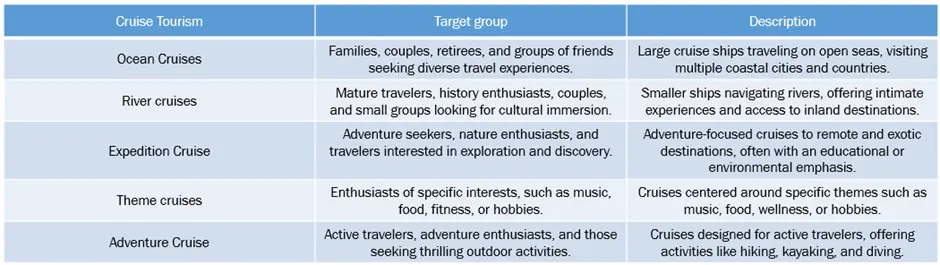
Based on the cruising type, luxury cruise tourism market is segmented into ocean cruises, river cruises, expedition cruise, theme cruise, adventure cruise and others. Ocean Cruises is large seafaring vessels designed for luxury travel, accommodating a high number of passengers. It has a wide variety of onboard amenities like high-end restaurants, spas, entertainment venues, and even specialty areas for children or adults-only. Ocean Cruises held the dominant position in the luxury cruise tourism market. Ocean cruises offer a wider range of destinations, from popular Caribbean getaways to exotic locations like Antarctica or the Mediterranean. It accommodates more passengers, allowing for a wider variety of onboard amenities and activities, catering to a broader range of preferences. It includes luxurious features like high-end dining, spas, casinos, and theatre productions. Ocean cruises typically offer longer itineraries, allowing for more in-depth exploration of destinations. The luxury cruise lines like Crystal Cruises, Regent Seven Seas Cruises, and Silversea have a strong market presence and loyal customer base across a globe. River cruises are offering a more intimate experience with a focus on cultural immersion. It focuses on scenic cruising along rivers, and permitting access to unique destinations and historical landmarks. River cruises held the second dominant position in the luxury cruise tourism market with a share of more than 18% in .
Based on the services, luxury cruise tourism market is segmented into restaurants, bars & pubs, water sports, adventurous sports, planetarium, snow rooms, cruise fares, 4d movie theaters, in-suite spa treatment centers and others. The cruise fares segment held the dominant position and is projected to continue its dominance during the forecast period. Cruise fares include the basic cost of the cruise like accommodation, meals, entertainment, and access to many onboard amenities. It covers range of crucial services and amenities, which is making it the prime cost component for travelers. luxury cruises include quality services in their fares like gourmet dining, special shore excursions, and personalized services.
Based Age, luxury cruise tourism market is segmented into millennials, generation x and baby boomers. Millennials are emerging as a strong force in the luxury cruise market. millennials are expected to be the driving force for the future of luxury cruises. Platforms like Instagram showcase the luxurious aspects of cruising, influencing millennial travel decisions. Luxury cruises provide both relaxation and opportunities for exploration, which resonates with millennials. As millennials mature in their careers, they have more disposable income to spend on luxury vacations, which is expected to drive their expenditure on luxury cruise tourism. A consumer shift towards a younger demographic is a positive sign for the future of the luxury cruise market.

By Booking Mode, luxury cruise tourism market is segmented into online and offline. The online segment held the dominant position in a share of more than 80% share in the market. In North America, online segment held a dominant share of 72.31% share in the luxury cruise tourism market. Online platforms allow for 24/7 access to information, comparisons across different cruise lines and itineraries. Online booking sites offers a wider range of options compared to a single travel agent. Online platforms offer detailed information about itineraries, amenities, and pricing alongside reviews from past passengers, facilitating informed decision-making. Many online booking platforms permit customization of itineraries, shore excursions, and cabin selection, with greater flexibility for travelers, which is driving the passenger’s preference for online booking mode. Luxury Cruise lines are leveraging online platforms for targeted marketing campaigns and exclusive online promotions.
Luxury Cruise Tourism Market Regional Insights:
North America held the 49.06% in the global luxury cruise tourism market. The dominance is attributed to the strong presence of international cruise operators, higher disposable incomes, and a well-developed tourism infrastructure in the region. A number of tourists use luxury cruise ships for traveling to popular destinations in the North America. United States is a major hub for luxury cruise tourism industry, with the Caribbean and Alaska being popular cruise destinations. By Country, United States held the dominant position and projected to continue its dominance during the forecast period. The country held the share of 83.06% in and Canada held the second dominant position in the North America market with a share of 12.6%.
Europe Luxury Cruise Tourism Market Overview:
Europe has a wealth of historical sites, iconic landmarks, and vibrant cultures for luxury cruise passengers. European cruises are heavily influenced by seasonality, with peak season concentrated in the summer months. River cruises in Europe are gaining popularity, offering an intimate and luxurious way to explore the continent's waterways. Luxury cruise lines are increasingly incorporating wellness offerings like spas, fitness programs, and healthy dining options. A strong economic recovery, particularly in key European markets like Germany, France, and the UK are expected to increase consumer spending and a growing demand for luxury travel experiences. European travelers make up 21% of annual cruise passengers globally.
Luxury Cruise Passenger Data by Region in 2023
| Region | Number of Passengers (in Millions) | Market Share(%) |
| North America | 15.9 | 49.5 |
| Europe | 7.9 | 25 |
| Asia Pacific(APAC) | 4.8 | 15 |
| South America | 2.4 | 7.5 |
| Middle East and Africa | 0.7 | 3 |
Luxury Cruise Tourism in India:
Luxury cruise tourism segment empowers a country through its natural water assets to enhance both its international & national integration and its economy through its ports. India has significant capabilities in luxury cruise tourism for coastal & river sector because of the presence of 12 Major and 200 Minor Ports along the 7500 km long coastline across the west and east and a network of more than 20000 kilometres long navigable 110 waterways connecting around 400 rivers. India has an untapped potential of overnight coastal tourism to generate unprecedent forex earnings and domestic tourism spends. Currently luxury cruise tourism traffic is highly limited in India. India is blessed with natural beauty of almost 400 rivers through 110 national waterways covering an estimated 20000 kms of length. There is an immense potential of river and canal cruise tourism across river waterways of which only a very small portion is currently being utilised and expected to have the potential of generating large forex earnings and domestic tourism spends.
The river luxury cruise tourism sector wants to be developed on a crucial priority mode by making availability of river & terminal infrastructure, multi modal connectivity, ease of doing business across multiple authorities. It is also having to be developed by factors like standardised and safe fleet availability, ease of funding, incentives through income taxes, GST & customs duties issues, standard operating procedures across all river cruise systems. The current ongoing plans for development of certain islands and lighthouses through a combination of both PPP & government funding is expected to boost the demand for luxury cruise tourism. The government has drafted a national strategy for luxury cruise tourism. The roadmap focuses on developing India as a premier cruise destination for coastal, ocean, and river cruises. In , Nitin Gadkari has inaugurated classic imperial, a luxury cruise vessel for cruise tourism in Kerala and India.
Luxury Cruise Tourism Market Scope: Inquire before buying
| Luxury Cruise Tourism Market | |||
|---|---|---|---|
| Report Coverage | Details | ||
| Base Year: | 2025 | Forecast Period: | 2026-2032 |
| Historical Data: | 2020 to 2025 | Market Size in 2025: | USD 10.23 Bn. |
| Forecast Period 2026 to 2032 CAGR: | 12.32% | Market Size in 2032: | USD 23.07 Bn. |
| Segments Covered: | by Cruising Type | Ocean Cruises River Cruises Expedition Cruise Theme Cruise Adventure Cruise Others |
|
| by Services | Restaurants Bars & Pubs Water Sports Adventurous Sports Planetarium Snow Rooms Cruise Fares 4D Movie Theaters In-suite Spa Treatment Centers Others |
||
| by Duration | Less Than 1 Week 1 Week 2 Weeks More Than 2 Weeks |
||
| by Age | Millennials Generation X Baby Boomers |
||
| by Booking Mode | Online Offline |
||
| by Target audience | Families Couples Solo Travelers |
||
Luxury Cruise Tourism Market, by Region
North America (United States, Canada and Mexico)
Europe (UK, France, Germany, Italy, Spain, Sweden, Austria and Rest of Europe)
Asia Pacific (China, South Korea, Japan, India, Australia, Indonesia, Malaysia, Vietnam, Taiwan, Bangladesh, Pakistan and Rest of APAC)
Middle East and Africa (South Africa, GCC, Egypt, Nigeria and Rest of ME&A)
South America (Brazil, Argentina Rest of South America)
Luxury Cruise Tourism Market, Key players are
1. Celebrity Cruises - United States
2. Royal Caribbean - United States
3. Princess Cruises - United States
4. Carnival Cruise Line - United States
5. American Cruise Lines - United States
6. Norwegian Cruise Line - United States
7. Azamara Club Cruises - United States
8. Disney Cruise Line - United States
9. Holland America Line - United States
10. Oceania Cruises - United States
11. MSC Cruises - Italy
12. Viking Cruises - Norway
13. MS Berlin (operated by FTI Cruises) - Germany
14. AIDA Cruises - Germany
15. Costa Cruises - Italy
16. Cunard Line - United Kingdom
17. P&O Cruises - United Kingdom
18. Pullmantur Cruises - Spain
19. TUI Cruises - Germany
20. Genting Hong Kong-China
21. Coral Expeditions (Australia)
22. Pandaw Cruises - Myanmar (Burma)
FAQs:
1. What are the growth drivers for the Luxury Cruise Tourism market?
Ans. Growing Disposable Income, increasing trend towards experiential travel, Environmental Sustainability are expected to be the major driver for the Luxury Cruise Tourism market.
2. What is the major restraint for the Luxury Cruise Tourism market growth?
Ans. Economic Uncertainty is expected to be the major restraining factor for the Luxury Cruise Tourism market growth.
3. Which region is expected to lead the global Luxury Cruise Tourism market during the forecast period?
Ans. The North American market is expected to lead the global Luxury Cruise Tourism market during the forecast period.
4. What was the Global Luxury Cruise Tourism Market size in 2025?
Ans: The Global Luxury Cruise Tourism Market size was USD 10.23 Billion in 2025.
5. What segments are covered in the Luxury Cruise Tourism Market report?
Ans. The segments covered in the Luxury Cruise Tourism market report are Cruising Type, Services, Duration, Age, Booking Mode, Target audience, and Region.