
Life Science Analytics Market Size by Type, Component, Delivery, Application, End User, Region – Revenue Pool Analysis, Margin Structure Assessment, Capital Flow Trends, Competitive Benchmarking & Forecast to 2030
Overview
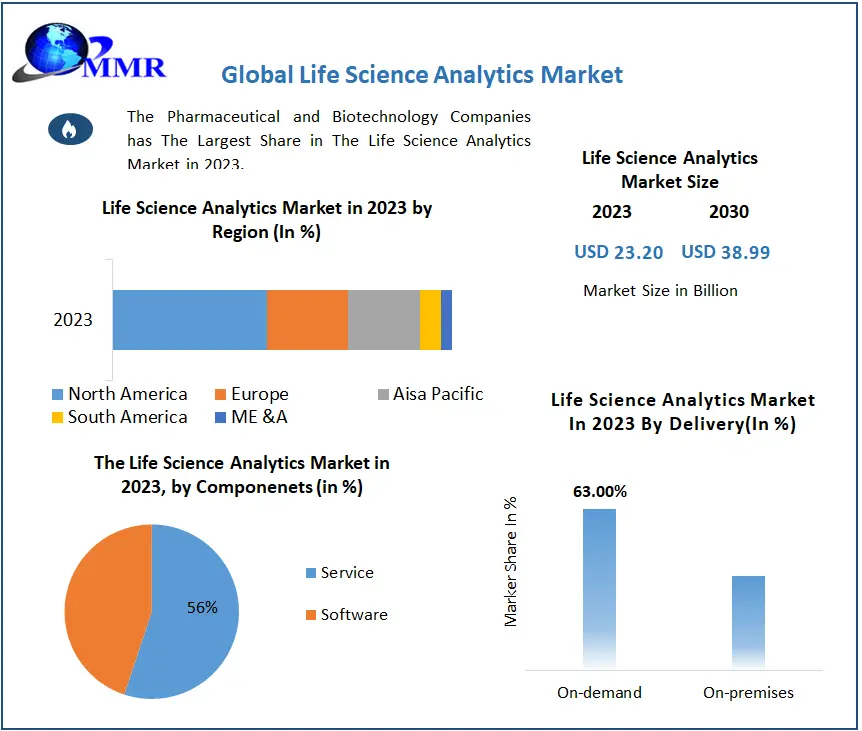
Global Life Science Analytics Market size was valued at USD 23.20 Billion in 2023 and the total Life Science Analytics Market revenue is expected to grow at 7.7 % from 2024 to 2030, reaching nearly USD 38.99 Billion.
Life Science Analytics is the systematic application of computational analysis to biological data generated in various areas of life sciences. It's essentially about using advanced computer tools and techniques to make sense of large, complex datasets related to living organisms and biological processes.
 To know about the Research Methodology :- Request Free Sample Report
The Life Science Analytics market has been subjected to a transformative phase, driven by several key factors such as the exponential growth of data driven by technological advancements, and necessary analytical approaches for meaningful insights. Life science analytics plays a pivotal role in advanced drug development processes (Developing new drugs and therapies more efficiently) by efficiently analyzing vast clinical trial data and facilitating quicker discovery and development of new pharmaceuticals (Discover patterns and insights in biological data). The convergence of these factors positions the Life Science Analytics market as a key player in driving innovation, efficiency, and compliance within the life sciences sector.
The need to extract meaningful insights for improved healthcare outcomes. Key players like IQVIA, Oracle, Accenture, Cognizant, and Wipro lead the pack, offering software, services, and hardware solutions. North America holds the largest market share, followed by Europe and Asia Pacific. However, Asia Pacific is expected to exhibit the fastest growth due to rising healthcare expenditure and increased government focus on life sciences development.
Life Science Analytics Market Dynamics:
Genomics, Clinical Trials, and Healthcare IT Drive Growth in Life Science Analytics Market
In the ever-evolving landscape of life sciences, key drivers have routed the momentum of the Life Science Analytics market. The merging of advancements in genomics, clinical trials, and healthcare information technology (IT) is creating massive and complex datasets. This surge in data necessitates sophisticated analytics solutions to derive meaningful insights, shaping the trajectory of the market. Genomics in medical research has boosted the generation of vast datasets containing intricate genetic information. Simultaneously, the growth of clinical trials and the integration of healthcare IT systems contribute to the complexity of data generated across the life sciences spectrum.
The merger of these forces has positioned life science analytics as a critical tool for unraveling the intricacies within these datasets. The life Science Analytics market is gaining prominence globally, various regions are witnessing accelerated growth in life science analytics adoption. The demand for sophisticated analytics tools is particularly pronounced in regions with a robust presence of genomics research, active clinical trial landscapes, and thriving healthcare IT ecosystems.
Data Management Hurdles Impede Market Growth in Developing Regions
Life Science Analytics companies encounter a difficult restraint in handling complex incoming data with missing values, inconsistencies, and potential preferences. The imperative to invest significant time in data ingestion, organization, and cleaning creates a substantial difficulty. The adoption of advanced technologies faces hindrances, primarily by the high costs, that are unaffordable for small- and medium-sized pharmaceutical and biotech businesses, along with Contract Research Organizations (CROs) operating on tight budgets. The constraint is particularly pronounced in developing nations, where securing funding for information technology over medical technology poses a tough challenge, thereby impeding the overall growth of the Life Science Analytics market.
Unlocking Growth Horizons: AI and Machine Learning Integration Fuels Opportunities in the Global Life Science Analytics Market
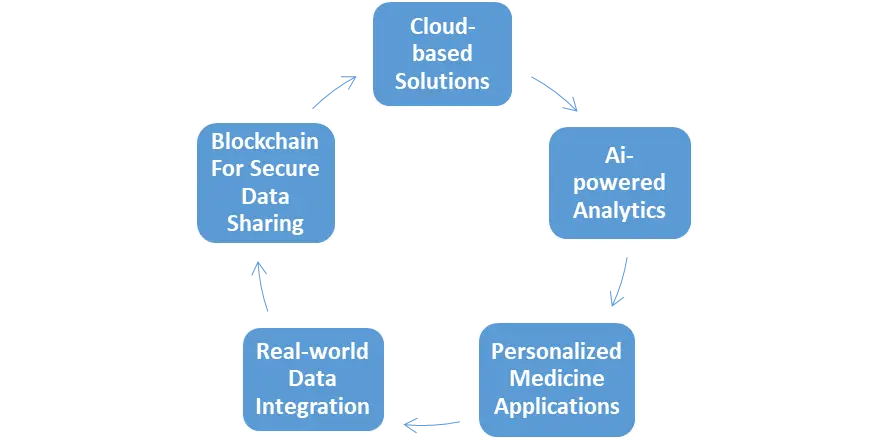
The life science analytics market has a significant opportunity to explain the seamless integration of Artificial Intelligence (AI) and Machine Learning (ML). The technological convergence is not only reshaping the industry but also driving it towards unique growth. With a particular emphasis on regions like North America and Europe, where technological adoption is strong, the integration of AI and ML into life science analytics presents a compelling opportunity. AI and ML play a pivotal role in advancing personalized medicine by refining the analysis of individual patient data, including genetic and health information, which has been the evolution of precision healthcare. Opportunity not only streamlines research processes but also contributes to bringing new drugs to market faster, addressing critical healthcare needs.
Emerging Life Science Analytics Market Trends:
Life Science Analytics Market Segment Analysis:
By Type, In the Life Science Analytics market, the segment with the highest market share based on the type of analytics is currently descriptive analytics its estimated share was around 38.56% of the total market in 2023, and predictive and prescriptive analytics are expected to grow at a faster rate. Descriptive analytics caters to the diverse needs of various life science sectors, from clinical research to drug safety monitoring. Descriptive type analytics provides basic insights quickly, facilitating immediate decision-making and process improvement.

By Application, Life science companies are increasingly targeting specific customer segments and tailoring their marketing messages based on individual needs and preferences. Analytics plays a crucial role in identifying these Sales & Marketing, analyzing customer behavior, and predicting sales potential. The application with the highest market share in the Life Science Analytics market is Sales and marketing, accounting for a share of around 32% of the total market in 2023. Other applications like Drug Discovery, Research and development, and Clinical trials are expected faster growth. The increasing focus on personalized medicine, faster drug development cycles, and optimizing clinical trial design and analysis have led to the Life Science Analytics market. Real-world data (RWD) analysis is gaining traction in S&M, providing insights into patient outcomes and medication adherence, and helping companies adjust their strategies accordingly.

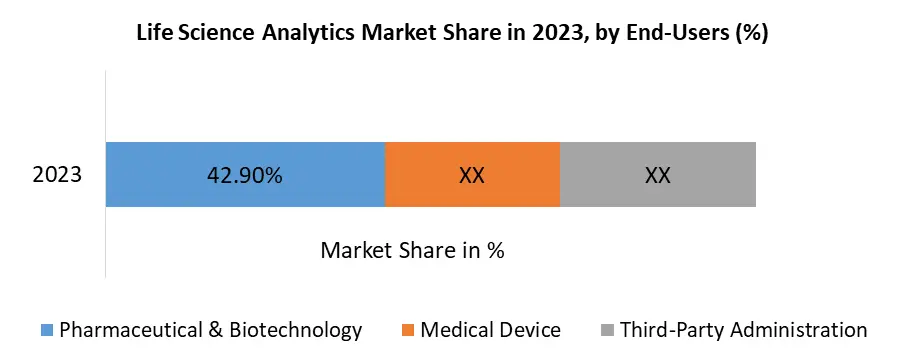
By End-User, Pharmaceuticals and biotech continue to hold the lead, while other segments like Academic Institutions & Research Organizations, and Contract Research Organizations (CROs) are expected to experience significant growth. Increased collaborations between academia and industry, and the outsourcing of research and development activities to CROs and other segments are driving their market in the forecast period 2024-2030. Pharmaceutical and Biotechnology Companies, holding a market share of 42.90% of the total life science analytics market in 2023. Illumina, Thermo Fisher Scientific, and Invitae these companies generate massive amounts of data from research, clinical trials, drug development, and sales and marketing, fueling the need for advanced analytics solutions. Demand for innovation and efficiency this factors Driving Pharmaceutical and Biotech Dominance.
Life Science Analytics Market Regional Insights:
North America holds the highest market share in the Life Science Analytics market in 2023, with an estimated share of 48.5% of the global market share. Dominance is driven by the High concentration of pharmaceutical and biotech companies having significant market share like IQVIA (15%), Oracle (12%), Accenture (10%), Cognizant (8%), and others (55%). North America spends the most on healthcare globally, creating a larger pool of resources for investing in analytics technologies.
Europe holds the second largest market share, estimated at around 33.2%. Major players include Thermo Fisher Scientific, Siemens Healthineers, and SAP. Mergers and acquisitions are expected to play a significant role in shaping the competitive landscape of the Life Science Analytics market. Asia Pacific has been the fastest-growing region, expected to reach a market share of around 20% by 2030. Key players include Wipro, Infosys, and FujiFilm.
Asia Pacific offers a dynamic and rapidly growing market due to:
1. Increasing healthcare expenditure
2. Governmental focus on life sciences development
3. Emerging local players gaining traction
Life Science Analytics Market Competitive Landscapes:
IQVIA- Recent acquisitions by IQVIA include Lasso (Nov 2022), Pharmaspectra (Sep 2022), and DMDConnects (Sep 2021). IQVIA reported financial results for the quarter ended December 31, 2023. The company's revenue for the fourth quarter of 2023 was USD 3,868 million, representing a 3.5 percent increase on a reported basis and a 2.6 percent increase at constant compared to the fourth quarter of 2022. The company's full-year 2024 guidance includes approximately USD 300 million of COVID-related revenue step down, about 50 basis points of headwind from foreign exchange, and about 100 basis points of contribution from acquisitions.
Oracle- The company has acquired 142 companies, including 6 in the last 5 years, with a total of 30 acquisitions coming from private equity firms. Recent acquisitions by Oracle include NextService (Nov 2023), Newmetrix (Jan 2022), and FOEX (Sep 2022). Additionally, Oracle completed the acquisition of Cerner Corporation in 2022, which was a significant M&A activity for the company. These acquisitions reflect Oracle's strategic efforts to enlarge its portfolio and capabilities across various sectors, including software and internet software and services.
Investments in 2023
1. IQVIA acquired Avaloq for USD 5.2 billion to strengthen its real-world data capabilities.
2. Oracle invested in BioAge and its AI-powered platform for drug discovery.
3. Datavant raised USD 500 million to increase its real-world data-sharing platform.
4. Veeva invested in Medidata to bolster its clinical trial management solutions.
5. Roche Dicritifcagnostics acquired TIBCO Spotfire for its advanced analytics capabilities.
Life Science Analytics Market Scope: Inquire before buying
| Global Life Science Analytics Market | |||
|---|---|---|---|
| Report Coverage | Details | ||
| Base Year: | 2023 | Forecast Period: | 2024-2030 |
| Historical Data: | 2018 to 2023 | Market Size in 2023: | US $ 23.20 Bn. |
| Forecast Period 2024 to 2030 CAGR: | 7.7% | Market Size in 2030: | US $ 38.9 Bn. |
| Segments Covered: | by Type | Descriptive Predictive Prescriptive |
|
| by Component | Software Services |
||
| by Delivery | On-demand On-premises |
||
| by Application | Research and Development Sales and Marketing Support Regulatory Compliance Supply Chain Analytics Pharmacovigilance |
||
| by End User | Medical Device Pharmaceutical & Biotechnology Third-Party Administration |
||
Life Science Analytics Market, by Region
North America (United States, Canada, and Mexico)
Europe (UK, France, Germany, Italy, Spain, Sweden, Austria, and the Rest of Europe)
Asia Pacific (China, South Korea, Japan, India, Australia, Indonesia, Malaysia, Vietnam, Taiwan, Bangladesh, Pakistan, and the Rest of APAC)
Middle East and Africa (South Africa, GCC, Egypt, Nigeria, and the Rest of ME&A)
South America (Brazil, Argentina Rest of South America)
Market Key Players:
North America Life Science Analytics Market Key Players
1. IQVIA(United States)
2. Oracle (United States)
3. Cognizant (United States)
4. GE Healthcare (United States)
5. SAS Institute Inc. (United States)
6. IBM (United States)
7. Microsoft (United States)
8. Thermo Fisher Scientific (United States)
9. Veeva Systems (United States)
10. Alteryx (United States)
11. Datavant (United States)
12. Medidata Solutions (United States)
13. Parexel International (United States)
14. Biogen Inc. (United States)
Europe Life Science Analytics Market Key Players
1. Roche Diagnostics (Switzerland)
2. Siemens Healthineers (Germany)
3. Accenture (Ireland)
4. Philips Healthcare (Netherlands)
Asia Pacific Life Science Analytics Market Key Players
1. Infosys (Bengaluru, India)
2. Wipro (India)
3. TCS (Tata Consultancy Services) (Mumbai, India)
4. Mahindra Satyam (Bengaluru, India)
5. Reliance Jio Infocomm (Navi Mumbai, India)
FAQs:
1. What are the factors driving the Life Science Analytics Market?
Ans. Exponential Data Growth, Personalized Medicine, Faster Drug Development, and other various factors are driving the market.
2. Which region is expected to lead the global Market during the forecast period?
Ans. The North American region is expected to hold the largest share of the Market. Countries such as the United States, and Canada are focusing on product development and collaborative strategies to enhance their business offerings in the region.
3. What is the projected market size and growth rate of the Life Science Analytics Market?
Ans. The Life Science Analytics Market size was valued at USD 23.20 Billion in 2023 and the total Life Science Analytics revenue is expected to grow at a CAGR of 7.7% from 2024 to 2030, reaching nearly USD 38.99 Billion by 2030.
4. What segments are covered in the Life Science Analytics Market report?
Ans. The segments covered in the Life Science Analytics Market report are Type, delivery, Component, Application, End-use, and Region.
5. What is the study period of the Life Science Analytics Market?
Ans: The Global Life Science Analytics Market is studied from 2023 to 2030.