
Gas-phase Air Filtration Materials Market Size Industry-Wide Analysis, Competitive Landscape Assessment & Long-Term Forecast to 2032
Overview
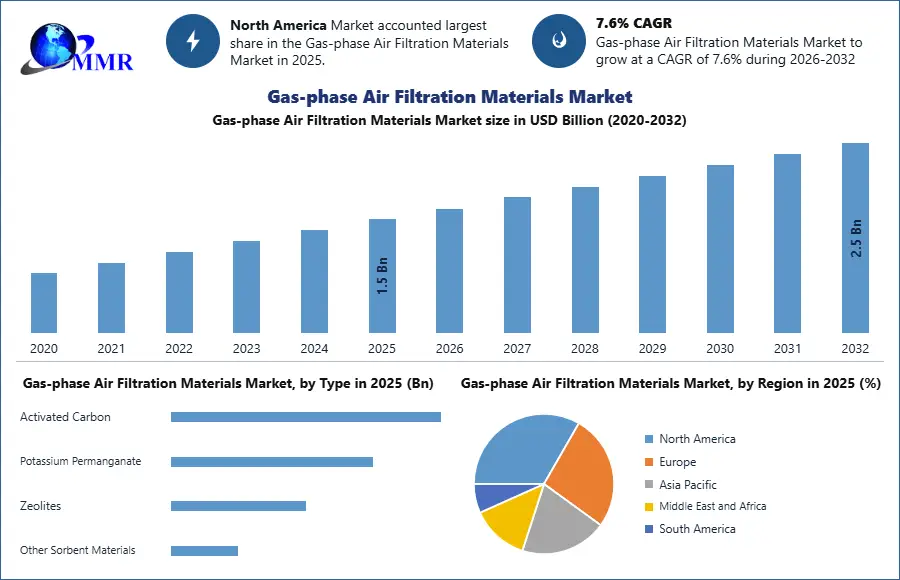
The Gas-phase Air Filtration Materials Market was valued at USD 1.5 Billion in 2025 and is estimated to grow at a CAGR of 7.6% over the forecast period, reaching USD 2.6 Billion by 2032.
The global Gas-phase Air Filtration Materials Market report is a comprehensive analysis of the industry, market, and key players. The report has covered the market by demand and supply-side by segments. The global Gas-phase Air Filtration Materials Market report also provides trends by market segments, Type, and investment with a competitive landscape Polystyrene Grade.
To know about the Research Methodology :- Request Free Sample Report
Global Gas-phase Air Filtration Materials Market Overview:
The Gas-phase Air Filtration Materials Market encompasses materials used to filter harmful gases, chemicals, and pollutants from the air. These materials are vital in industries where high-quality air is crucial for processes such as chemical manufacturing, pharmaceuticals, food production, and HVAC systems in residential, commercial, and industrial applications. Key materials used in gas-phase air filtration include activated carbon, zeolites, potassium permanganate, and other specialized sorbents. These materials are employed to eliminate volatile organic compounds (VOCs), sulfur compounds, nitrogen oxides, and other harmful gases from industrial exhausts or ambient air.
The growing concern for environmental and human health impacts caused by air pollution has led to increased investments in gas-phase filtration technologies. The gas-phase filtration process is used to target air contaminants that are typically not captured by conventional particle filtration systems. This process, which includes adsorption, chemical reactions, and molecular sieving, is key to maintaining air quality in sensitive environments like laboratories, clean rooms, and industrial sites. The demand for gas-phase air filtration materials is driven by tightening government regulations on air pollution, especially in countries with significant industrial activity, including the U.S., China, and European nations.
Moreover, the rapid urbanization, industrialization, and increased vehicle emissions have escalated the need for advanced air filtration systems in cities worldwide. The global regulatory push for cleaner air, with laws such as the Clean Air Act in the U.S. and the European Air Quality Framework Directive, further fuels the market's growth. Also, technological advancements in filtration materials, such as the development of more efficient and durable adsorbents, are expected to further propel demand. Furthermore, industries such as automotive, food processing, and healthcare are increasingly adopting these technologies to mitigate the effects of pollutants, further supporting the Gas-phase Air Filtration Materials Market.
Gas-phase Air Filtration Materials Market Growth Catalysts
Stringent Environmental Regulations and Standards
One of the primary drivers of the Gas-phase Air Filtration Materials Market is the tightening of environmental regulations and standards globally. Governments around the world have implemented and reinforced stringent air quality standards, pushing industries to adopt advanced air purification technologies, including gas-phase filtration materials. This trend is particularly prevalent in developed nations such as the United States, the European Union, and Japan, where regulations on VOC emissions, hazardous air pollutants (HAPs), and industrial air pollution continue to evolve.
For instance, the Clean Air Act in the U.S. mandates emissions control, which has significantly boosted the demand for air filtration systems capable of capturing gases such as nitrogen oxides, sulfur dioxide, and VOCs. Similarly, European Union standards have also been instrumental in driving air quality management solutions. As air pollution becomes a more pressing concern, particularly in densely populated urban areas, government regulations will increasingly push businesses in manufacturing, chemical, and automotive industries to implement high-efficiency air filtration systems. This results in increased demand for specialized gas-phase air filtration materials.
Growing Industrialization and Urbanization
Industrial growth and urbanization are also substantial catalysts for the Gas-phase Air Filtration Materials Market. The increasing number of industrial facilities, power plants, chemical processing plants, and refineries globally has led to the emission of harmful gases, necessitating the need for effective air filtration systems. Additionally, urbanization has intensified air pollution, especially in rapidly developing regions such as Asia Pacific and the Middle East, where air quality has become a major concern. As these regions expand their industrial and manufacturing capacities, they will see a corresponding rise in the need for gas-phase filtration systems to meet air quality standards. The expansion of smart cities, which focus on sustainable living and environmental protection, also fosters the growth of clean air technologies, which is further driving the demand for these filtration materials.
Increased Focus on Health and Safety Standards
A growing awareness of the health risks associated with air pollution is a significant factor propelling the Gas-phase Air Filtration Materials Market. Poor air quality can cause a range of health problems, including respiratory issues, cardiovascular diseases, and even cancer. As public awareness increases, both consumers and businesses are becoming more conscious of the need for better air quality. In healthcare, for instance, the implementation of cleanroom technology and stringent air quality standards in medical manufacturing processes has contributed to the growing demand for advanced air filtration systems, including gas-phase filters. The increasing focus on worker safety and public health has led to greater demand for air filtration materials that can remove harmful gases from ambient air.
Technological Advancements in Filtration Materials
Technological advancements in the materials used for gas-phase air filtration are also contributing to market growth. The development of high-efficiency sorbents, such as activated carbon, zeolites, and potassium permanganate, has enhanced the effectiveness of gas-phase filters. New advancements, such as the incorporation of nano-materials and graphene, have led to the creation of more efficient and durable filtration systems that are capable of removing a broader spectrum of gases at a faster rate. Additionally, the growth of customizable filtration solutions tailored to meet specific industrial needs further fuels the market, as businesses seek filtration systems that offer optimized performance at reduced costs. The continuous innovation in gas-phase air filtration materials will significantly drive the growth of the market over the forecast period.
Gas-phase Air Filtration Materials Market Limitations
High Initial Investment Costs
One of the significant challenges facing the Gas-phase Air Filtration Materials Market is the high initial investment cost of installing advanced filtration systems. While gas-phase air filtration systems provide long-term savings through improved air quality and compliance with environmental regulations, the upfront costs for equipment, installation, and ongoing maintenance can be prohibitive for small and medium-sized enterprises (SMEs) or businesses operating in regions with limited access to capital. Additionally, the complexity of some systems, particularly in industrial applications, requires specialized installation and operational expertise, further increasing costs. This has created a barrier to adoption in some regions and industries, where cost is a critical factor in decision-making.
Limited Awareness and Adoption in Developing Markets
While the demand for gas-phase air filtration systems is increasing globally, awareness and adoption in developing markets remain relatively low. In regions such as Africa, Southeast Asia, and parts of Latin America, industries are still in the early stages of adopting air filtration technologies. Limited awareness of the long-term benefits of these systems, combined with the high costs of implementation, has slowed the adoption of gas-phase filtration technologies in these markets. However, as these regions continue to industrialize and implement stricter environmental policies, the market for gas-phase air filtration materials is expected to grow. Government incentives and international organizations may also play a significant role in increasing awareness and encouraging adoption in these areas.
Gas-phase Air Filtration Materials Market Opportunities
Emerging Applications in Consumer Products
The growing trend toward cleaner indoor air and safer environments is leading to the adoption of gas-phase filtration materials in consumer products. From household air purifiers to automotive air filtration systems, there is a rising demand for consumer-grade filtration systems that provide effective air purification. Manufacturers can tap into this opportunity by offering compact, cost-effective, and user-friendly solutions for residential and small commercial use. Additionally, with the rise of health-conscious consumers, there is potential for gas-phase filtration materials to be integrated into everyday products such as HVAC systems, refrigerators, and air purifiers. This new segment offers untapped potential for market players.
Expansion in Emerging Markets
Emerging markets, especially in regions like Asia Pacific, the Middle East, and Africa, offer substantial growth opportunities for the Gas-phase Air Filtration Materials Market. With rapid urbanization, industrial growth, and the increase in vehicle emissions, air quality has become a significant concern in these regions. As governments and industries work to meet stricter air quality standards, the demand for gas-phase air filtration materials will continue to rise. Companies that can establish a strong presence in these markets, particularly through local manufacturing and cost-effective solutions, will be well-positioned for long-term success.
Gas-phase Air Filtration Materials Market Trends
Growing Focus on Sustainability and Eco-friendly Products
As environmental concerns continue to grow, there is an increasing demand for sustainable and eco-friendly gas-phase filtration solutions. Manufacturers are focusing on developing filtration materials that are not only effective at removing gases and pollutants but also environmentally friendly. This includes the use of renewable materials, biodegradable filters, and energy-efficient systems. The trend toward sustainability in the Gas-phase Air Filtration Materials Market is likely to accelerate as both consumers and businesses place greater importance on environmental impact.
Integration of Smart Technologies in Air Filtration Systems
The integration of smart technologies in gas-phase air filtration systems is a significant trend shaping the future of the market. The use of sensors, IoT connectivity, and AI-based algorithms in air filtration systems allows for real-time monitoring, predictive maintenance, and improved operational efficiency. These advancements not only enhance the performance of filtration systems but also provide valuable data for businesses and industries to optimize their air quality management. The growing adoption of smart technologies will likely drive the development of more advanced gas-phase filtration materials that are both effective and user-friendly.
Gas-phase Air Filtration Materials Market Segments Analysis
Gas-phase Air Filtration Materials Market Segmentation, by Type
TYPE
- Activated Carbon
- Potassium Permanganate
- Zeolites
- Other Sorbent Materials
In 2025, Activated Carbon was the largest segment in the Gas-phase Air Filtration Materials Market. This dominance was driven by activated carbon's proven efficacy in adsorbing a wide range of gases, including VOCs, sulfur compounds, and ammonia, making it the preferred material for many industrial applications. Activated carbon is highly versatile, and its high surface area allows it to effectively filter harmful gases from both indoor and industrial air. Its established market presence, combined with continued improvements in its formulation and regenerability, ensured its position as the leading material for gas-phase filtration. Furthermore, activated carbon's relatively lower cost and ease of use in both small-scale and large-scale filtration systems helped cement its dominance in 2025.
Gas-phase Air Filtration Materials Market Segmentation, by Region
- North America
- Europe
- Asia Pacific
- Middle East and Africa
- South America
In 2025, North America was the leading region in the Gas-phase Air Filtration Materials Market due to its advanced industrial base, stringent environmental regulations, and high adoption of air quality technologies. The United States, in particular, dominated the market, supported by the implementation of the Clean Air Act and increasing industrial pollution control standards. North America's strong technological infrastructure and high levels of investment in air filtration technologies, especially in commercial and industrial sectors, further solidified its position as the dominant region. Additionally, the growing demand for air purification systems in both residential and commercial spaces contributed to North America's leadership in the market.
Recent Development
January 2025: 3M Company announced the expansion of its air filtration systems designed to meet new global air quality regulations. The new product range, featuring advanced activated carbon filters, aims to provide industrial and commercial customers with more efficient solutions for capturing hazardous gases. This development reflects 3M’s commitment to improving air quality standards while ensuring better performance for gas-phase filtration materials. The expansion is expected to help the company grow its market share and reinforce its leadership position in industrial filtration applications, addressing increasing demand for effective air purification across multiple sectors.
February 2025: Camfil AB introduced a new series of zeolite-based filtration materials for gas-phase filtration. These new materials are designed to improve the adsorption of ammonia and sulfur compounds, which are common pollutants in industrial emissions. This product line extension provides an innovative solution for industries that face regulatory pressure on emissions and air quality. With its focus on enhancing filtration efficiency and sustainability, Camfil aims to further solidify its position in the growing Gas-phase Air Filtration Materials Market, particularly in sectors such as food production, pharmaceuticals, and chemical manufacturing.
March 2025: Purafil, Inc. announced the acquisition of SAAF International, a move that will allow Purafil to expand its presence in the global gas-phase air filtration materials market. The acquisition brings additional expertise in chemical filtration and will enhance Purafil’s product offerings in both industrial and commercial air filtration applications. The merger will also result in a broader product portfolio, increasing the company’s competitive edge and allowing it to meet the growing demand for high-performance air filtration solutions across diverse industries
The objective of the report is to present a comprehensive analysis of the global Gas-phase Air Filtration Materials Market to the stakeholders in the industry. The past and current status of the industry with the forecasted market size and trends are presented in the report with the analysis of complicated data in simple language. The report covers all the aspects of the industry with a dedicated study of key players that include market leaders, followers, and new entrants.
PORTER, PESTEL analysis with the potential impact of micro-economic factors of the market have been presented in the report. External as well as internal factors that are supposed to affect the business positively or negatively have been analyzed, which will give a clear futuristic view of the industry to the decision-makers.
The report also helps in understanding the global Market dynamics, structure by analyzing the market segments and project the global Gas-phase Air Filtration Materials Market size. Clear representation of competitive analysis of key players by Grade, price, financial position, Grade portfolio, growth strategies, and regional presence in the global Gas-phase Air Filtration Materials Market make the report investor’s guide.
Global Gas-phase Air Filtration Materials Market Scope: Inquire before buying
| Gas-phase Air Filtration Materials Market | |||
|---|---|---|---|
| Report Coverage | Details | ||
| Base Year: | 2025 | Forecast Period: | 2026-2032 |
| Historical Data: | 2020 to 2025 | Market Size in 2025: | 1.5 USD Billion |
| Forecast Period 2026-2032 CAGR: | 7.6% | Market Size in 2032: | 2.5 USD Billion |
| Segments Covered: | by Type | Activated Carbon Potassium Permanganate Zeolites Other Sorbent Materials |
|
| by Application | Natural Sorbents Synthetic Sorbents Hybrid Sorbents |
||
| by End User | Industrial Applications Chemical Manufacturing Power Generation Petrochemicals Food Processing Pharmaceuticals Commercial Applications HVAC Systems Offices and Buildings Healthcare and Clean Rooms Transportation |
||
| by Distribution Channel | Direct Sales Distributors and Wholesalers Online Retail Third-party Retailers |
||
Global Gas-phase Air Filtration Materials Market, by Region
North America (United States, Canada and Mexico)
Europe (UK, France, Germany, Italy, Spain, Sweden, Austria, Turkey, Russia and Rest of Europe)
Asia Pacific (China, India, Japan, South Korea, Australia, ASEAN and Rest of APAC)
Middle East and Africa (South Africa, GCC, Egypt, Nigeria and Rest of ME&A)
South America (Brazil, Argentina, Columbia and Rest of South America)
Key Players/Competitors Profiles Covered in the Gas-phase Air Filtration Materials Market Report in Strategic Perspective
- 3M Company
- Honeywell International Inc.
- Camfil AB
- Donaldson Company, Inc.
- AAF International
- Purafil, Inc.
- Filtration Group Corporation
- Freudenberg Filtration Technologies
- Parker Hannifin Corporation
- Atkins Group
- Spectrum Filtration Inc.
- GVS S.p.A.
- Filtration Technologies, LLC
- Air Products and Chemicals, Inc.
- Global Industrial Solutions, Inc.
- Calgon Carbon Corporation
- SAAF International
- Carbon Clean Solutions
- KCC Corporation
- Daikin Industries Ltd.
- Alfa Laval
- Linde Group
- Ball Corporation
- XOS
- Veolia Environnement S.A.
Table of Contents
10.3. Purafil
10.4. Filtration Group Corporation
10.5. Freudenberg Filtration Technologies
10.6. Parker Hannifin Corporation
10.7. Atkins Group
10.8. Spectrum Filtration Inc.
10.9. GVS S.p.A.
10.10. Filtration Technologies
10.11. Air Products and Chemicals
10.12. Global Industrial Solutions
10.13. Calgon Carbon Corporation
10.14. SAAF International
10.15. Carbon Clean Solutions
10.16. KCC Corporation
10.17. Daikin Industries Ltd.
10.18. Alfa Laval
10.19. Linde Group
10.20. Ball Corporation
10.21. XOS
10.22. Veolia Environnement S.A.