
Floating Solar Panels Market- Industry Structure Evaluation, Demand Drivers Analysis, Regional Growth Analysis and Identification, Competitive Positioning Review & Global Market Size Forecast to 2030
Overview
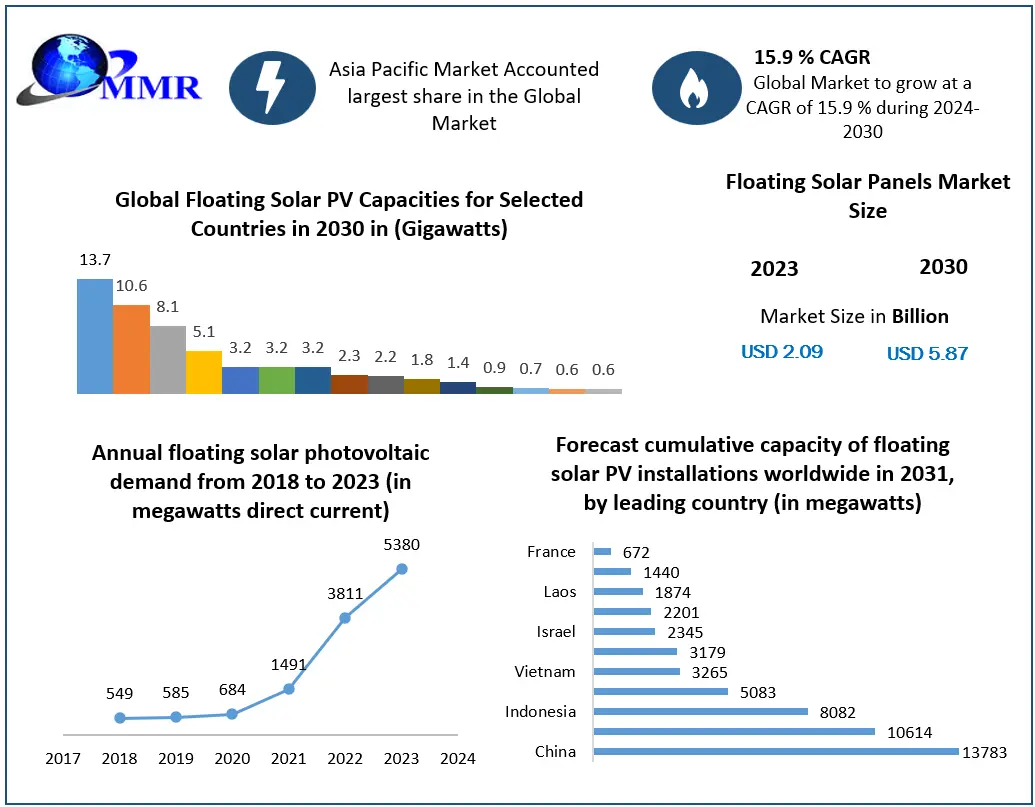
Floating Solar Panels Market was valued at USD 2.09 Bn in 2023 and is expected to reach USD 5.87 Bn by 2030, at a CAGR of 15.9 percent during the forecast period.
Floating Solar Panels Market Overview
Floating solar panels, also known as floating solar farms or floating photovoltaic (FPV) systems, are solar power generation facilities that are installed on bodies of water, such as lakes, reservoirs, ponds, or other water bodies. Instead of being mounted on land or rooftops, the solar panels are positioned on floating structures that are specifically designed to support the solar panels while floating on the water's surface. Floating solar panels are installed on bodies of water without using valuable land resources. This is especially beneficial in densely populated areas where available land is limited. Floating solar Panel technology continues to evolve, with various designs and materials being used for the floating platforms to ensure stability and durability. Research and development are ongoing to optimize the performance and cost-effectiveness of floating solar installations. This form of solar power generation is considered an innovative and sustainable solution for expanding renewable energy capacity while addressing land use challenges.
 To know about the Research Methodology:-Request Free Sample Report
The floating solar panels market has been witnessing substantial growth globally. Countries across Asia, Europe, and North America have been actively adopting floating solar technology to harness solar energy efficiently. Asia-Pacific, particularly countries like China, Japan, and South Korea, has been a key region driving the growth of the floating solar market. These countries have large water bodies and face challenges related to land availability, making floating solar a compelling alternative.
Floating Solar Panels Market Dynamics
Optimal Land Use and Multi-Use Benefits to boost Floating Solar Panels Market growth
Floating solar installations make efficient use of water surfaces, allowing for dual land use. By deploying solar panels on bodies of water, valuable land are preserved for other purposes, such as agriculture, urban development, or conservation. This multi-use benefit makes floating solar an attractive option, especially in regions where land use conflicts are a concern. The adoption of floating solar panels is the scarcity of available land for traditional solar installations. In densely populated areas experiencing rapid urbanization, there is limited space for large-scale solar farms. Floating solar panels provide an innovative solution by utilizing water bodies, such as reservoirs and ponds, thus avoiding competition for valuable land resources, which significantly boosts the Floating Solar Panels Market growth. The cooling effect of the water on floating solar panels contributes to increased energy efficiency. Solar panels typically perform better in cooler conditions, and the presence of water helps dissipate heat, preventing the panels from overheating. This improvement in efficiency adds to the overall attractiveness of floating solar installations, as it result in higher electricity generation compared to land-based systems.
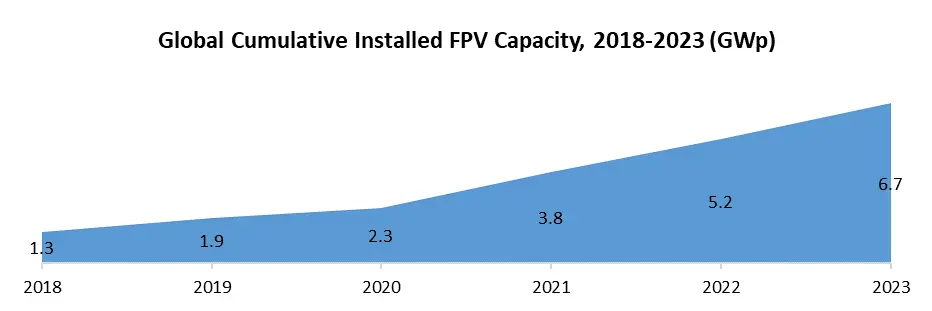
Many governments worldwide are promoting renewable energy as part of their sustainability goals. Incentives, subsidies, and favorable policies have been instrumental in driving the adoption of floating solar panels. Governments recognize the potential of floating solar to contribute to their renewable energy targets while addressing land use issues. Financial support and regulatory frameworks encourage businesses and investors to engage in floating solar projects, which boosts the Floating Solar Panels Market. Ongoing research and development have led to technological advancements in floating solar panel systems. Improved designs, materials, and anchoring systems contribute to the efficiency, durability, and stability of these installations. As technology advances and economies of scale come into play, the costs associated with floating solar projects are expected to decrease, making them more competitive with traditional solar installations. Floating solar panels offer environmental benefits beyond energy generation. They provide shade to the water surface, reducing algae growth and improving water quality. These installations create habitats for aquatic life, contributing to biodiversity conservation. The positive ecological impact enhances the overall sustainability profile of floating solar projects and fuels the Floating Solar Panels Market growth.
High Initial Costs of Installation to restrain Floating Solar Panels Market growth
The upfront costs associated with installing floating solar panels is relatively high compared to traditional land-based solar installations. The cost of floating structures, anchoring systems, and other components specific to water-based installations contribute to a higher initial investment. While the long-term benefits offset these costs, the initial financial barrier is a restraint for some potential investors and project developers. Floating solar installations require specialized engineering and design considerations to ensure stability, durability, and performance. Factors such as water depth, wind and wave conditions, and the specific characteristics of the water body pose technical challenges, which is expected to restrain the Floating Solar Panels Market growth. Addressing these challenges requires expertise in both solar technology and aquatic engineering, adding complexity to project planning and execution. The environmental impact of floating solar panels on aquatic ecosystems is a consideration that needs careful attention. Balancing the benefits of renewable energy with environmental conservation is a challenge that the industry must address to gain wider acceptance and limits the Floating Solar Panels Market growth.
Floating solar panels are susceptible to debris, algae growth, and other forms of fouling that reduce their efficiency over time. Maintenance and cleaning of the panels pose challenges, as accessing the floating platforms on water bodies are more complex than land-based installations. Regular upkeep is essential to ensure optimal performance, and developing cost-effective maintenance strategies is an ongoing concern. Securing the necessary permits and complying with regulatory requirements for floating solar installations is time-consuming and complex. Different regions have varying regulations regarding the use of water bodies for solar projects, and navigating these regulatory landscapes is restraint for project development, which significantly limits the Floating Solar Panels Market growth.
Impact of floating solar panels on the environment:
1. Floating solar panels have both positive as well as negative impacts on the environment.
2. Floatovoltaics help in resisting excessive evaporation from water bodies. They also control the algae bloom, which helps in keeping the water clean.
3. Prolonged usage of floating panels effectively minimize the concentration of greenhouse gasses, which includes carbon dioxide and sulfur dioxide, in the atmosphere.
4. Floating solar panels block a large amount of sunlight over a water body. As a result, underwater plants and algae get affected.
5. Solar photovoltaics contains a heavy metal cadmium telluride.
6. After coming in contact with rainwater, the water gets contaminated with this metal which is not suitable for the organisms of that water body.
Floating Solar Panels Market Segment Analysis
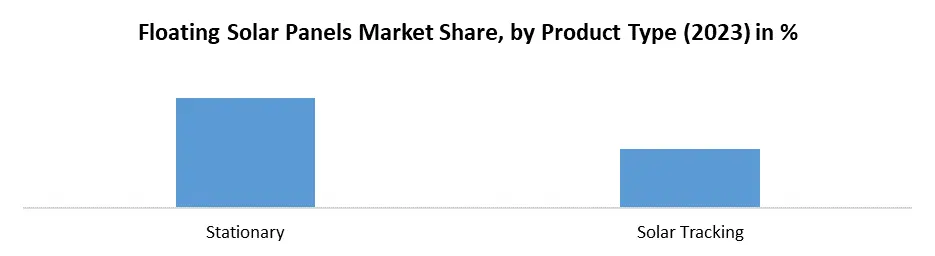
Based on Product Type, Stationary and Solar Tracking. Stationary segment dominated the market in 2023 and is expected to hold the largest Floating Solar Panels Market share over the forecast period. Floating solar panels, also known as floating photovoltaic (FPV) systems, are solar panels mounted on a structure that floats on the surface of a body of water, such as a lake, pond, reservoir, or other water bodies. These systems offer several advantages, including efficient land use, reduced water evaporation, and the potential for increased energy production due to the cooling effect of the water .It refer to floating solar panels mounted on stationary platforms or structures that do not have the ability to move or rotate. In contrast, some floating solar systems use tracking mechanisms to follow the sun's movement throughout the day.
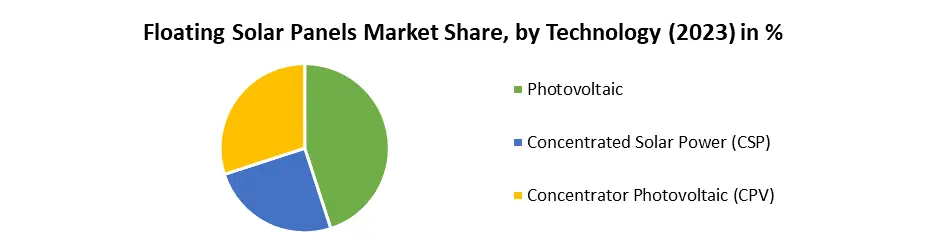
Based on Technology, the market is segment into Photovoltaic, Concentrated Solar Power (CSP), and Concentrator Photovoltaic (CPV). Photovoltaic segment dominated the market in 2023 and is expected to hold the largest Floating Solar Panels Market share over the forecast period. The Photovoltaic (PV) segment uses photovoltaic technology for generating electricity from sunlight on floating structures. Photovoltaic technology involves the direct conversion of sunlight into electricity using semiconductor materials, typically silicon-based solar cells. In the context of floating solar panels, PV technology is employed to harness solar energy while the solar panels are mounted on platforms that float on bodies of water, such as lakes, ponds, reservoirs, or other water surfaces. In this segment, solar panels consist of PV cells that convert sunlight into direct current (DC) electricity. The PV cells generate electrical power when exposed to sunlight, creating a flow of electrons. Floating PV installations vary in size and scale. They are deployed in small water bodies, such as ponds, or in larger installations on reservoirs or artificial lakes, which is expected to boost Floating Solar Panels Market growth. The technology is adaptable to different water conditions.
Floating Solar Panels Market Regional Insight
High Population Density and Land Scarcity to boost Asia Pacific Floating Solar Panels Market growth
Many countries in the Asia-Pacific region, such as China, India, and parts of Southeast Asia, experience high population density and rapid urbanization. This has led to a scarcity of available land for traditional solar installations. The demand for energy in densely populated urban areas has driven the exploration of alternative spaces for solar projects, making bodies of water a viable option. The Asia-Pacific region is characterized by numerous rivers, lakes, and reservoirs. The abundance of water bodies provides ample opportunities for the deployment of floating solar panels, which significantly boosts the Floating Solar Panels Market growth. Governments across the Asia-Pacific region are actively promoting renewable energy as part of their sustainability goals. Incentives, subsidies, and favorable policies have encouraged the adoption of solar energy, including floating solar. Governments in countries such as Japan and India have implemented supportive policies, providing financial incentives and regulatory frameworks to boost the development of floating solar projects, which is expected to boost the Asia Pacific Floating Solar Panels Market growth. The region experiences high energy demand due to rapid economic growth and industrialization. Floating solar presents an opportunity to meet this growing demand for clean energy. Ongoing research and development in floating solar technology have led to advancements that address specific regional challenges, such as typhoons and varying water conditions. Innovations in floating solar designs withstand typhoon conditions have been particularly important for countries in Southeast Asia, where typhoons are common.
The Netherlands leads Europe in floating solar PV, holding 32% of the 48 MW capacity. Despite being a small market, Europe shows positive growth, with large projects expected by 2025, which is significantly expected to boost Europe Floating Solar Panels Market growth over the forecast period. Challenges include grid constraints and higher LCOE, making floating solar PV more costly than rooftop PV.
Global Floating Solar Panels Market, Scope: Inquire before buying
| Global Floating Solar Panels Market | |||
|---|---|---|---|
| Report Coverage | Details | ||
| Base Year: | 2023 | Forecast Period: | 2024-2030 |
| Historical Data: | 2018 to 2023 | Market Size in 2023: | US $ 2.09 Bn. |
| Forecast Period 2024 to 2030 CAGR: | 15.9 % | Market Size in 2030: | US $ 5.87 Bn. |
| Segments Covered: | by Product | Stationary Solar Tracking |
|
| by Location | On-Shore Off-Shore |
||
| by Technology | Photovoltaic Concentrated Solar Power (CSP) Concentrator Photovoltaic (CPV) |
||
| by Capacity | Small-scale (<100kW) Medium-scale (100kW-10MW) Large-scale (>10MW) |
||
Floating Solar Panels Market, by Region
North America (United States, Canada and Mexico)
Europe (UK, France, Germany, Italy, Spain, Sweden, Austria and Rest of Europe)
Asia Pacific (China, South Korea, Japan, India, Australia, Indonesia, Malaysia, Vietnam, Taiwan, Bangladesh, Pakistan and Rest of APAC)
Middle East and Africa (South Africa, GCC, Egypt, Nigeria and Rest of ME&A)
South America (Brazil, Argentina Rest of South America)
Floating Solar Panels Manufacturers include:
Asia-Pacific:
1. Ciel & Terre International (France) (Hong Kong)
2. Sungrow Power Supply Co., Ltd. (China) (Hefei, China)
3. SPIC (State Power Investment Corporation, China) (Beijing, China)
4. Kyocera Corporation (Japan) (Kyoto, Japan)
5. Sharp Corporation (Japan) (Osaka, Japan)
6. SunMan Energy (Australia) (Sydney, Australia)
7. Trina Solar (China) (Changzhou, China)
8. PowerChina (China) (Beijing, China)
Europe:
9. BayWa r.e. (Germany) - Headquarters: Munich, Germany
10. Solaris Synergy (Israel) (Tel Aviv, Israel)
11. DNV GL (Norway) (Oslo, Norway)
12. Statkraft (Norway) (Oslo, Norway)
13. Ciel & Terre Deutschland GmbH (Germany) (Lünen, Germany)
North America:
14. D3Energy (Florida)
15. Floating Solar (United States) (San Francisco, United States)
16. Solaris Power Cells, Inc. (United States) (United States)
17. Infratech Industries (Canada) (Calgary, Canada)
Latin America:
18. Tecnoveritas (Portugal) (Lisbon, Portugal)
Africa:
19. Redavia (Germany) (Munich, Germany)
Global/International:
20. Ocean Sun (Norway) (Oslo, Norway)
21. Floating Power Plant A/S (Denmark) (Copenhagen, Denmark)
Frequently asked Questions:
1: What are floating solar panels, and how are they installed?
Ans: Floating solar panels are solar power facilities installed on bodies of water, such as lakes or ponds, using floating structures. These panels float on the water's surface, preserving valuable land resources and addressing land use challenges in densely populated areas.
2: Which regions are actively adopting floating solar technology?
Ans: Asia-Pacific, particularly China, Japan, and South Korea, has been a key driver in the global growth of floating solar panels. Europe and North America also show substantial adoption, with countries like the Netherlands leading in Europe.
3: How do governments support the adoption of floating solar panels?
Ans: Governments worldwide offer incentives, subsidies, and favorable policies to encourage the adoption of floating solar panels. This support aligns with sustainability goals and helps address land use issues.
4: What role does technology play in the growth of floating solar projects?
Ans: Ongoing research and development lead to technological advancements in floating solar panel systems, improving efficiency, durability, and stability. As technology advances, costs associated with floating solar projects are expected to decrease.
5: How does the choice between stationary and solar tracking impact the market?
Ans: The stationary segment dominates the market, offering advantages like efficient land use and reduced water evaporation. Solar tracking allows panels to follow the sun's movement but is not as prevalent in the market.