
ENT (Ear, Nose, and Throat) Devices Market – Industry Structure Evaluation, Demand Drivers Analysis, Regional Growth Analysis and Identification, Competitive Positioning Review & Global Market Size Forecast to 2030
Overview
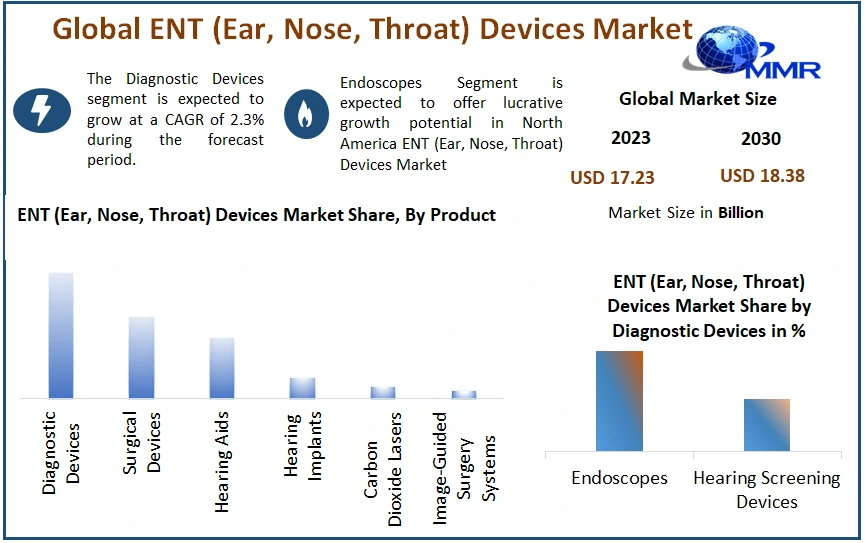
The ENT (Ear, Nose, and Throat) Devices Market size was valued at USD 17.23 Billion in 2023 and the total ENT (Ear, Nose, Throat) Devices revenue is expected to grow at a CAGR of 6.7% from 2024 to 2030, reaching nearly USD 18.38 Billion by 2030
ENT (Ear, Nose, and Throat) Devices Market Overview:
ENT (Ear, Nose, Throat) devices cover a wide range of medical tools and instruments used in the diagnosis, treatment, and management of conditions affecting the ear, nose, and throat. These devices are crucial in addressing various ENT disorders, including hearing loss, sinusitis, tonsillitis, and laryngeal disorders. Common ENT devices include hearing aids, endoscopes, tympanometers, rhinometers, laryngoscopes, and nasal splints. In recent years, the ENT devices market has witnessed significant advancements driven by technological innovations, such as the integration of digital and wireless technologies into hearing aids, the development of minimally invasive endoscopic procedures, and the introduction of advanced imaging techniques for accurate diagnosis. These innovations have improved patient outcomes, reduced treatment invasiveness, and enhanced the overall efficiency of ENT procedures.
 To know about the Research Methodology:-Request Free Sample Report
The global ENT devices market continues to grow rapidly, fueled by the growing prevalence of ENT disorders, increasing awareness about available treatment options, and rising healthcare expenditure. Additionally, the aging population and the rising demand for personalized healthcare solutions further contribute to market growth. However, regulatory hurdles, reimbursement issues, and high device costs remain prominent in this dynamic healthcare segment. Overall, the ENT devices market presents lucrative opportunities for manufacturers, healthcare providers, and investors, as the demand for effective ENT solutions continues to rise globally. For instance, Northwestern University researchers unveil a wearable detecting voice usage, aiding vocal health for singers, teachers, and politicians. The device, worn on the chest, tracks vibrations during speech or singing, relaying data to a smartphone app via Bluetooth. It monitors amplitude and frequency, crucial for vocal load assessment. Users set thresholds, receiving haptic alerts nearing vocal fatigue, preventing injury. Unlike microphone-based alternatives, this unobtrusive solution prioritizes privacy. Theresa Brancaccio highlights its significance for less-trained singers and vocal-intensive professions like teaching. The innovation addresses the challenge of voice overuse, fostering awareness and injury prevention.
ENT (Ear, Nose, Throat) Devices Market Dynamics:
Continuous innovations in ENT devices Drive Continuous innovations in ENT devices market growth
Continuous innovations in ENT devices, such as minimally invasive surgical tools like endoscopes, drive market growth. For example, the introduction of advanced imaging technologies like high-definition endoscopy systems enables more precise diagnosis and treatment, leading to better patient outcomes and increased demand for such devices. The increasing prevalence of conditions like chronic sinusitis, hearing loss, and throat cancers fuels the demand for ENT devices. With the aging population and lifestyle factors contributing to these disorders, there is a growing need for diagnostic and therapeutic devices such as hearing aids, rhinoscopes, and laryngoscopes. Greater awareness about ENT disorders and available treatment options among patients and healthcare professionals drives market growth.
Educational campaigns and training programs for ENT specialists on the benefits of advanced devices like cochlear implants or balloon sinuplasty systems encourage their adoption, growing the market. Supportive reimbursement policies for ENT procedures and devices incentivize healthcare providers and patients to invest in advanced technologies. For instance, reimbursement coverage for cochlear implantation procedures encourages patients with severe hearing loss to opt for these devices, contributing to market growth. The aging population globally is more prone to ENT conditions such as presbycusis (age-related hearing loss) and vocal cord disorders. Consequently, there's a growing demand for hearing aids, voice prostheses, and other ENT devices tailored to the specific needs of elderly patients, driving market growth. The trend towards outpatient procedures and minimally invasive treatments for ENT conditions promotes the adoption of portable and user-friendly devices.
Devices like portable audiometers and handheld otoscopes facilitate diagnostic evaluations and treatments in ambulatory care settings, enhancing patient convenience and driving market growth. The increasing number of ENT surgeries worldwide, including procedures like tonsillectomy, septoplasty, and tympanoplasty, boosts the demand for specialized surgical instruments and equipment. Advanced devices such as powered surgical tools and navigation systems improve surgical precision and outcomes, stimulating market growth. Strategic collaborations between medical device manufacturers, healthcare institutions, and research organizations drive innovation and market growth in the ENT sector. For example, partnerships between ENT specialists and device companies facilitate the development of customized solutions like 3D-printed nasal implants, addressing specific patient needs and increasing market opportunities.
The preference for disposable ENT devices over reusable ones due to infection control concerns and convenience contributes to market growth. Disposable devices like single-use endoscopes and biopsy forceps reduce the risk of cross-contamination and eliminate the need for sterilization, driving their adoption in healthcare facilities and boosting market revenue. The increasing healthcare spending and improving healthcare infrastructure in emerging economies present significant growth opportunities for the ENT devices market. Companies increasing their presence in regions like Asia-Pacific and Latin America capitalize on the growing demand for ENT diagnostics and treatments, driven by rising disposable incomes and awareness about healthcare among the population.
For instance, Sept. 30, 2021, Acclarent, a Johnson & Johnson company, introduced AI-powered ENT technology, enhancing surgical planning and navigation during procedures like endoscopic sinus surgery. The software, comprising TruSeg™ and TruPath™ for TruDi® Navigation System, employs machine learning to streamline preoperative planning and provide real-time guidance. With over 30 million U.S. adults diagnosed with sinusitis annually, this innovation aims to improve outcomes. TruDi, launched in 2018, offers 3D guidance and anatomical mapping. TruSeg ensures precise labeling of anatomical structures, while TruPath calculates optimal paths. Dr. Ebert underscores its potential for safe, minimally invasive solutions. Acclarent present insights at upcoming ENT meetings, highlighting advancements in image-guided procedures.
High Costs Associated with Advanced Technologies Challenges Provoking Growth in the ENT Devices Market
Stringent regulatory processes, exemplified by the arduous FDA clearance for new ENT devices, pose a substantial hurdle for market growth, delaying product launches and inflating development costs. Inadequate reimbursement policies, particularly for essential devices like hearing aids or cochlear implants, restrict patient access due to financial barriers, constraining market growth. The high costs associated with advanced technologies, such as laser systems or robotic-assisted platforms, deter healthcare facilities from investing, impeding adoption and market growth. Limited awareness among patients and professionals about the latest ENT advancements, along with technological complexity and integration challenges, further hinder market growth. Competition from alternative therapies and resistance to change among physicians also play roles, while economic downturns and concerns over patient safety, coupled with global supply chain disruptions, add additional of restraint to the ENT devices market.
Evolving Landscape Of Ear, Nose, And Throat (Ent) Devices Boost the Market Grtowth
In the rapidly evolving landscape of Ear, Nose, and Throat (ENT) devices, several growth factors emerge, driven by technological advancements, demographic trends, and growing healthcare infrastructure. Firstly, the increasing prevalence of ENT disorders, such as chronic sinusitis and hearing loss, presents a significant growth opportunity for manufacturers of diagnostic and therapeutic devices. With aging populations worldwide and lifestyle factors contributing to these conditions, there's a growing demand for innovative solutions like advanced hearing aids, sinus endoscopes, and laryngeal implants. Additionally, the rise in disposable ENT devices market offers opportunities for companies to capitalize on infection control concerns and convenience preferences, with single-use endoscopes and biopsy forceps gaining traction due to reduced risk of cross-contamination and ease of use.
The growth of emerging markets presents substantial growth opportunities for ENT device manufacturers. As developing economies invest in healthcare infrastructure and experience rising disposable incomes, there's an increasing demand for ENT diagnostics and treatments. Companies growing their presence in regions like Asia-Pacific and Latin America stand to benefit from this growth, catering to the needs of a burgeoning patient population. Moreover, strategic collaborations and partnerships between device manufacturers, healthcare institutions, and research organizations foster innovation and market growth. For example, joint ventures to develop customized solutions like 3D-printed nasal implants address specific patient needs and enhance market competitiveness.
The shift towards outpatient procedures and minimally invasive treatments for ENT conditions creates opportunities for portable and user-friendly devices. Portable audiometers and handheld otoscopes enable diagnostic evaluations and treatments in ambulatory care settings, enhancing patient convenience and driving market growth. Similarly, advancements in telemedicine and remote patient monitoring technologies open new avenues for delivering ENT care, especially in underserved rural areas or during public health crises like the COVID-19 pandemic. These technologies enable virtual consultations, remote diagnostics, and treatment monitoring, increasing access to ENT services and devices.
The growing adoption of artificial intelligence (AI) and machine learning in ENT devices presents promising opportunities for improving diagnostic accuracy and treatment outcomes. AI-powered software for image-guided procedures, like endoscopic sinus surgery, enhances surgical planning and navigation, reducing the risk of complications and improving patient outcomes. For instance, the introduction of AI algorithms in ENT navigation systems provides real-time feedback and assists surgeons in identifying anatomical structures with precision, contributing to safer and more efficient procedures.
The emphasis on patient-centered care and personalized medicine drives the development of customized ENT devices tailored to individual patient needs. For example, advancements in 3D printing technology enable the production of patient-specific implants and prostheses for reconstructive surgery or vocal cord restoration. Custom-fit hearing aids and cochlear implants enhance comfort and performance, improving patient satisfaction and driving market demand. Additionally, the integration of wearable technology with ENT devices offers opportunities for continuous monitoring and personalized interventions for managing chronic conditions like tinnitus or sleep apnea. The increasing awareness and education about ENT disorders and treatment options among patients and healthcare professionals contribute to market growth. Educational initiatives, training programs, and awareness campaigns raise awareness about the benefits of early diagnosis and timely intervention for ENT conditions, driving demand for diagnostic devices and treatments. Overall, the ENT devices market is poised for significant growth, fueled by technological innovation, demographic trends, and evolving healthcare delivery models.
Table: Key Players in the ENT Devices Market
| Company | Description |
| Medtronic plc | A global leader in medical technology, offering a wide range of ENT devices including surgical instruments, implants, and navigation systems. |
| Cochlear Limited | Known for cochlear implant systems, Cochlear provides hearing solutions for individuals with hearing loss, offering cochlear implants, bone conduction implants, etc. |
| Olympus Corporation | Manufacturer of medical and surgical equipment, offering a comprehensive range of ENT devices such as endoscopes, cameras, and surgical instruments. |
| Stryker Corporation | Focuses on innovation in ENT devices, providing powered surgical instruments, navigation systems, and sinus dilation devices for improved surgical outcomes. |
| Karl Storz GmbH & Co. | Offers endoscopic equipment and instruments for ENT procedures, including endoscopes, cameras, light sources, and surgical instruments. |
| GN Store Nord A/S | A major player in the hearing aid market, GN Store Nord provides hearing solutions through brands like ReSound and Beltone, offering a variety of hearing aids. |
| Smith & Nephew plc | Offers a range of ENT devices for rhinology and otology procedures, including nasal splints, sinus irrigation systems, and tympanostomy tubes. |
| William Demant Group | Provides a comprehensive range of ENT devices through brands like Oticon Medical and Interacoustics, offering cochlear implants, bone-anchored hearing systems, etc. |
| Atos Medical AB | Specializes in laryngology and voice rehabilitation, offering voice prostheses, tracheostomy tubes, and accessories for laryngectomy patients. |
| Cook Medical LLC | Specializes in minimally invasive medical device technology and has launched its OHNS clinical division, focusing on minimally invasive devices for otolaryngology. |
Competitive Landscape:
1. Jan. 26, 2024, Cook Medical, renowned for its innovative minimally invasive medical devices, has launched a dedicated clinical division focusing on Otolaryngology/Head and Neck Surgery (OHNS). This division aims to extend the benefits of Cook's devices, traditionally used in non-surgical procedures, to a broader range of physicians and patients within the otolaryngology field. Acknowledging the demand for specialized minimally invasive solutions in otolaryngology, Cook OHNS is actively researching and developing alternatives to traditional open surgeries across various ENT specialties. The unveiling of this new clinical division and a selection of its current and upcoming products, including salivary duct access tools and the Hercules® 3 Stage Wire Guided Balloon, took place at the American Academy of Otolaryngology-Head and Neck Surgery (AAO-HNS) conference in Washington.
ENT (Ear, Nose, Throat) Devices Market Scope: Inquire before buying
| Global ENT (Ear, Nose, Throat) Devices Market | |||
|---|---|---|---|
| Report Coverage | Details | ||
| Base Year: | 2023 | Forecast Period: | 2024-2030 |
| Historical Data: | 2018 to 2023 | Market Size in 2023: | US $ 17.23 Bn. |
| Forecast Period 2024 to 2030 CAGR: | 6.7% | Market Size in 2030: | US $ 18.38 Bn. |
| Segments Covered: | by Product | Diagnostic Devices Surgical Devices Hearing Aids Hearing Implants Carbon Dioxide Lasers Image-Guided Surgery Systems |
|
| by Diagnostic Devices | Endoscopes Hearing Screening Devices |
||
| by Surgical Devices | Powered Surgical Instruments Radiofrequency (RF) Handpieces Handheld Instruments Balloon Sinus Dilation Devices ENT Supplies Ear Tubes Voice Prosthesis Devices |
||
ENT (Ear, Nose, Throat) Devices Market, by Region
North America (United States, Canada and Mexico)
Europe (UK, France, Germany, Italy, Spain, Sweden, Austria and Rest of Europe)
Asia Pacific (China, South Korea, Japan, India, Australia, Indonesia, Malaysia, Vietnam, Taiwan, Bangladesh, Pakistan and Rest of APAC)
Middle East and Africa (South Africa, GCC, Egypt, Nigeria and Rest of ME&A)
South America (Brazil, Argentina Rest of South America)
ENT (Ear, Nose, Throat) Devices Market Key Players:
Major Contributors in the ENT (Ear, Nose, Throat) Devices Market in North America:
1. Stryker Corporation (Kalamazoo, Michigan, USA)
2. Cook Medical LLC (Bloomington, Indiana, USA)
3. Johnson & Johnson (New Brunswick, New Jersey, USA)
4. Intersect ENT, Inc. (Menlo Park, California, USA)
Major Leading Player in the ENT (Ear, Nose, Throat) Devices Market in Europe:
1. Medtronic plc (Dublin, Ireland)
2. Karl Storz GmbH & Co. KG (Tuttlingen, Germany)
3. GN Store Nord A/S (Ballerup, Denmark)
4. Smith & Nephew plc (London, United Kingdom)
5. William Demant Holding Group (Copenhagen, Denmark)
6. Atos Medical AB (Hörby, Sweden)
7. Siemens Healthineers AG (Erlangen, Germany)
Major Leading Player in the ENT (Ear, Nose, Throat) Devices Market in Asia Pacific:
1. Cochlear Limited (Sydney, Australia)
2. Olympus Corporation (Tokyo, Japan)
3. Sonova Holding AG (Stäfa, Switzerland)
4. Rion Co., Ltd. (Tokyo, Japan)
FAQ:
1] What segments are covered in the ENT (Ear, Nose, Throat) Devices Market report?
Ans. The segments covered in the ENT (Ear, Nose, Throat) Devices Market report are based on Product, Diagnostic Devices, Surgical Devices, and Region.
2] Which region is expected to hold the highest share in the Global ENT (Ear, Nose, Throat) Devices Market?
Ans. North America region is expected to hold the highest market share in the ENT (Ear, Nose, Throat) Devices market.
3] What is the market size of the Global ENT (Ear, Nose, Throat) Devices Market by 2030?
Ans. The market size of the ENT (Ear, Nose, Throat) Devices Market by 2030 is expected to reach USD 18.38 Billion.
4] What is the forecast period for the Global ENT (Ear, Nose, Throat) Devices Market?
Ans. The forecast period for the ENT (Ear, Nose, Throat) Devices Market is 2024-2030.
5] What was the market size of the Global ENT (Ear, Nose, Throat) Devices Market in 2023?
Ans. The market size of the ENT (Ear, Nose, Throat) Devices Market in 2023 was valued at USD 17.23 Billion.