
Electric Sub-Meter Market by Metering Technology, by Phase, by Connectivity, by Application and Regional Insights 2034
Overview
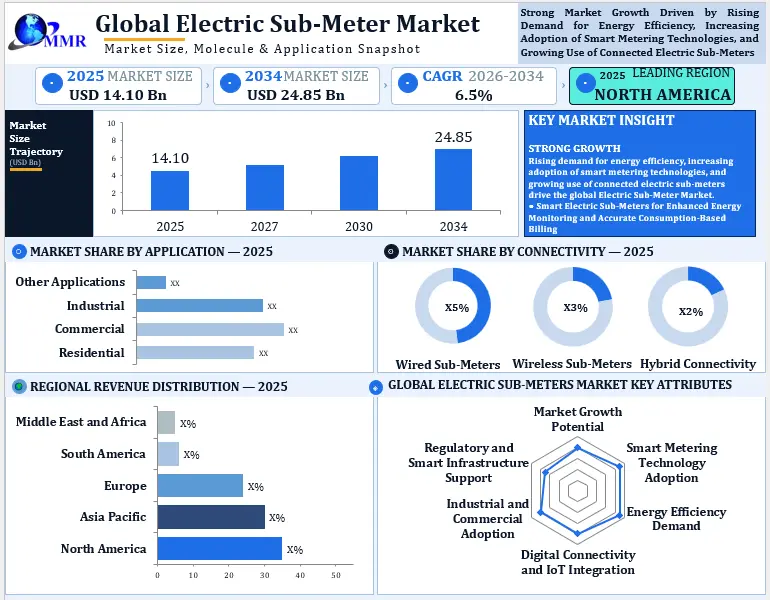
The Global Electric Sub-Meter Market is Valued at USD 14.10 billion in 2025, growing at a CAGR of 6.5% from 2026 to 2034, with a projected market size of USD 24.85 billion by 2034.
Global Electric Sub-meter Market Overview:
Electric submeters are devices that measure, record, and monitor electricity consumption across individual units, equipment, or designated areas within a building or facility. Unlike a main electricity meter that measures the total energy consumption of an entire property, electric submeters provide detailed consumption data for individual apartments, commercial units, industrial equipment, and specific operational areas. These devices enable accurate electricity cost allocation, improve energy monitoring, and support efficient energy management. In multi-tenant residential complexes, commercial buildings, offices, and industrial facilities, electric submeters help property owners and facility managers track individual electricity usage, prepare consumption-based billing, and reduce disputes over energy charges. The growing adoption of smart electric submeters, digital metering technologies, and remote energy monitoring systems further enhances consumption visibility, operational efficiency, and cost control. Increasing emphasis on energy conservation, electricity expense management, smart building infrastructure, and energy efficiency supports the growth of the global electric sub-meter market.
Electric Sub-Meter Market Growth and Share Analysis
To know about the Research Methodology :- Request Free Sample Report
Key Highlights of the Global Electric Sub-meter Market
• Market Growth: The global electric sub-meter market reaches USD 14.10 billion in 2025 and is projected to reach USD 24.85 billion by 2034, registering a CAGR of 6.5% during 2025–2034.
• Growing Smart Meter Adoption: Increasing demand for smart electric sub-meters, IoT-enabled monitoring, remote meter reading, and automated electricity billing supports market expansion across residential, commercial, and industrial facilities.
• Energy Efficiency and Cost Management: Rising demand for accurate electricity consumption monitoring, transparent billing, and efficient energy management strengthens the adoption of electric sub-metering solutions.
• Technological Advancements: Integration of advanced energy analytics, bidirectional metering, multi-circuit monitoring, and connected energy management systems creates opportunities for market growth.
• Competitive Landscape: Leading companies focus on measurement accuracy, smart connectivity, reliable performance, and integration with building management systems to strengthen their positions in the global electric sub-meter market.
Global Electric Sub-meter Market Dynamics:
Global Electric Sub-Meter Market Drivers
Rising Demand for Energy Efficiency and Electricity Consumption Monitoring
Increasing electricity consumption across residential, commercial, and industrial buildings drives demand for electric submeters that support accurate energy monitoring and consumption-based billing. According to the International Energy Agency, global electricity consumption in buildings increases by more than 600 TWh in 2025, highlighting the growing need for effective energy management and electricity monitoring solutions. Electric submeters help property owners and facility managers identify excessive energy consumption, allocate electricity costs accurately, and improve operational efficiency. Growing adoption of smart buildings, energy management systems, and digital metering technologies further supports market demand.
Expansion of Smart Metering Infrastructure and Connected Energy Management
The expansion of smart metering infrastructure creates opportunities for electric sub-meter manufacturers. The International Energy Agency reports that global smart meter installations exceed 1 billion units, demonstrating the widespread adoption of digital electricity measurement technologies. Connected metering systems enable remote readings, real-time consumption monitoring, and improved electricity data management. Integration with the Internet of Things (IoT), building management systems, and automated billing platforms further enhances the value of electric submeters across multi-tenant residential buildings, commercial properties, and industrial facilities.
Global Electric Sub-Meter Market Restraints
High Initial Installation and Integration Costs
The initial costs associated with electric sub-meter installation, electrical infrastructure modifications, communication networks, and monitoring software can limit adoption, particularly among small property owners and budget-conscious facilities. Smart sub-metering systems also require compatibility with existing electrical infrastructure and building management platforms. These requirements can increase installation complexity and extend implementation timelines. In price-sensitive markets, conventional electricity meters remain an alternative when property owners prioritize lower upfront expenditure over advanced monitoring capabilities.
Data Security and Interoperability Challenges
The growing use of wireless communication, cloud-based monitoring, and IoT-enabled electric submeters increases concerns regarding data security, unauthorized access, and system interoperability. Different communication protocols and metering standards can complicate integration with existing energy management systems. Building operators may also face additional costs associated with software upgrades, cybersecurity measures, and maintenance. Addressing these challenges through secure communication technologies, standardized interfaces, and reliable data management systems remains important for wider adoption.
Global Electric Sub-Meter Market Opportunities
Growing Adoption of Smart Buildings and Multi-Tenant Properties
The expansion of commercial real estate, apartment complexes, office buildings, and mixed-use developments creates opportunities for electric sub-meter adoption. Individual electricity measurement allows property managers to allocate energy expenses according to actual consumption rather than shared estimates. This improves billing transparency and encourages tenants to manage electricity usage more efficiently. Demand for digital billing, remote monitoring, and automated facility management further strengthens opportunities for advanced electric sub-metering solutions.
Increasing Investment in Energy Management and Industrial Automation
Industrial facilities increasingly require detailed electricity consumption data to monitor equipment performance, identify energy-intensive operations, and optimize operating costs. Electric submeters support machine-level monitoring, departmental energy accounting, and integration with industrial energy management platforms. The growing use of automated manufacturing systems, data centers, and electrically powered equipment creates additional opportunities for multi-circuit submeters, three-phase submeters, and connected monitoring solutions.
Global Electric Sub-Meter Market Challenges
High Installation Costs and Infrastructure Compatibility
The installation of electric submeters involves expenses related to metering equipment, electrical wiring, communication infrastructure, software integration, and ongoing maintenance. Retrofitting existing residential, commercial, and industrial buildings can require electrical modifications and temporary operational disruptions. These costs create barriers for small property owners and facilities operating under tight budgets. Compatibility issues between conventional electrical systems and advanced digital submeters also increase implementation complexity. Manufacturers need to offer cost-effective, scalable metering solutions that support existing infrastructure while delivering accurate electricity measurement and reliable performance.
Data Security, Privacy, and Interoperability Concerns
The increasing adoption of smart electric submeters introduces challenges related to cybersecurity, data privacy, and interoperability. Connected devices collect detailed electricity consumption data and transmit information through wireless networks, communication gateways, and cloud-based platforms. Inadequate security measures can expose these systems to unauthorized access, data manipulation, and service disruptions. Furthermore, differences in communication protocols, software platforms, and metering standards complicate integration with building management systems and energy monitoring infrastructure. Manufacturers address these challenges through secure data transmission, encryption, standardized communication interfaces, and improved system compatibility.
Global Electric Sub-Meter Market Trends
Growing Adoption of Smart and IoT-Enabled Electric Submeters
The electric sub-meter market increasingly shifts toward smart metering technologies that provide remote monitoring, automated readings, and real-time electricity consumption data. IoT-enabled submeters connect with building management systems, energy management platforms, and digital billing software to improve consumption visibility. These devices reduce dependence on manual meter readings, simplify electricity cost allocation, and help facility managers identify unusual consumption patterns. Integration with wireless communication technologies, mobile dashboards, and cloud-based analytics further supports the adoption of connected electric submeters across residential complexes, commercial buildings, and industrial facilities.
Integration of Advanced Energy Analytics and Automated Billing
Electric sub-meter manufacturers increasingly incorporate advanced data analytics, automated reporting, and digital billing capabilities into metering solutions. These features help property managers compare electricity consumption across individual units, identify energy-intensive equipment, and improve operational cost management. Automated billing systems use submeter readings to calculate electricity charges according to individual consumption, improving transparency in multi-tenant properties. Integration with energy management software also supports consumption forecasting, anomaly detection, and energy-efficiency initiatives. The growing demand for data-driven building operations strengthens the adoption of intelligent electric sub-metering systems.
Increasing Demand for Bidirectional and Multi-Circuit Metering
The expansion of distributed energy resources, rooftop solar installations, battery storage systems, and electric vehicle charging infrastructure increases the need for more advanced electricity measurement. Bidirectional submeters monitor electricity flows in both directions, while multi-circuit submeters measure consumption across multiple electrical circuits using a single monitoring system. These capabilities support energy accounting, load monitoring, and power distribution analysis in commercial buildings, industrial facilities, and modern residential developments. Growing electrification and the integration of distributed energy technologies create opportunities for manufacturers offering flexible, connected, and application-specific electric sub-metering solutions.
Global Electric Sub-meter Market Segment Analysis:
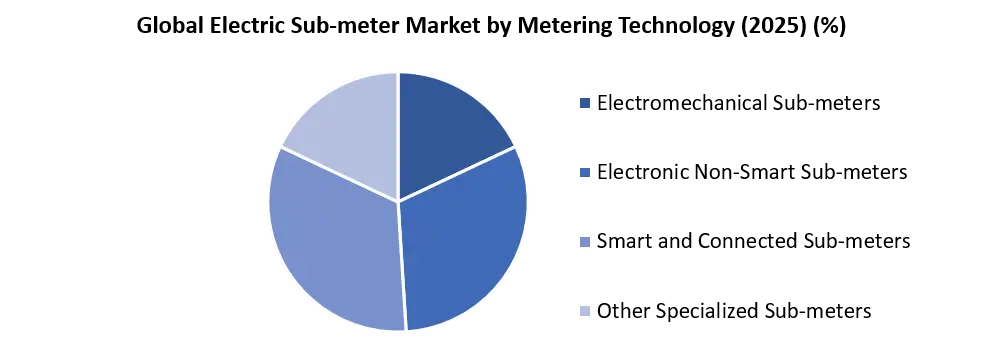
By Metering Technology, The electromechanical sub-meters use mechanical components to measure and record electricity consumption, offering a simple and cost-effective solution for conventional electricity monitoring and billing. Electronic non-smart sub-meters use electronic circuits and digital displays to provide accurate consumption measurements, making them suitable for residential, commercial, and industrial facilities that do not require remote monitoring. Smart and connected sub-meters incorporate advanced digital technology and communication capabilities to enable remote meter reading, real-time electricity monitoring, automated billing, and detailed consumption analysis. Other specialized sub-meters serve specific electricity measurement requirements across commercial and industrial installations, supporting specialized equipment monitoring and operational energy management.
 By Phase, The single-phase sub-meters measure electricity consumption in residential properties, apartments, small offices, and retail outlets where electrical loads are relatively low. They support individual consumption tracking, accurate electricity billing, and efficient energy cost allocation. Three-phase sub-meters are designed for higher-power electrical systems in manufacturing plants, industrial facilities, warehouses, and large commercial buildings. They enable electricity monitoring across machinery, production equipment, and HVAC systems while supporting load analysis, energy management, operational efficiency, and accurate consumption-based billing.
Based on Application, the market is segmented into Residential, Commercial and Industrial.
The residential segment is estimated to hold the biggest market share of xx% by 2025 and it is expected to grow at the significant rate of xx% during the forecast period. Smart electric metres installed in residential areas can assist consumers in monitoring, normalising, and reducing their consumptions from the grid and generators, as well as further integrating their consumptions from renewable energy sources such as solar installations, thereby reducing consumption of fossil fuels.
Global Electric Sub-meter market Regional Insights:
North America leads the global electric sub-meter market, supported by established smart grid infrastructure, increasing adoption of smart metering technologies, and growing demand for energy consumption monitoring. The United States and Canada drive regional growth through smart building development, industrial automation, and electricity cost management. Rising demand for accurate tenant billing, real-time energy monitoring, and energy efficiency solutions further strengthens market expansion.
Asia Pacific experiences strong growth in the electric sub-meter market, driven by rapid urbanization, expanding residential and commercial infrastructure, and increasing investments in smart electricity metering. China, India, Japan, and South Korea support demand through industrial development, smart city projects, and electricity network modernization. Growing adoption of digital sub-meters, IoT-enabled monitoring, and energy management systems creates further opportunities.
Europe maintains significant demand for electric sub-meters through energy efficiency initiatives, building modernization, and increasing emphasis on transparent electricity billing. Germany, the United Kingdom, France, and Italy support regional adoption across residential buildings, commercial properties, and industrial facilities. Growing investments in smart buildings, digital energy monitoring, and sustainable infrastructure encourage the adoption of advanced sub-metering solutions.
South America experiences increasing demand for electric sub-meters as urban infrastructure expands and businesses focus on electricity cost control. Brazil and other developing markets support adoption through commercial construction, industrial modernization, and improvements in electricity monitoring systems. Growing awareness of energy efficiency and consumption-based billing creates opportunities for digital and smart sub-meter installations.
The Middle East and Africa market develops through investments in commercial infrastructure, residential complexes, industrial facilities, and smart city projects. Countries such as the United Arab Emirates, Saudi Arabia, and South Africa support demand for electricity monitoring and energy management solutions. Increasing adoption of smart buildings, digital metering technologies, and efficient electricity billing systems contributes to regional market growth.
Global Electric Sub-meter Market Competitive Landscape
The global electric sub-meter market features a competitive mix of established electrical equipment manufacturers, smart metering technology providers, and specialized meter producers. Competition centers on measurement accuracy, product reliability, pricing, connectivity, and integration with energy management systems. Companies strengthen their market positions by offering solutions for residential buildings, commercial properties, industrial facilities, and multi-tenant developments.
Technology and Product Differentiation: Leading companies focus on developing digital and smart electric sub-meters with real-time monitoring, remote meter reading, automated billing, and data analytics capabilities. Integration with building management systems and IoT-enabled energy monitoring platforms helps customers improve electricity consumption visibility and cost allocation.
Global Leaders and Specialized Competitors: Established companies such as Schneider Electric, Siemens AG, ABB Ltd., Honeywell International Inc., and Itron Inc. compete through broad product portfolios, advanced metering technologies, and established distribution networks. Other significant participants, including Landis+Gyr, Eaton Corporation, Leviton Manufacturing Co., Inc., and Kamstrup, contribute through specialized metering products and energy monitoring solutions.
Regional Competition and Market Expansion: Manufacturers compete by adapting products to regional electrical standards, customer requirements, and pricing expectations. Asian manufacturers, including Wasion Group Holdings, Hexing Electrical Co., Ltd., and Zhejiang Chint Instrument & Meter Co., Ltd., strengthen competition through manufacturing capabilities and regional distribution networks. Growing demand for smart buildings, energy efficiency, and transparent electricity billing encourages companies to expand their smart sub-meter portfolios and strengthen customer support.
Overall Competitive Outlook: Competitive advantage increasingly depends on combining accurate electricity measurement with smart connectivity, user-friendly monitoring platforms, cost-effective installation, and dependable technical support. Manufacturers that address the requirements of residential, commercial, and industrial customers are well positioned to capture opportunities in the evolving electric sub-meter market.
Global Electric Sub-meter Market Recent Developments
| Date | Company | Development | Impact |
| April 6, 2026 | Leviton Manufacturing | Introduces the VerifEye Series 2500 Submeter, supporting single-phase, two-phase, and three-phase applications with programmable configuration and diagnostic features. | Simplifies installation, improves monitoring reliability, and expands applications across commercial and industrial buildings. |
| May 20, 2026 | DENT Instruments | Announces the PowerScout FLEX power meter platform with 3, 12, 24, and 48 monitoring-channel configurations and integrated energy monitoring software. | Strengthens scalable electricity monitoring, multi-load measurement, and integration with building automation systems. |
| March 4, 2026 | Salzer | Integrates the Wirepas Certified platform into its smart electricity meters to improve connectivity and network reliability. | Supports reliable meter communication and expands smart metering capabilities across diverse infrastructure environments. |
| March 4, 2026 | Hubbell Incorporated (Aclara) | Announces a two-year smart meter supply agreement with Manila Electric Company for approximately 72,000 meters as part of a broader grid modernization program. | Expands smart metering deployment and supports automated readings, improved billing management, and electricity network monitoring. |
| June 9, 2026 | Adani Energy Solutions | Signs an agreement to acquire IntelliSmart Infrastructure, strengthening its smart metering portfolio with a proposed transaction valued at INR 3,050 crore. | Expands smart metering operations in India and strengthens capabilities in large-scale digital electricity monitoring. |
Global Electric Sub-meter Market Scope: Inquire before buying
| Electric Sub-Meter Market | |||
|---|---|---|---|
| Report Coverage | Details | ||
| Base Year: | 2025 | Forecast Period: | 2026-2034 |
| Historical Data: | 2020 to 2025 | Market Size in 2025: | 14.10 USD Billion |
| Forecast Period 2026-2034 CAGR: | 6.5% | Market Size in 2034: | 24.85 USD Billion |
| Segments Covered: | by Metering Technology | Electromechanical Sub-meters Electronic Non-Smart Sub-meters Smart and Connected Sub-meters Other Specialized Sub-meters |
|
| by Phase | Single-Phase Sub-meters Three-Phase Sub-meters |
||
| by Connectivity | Wired Sub-meters Wireless Sub-meters Hybrid Connectivity Sub-meters |
||
| by Application | Residential Commercial Industrial Other Applications |
||
Global Electric Sub-meter Market, by Region
North America (United States, Canada, and Mexico)
Europe (UK, France, Germany, Italy, Spain, Sweden, Austria, and the Rest of Europe)
Asia Pacific (China, South Korea, Japan, India, Australia, ASEAN, Indonesia, Philippines, Malaysia, Vietnam, Thailand, ASEAN, Rest of Asia Pacific)
Middle East & Africa (South Africa, GCC, Nigeria, Rest of ME&A)
South America (Brazil, Argentina, Rest of South America)
Global Electric Sub-meter Market Key Player:
1. Landis+Gyr
2. Itron Inc.
3. Siemens AG
4. Schneider Electric
5. ABB Ltd.
6. Honeywell International Inc.
7. Kamstrup A/S
8. Sagemcom
9. Leviton Manufacturing Co., Inc.
10. Eaton Corporation plc
11. Hubbell Incorporated
12. Xylem Inc.
13. Wasion Group Holdings
14. Jiangsu Linyang Energy Co., Ltd.
15. Ningbo Sanxing Electric Co., Ltd.
16. Hexing Electrical Co., Ltd.
17. Holley Technology Ltd.
18. EDMI Limited
19. Genus Power Infrastructures Ltd.
20. Secure Meters Ltd.
21. ZENNER International GmbH & Co. KG
22. Shenzhen Clou Electronics Co., Ltd.
23. Shenzhen Techrise Electronics Co., Ltd.
24. Zhejiang Chint Instrument & Meter Co., Ltd.
25. XJ Measurement & Control Meter Co., Ltd.
26. Haixing Electrical Co., Ltd.
27. Zhejiang Wellsun Electric Meter Co., Ltd.
28. Zhejiang Hengye Electronics Co., Ltd.
29. Nanjing Xinlian Electronics Co., Ltd.
30. NuriFlex Co., Ltd.
31. Osaki Electric Co., Ltd.
32. Iskraemeco d.d.
33. Apator SA
34. ZIV Automation
35. Iskra d.d.
36. F&F Filipowski
37. Aichi Tokei Denki Co., Ltd.
38. Mitsubishi Electric Corporation
39. Toshiba Corporation
40. Eastron Electronic Co., Ltd.
Frequently Asked Questions:
1. What is the global electric sub-meter market size in 2025?
Ans. The global electric sub-meter market is valued at USD 14.10 billion in 2025, driven by rising demand for electricity consumption monitoring, energy efficiency, and accurate consumption-based billing.
2. What is the projected CAGR of the global electric sub-meter market through 2034?
Ans. The global electric sub-meter market is projected to grow at a CAGR of 6.5% from 2025 to 2034, supported by smart metering adoption, digital energy monitoring, and energy management requirements.
3. What are the key factors driving the electric sub-meter market?
Ans. Key growth drivers include increasing demand for energy efficiency, smart building infrastructure, remote electricity monitoring, automated billing, and accurate electricity cost allocation across residential, commercial, and industrial properties.
4. Which are the major segments of the global electric sub-meter market?
Ans. The market is segmented by metering technology, phase, connectivity, and application. These categories include smart and connected sub-meters, single-phase and three-phase sub-meters, wired and wireless sub-meters, and residential, commercial, and industrial applications.
5. What are the major trends shaping the global electric sub-meter market?
Ans. Major trends include the adoption of IoT-enabled electric sub-meters, real-time energy monitoring, automated electricity billing, advanced energy analytics, bidirectional metering, and multi-circuit monitoring. These technologies improve energy management and electricity consumption visibility.