
Connected Motorcycle Market Size by Services, Hardware, Network Type, Communication Type, End-user, Region – Revenue Pool Analysis, Margin Structure Assessment, Capital Flow Trends, Competitive Benchmarking & Forecast to 2030
Overview
The Connected Motorcycle Market size was valued at US 98.5 Mn in 2023 and market revenue is growing at a CAGR of 13.7 % from 2023 to 2030, reaching nearly USD 241.97 Mn by 2030.
Connected Motorcycle Market Overview:
The connected motorcycle market is experiencing rapid growth boosted by technological advancements and evolving consumer preferences. These motorcycles leverage IoT, telematics, and Advanced Rider Assistance Systems (ARAS) to offer riders enhanced safety, convenience, and entertainment features. IoT enables real-time data exchange between motorcycles, other vehicles, and infrastructure, while telematics systems gather and transmit vehicle diagnostics and location data for predictive maintenance and insurance benefits. ARAS features such as blind spot detection and collision warnings further improve rider safety by alerting them to potential hazards.
The future of the connected motorcycle market is promising. Developments such as autonomous capabilities, advanced data analytics, enhanced connectivity, and an expanded ecosystem are poised to revolutionize the riding experience. Autonomous capabilities introduce self-driving motorcycles, while advanced analytics provide valuable insights into rider behavior and preferences. Enhanced connectivity facilitates seamless integration with other smart devices and services, while an expanded ecosystem includes partnerships with ride-sharing platforms or smart city initiatives. The Connected Motorcycle Market is on a trajectory of innovation and growth, promising an exciting future for riders across the world.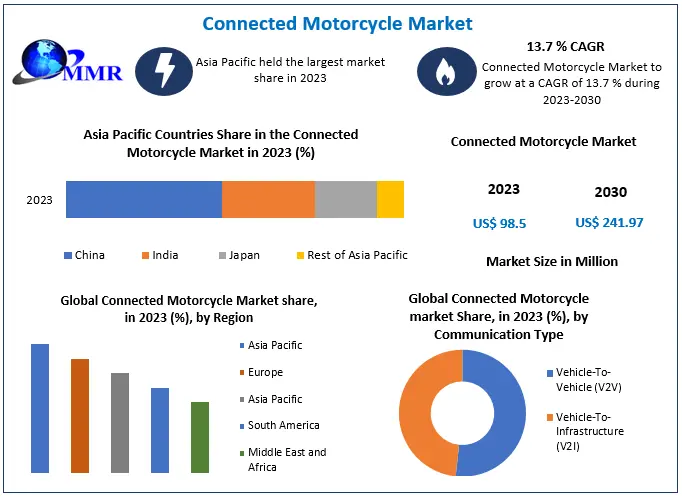 To know about the Research Methodology :- Request Free Sample Report
Connected Motorcycle Market: Dynamics
Driver
Technological Advancements boost the Connected Motorcycle Market Growth
Technological advancements have revolutionized the connected motorcycle market, making it more dynamic and appealing to consumers. The convergence of IoT, AI, and telematics has ushered in a new era of connectivity, transforming motorcycles into smart vehicles with enhanced capabilities. IoT facilitates seamless communication between motorcycles and various devices, enabling real-time data exchange and remote-control functionalities. This connectivity allows riders to remotely access and control features such as ignition, and security systems, and even perform diagnostic checks through smartphone apps or other devices. AI-powered systems imbue connected motorcycles with advanced intelligence, empowering them to offer predictive maintenance alerts, adaptive cruise control for smoother rides, and intelligent navigation systems that optimize routes based on traffic conditions and rider preferences and boost the Connected Motorcycle Market Growth
Telematics systems serve as the backbone of connected motorcycle infrastructure, facilitating the transmission and reception of data. This enables remote diagnostics, vehicle tracking for theft recovery, and emergency assistance services in the event of an accident or breakdown. Also, sensor technology advancements have enabled the integration of critical safety features such as collision detection, blind-spot monitoring, and automatic emergency braking systems, enhancing rider safety and reducing the risk of accidents. These technological innovations not only elevate the riding experience by providing entertainment, navigation, and convenience features but also substantially improve safety, performance, and efficiency. As technology continues to evolve, further breakthroughs in connected motorcycle systems, driving continued growth and adoption in the market and enrich the overall riding experience for enthusiasts across the World.
Connected Motorcycle Market Restrain
Regulatory Hurdles Limit the Connected Motorcycle Market Growth
Regulatory hurdles significantly impede the widespread adoption of connected motorcycles. The variations in regulations across different jurisdictions make it challenging for manufacturers to integrate and deploy connectivity features. Navigating the intricate landscape of safety, privacy, and data protection standards, which vary greatly from region to region, adds complexity. Manufacturers are burdened with extensive testing, certification processes, and compliance measures to meet these regulatory requirements, resulting in increased time and costs. Conflicting or ambiguous regulations further exacerbate the situation, hindering investment and innovation in connected motorcycle technology.
Harmonizing regulations globally simplifies development and deployment, ensuring consistency and interoperability while fostering Connected Motorcycle Market growth. Until such harmonization occurs, regulatory barriers continue to hinder the full realization of the benefits offered by connected motorcycles. While specific regulatory hurdles for connected motorcycles are not readily available, general knowledge suggests the need to establish safety standards, address privacy concerns, and facilitate effective communication among government agencies, transport departments, and manufacturers. The application of UN Regulation No. 155 to motorcycles marks a step towards regulating their safety and performance. Although direct information on regulatory hurdles specifically related to connected motorcycles is limited, it is crucial to consider existing regulatory frameworks and emerging technologies when addressing this issue.
Connected Motorcycle Market Opportunity
E-commerce and On-Demand Services create lucrative growth opportunities for the Connected Motorcycle Market
Connected motorcycles offer a unique platform for e-commerce and on-demand services, revolutionizing how goods are delivered and services are accessed. Manufacturers integrate these motorcycles with third-party apps and services, allowing users to seamlessly order products and request services while on the go. For example, connected motorcycles are utilized for food delivery, parcel delivery, and even ride-hailing services. This integration enhances convenience for consumers by providing faster delivery times and greater accessibility to goods and services. Businesses also benefit from the increased efficiency and flexibility offered by connected motorcycle fleets, enabling them to meet customer demand more effectively and reduce delivery costs.
The real-time tracking and monitoring capabilities of connected motorcycles enhance security and transparency throughout the delivery process, ensuring the safe and timely arrival of goods. Overall, e-commerce and on-demand services represent a lucrative opportunity within the connected motorcycle market, driving innovation and transforming the way products are distributed and services are accessed in urban and rural areas the same.
Connected Motorcycle Market Segment Analysis:
Based On Services: The Info Infotainment sub-segment dominated the Service segment of the Connected Motorcycle Market in the year 2023. The Info Infotainment sub-segment asserts its dominance within the Service segment. This supremacy is underpinned by a fusion of innovative technologies and user-centric features that enhance the riding experience. Info Infotainment systems seamlessly integrate entertainment, navigation, and communication functionalities, Providing to the diverse needs of riders.
These systems offer real-time data updates, intuitive interfaces, and connectivity options, empowering riders with comprehensive information and entertainment on the go. Through intuitive interfaces and seamless connectivity, Info Infotainment systems revolutionize the riding experience, providing riders with enhanced safety, convenience, and entertainment options. At the forefront of technological advancement within the Service segment, the Info Infotainment sub-segment sets the standard for connected motorcycle experiences, driving Connected Motorcycle Market growth and shaping the future of motorcycle connectivity.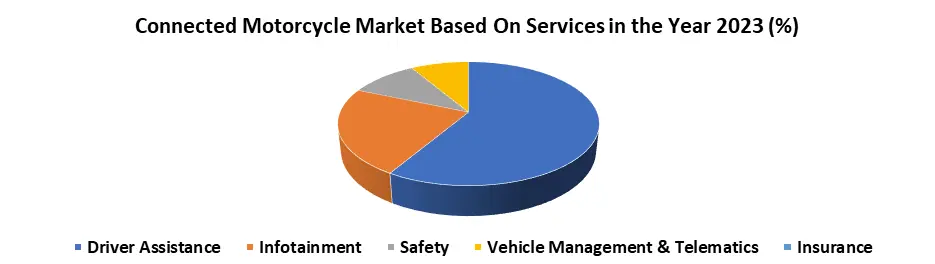
Connected Motorcycle Market: Regional Analysis
Asia Pacific Region dominated the Connected Motorcycle Market in the year 2023. The dominance of the Connected Motorcycle Market in the Asia Pacific region is attributed to the region boasts vast population, particularly in countries such as India, China, and various Southeast Asian nations, presenting a substantial consumer base for motorcycles. With an increasing middle class and rapid urbanization, there is an increasing demand for technologically sophisticated vehicles, including connected motorcycles. Also, Asia Pacific is experiencing significant technological advancements and infrastructure development, facilitating the integration of connected features into motorcycles. This includes progress in telecommunications networks, GPS technologies, and the Internet of Things (IoT), all of which provide the necessary framework for enhanced connectivity in vehicles.
The diverse terrain and traffic conditions prevalent in the region underscore the significance of safety and navigation features offered by connected motorcycles. With congested urban streets and expansive rural areas, riders prioritize features such as real-time traffic updates, navigation assistance, and emergency support systems. The supportive government policies and initiatives aimed at promoting vehicle safety and smart transportation solutions further boost the adoption of connected motorcycle technologies in the Asia Pacific region.
In April 2021, Niu RQI introduced an electric motorcycle tailored for both the Chinese and European markets. This innovation enables real-time ride data analysis. It incorporates an IoT-connected battery pack, a fully digital dashboard, anti-theft GPS tracking, and seamless Bluetooth connectivity.
Similarly, in January 2021, Qianjiang Motor, a renowned two-wheeler manufacturer under Geely's ownership and the parent company of Benelli, unveiled its own electric sports bike. This model showcases a sleek digital TFT instrument panel and Bluetooth capability. Also,users leverage a dedicated app to monitor various aspects of the motorcycle, such as charge levels, performance metrics, and geo-fencing functionalities.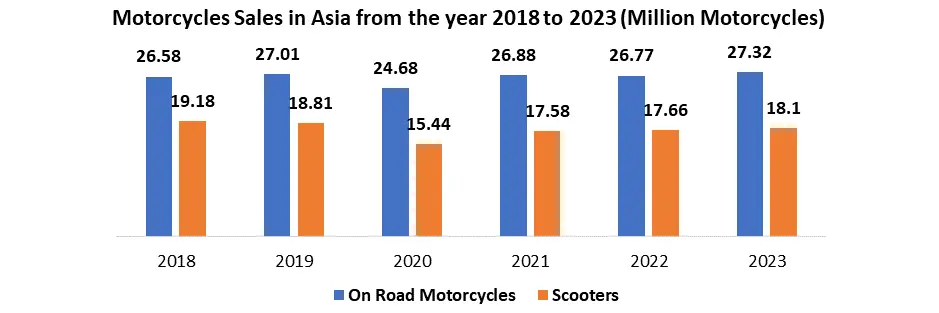
Connected Motorcycle Market Scope : Inquire before buying
| Global Connected Motorcycle Market | |||
|---|---|---|---|
| Report Coverage | Details | ||
| Base Year: | 2023 | Forecast Period: | 2024-2030 |
| Historical Data: | 2018 to 2023 | Market Size in 2023: | US $ 98.5 Mn. |
| Forecast Period 2024 to 2030 CAGR: | 13.7% | Market Size in 2030: | US $ 241.97 Mn. |
| Segments Covered: | By Services | Driver Assistance Infotainment Safety Vehicle Management & Telematics Insurance |
|
| By Hardware | Embedded Tethered |
||
| By Network Type | Cellular V2X (C-V2X) Dedicated Short Range Communication (DSRC) |
||
| by Communication Type | Vehicle-To-Vehicle (V2V) Vehicle-To-Infrastructure (V2I) |
||
| By End-user | Commercial Private |
||
Connected Motorcycle Market by Region
North America (United States, Canada, and Mexico)
Europe (UK, France, Germany, Italy, Spain, Sweden, Austria, and the Rest of Europe)
Asia Pacific (China, South Korea, Japan, India, Australia, Indonesia, Malaysia, Vietnam, Taiwan, and the Rest of APAC)
Middle East and Africa (South Africa, GCC, Egypt, Nigeria, and the Rest of ME&A)
South America (Brazil, Argentina Rest of South America)
Connected Motorcycle Market Key Players
Europe
1. Bosch (Germany)
2. Continental AG (Germany)
3. BMW Motorrad (Germany)
4. Ducati Motor Holding S.p.A. (Italy)
5. Piaggio & C. S.p.A. (Italy)
6. MV Agusta Motor S.p.A. (Italy)
7. Triumph Motorcycles Ltd. (UK)
Asia Pacific
1. Yamaha Motor Co., Ltd. (Japan)
2. Honda Motor Co., Ltd. (Japan)
3. KTM AG (Austria)
4. Suzuki Motor Corporation (Japan)
5. Kawasaki Heavy Industries, Ltd. (Japan)
6. TVS Motor Company (India)
7. Hero MotoCorp Ltd. (India)
8. Royal Enfield (India)
9. Bajaj Auto Ltd. (India)
North America
1. Harley-Davidson, Inc. (USA)
2. Zero Motorcycles Inc. (USA)
3. Polaris Inc. (USA)
Frequently Asked Question:
1] What segments are covered in the Global Consumer IoT (CIoT) Market report?
Ans. The segments covered in the Consumer IoT (CIoT) Market report are based on, Service, Hardware, Network Type, Communication Type, End User, and Regions.
2] Which region is expected to hold the highest share of the Global Consumer IoT (CIoT) Market?
Ans. The Asia Pacific region is expected to hold the highest share of the Consumer IoT (CIoT) Market.
3] What is the market size of the Global Consumer IoT (CIoT) Market by 2030?
Ans. The market size of the Consumer IoT (CIoT) Market by 2030 is expected to reach US$ 241.97 Mn.
4] What was the market size of the Global Consumer IoT (CIoT) Market in 2023?
Ans. The market size of the Consumer IoT (CIoT) Market in 2023 was valued at US$ 98.5 Mn.
5] Key players in the Consumer IoT (CIoT) Market.
Ans. Bosch (Germany), Continental AG (Germany), BMW Motorrad (Germany), Ducati Motor Holding S.p.A. (Italy), Piaggio & C. S.p.A. (Italy)