
Commercial Food Dehydrators Market – Global Market Size, Strategic Growth Drivers, Risk Assessment Framework, Regulatory Landscape Review, Competitive Intensity Mapping & Long-Term Industry Outlook to 2032
Overview
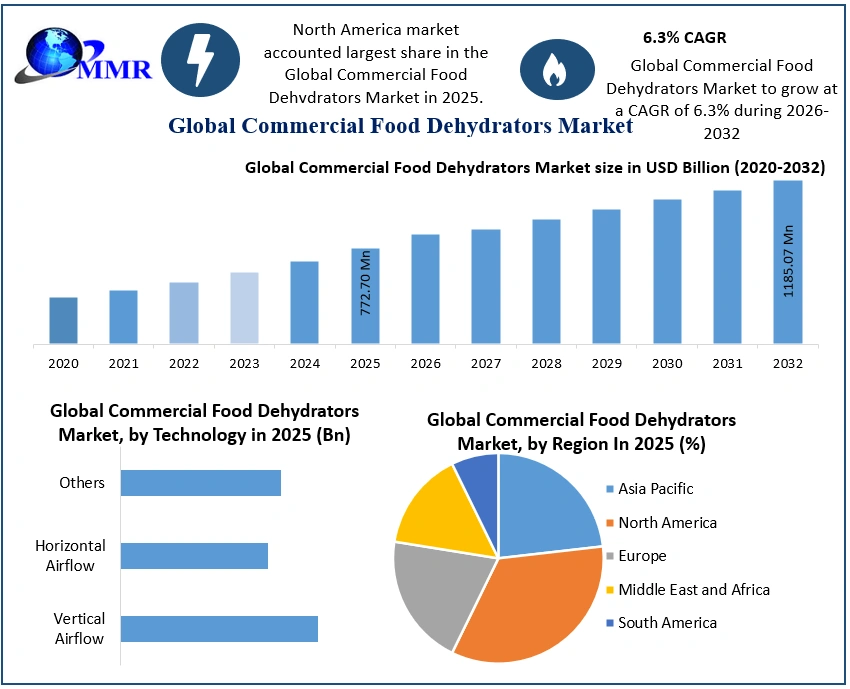
The Commercial Food Dehydrators Market size was valued at USD 772.70 Million in 2025 and the total Commercial Food Dehydrators revenue is expected to grow at a CAGR of 6.3% from 2025 to 2032, reaching nearly USD 1185.07 Million by 2032.
Analysis of the Global Commercial Food Dehydrators Market is done by keeping 2025 as the base year. Though the availability of quantitative data from the year 2025 is insufficient, data from major players and established markets is considered for forecasting the market through 2032. This report has taken historical data from 2025 to 2032 with a focused analysis of the year 2025 to forecast the growth of the Global Commercial Food Dehydrators Market through 2032. Special attention is given to 2025, and the effect of lockdown on different segments of the Global Commercial Food Dehydrators Market is analyzed thoroughly.
 To know about the Research Methodology :- Request Free Sample Report
Global Commercial Food Dehydrators Market Overview:
The increased demand for natural food products by people has resulted in a growth in demand for machinery that fastens the process of drying and preserving them. A Commercial Food Dehydrator is a machine that removes aquatic components from natural food products preventing microbial growth and wastage of natural food products. Commercial Food Dehydrators circulate the warm air to heat the natural food products at the desired temperature without damaging the quality or nutrient content.
Increased preference for low-cost drying of natural food products by the industrial and commercial sectors has resulted in a growth in demand for Commercial Food Dehydrators. A rise in health concerns increased consumption of natural food products, and growing demand for machinery that helps in improving shelf-life of natural food products has resulted in a boom in the Global Commercial Dehydrators Market.
Global Commercial Food Dehydrators Market Dynamics:
Increased preference for organic components in food products, medicine, and cosmetics has resulted in a growth in demand for natural food products. Different factors like spoilage, loss of nutrient content, and low shelf life have resulted in a growth in demand for Commercial Food Dehydrators by the food processing industries. Commercial Food Dehydrators reduce the cost of production by providing a low-cost medium for drying and preserving natural food products. An increase in demand for machinery that reduces inventory cost for the industrial sector has resulted in a growth in demand for Commercial Food Dehydrators.
The rising preference for buying Commercial Food Dehydrators by small and medium industries to reduce the cost of production has resulted in a rising demand for Commercial Food Dehydrators. An increase in preference for purchasing preservative machinery by the industrial and commercial sectors has resulted in a growth in demand for Commercial Food Dehydrators.
A report by FAO published in 2016 states that more than 1.7 Billion tons of natural food products got wasted due to the absence of proper machinery for preservation. The limitations to the natural methods used for preservation have resulted in increased demand for Food Dehydrators. The cost required for using Commercial Food Dehydrator is low and it does the work of drying faster than other mediums used by people. Commercial Food Dehydrator has provided a cost-efficient medium that reduces spoilage of food products and improves the inventory cost.
A report by the World Bank published in 2019 states that more than the US $ 650 Billion worth of fruits and vegetables were traded between countries. The increased preference for the consumption of Natural products throughout the world has resulted in a rise in the number of players importing and exporting natural food products. Food Dehydrators provide an excellent option to these traders to improve the volume of the products as drying reduces the volume of the natural food products.
The rising need for natural food products acts as the major driving factor for the growth of the Global Food Dehydrators Market.
Restraints:
The preference for the traditional methods used for drying by a large number of people is the major restraining factor here.
The high cost of commercial food dehydrators that work on renewable energy sources is limiting the growth of the global commercial food dehydrators market.
Segment Analysis:
By Technology, More than 65% of the Commercial Food Dehydrators present in the market work on the Horizontal Airflow method. Ease in operating and rapid work process has resulted in a 2.1% increase in demand for Commercial Food Dehydrators that work on Vertical Airflow. Different Commercial Food Dehydrators working with different mechanisms are present in the market.
By Energy Source, The rising preference for low-cost and quick to perform food dryers by the commercial sector has resulted in more than 45% market share covered by the Electric Food Dehydrators. Increased environmental awareness has resulted in a 1.6% increase in the demand for Biofuel based and a 1.3% increase in demand for Solar-based Food Dehydrators. Different types of Commercial Food Dehydrators are available in the market.
By End Users, Increased consumption of natural food products and aim to reduce manufacturing cost has resulted in making the HoReCa sector the biggest consumer of the Commercial Food Dehydrators Market. An increase in demand for organic food products has resulted in a 3.1% increase in demand for Commercial Food Dehydrators by the industrial sector. Growth in global trade has resulted in a 1.8% increase in demand for Commercial Food Dehydrators by the Logistics and Supply Chain industry.
An increase in demand for machinery that provides low-cost heating and preserving options has resulted in a 2.1% increase in demand for Commercial Food Dehydrators by the Food & Beverage industry. Growth in the Global foodservice industry has resulted in a 2.4% increase in demand for Commercial Food Dehydrators by the HoReCa sector. Increased preference for supplementary food products made by using organic components has resulted in a 1.7% increase in demand for Commercial Food Dehydrators by the Nutraceutical industry.
The rising preference for vegan cosmetics has resulted in a 1.6% increase in demand for Commercial Food Dehydrators by the Cosmetics industry. The rising preference for traditional and herbal medicines especially in the western countries has resulted in a 1.3% increase in demand for Commercial Food Dehydrators by the Herbal Products industry.
Increased consumption of natural food products around the world has resulted in a 1.5% increase in demand for Commercial Food Dehydrators by the traders dealing in natural food products. Different industries and sectors that deal in natural food products use Commercial Food Dehydrators as per need.
Regional Insights:
Increased health concerns have resulted in a rising demand for natural food products around the world. An Increased industrial consumption of organic products has resulted in a 3.2% increase in demand for Commercial Food Dehydrators in Europe. Increased preference for vegan cosmetics has resulted in a 1.6% increase in demand for Commercial Food Dehydrators by the cosmetics industry present in this region.
Increased preference for functional food products having natural origin has resulted in a 2.8% increase in demand for Commercial Food Dehydrators by the Food & Beverage industry present in North America. The rising consumption of traditional medicine has resulted in a 1.6% increase in demand for Commercial Food Dehydrators by the Herbal Products manufacturing industry present in this region.
Increased demand for the use of advanced machinery by the industrial sector has resulted in a 1.8% increase in demand for Commercial Food Dehydrators in the Asia-Pacific. The increased consumption of supplementary food products has resulted in a 1.5% increase in demand for Commercial Food Dehydrators by the Nutraceutical industry present in this region.
The South American market is showing a growth rate of 2.1%, the reason for which is an increase in the use of modern machinery for drying and preserving by the industrial sector present in this region. The Middle East and Africa’s Market is showing a growth rate of 1.8%, the reason for which is the role of this region as the trade intermediary between the eastern and western hemispheres. Increased preference for the use of modern machinery for drying natural food products has resulted in a 1.3% increase in the purchase of Commercial Food Dehydrators by traders are present in this region.
The objective of the report is to present a comprehensive analysis of the global Commercial Food Dehydrators market to the stakeholders in the industry. The past and current status of the industry with the forecasted market size and trends are presented in the report with the analysis of complicated data in simple language. The report covers all the aspects of the industry with a dedicated study of key players that include market leaders, followers, and new entrants.
PORTER, SVOR, PESTEL analysis with the potential impact of micro-economic factors of the market have been presented in the report. External as well as internal factors that are supposed to affect the business positively or negatively have been analyzed, which will give a clear futuristic view of the industry to the decision-makers.
The report also helps in understanding the global Commercial Food Dehydrators market dynamics, structure by analyzing the market segments and Project the global Commercial Food Dehydrators market size. Clear representation of competitive analysis of key players by product, price, financial position, product portfolio, growth strategies, and regional presence in the global Commercial Food Dehydrators market make the report investor’s guide.
Global Commercial Food Dehydrators Market Scope: Inquire before buying
| Commercial Food Dehydrators Market | |||
|---|---|---|---|
| Report Coverage | Details | ||
| Base Year: | 2025 | Forecast Period: | 2026-2032 |
| Historical Data: | 2020 to 2025 | Market Size in 2025: | USD 772.70 Mn. |
| Forecast Period 2026 to 2032 CAGR: | 6.3% | Market Size in 2032: | USD 1185.07 Mn. |
| Segments Covered: | by Technology | Vertical Airflow Horizontal Airflow Others |
|
| by Energy Source | Electricity Biofuel Solar Others |
||
| by End User | Food & Beverages Industry Nutraceutical Industry Cosmetics Industry Herbal Products Industry HoReCa Sector Food Product Exporters Others |
||
Global Commercial Food Dehydrators Market, by Region:
North America (United States, Canada and Mexico)
Europe (UK, France, Germany, Italy, Spain, Sweden, Austria and Rest of Europe)
Asia Pacific (China, South Korea, Japan, India, Australia, Indonesia, Malaysia, Vietnam, Taiwan, Bangladesh, Pakistan and Rest of APAC)
Middle East and Africa (South Africa, GCC, Egypt, Nigeria and Rest)
South America (Brazil, Argetina and Rest of South America)
Global Commercial Food Dehydrators Market, Key Players
1. The Sausage Maker, Inc.
2. NutriChef Kitchen LLC
3. Buffalo Appliances
4. Avantco Equipment
5. Vitality 4 Life Pty. Ltd.
6. STX International
7. Aroma Housewares Company
8. National Enameling and Stamping Company
9. National Presto Industries, Inc.
10. Tribest Corporation
11. Hamilton Beach Brands Holdings Company
12. Koolatron Corporation
13. Lem Products Holding LLC
14. Excalibur Dehydrator
15. Waring Commercial
16. Kerone Engineering Solutions Ltd.
17. Weston Brands, LLC
FAQ’s:-
1) What will be the market size of the Global Commercial Food Dehydrators Market in 2025?
Ans: The market size of the Global Commercial Food Dehydrators market in 2025 will be USD 772.70 Million.
2) What is the key driving factor for the growth of the Global Commercial Food Dehydrators Market?
Ans: Increased consumption of natural food products around the world act as that major driving factor for the growth of the Global Commercial Food Dehydrators Market.
3) Which type of Commercial Food Dehydrator dominates the market?
Ans: Commercial Food Dehydrators that work on electricity and work on horizontal airflow system covers more than 6.3% of the total share of the Global Commercial Food Dehydrators Market.
4) Which region is the biggest market for Commercial Food Dehydrators?
Ans: The presence of a big food and beverage industry and increased consumption has resulted in making Europe the biggest market for Commercial Food Dehydrators.
5) Which region holds potential to grow at a fast pace in the coming 6 years?
Ans: The presence of a large population and an established foodservice industry has forecasted a double digit growth rate in the region of the Asia-Pacific.