
Collaborative Robotics Market – Industry Structure Evaluation, Demand Drivers Analysis, Regional Growth Analysis and Identification, Competitive Positioning / Landscape Review & Global Market Size Forecast to 2032
Overview
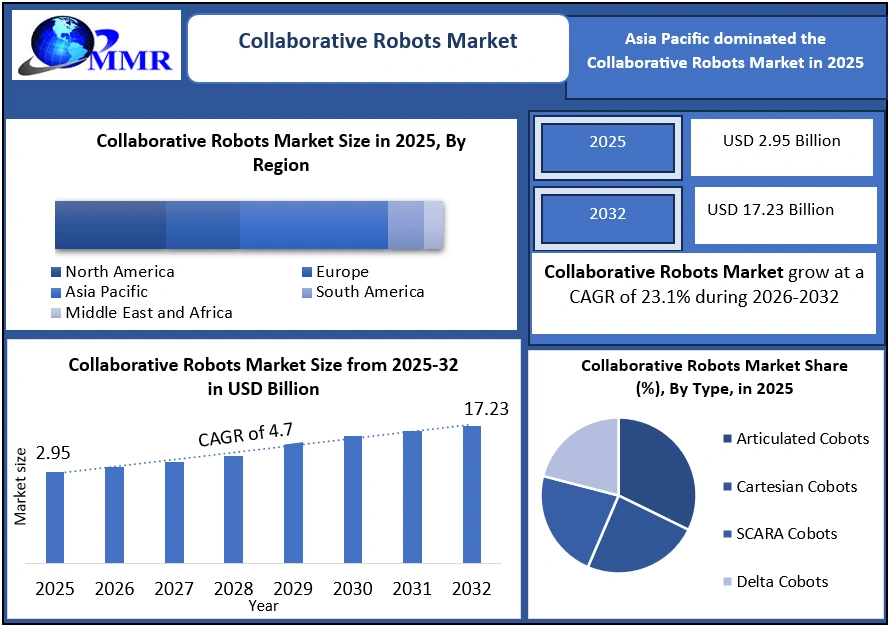
The Global Collaborative Robotics Market is expected to reach USD 2.95 billion in 2025 and USD 17.23 billion by 2032, with a CAGR of approximately 23.1% from 2025 to 2032. This growth is driven by the increasing demand for automation across industries.
Collaborative Robotics Market Overview
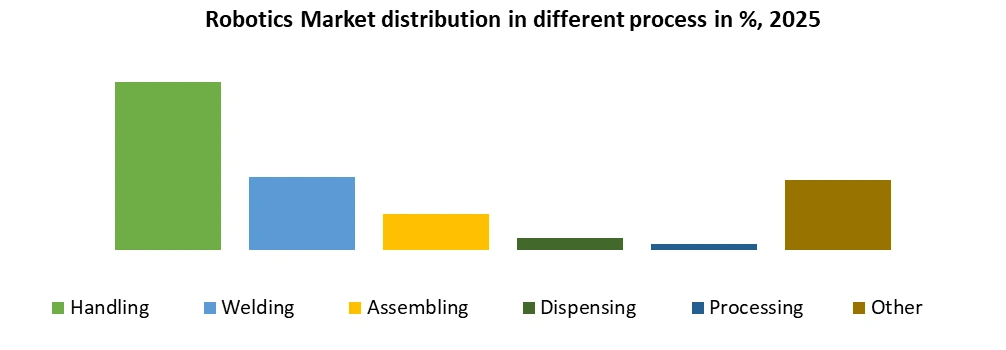
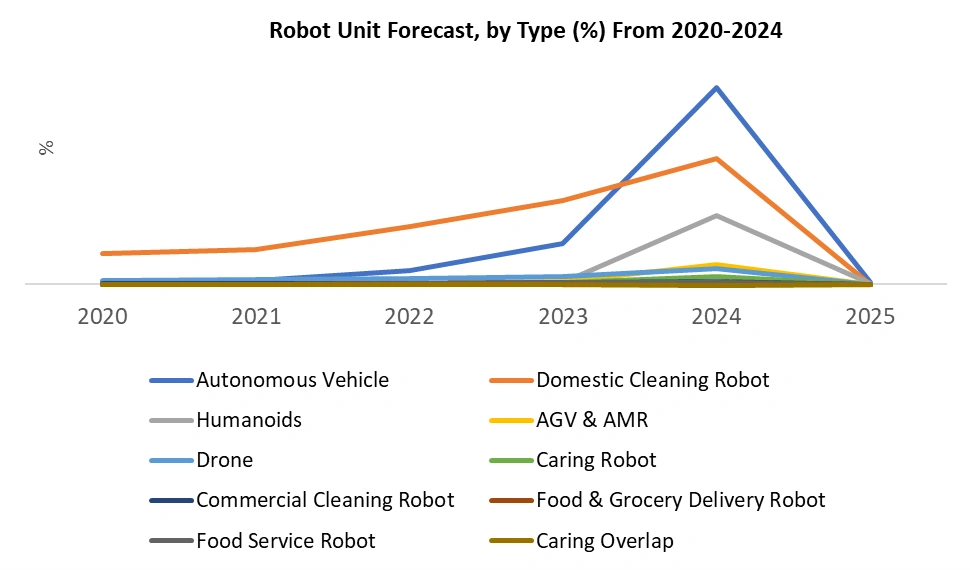
The global industrial robot market, which includes collaborative robots (cobots), had an installed base of 4.28 million robots by the end of 2023. This marks a 10% increase compared to the previous year. In 2024, approximately 542,000 industrial robots were installed globally, continuing a decade-long trend of growth, with Asia accounting for the largest share, representing around 74% of these installations. In contrast, Europe and the Americas captured around 16% and 9%, respectively. The global robot density in manufacturing, measured as robots per 10,000 manufacturing employees, reached 162 units in 2023, a significant increase from 74 units per 10,000 workers in 2016.
To know about the Research Methodology:-Request Free Sample Report
Key Highlights
• 35% increase in cobot adoption in 2024 reflects growing ease of deployment and the appeal of quick ROI, which is commonly achieved with ROI payback of 12–18 months, especially in SME and mid-market implementations.
• 31% growth in cobot shipments in 2025 underscores accelerated cobot adoption tied to smarter technologies such as AI integration, machine vision, and advanced sensors.
• 79% of industrial robots in 2025 include AI features, which correlate with rising cobot use cases across various industries, including automotive manufacturing.
• Over 60% of cobot installations span multiple industries, reflecting wide applicability across sectors such as healthcare, electronics, and logistics.
• In 2025, 48% automotive manufacturer adoption in North America indicates sector-specific uptake supported by safety features and flexibility benefits, key drivers of cobot integration in production environments.
• The integration of AI, machine vision, advanced sensors, and modular designs is a key trend, enabling collaborative robots to perform more complex tasks, adapt quickly to production changes, and interact safely with human workers.
Collaborative Robotics Market Dynamics
Human-Centred Automation with Industry 5.0 Focus
The shift towards Industry 5.0 is transforming collaborative robots (cobots) into human-centric systems. By 2025, AI-integrated cobots are to increase by 35% in small businesses, as cobots evolve to enhance worker collaboration in areas such as personalised production and ergonomic workspaces. Companies adopting cobots for human-centric automation have reported 40% improvement in worker satisfaction and 30% faster production cycles. This human-robot collaboration is driving the adoption of collaborative robots across industries, particularly in automotive, electronics, and food & beverage.
Cobot Hardware & Software Ecosystem Innovations
Innovations in cobot hardware, including AI-powered sensors, modular designs, and adaptive computing platforms, are helping manufacturers reduce downtime by 25% and boost task efficiency by 40%. The increasing integration of AI, machine vision, and modular toolsets is key to cobots adapting to a variety of tasks and rapidly evolving production demands. For example, AI-driven cobots adjust their behaviour in real-time to optimise manufacturing workflows. By 2026, 40% of cobots are expected to feature next-gen AI to improve task precision and speed. This growing hardware and software ecosystem is transforming the Collaborative Robotics Market, enabling cobots to enhance both flexibility and efficiency in complex manufacturing environments.
Collaborative Control & Shared Decision Making
Research into adaptive collaborative control suggests that by 2030, over 25% of cobots will operate under a shared decision-making framework with human workers. This trend allows cobots to not just assist, but actively collaborate, adapting their movements and decision processes based on real-time feedback from human operators. Early pilot programs show that this type of human-robot collaboration leads to a 30% reduction in task completion time, optimising production flow and enabling better collaborative automation in industries like automotive manufacturing and electronics assembly. As shared decision-making frameworks evolve, cobots are set to play a larger role in smart factories and AI-driven automation.
Next-Gen Safety Systems with Advanced Sensors
Next-generation safety systems integrated with thermal imaging, 97% accuracy in human detection, and dynamic collision avoidance are reshaping cobot applications in environments where safety is critical. In 2024, AI-powered cobots equipped with advanced safety sensors helped reduce workplace injuries by 20% in automotive plants, enabling safer human-robot collaboration. This trend is expected to grow by 45% by 2028 as more sectors adopt these enhanced safety protocols, including food & beverage, electronics, and pharmaceuticals. The integration of advanced sensors is not only improving safety but also contributing to efficiency in automated workflows across various industries.
Smart Factory Integration with IoT & Real-Time Data
Collaborative robots (cobots) are becoming a core component of smart factories, integrated with IoT, digital twins, and real-time data analytics. Over 50% of cobot systems in 2025 were connected to smart factory ecosystems, enabling real-time adjustments to production schedules and workflows. This integration allows cobots to optimise performance based on live data, improving efficiency, reducing downtime, and enabling predictive maintenance. Companies report 15–20% cost savings by adopting connected cobots, primarily through predictive maintenance and optimising machine uptime. The rise of AI-driven cobots is enabling factories to become more flexible and adaptive, driving the transition toward Industry 4.0. This technology is critical in sectors such as automotive, electronics, and food & beverage manufacturing, where automation and data integration are key for maintaining a competitive advantage.
Growth of Soft Robotics & Physical Interaction Technologies
Soft robotics, focusing on variable stiffness and compliant actuators, is a rapidly growing field for collaborative robots (cobots). In 2026, it is projected that soft cobots will increase by 18% annually, especially in unstructured environments like food handling and agriculture. These cobots are designed to safely manipulate delicate items and interact physically with humans in a flexible, adaptable manner. The growth of soft robotics is driven by the need for cobots to work in sensitive environments, performing tasks like gripping fragile materials and sorting produce in food processing plants. As industries push toward human-robot collaboration, soft cobots offer a unique advantage in interacting physically with humans while maintaining safety and precision. This growth trend reflects the expanding role of robotics in tasks traditionally too delicate for traditional rigid robots.
Collaborative Robotics Market Segment Analysis:
Dominant Segment: Articulated Cobots
The Articulated Cobots segment held the largest share of the Collaborative Robotics Market in 2025. Their flexibility, range of motion, and high payload capacity make them highly effective in applications requiring multi-axis movement, such as assembly, welding, and painting. Articulated cobots are widely adopted across industries such as automotive, electronics, and metalworking, where complex and dynamic tasks require robots that can perform versatile operations. This flexibility, combined with advanced AI integration, continues to drive their dominance in the market.
Fastest-Growing Segment: SCARA Cobots
The SCARA Cobots segment is the fastest-growing in 2025, driven by the increasing demand for high-speed automation and precision in tasks such as assembly, sorting, and testing. Their compact form factor and efficiency make SCARA cobots ideal for industries like electronics, automotive, and plastics, where speed and accuracy are critical for large-scale production. With rapid adoption in SMEs, especially in applications with space constraints, SCARA cobots are expected to experience substantial growth as businesses seek cost-effective automation solutions for high-volume tasks.
Collaborative Robotics Market Regional Growth:
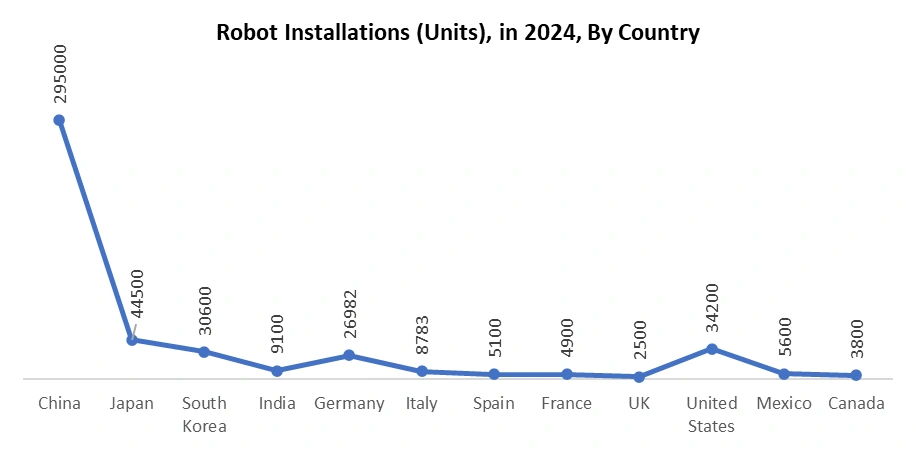
The Asia-Pacific region dominated the Collaborative Robots (Cobots) market in 2025, driven primarily by China, which represents the largest market for industrial robots globally. In 2024, China accounted for 54% of global industrial robot deployments, with 295,000 units installed, marking the highest annual total ever recorded. The region benefits from rapid advancements in automation, a strong manufacturing base, and government support for robotics and industrial transformation.
Recent Development:
In October 2025, Universal Robots expanded its product portfolio with the launch of the UR18, a new collaborative robot featuring an 18 kg payload, a 950 mm reach, and motion speeds up to 4 m/s, targeting logistics, automotive, and food & beverage automation applications. The UR18 combines higher strength and speed with modular safety features to boost throughput and flexibility across industries
In mid‑2025, ABB declared the expansion of its robotics line‑up in China with three new robot families (Lite+, PoWa, and IRB1200), designed for mid‑market automation, including pick‑and‑place and packaging tasks. These robots can be operational within 60 minutes of installation and support speech and demonstration‑based programming, expanding ABB’s footprint in the world’s largest robotics market.
Collaborative Robotics Market Scope: Inquire before buying
| Global Collaborative Robotics Market | |||
|---|---|---|---|
| Report Coverage | Details | ||
| Base Year: | 2025 | Forecast Period: | 2026-2032 |
| Historical Data: | 2020 to 2025 | Market Size in 2025: | USD 2.95 Bn. |
| Forecast Period 2026 to 2032 CAGR: | 23.1% | Market Size in 2032: | USD 17.23 Bn. |
| Segments Covered: | by Type | Articulated Cobots Cartesian Cobots SCARA Cobots Delta Cobots |
|
| by Component | Hardware Software Services |
||
| by Payload Capacity | Up to 5 kg 5–10 kg Above 10 kg |
||
| by Application | Assembly Pick & Place Material Handling Packaging & Palletizing Welding & Soldering Machine Tending Quality Inspection & Testing Dispensing & Gluing |
||
| by End User | Automotive Electronics / Electrical Food & Beverage Pharmaceuticals & Life Sciences Metal & Machinery Plastics, Polymers & Chemical Healthcare Logistics & Warehousing Aerospace |
||
Collaborative Robotics Market, by Region:
North America (United States, Canada, and Mexico)
Europe (UK, France, Germany, Italy, Spain, Sweden, Austria, and the Rest of Europe)
Asia Pacific (China, South Korea, Japan, India, Australia, Indonesia, Malaysia, Vietnam, Taiwan, Bangladesh, Pakistan, and the Rest of APAC)
Middle East and Africa (South Africa, GCC, Egypt, Nigeria, and the Rest of ME&A)
South America (Brazil, Argentina Rest of South America)
Collaborative Robots Key Players
1. Universal Robots A/S (Odense, Denmark)
2. ABB Ltd. (Zurich, Switzerland)
3. FANUC Corporation (Oshino, Japan)
4. KUKA AG (Augsburg, Germany)
5. Yaskawa Electric Corporation (Kobe, Japan)
6. Omron Corporation (Kyoto, Japan)
7. DENSO Corporation (Aichi, Japan)
8. Techman Robot Inc. (Taoyuan, Taiwan)
9. Doosan Robotics Inc. (Suwon, South Korea)
10. AUBO Robotics Technology Co., Ltd. (Beijing, China)
11. Siasun Robot & Automation Co., Ltd. (Shenyang, China)
12. Elite Robot (China)
13. Dobot (Shenzhen Dobot Corp Ltd, China)
14. Elephant Robotics (China)
15. Iplusmobot Technology Co., Ltd. (China)
16. Shenzhen Yuejiang Technology Co., Ltd. (China)
17. Standard Bots (USA)
18. Productive Robotics, LLC (USA)
19. Wyzo (Switzerland)
20. Others
FAQ
1. What factors are driving the growing demand for collaborative robots in manufacturing and other industries?
Answer: The demand for collaborative robots (cobots) is driven by several factors, including the need for flexibility, cost-efficiency, and enhanced safety in workplaces. As industries move towards Industry 4.0, cobots help to bridge labor shortages by performing repetitive and physically demanding tasks, allowing human workers to focus on higher-level functions.
2. How is the adoption of automation and digitalisation in the collaborative robot market impacting operational efficiency and safety?
Answer: The integration of automation and digitalisation in collaborative robots enhances operational efficiency by improving task precision, reducing human error, and speeding up production cycles. Real-time monitoring, predictive maintenance, and AI-enabled learning help optimise the performance of robots, reducing downtime and maintenance costs.
3. What role do environmental regulations play in shaping the design and manufacturing of collaborative robots? Are companies adapting quickly enough to meet stricter standards?
Answer: Environmental regulations, particularly those concerning energy consumption and emissions, are shaping the design of collaborative robots. Manufacturers are focusing on energy-efficient designs, using lightweight materials and implementing sustainable practices to reduce the ecological impact of robots.
4. Which region is expected to collaborative robot demand, and what factors are contributing to this regional growth?
Answer: The Asia-Pacific region, particularly China and India, is expected to grow in the Collaborative Robotics Market over the forecast period. This is due to rapid industrialisation, increased demand for automation in manufacturing, and growing investments in robotics technology. China’s advanced manufacturing sector and its focus on smart factories are key factors contributing to this growth.