
Cinnamon Market Size, Share, Growth & Forecast (2026–2032) | Clean-Label Foods, Plant-Based Dairy & Functional Beverage Trends
Overview
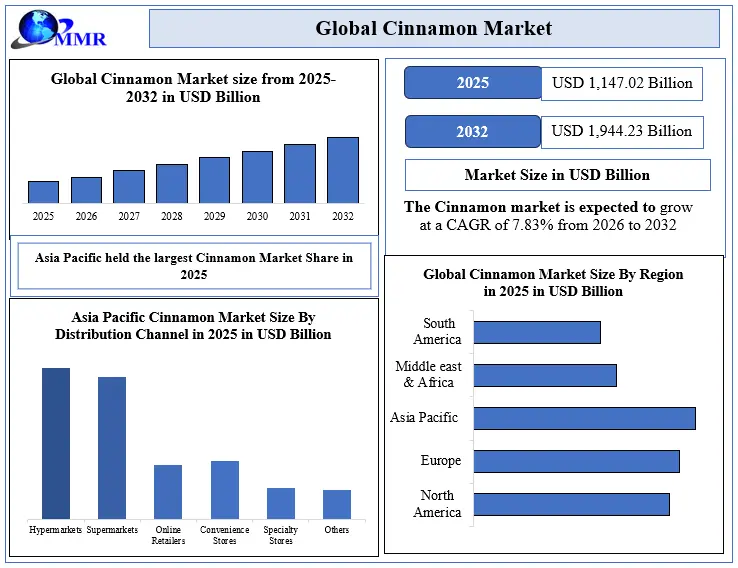
The Global Cinnamon Market is expected to grow from USD 1,147.02 Billion in 2025 to USD 1,944.23 Billion by 2032, at a CAGR of 7.83%, driven by rising demand for clean-label foods, plant-based dairy alternatives, functional beverages, nutraceutical applications, cosmetics & fragrance industries.
Cinnamon Market Overview:
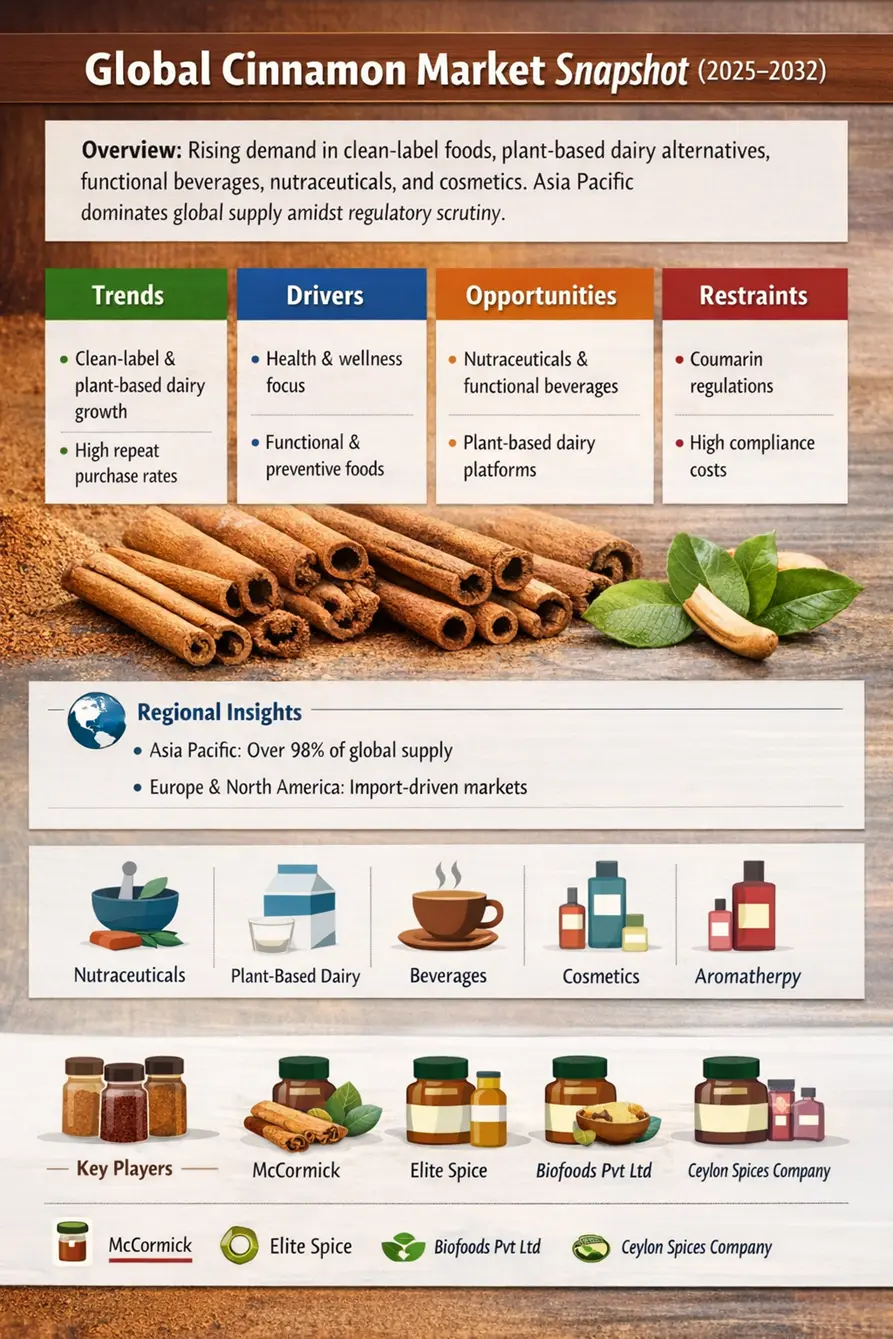
Cinnamon, a natural spice from Cinnamomum species, is increasingly demanded in clean-label foods, plant-based dairy alternatives, functional beverages, nutraceuticals, and cosmetics. Rising consumer health awareness, preference for natural flavouring, and botanical ingredient adoption drive market growth. Regulatory scrutiny on coumarin, Asia Pacific dominance, and fragmented competition among Ceylon specialists, multinational spice brands, and regional processors shape industry dynamics and opportunities.
To know about the Research Methodology :- Request Free Sample Report
Cinnamon Market Dynamics:
Rising demand for natural flavors and functional ingredients is driving the market
The increasing consumer preference for natural, clean-label, and plant-based ingredients is driving the global cinnamon market. Cinnamon is widely used as a flavoring agent in bakery products, beverages, confectionery, dairy products, and savory foods. In addition to its culinary applications, the growing awareness of cinnamon's antioxidant, anti-inflammatory, and antimicrobial properties has expanded its use in nutraceuticals, dietary supplements, and traditional medicines. The rising demand for functional foods and natural food preservatives continues to support market growth.
Fluctuating raw material prices and climate variability are restraining market growth
The cinnamon market is influenced by climatic conditions, agricultural productivity, and fluctuations in raw material prices. Adverse weather events, pest infestations, and changing rainfall patterns in major cinnamon-producing countries can reduce crop yields and affect supply stability. These factors often result in price volatility, impacting manufacturers, exporters, and food processing companies that rely on consistent cinnamon supplies.
Expanding applications in pharmaceuticals, cosmetics, and personal care are creating growth opportunities
The growing use of cinnamon in pharmaceutical formulations, herbal medicines, cosmetics, and personal care products is creating significant growth opportunities for the cinnamon market. Its natural antimicrobial, antioxidant, and fragrance properties make it a valuable ingredient in skincare products, oral care formulations, essential oils, and wellness products. Increasing consumer preference for natural and organic ingredients is further encouraging manufacturers to develop innovative cinnamon-based products.
Supply chain challenges and quality standardization are challenging market expansion
The cinnamon market faces challenges related to supply chain disruptions, inconsistent product quality, and stringent international food safety regulations. Variations in cinnamon species, coumarin content, and processing methods can affect product quality and compliance with import standards. Additionally, ensuring traceability, sustainable sourcing, and adherence to global quality certifications requires continuous investment from producers and exporters, particularly in developing countries.
Global Cinnamon Market Segmentation Analysis:

Key Regulatory Factors Influencing the Global Cinnamon Market:
| Factor | Impact Level | Description |
| Coumarin Threshold in Bakery Products | High | Regulatory authorities have established maximum permissible coumarin limits in bakery and processed food products. Compliance with these limits significantly influences product formulation and export opportunities. |
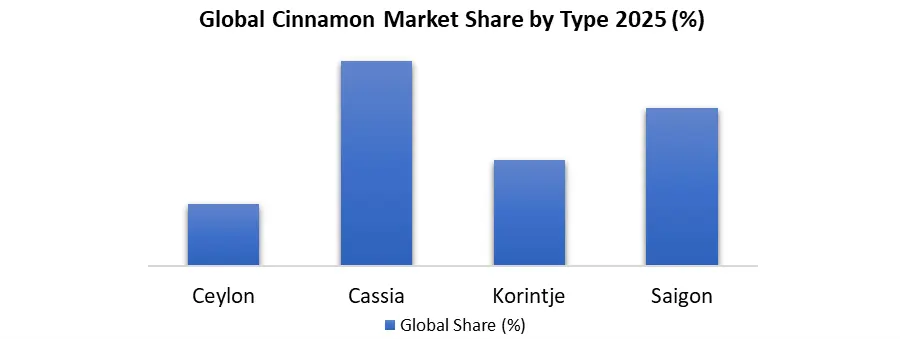
| Coumarin Content in Cassia Cinnamon | High | Cassia cinnamon naturally contains high levels of coumarin, making regulatory compliance more challenging, particularly in markets with stringent food safety standards. |
| Coumarin Content in Ceylon Cinnamon | Low | Ceylon cinnamon contains significantly lower coumarin levels, making it the preferred choice for premium food, beverage, and health product applications requiring strict regulatory compliance. |
| Non-Compliance in Product Testing | High | Products exceeding permissible coumarin limits may face import restrictions, product recalls, or regulatory actions, increasing operational and reputational risks for manufacturers. |
| Supplier Qualification & Compliance Cost | Medium | Manufacturers are investing in supplier audits, quality testing, certification, and traceability systems to ensure compliance with international food safety regulations, increasing operational costs while improving product quality. |
Global Cinnamon Market Regional Insights:
Asia-Pacific
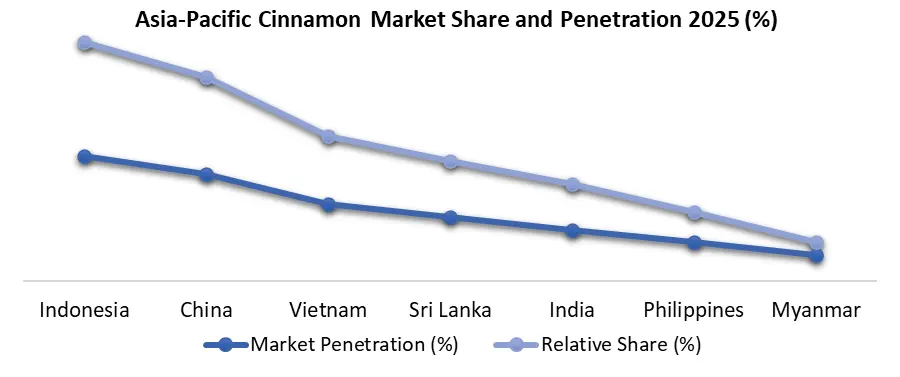
Asia-Pacific dominated the cinnamon market in 2025, accounting for the largest market share due to its strong production, consumption, and export activities. Countries such as China, Indonesia, Sri Lanka, Vietnam, and India are major producers and suppliers of cinnamon, supported by favorable climatic conditions and established spice cultivation practices. The region also benefits from increasing demand from the food and beverage, pharmaceutical, and personal care industries, along with rising exports to Europe and North America.
Europe
Europe held a significant share of the cinnamon market in 2025, driven by high consumer demand for natural spices, organic food products, and functional ingredients. The region's well-established bakery, confectionery, and beverage industries continue to support cinnamon consumption. Additionally, stringent food safety regulations have increased the preference for premium-quality and low-coumarin Ceylon cinnamon across several European countries.
North America
North America accounted for a considerable share of the cinnamon market in 2025, supported by growing consumer preference for clean-label food products, natural flavoring ingredients, and dietary supplements. The United States and Canada are witnessing increasing demand for cinnamon in bakery products, beverages, cereals, and nutraceuticals. Rising awareness of cinnamon's health benefits is further contributing to market growth.
Latin America
Latin America is expected to witness steady growth in the cinnamon market due to increasing consumption of processed foods, bakery products, and traditional beverages. Brazil and Mexico remain the key regional markets, supported by expanding food processing industries, growing retail distribution networks, and rising consumer demand for natural spices and seasonings.
Middle East & Africa
The Middle East & Africa cinnamon market is expected to grow at a moderate pace during the forecast period, driven by the widespread use of cinnamon in traditional cuisine, beverages, and herbal medicine. Increasing urbanization, rising disposable incomes, and growing demand for natural ingredients in food and personal care products are supporting market expansion. Furthermore, expanding imports of premium cinnamon varieties are creating additional opportunities across the region.
Competitive Landscape
The global cinnamon market is moderately fragmented, with leading spice producers, exporters, and ingredient manufacturers competing through product quality, sustainable sourcing, certification, geographic expansion, and value-added product development. Companies are increasingly investing in organic cultivation, traceable supply chains, advanced processing technologies, and premium Ceylon cinnamon offerings to address growing consumer demand for clean-label and high-quality spices. Strategic partnerships with food and beverage manufacturers, expansion of distribution networks, and compliance with international food safety and sustainability standards remain key competitive strategies. For example, companies such as McCormick & Company focus on expanding their premium spice portfolio and strengthening retail distribution, while Olam Food Ingredients emphasizes sustainable sourcing and traceability programs to ensure consistent quality and regulatory compliance. Similarly, Frontier Co-op and Simply Organic continue to expand their portfolio of organic and ethically sourced cinnamon products to meet rising consumer demand.
Cinnamon Market Recent Development
| Month & Year | Recent Development |
| May 2025 | McCormick & Company has expanded its premium cinnamon product portfolio by introducing sustainably sourced cinnamon products to meet the growing demand for clean-label and organic spices. |
| March 2025 | Olam Food Ingredients has strengthened its sustainable spice sourcing initiatives by expanding traceability and responsible procurement programs across its cinnamon supply chain. |
| January 2025 | Kerry Group has introduced new cinnamon-based flavor solutions for bakery, beverage, and functional food manufacturers, supporting the growing demand for natural ingredients. |
| October 2024 | Symrise AG has expanded its portfolio of natural cinnamon extracts and flavor ingredients for food, beverage, and personal care applications. |
| August 2024 | Givaudan has launched innovative cinnamon-derived flavor and wellness ingredients to strengthen its natural product offerings for the global food and beverage industry. |
| June 2024 | Lion Spice has enhanced its export capabilities by expanding the production of premium Ceylon cinnamon to address rising international demand for high-quality and low-coumarin cinnamon products. |
Competitive Landscape
The global cinnamon market is moderately fragmented, with leading spice producers, exporters, and ingredient manufacturers competing through product quality, sustainable sourcing, certification, geographic expansion, and value-added product development. Companies are increasingly investing in organic cultivation, traceable supply chains, advanced processing technologies, and premium Ceylon cinnamon offerings to address growing consumer demand for clean-label and high-quality spices. Strategic partnerships with food and beverage manufacturers, expansion of distribution networks, and compliance with international food safety and sustainability standards remain key competitive strategies. For example, companies such as McCormick & Company focus on expanding their premium spice portfolio and strengthening retail distribution, while Olam Food Ingredients emphasizes sustainable sourcing and traceability programs to ensure consistent quality and regulatory compliance. Similarly, Frontier Co-op and Simply Organic continue to expand their portfolio of organic and ethically sourced cinnamon products to meet rising consumer demand.
Cinnamon Market Scope: Inquire before buying
| Cinnamon Market | |||
|---|---|---|---|
| Report Coverage | Details | ||
| Base Year: | 2025 | Forecast Period: | 2026-2032 |
| Historical Data: | 2020 to 2025 | Market Size in 2025: | USD 1147.02 Bn. |
| Forecast Period 2026 to 2032 CAGR: | 4.5% | Market Size in 2032: | USD 1944.23 Bn. |
| Segments Covered: | by Type | Ceylon Cassia Korintje Saigon |
|
| by Form | Powder Quills Oil Others |
||
| by Application | Essential Oils & Aroma Therapy Beverages Bakery Other Processed Food Pharmaceutical Cosmetics |
||
| by Distribution Channel | Hypermarkets Supermarkets Online Retailers Convenience Stores Specialty Stores Others |
||
innamon Market Scope: Inquire before buyingCinnamon Market Key Players:
1)McCormick & Company, Inc
2) Elite Spice
3) The Ceylon Spice Company
4) Rathna Ceylon Cinnamon
5) Sauer Brands
6) HDDES Group
7) Biofoods Pvt Ltd
8) PURE CINNAMON EXPORTS (PVT) LTD
9) Cinnatopia
10) First Spice Mixing Company Inc
11) SDS Spices
12) Organic Spices Inc.
13) B&G Foods, Inc.
14) The Watkins Co
15) Olam International
16) Penzeys Spice
17) Frontier Co-op.
18) EHL Ingredients
19) Bart Ingredients
20) FUCHS GmbH & Co. KG
21) Ceylon Exports and Trading Pvt Ltd
22) MDH Spices
23) Everest Spices
24) Eastern Condiments Pvt Ltd
25) Aachifoods
26) Indaroma-Inspired by Nature
27) Cassia Co-op
28) Vinasamex
29) Elmar spices
30) Visimex Corporation
Others