
Baby Food Packaging Market Size by Product, Packaging Type, Application, Region – Revenue Pool Analysis, Margin Structure Assessment, Capital Flow Trends, Competitive Benchmarking & Forecast to 2029
Overview
Baby Food Packaging Market size was valued at US$ 66.87 Bn in 2022 and the total revenue is expected to grow at 7.4% through 2023 to 2029, reaching nearly US$ 110.23 Bn. by 2029.
The global Baby Food Packaging market report is a comprehensive analysis of the industry, market, and key players. The report has covered the market by demand and supply-side by segments. The global Baby Food Packaging report also provides trends by market segments, technology, and investment with a competitive landscape.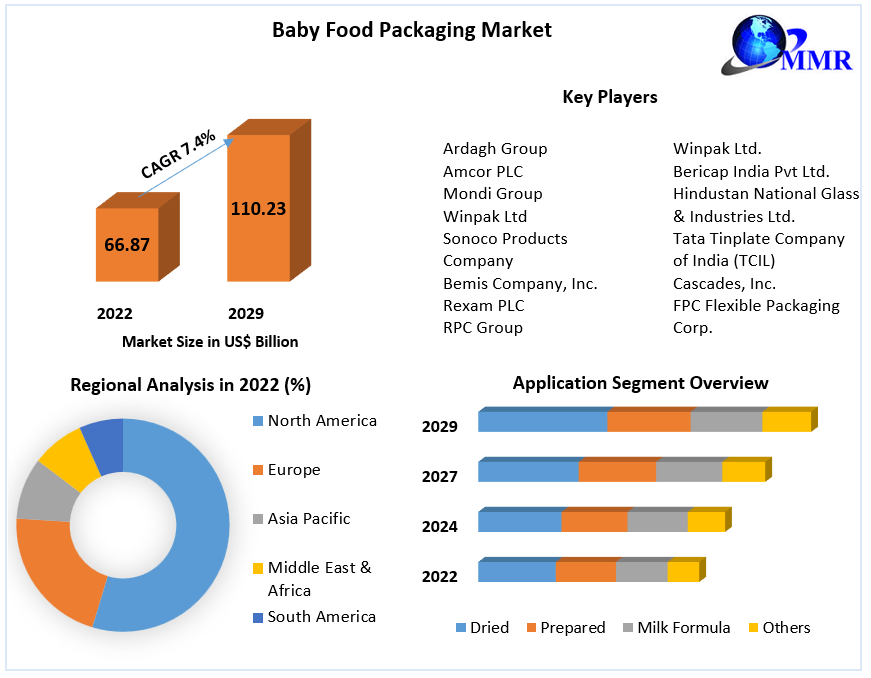 To know about the Research Methodology :- Request Free Sample Report
Baby Food Packaging Market Overview:
Consumers need to be aware of the importance of baby food packaging to protect the packaged food's quality. The infant food packaging business has progressed from glass jars to plastics and other low-cost materials that are easy to keep.
Baby food is packaged in a variety of ways, including folding cartons, metal cans, thin-wall containers, and stand-up pouches, which are ideal for a variety of food kinds including dry, milk formula, prepared, and other baby food. Because of its long shelf life, the demand for stand-up pouches is increasing.
Baby Food Packaging Market Dynamics:
Dynamics:
Some of the key drivers driving the worldwide baby food packaging market include the rising demand for stand-up pouches and thin-wall containers due to their sanitary, lightweight, safe, reusable, and easy-to-carry characteristics. The added benefits of this packaging, such as food freshness and high shelf life, are fueling the growth of the baby food packaging industry.
Furthermore, research and development for the introduction of biodegradable materials such as paper will expand this market's potential opportunities. Teenagers' growing predilection for items packaged in microwaveable plastic tubs and pouches is boosting the market's expansion.
Additionally, continuous product innovation in terms of design and materials is expected to raise demand even further. The industry is projected to see new growth prospects as biodegradable materials, such as paper, are developed.
As a result, the rising demand for paperboard packaging and thin-wall packaging, which is lightweight, easy to use, safe, and reusable is likely to be one of the market's main growth drivers. Furthermore, paperboard packaging's freshness and longer product shelf life are likely to drive up demand in the future years.
Another element driving the demand for packaging solutions is baby food producers' innovations to fulfill the diverse demands of their customers. As a result, businesses have developed green, creative, and recyclable goods to replace traditional packaging.
Restraints:
BPA (Bisphenol A) in baby food packaging, On the other hand is detrimental to newborns and has been outlawed by the governments of the United States, Canada, and numerous European nations.
Baby Food Packaging Market Segment Analysis:
Based on Product, the global baby food packaging market is segmented into metal, glass, rigid plastic, liquid cartons, paperboard packaging, and others. Among all these the rigid plastic segment dominated the market over the forecast period. The rising need for safe and flexible packaging materials is associated with this rise. From 2022 to 2029, the liquid carton category is predicted to develop at the quickest rate, with a CAGR of 7.9%. The continual product advancements in the industry are credited with this rise.
Based on Application, the market is segmented into the dried food, prepared food, milk formula, and others. Due to the increased demand for milk-based baby meals throughout the world, the milk formula application category is likely to lead the worldwide market throughout the forecast period. With the growing newborn nutrition industry, it's clear that demand for nutritious products like milk is rising, which is driving the baby food packaging industry.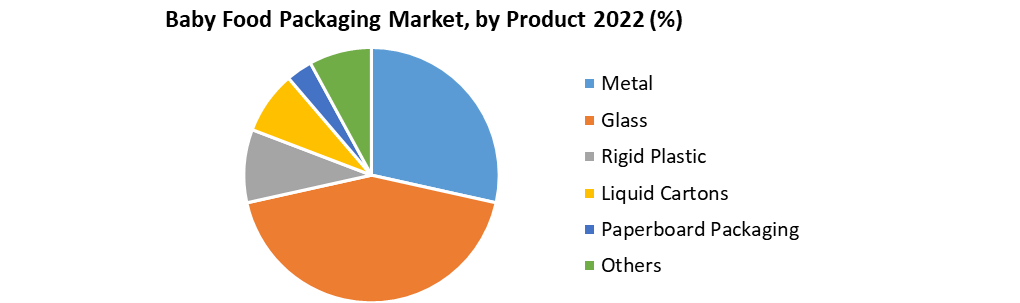
Baby Food Packaging Market Regional Insights:
Due to the increasing demand for packaged infant food items in countries such as the United States and Canada, North America produced the most revenue share in 2022. Furthermore, in countries such as Mexico, changing lifestyles and growing consumer disposable income levels are predicted to enhance demand for packaged infant food items, boosting market development.
The fastest-growing region is expected to be the Asia Pacific. Consumer disposable income levels in emerging economies such as China, India, and Bangladesh are growing. Furthermore, the strong foothold of major baby food producers in China and Japan, owing to easy access to raw materials and the availability of efficient food processing infrastructure, is projected to continue to be a positive driver for the region's growth. The market is predicted to expand in response to rising consumer awareness of the nutritional advantages of packaged infant food products. Moreover, the growing number of working women is expected to fuel the market's growth.
The objective of the report is to present a comprehensive analysis of the global Baby Food Packaging market to the stakeholders in the industry. The past and current status of the industry with the forecasted market size and trends are presented in the report with the analysis of complicated data in simple language. The report covers all the aspects of the industry with a dedicated study of key players that include market leaders, followers, and new entrants.
PORTER, PESTEL analysis with the potential impact of micro-economic factors of the market have been presented in the report. External as well as internal factors that are supposed to affect the business positively or negatively have been analyzed, which will give a clear futuristic view of the industry to the decision-makers.
The report also helps in understanding the global Baby Food Packaging market dynamics, structure by analyzing the market segments and project the global Baby Food Packaging market size. Clear representation of competitive analysis of key players by product, price, financial position, product portfolio, growth strategies, and regional presence in the global Baby Food Packaging market make the report investor’s guide.
Baby Food Packaging Market Scope: Inquire before buying
| Baby Food Packaging Market | |||
|---|---|---|---|
| Report Coverage | Details | ||
| Base Year: | 2022 | Forecast Period: | 2023-2029 |
| Historical Data: | 2018 to 2022 | Market Size in 2022: | US $ 66.87 Bn. |
| Forecast Period 2023 to 2029 CAGR: | 7.4% | Market Size in 2029: | US $ 110.23 Bn. |
| Segments Covered: | by Product | Metal Glass Rigid Plastic Liquid Cartons Paperboard Packaging Others |
|
| by Packaging Type | Bottles Metal Cans Cartons Jars Pouches |
||
| by Application | Dried Prepared Milk Formula Others |
||
Baby Food Packaging Market Key Players are:
1. Ardagh Group
2. Amcor PLC
3. Mondi Group
4. Winpak Ltd
5. Sonoco Products Company
6. Bemis Company, Inc.
7. Rexam PLC
8. RPC Group
9. Winpak Ltd.
10.Bericap India Pvt Ltd.
11.Hindustan National Glass & Industries Ltd.
12.Tata Tinplate Company of India (TCIL)
13.Cascades, Inc.
14.FPC Flexible Packaging Corp.
15.Hood Packaging Corp.
16.AptarGroup, Inc.
17.Essel Propack Limited
18.Other Key Players
Frequently Asked questions
1. What is the market size of the Global Baby Food Packaging Market in 2022?
Ans. The market size Global Baby Food Packaging Market in 2022 was US$ 66.87 Billion.
2. What are the different segments of the Global Baby Food Packaging Market ?
Ans. The Global Baby Food Packaging Market is divided into Product ,Packaging Type and Application.
3. What is the study period of this market?
Ans. The Global Baby Food Packaging Market will be studied from 2022 to 2029.
4. Which region is expected to hold the highest Global Baby Food Packaging Market share?
Ans. The Asia Pacific dominates the market share in the market.
5. What is the Forecast Period of Global Baby Food Packaging Market ?
Ans. The Forecast Period of the market is 2023-2029 in the market.