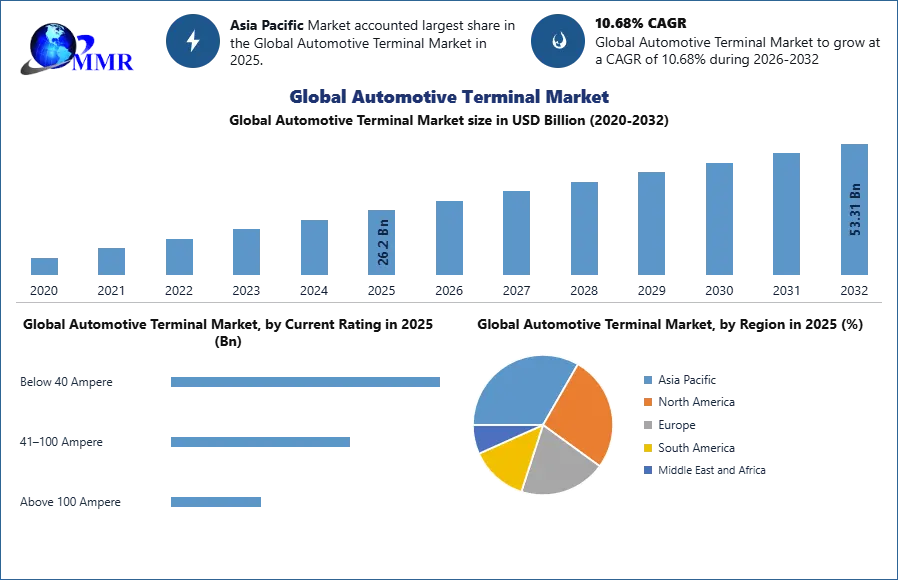
Global Automotive Terminal Market
1. Preface
1.1. Report Scope and Market Segmentation
1.2. Research Highlights
1.3. Research Objectives
2. Assumptions and Research Methodology
2.1. Report Assumptions
2.2. Abbreviations
2.3. Research Methodology
2.3.1. Secondary Research
2.3.1.1. Secondary data
2.3.1.2. Secondary Sources
2.3.2. Primary Research
2.3.2.1. Data from Primary Sources
2.3.2.2. Breakdown of Primary Sources
3. Executive Summary: Global Automotive Terminal Market Size, by Market Value (USD Bn)
4. Market Overview
4.1. Introduction
4.2. Market Indicator
4.2.1. Drivers
4.2.2. Restraints
4.2.3. Opportunities
4.2.4. Challenges
4.3. Porter’s Analysis
4.4. Value Chain Analysis
4.5. Market Risk Analysis
4.6. SWOT Analysis
4.7. Industry Trends and Emerging Technologies
5. Supply Side and Demand Side Indicators
6. Global Automotive Terminal Market Analysis and Forecast
6.1. Automotive Terminal Market Size & Y-o-Y Growth Analysis
6.1.1. North America
6.1.2. Europe
6.1.3. Asia Pacific
6.1.4. Middle East & Africa
6.1.5. South America
7. Global Automotive Terminal Market Analysis and Forecast, by Current Rating
7.1. Introduction and Definition
7.2. Key Findings
7.3. Automotive Terminal Market Value Share Analysis, by Current Rating
7.4. Automotive Terminal Market Size (USD Bn) Forecast, by Current Rating
7.5. Automotive Terminal Market Analysis, by Current Rating
7.6. Automotive Terminal Market Attractiveness Analysis, by Current Rating
8. Global Automotive Terminal Market Analysis and Forecast, by On-Highway Vehicle
8.1. Introduction and Definition
8.2. Key Findings
8.3. Automotive Terminal Market Value Share Analysis, by On-Highway Vehicle
8.4. Automotive Terminal Market Size (USD Bn) Forecast, by On-Highway Vehicle
8.5. Automotive Terminal Market Analysis, by On-Highway Vehicle
8.6. Automotive Terminal Market Attractiveness Analysis, by On-Highway Vehicle
9. Global Automotive Terminal Market Analysis and Forecast, by Off-Highway Vehicle
9.1. Introduction and Definition
9.2. Key Findings
9.3. Automotive Terminal Market Value Share Analysis, by Off-Highway Vehicle
9.4. Automotive Terminal Market Size (USD Bn) Forecast, by Off-Highway Vehicle
9.5. Automotive Terminal Market Analysis, by Off-Highway Vehicle
9.6. Automotive Terminal Market Attractiveness Analysis, by Off-Highway Vehicle
10. Global Automotive Terminal Market Analysis and Forecast, by Electric Vehicle
10.1. Introduction and Definition
10.2. Key Findings
10.3. Automotive Terminal Market Value Share Analysis, by Electric Vehicle
10.4. Automotive Terminal Market Size (USD Bn) Forecast, by Electric Vehicle
10.5. Automotive Terminal Market Analysis, by Electric Vehicle
10.6. Automotive Terminal Market Attractiveness Analysis, by Electric Vehicle
11. Global Automotive Terminal Market Analysis and Forecast, by Application
11.1. Introduction and Definition
11.2. Key Findings
11.3. Automotive Terminal Market Value Share Analysis, by Application
11.4. Automotive Terminal Market Size (USD Bn) Forecast, by Application
11.5. Automotive Terminal Market Analysis, by Application
11.6. Automotive Terminal Market Attractiveness Analysis, by Application
12. Global Automotive Terminal Market Analysis, by Region
12.1. Automotive Terminal Market Value Share Analysis, by Region
12.2. Automotive Terminal Market Size (USD Bn) Forecast, by Region
12.3. Automotive Terminal Market Attractiveness Analysis, by Region
13. North America Automotive Terminal Market Analysis
13.1. Key Findings
13.2. North America Automotive Terminal Market Overview
13.3. North America Automotive Terminal Market Value Share Analysis, by Current Rating
13.4. North America Automotive Terminal Market Forecast, by Current Rating
13.4.1. Below 40 Ampere
13.4.2. 41–100 Ampere
13.4.3. Above 100 Ampere
13.5. North America Automotive Terminal Market Value Share Analysis, by On-Highway Vehicle
13.6. North America Automotive Terminal Market Forecast, by On-Highway Vehicle
13.6.1. Passenger Cars (PC)
13.6.2. Light Commercial Vehicle (LCV)
13.6.3. Heavy Commercial Vehicle (HCV)
13.7. North America Automotive Terminal Market Value Share Analysis, by Off-Highway Vehicle
13.8. North America Automotive Terminal Market Forecast, by Off-Highway Vehicle
13.8.1. Construction Vehicle
13.8.2. Agricultural Vehicle
13.9. North America Automotive Terminal Market Value Share Analysis, by Electric Vehicle
13.10. North America Automotive Terminal Market Forecast, by Electric Vehicle
13.10.1. Battery Electric Vehicle (BEV)
13.10.2. Hybrid Electric Vehicle (HEV)
13.10.3. Plug-In Hybrid Electric Vehicle (PHEV)
13.11. North America Automotive Terminal Market Value Share Analysis, by Application
13.12. North America Automotive Terminal Market Forecast, by Application
13.12.1. Cooling
13.12.2. Engine & Emission Control
13.12.3. Safety & Security System
13.12.4. Body Control & Interiors
13.12.5. Infotainment
13.12.6. Lighting System
13.12.7. Battery System
13.13. North America Automotive Terminal Market Value Share Analysis, by Country
13.14. North America Automotive Terminal Market Forecast, by Country
13.14.1. U.S.
13.14.2. Canada
13.15. North America Automotive Terminal Market Analysis, by Country
13.16. U.S. Automotive Terminal Market Forecast, by Current Rating
13.16.1. Below 40 Ampere
13.16.2. 41–100 Ampere
13.16.3. Above 100 Ampere
13.17. U.S. Automotive Terminal Market Forecast, by On-Highway Vehicle
13.17.1. Passenger Cars (PC)
13.17.2. Light Commercial Vehicle (LCV)
13.17.3. Heavy Commercial Vehicle (HCV)
13.18. U.S. Automotive Terminal Market Forecast, by Off-Highway Vehicle
13.18.1. Construction Vehicle
13.18.2. Agricultural Vehicle
13.19. U.S. Automotive Terminal Market Forecast, by Electric Vehicle
13.19.1. Battery Electric Vehicle (BEV)
13.19.2. Hybrid Electric Vehicle (HEV)
13.19.3. Plug-In Hybrid Electric Vehicle (PHEV)
13.20. U.S. Automotive Terminal Market Forecast, by Application
13.20.1. Cooling
13.20.2. Engine & Emission Control
13.20.3. Safety & Security System
13.20.4. Body Control & Interiors
13.20.5. Infotainment
13.20.6. Lighting System
13.20.7. Battery System
13.21. Canada Automotive Terminal Market Forecast, by Current Rating
13.21.1. Below 40 Ampere
13.21.2. 41–100 Ampere
13.21.3. Above 100 Ampere
13.22. Canada Automotive Terminal Market Forecast, by On-Highway Vehicle
13.22.1. Passenger Cars (PC)
13.22.2. Light Commercial Vehicle (LCV)
13.22.3. Heavy Commercial Vehicle (HCV)
13.23. Canada Automotive Terminal Market Forecast, by Off-Highway Vehicle
13.23.1. Construction Vehicle
13.23.2. Agricultural Vehicle
13.24. Canada Automotive Terminal Market Forecast, by Electric Vehicle
13.24.1. Battery Electric Vehicle (BEV)
13.24.2. Hybrid Electric Vehicle (HEV)
13.24.3. Plug-In Hybrid Electric Vehicle (PHEV)
13.25. Canada Automotive Terminal Market Forecast, by Application
13.25.1. Cooling
13.25.2. Engine & Emission Control
13.25.3. Safety & Security System
13.25.4. Body Control & Interiors
13.25.5. Infotainment
13.25.6. Lighting System
13.25.7. Battery System
13.26. North America Automotive Terminal Market Attractiveness Analysis
13.26.1. By Current Rating
13.26.2. By On-Highway Vehicle
13.26.3. By Off-Highway Vehicle
13.26.4. By Electric Vehicle
13.26.5. By Application
13.27. PEST Analysis
13.28. Key Trends
13.29. Key Developments
14. Europe Automotive Terminal Market Analysis
14.1. Key Findings
14.2. Europe Automotive Terminal Market Overview
14.3. Europe Automotive Terminal Market Value Share Analysis, by Current Rating
14.4. Europe Automotive Terminal Market Forecast, by Current Rating
14.4.1. Below 40 Ampere
14.4.2. 41–100 Ampere
14.4.3. Above 100 Ampere
14.5. Europe Automotive Terminal Market Value Share Analysis, by On-Highway Vehicle
14.6. Europe Automotive Terminal Market Forecast, by On-Highway Vehicle
14.6.1. Passenger Cars (PC)
14.6.2. Light Commercial Vehicle (LCV)
14.6.3. Heavy Commercial Vehicle (HCV)
14.7. Europe Automotive Terminal Market Value Share Analysis, by Off-Highway Vehicle
14.8. Europe Automotive Terminal Market Forecast, by Off-Highway Vehicle
14.8.1. Construction Vehicle
14.8.2. Agricultural Vehicle
14.9. Europe Automotive Terminal Market Value Share Analysis, by Electric Vehicle
14.10. Europe Automotive Terminal Market Forecast, by Electric Vehicle
14.10.1. Battery Electric Vehicle (BEV)
14.10.2. Hybrid Electric Vehicle (HEV)
14.10.3. Plug-In Hybrid Electric Vehicle (PHEV)
14.11. Europe Automotive Terminal Market Value Share Analysis, by Application
14.12. Europe Automotive Terminal Market Forecast, by Application
14.12.1. Cooling
14.12.2. Engine & Emission Control
14.12.3. Safety & Security System
14.12.4. Body Control & Interiors
14.12.5. Infotainment
14.12.6. Lighting System
14.12.7. Battery System
14.13. Europe Automotive Terminal Market Value Share Analysis, by Country
14.14. Europe Automotive Terminal Market Forecast, by Country
14.14.1. Germany
14.14.2. U.K.
14.14.3. France
14.14.4. Italy
14.14.5. Spain
14.14.6. Rest of Europe
14.15. Europe Automotive Terminal Market Analysis, by Country
14.16. Germany Automotive Terminal Market Forecast, by Current Rating
14.16.1. Below 40 Ampere
14.16.2. 41–100 Ampere
14.16.3. Above 100 Ampere
14.17. Germany Automotive Terminal Market Forecast, by On-Highway Vehicle
14.17.1. Passenger Cars (PC)
14.17.2. Light Commercial Vehicle (LCV)
14.17.3. Heavy Commercial Vehicle (HCV)
14.18. Germany Automotive Terminal Market Forecast, by Off-Highway Vehicle
14.18.1. Construction Vehicle
14.18.2. Agricultural Vehicle
14.19. Germany Automotive Terminal Market Forecast, by Electric Vehicle
14.19.1. Battery Electric Vehicle (BEV)
14.19.2. Hybrid Electric Vehicle (HEV)
14.19.3. Plug-In Hybrid Electric Vehicle (PHEV)
14.20. Germany Automotive Terminal Market Forecast, by Application
14.20.1. Cooling
14.20.2. Engine & Emission Control
14.20.3. Safety & Security System
14.20.4. Body Control & Interiors
14.20.5. Infotainment
14.20.6. Lighting System
14.20.7. Battery System
14.21. U.K. Automotive Terminal Market Forecast, by Current Rating
14.21.1. Below 40 Ampere
14.21.2. 41–100 Ampere
14.21.3. Above 100 Ampere
14.22. U.K. Automotive Terminal Market Forecast, by On-Highway Vehicle
14.22.1. Passenger Cars (PC)
14.22.2. Light Commercial Vehicle (LCV)
14.22.3. Heavy Commercial Vehicle (HCV)
14.23. U.K. Automotive Terminal Market Forecast, by Off-Highway Vehicle
14.23.1. Construction Vehicle
14.23.2. Agricultural Vehicle
14.24. U.K. Automotive Terminal Market Forecast, by Electric Vehicle
14.24.1. Battery Electric Vehicle (BEV)
14.24.2. Hybrid Electric Vehicle (HEV)
14.24.3. Plug-In Hybrid Electric Vehicle (PHEV)
14.25. U.K. Automotive Terminal Market Forecast, by Application
14.25.1. Cooling
14.25.2. Engine & Emission Control
14.25.3. Safety & Security System
14.25.4. Body Control & Interiors
14.25.5. Infotainment
14.25.6. Lighting System
14.25.7. Battery System
14.26. France Automotive Terminal Market Forecast, by Current Rating
14.26.1. Below 40 Ampere
14.26.2. 41–100 Ampere
14.26.3. Above 100 Ampere
14.27. France Automotive Terminal Market Forecast, by On-Highway Vehicle
14.27.1. Passenger Cars (PC)
14.27.2. Light Commercial Vehicle (LCV)
14.27.3. Heavy Commercial Vehicle (HCV)
14.28. France Automotive Terminal Market Forecast, by Off-Highway Vehicle
14.28.1. Construction Vehicle
14.28.2. Agricultural Vehicle
14.29. France Automotive Terminal Market Forecast, by Electric Vehicle
14.29.1. Battery Electric Vehicle (BEV)
14.29.2. Hybrid Electric Vehicle (HEV)
14.29.3. Plug-In Hybrid Electric Vehicle (PHEV)
14.30. France Automotive Terminal Market Forecast, by Application
14.30.1. Cooling
14.30.2. Engine & Emission Control
14.30.3. Safety & Security System
14.30.4. Body Control & Interiors
14.30.5. Infotainment
14.30.6. Lighting System
14.30.7. Battery System
14.31. Italy Automotive Terminal Market Forecast, by Current Rating
14.31.1. Below 40 Ampere
14.31.2. 41–100 Ampere
14.31.3. Above 100 Ampere
14.32. Italy Automotive Terminal Market Forecast, by On-Highway Vehicle
14.32.1. Passenger Cars (PC)
14.32.2. Light Commercial Vehicle (LCV)
14.32.3. Heavy Commercial Vehicle (HCV)
14.33. Italy Automotive Terminal Market Forecast, by Off-Highway Vehicle
14.33.1. Construction Vehicle
14.33.2. Agricultural Vehicle
14.34. Italy Automotive Terminal Market Forecast, by Electric Vehicle
14.34.1. Battery Electric Vehicle (BEV)
14.34.2. Hybrid Electric Vehicle (HEV)
14.34.3. Plug-In Hybrid Electric Vehicle (PHEV)
14.35. Italy Automotive Terminal Market Forecast, by Application
14.35.1. Cooling
14.35.2. Engine & Emission Control
14.35.3. Safety & Security System
14.35.4. Body Control & Interiors
14.35.5. Infotainment
14.35.6. Lighting System
14.35.7. Battery System
14.36. Spain Automotive Terminal Market Forecast, by Current Rating
14.36.1. Below 40 Ampere
14.36.2. 41–100 Ampere
14.36.3. Above 100 Ampere
14.37. Spain Automotive Terminal Market Forecast, by On-Highway Vehicle
14.37.1. Passenger Cars (PC)
14.37.2. Light Commercial Vehicle (LCV)
14.37.3. Heavy Commercial Vehicle (HCV)
14.38. Spain Automotive Terminal Market Forecast, by Off-Highway Vehicle
14.38.1. Construction Vehicle
14.38.2. Agricultural Vehicle
14.39. Spain Automotive Terminal Market Forecast, by Electric Vehicle
14.39.1. Battery Electric Vehicle (BEV)
14.39.2. Hybrid Electric Vehicle (HEV)
14.39.3. Plug-In Hybrid Electric Vehicle (PHEV)
14.40. Spain Automotive Terminal Market Forecast, by Application
14.40.1. Cooling
14.40.2. Engine & Emission Control
14.40.3. Safety & Security System
14.40.4. Body Control & Interiors
14.40.5. Infotainment
14.40.6. Lighting System
14.40.7. Battery System
14.41. Rest of Europe Automotive Terminal Market Forecast, by Current Rating
14.41.1. Below 40 Ampere
14.41.2. 41–100 Ampere
14.41.3. Above 100 Ampere
14.42. Rest of Europe Automotive Terminal Market Forecast, by On-Highway Vehicle
14.42.1. Passenger Cars (PC)
14.42.2. Light Commercial Vehicle (LCV)
14.42.3. Heavy Commercial Vehicle (HCV)
14.43. Rest of Europe Automotive Terminal Market Forecast, by Off-Highway Vehicle
14.43.1. Construction Vehicle
14.43.2. Agricultural Vehicle
14.44. Rest of Europe Automotive Terminal Market Forecast, by Electric Vehicle
14.44.1. Battery Electric Vehicle (BEV)
14.44.2. Hybrid Electric Vehicle (HEV)
14.44.3. Plug-In Hybrid Electric Vehicle (PHEV)
14.45. Rest Of Europe Automotive Terminal Market Forecast, by Application
14.45.1. Cooling
14.45.2. Engine & Emission Control
14.45.3. Safety & Security System
14.45.4. Body Control & Interiors
14.45.5. Infotainment
14.45.6. Lighting System
14.45.7. Battery System
14.46. Europe Automotive Terminal Market Attractiveness Analysis
14.46.1. By Current Rating
14.46.2. By On-Highway Vehicle
14.46.3. By Off-Highway Vehicle
14.46.4. By Electric Vehicle
14.46.5. By Application
14.47. PEST Analysis
14.48. Key Trends
14.49. Key Developments
15. Asia Pacific Automotive Terminal Market Analysis
15.1. Key Findings
15.2. Asia Pacific Automotive Terminal Market Overview
15.3. Asia Pacific Automotive Terminal Market Value Share Analysis, by Current Rating
15.4. Asia Pacific Automotive Terminal Market Forecast, by Current Rating
15.4.1. Below 40 Ampere
15.4.2. 41–100 Ampere
15.4.3. Above 100 Ampere
15.5. Asia Pacific Automotive Terminal Market Value Share Analysis, by On-Highway Vehicle
15.6. Asia Pacific Automotive Terminal Market Forecast, by On-Highway Vehicle
15.6.1. Passenger Cars (PC)
15.6.2. Light Commercial Vehicle (LCV)
15.6.3. Heavy Commercial Vehicle (HCV)
15.7. Asia Pacific Automotive Terminal Market Value Share Analysis, by Off-Highway Vehicle
15.8. Asia Pacific Automotive Terminal Market Forecast, by Off-Highway Vehicle
15.8.1. Construction Vehicle
15.8.2. Agricultural Vehicle
15.9. Asia Pacific Automotive Terminal Market Value Share Analysis, by Electric Vehicle
15.10. Asia Pacific Automotive Terminal Market Forecast, by Electric Vehicle
15.10.1. Battery Electric Vehicle (BEV)
15.10.2. Hybrid Electric Vehicle (HEV)
15.10.3. Plug-In Hybrid Electric Vehicle (PHEV)
15.11. Asia Pacific Automotive Terminal Market Value Share Analysis, by Application
15.12. Asia Pacific Automotive Terminal Market Forecast, by Application
15.12.1. Cooling
15.12.2. Engine & Emission Control
15.12.3. Safety & Security System
15.12.4. Body Control & Interiors
15.12.5. Infotainment
15.12.6. Lighting System
15.12.7. Battery System
15.13. Asia Pacific Automotive Terminal Market Value Share Analysis, by Country
15.14. Asia Pacific Automotive Terminal Market Forecast, by Country
15.14.1. China
15.14.2. India
15.14.3. Japan
15.14.4. ASEAN
15.14.5. Rest of Asia Pacific
15.15. Asia Pacific Automotive Terminal Market Analysis, by Country
15.16. China Automotive Terminal Market Forecast, by Current Rating
15.16.1. Below 40 Ampere
15.16.2. 41–100 Ampere
15.16.3. Above 100 Ampere
15.17. China Automotive Terminal Market Forecast, by On-Highway Vehicle
15.17.1. Passenger Cars (PC)
15.17.2. Light Commercial Vehicle (LCV)
15.17.3. Heavy Commercial Vehicle (HCV)
15.18. China Automotive Terminal Market Forecast, by Off-Highway Vehicle
15.18.1. Construction Vehicle
15.18.2. Agricultural Vehicle
15.19. China Automotive Terminal Market Forecast, by Electric Vehicle
15.19.1. Battery Electric Vehicle (BEV)
15.19.2. Hybrid Electric Vehicle (HEV)
15.19.3. Plug-In Hybrid Electric Vehicle (PHEV)
15.20. China Automotive Terminal Market Forecast, by Application
15.20.1. Cooling
15.20.2. Engine & Emission Control
15.20.3. Safety & Security System
15.20.4. Body Control & Interiors
15.20.5. Infotainment
15.20.6. Lighting System
15.20.7. Battery System
15.21. India Automotive Terminal Market Forecast, by Current Rating
15.21.1. Below 40 Ampere
15.21.2. 41–100 Ampere
15.21.3. Above 100 Ampere
15.22. India Automotive Terminal Market Forecast, by On-Highway Vehicle
15.22.1. Passenger Cars (PC)
15.22.2. Light Commercial Vehicle (LCV)
15.22.3. Heavy Commercial Vehicle (HCV)
15.23. India Automotive Terminal Market Forecast, by Off-Highway Vehicle
15.23.1. Construction Vehicle
15.23.2. Agricultural Vehicle
15.24. India Automotive Terminal Market Forecast, by Electric Vehicle
15.24.1. Battery Electric Vehicle (BEV)
15.24.2. Hybrid Electric Vehicle (HEV)
15.24.3. Plug-In Hybrid Electric Vehicle (PHEV)
15.25. India Automotive Terminal Market Forecast, by Application
15.25.1. Cooling
15.25.2. Engine & Emission Control
15.25.3. Safety & Security System
15.25.4. Body Control & Interiors
15.25.5. Infotainment
15.25.6. Lighting System
15.25.7. Battery System
15.26. Japan Automotive Terminal Market Forecast, by Current Rating
15.26.1. Below 40 Ampere
15.26.2. 41–100 Ampere
15.26.3. Above 100 Ampere
15.27. Japan Automotive Terminal Market Forecast, by On-Highway Vehicle
15.27.1. Passenger Cars (PC)
15.27.2. Light Commercial Vehicle (LCV)
15.27.3. Heavy Commercial Vehicle (HCV)
15.28. Japan Automotive Terminal Market Forecast, by Off-Highway Vehicle
15.28.1. Construction Vehicle
15.28.2. Agricultural Vehicle
15.29. Japan Automotive Terminal Market Forecast, by Electric Vehicle
15.29.1. Battery Electric Vehicle (BEV)
15.29.2. Hybrid Electric Vehicle (HEV)
15.29.3. Plug-In Hybrid Electric Vehicle (PHEV)
15.30. Japan Automotive Terminal Market Forecast, by Application
15.30.1. Cooling
15.30.2. Engine & Emission Control
15.30.3. Safety & Security System
15.30.4. Body Control & Interiors
15.30.5. Infotainment
15.30.6. Lighting System
15.30.7. Battery System
15.31. ASEAN Automotive Terminal Market Forecast, by Current Rating
15.31.1. Below 40 Ampere
15.31.2. 41–100 Ampere
15.31.3. Above 100 Ampere
15.32. ASEAN Automotive Terminal Market Forecast, by On-Highway Vehicle
15.32.1. Passenger Cars (PC)
15.32.2. Light Commercial Vehicle (LCV)
15.32.3. Heavy Commercial Vehicle (HCV)
15.33. ASEAN Automotive Terminal Market Forecast, by Off-Highway Vehicle
15.33.1. Construction Vehicle
15.33.2. Agricultural Vehicle
15.34. ASEAN Automotive Terminal Market Forecast, by Electric Vehicle
15.34.1. Battery Electric Vehicle (BEV)
15.34.2. Hybrid Electric Vehicle (HEV)
15.34.3. Plug-In Hybrid Electric Vehicle (PHEV)
15.35. ASEAN Automotive Terminal Market Forecast, by Application
15.35.1. Cooling
15.35.2. Engine & Emission Control
15.35.3. Safety & Security System
15.35.4. Body Control & Interiors
15.35.5. Infotainment
15.35.6. Lighting System
15.35.7. Battery System
15.36. Rest of Asia Pacific Automotive Terminal Market Forecast, by Current Rating
15.36.1. Below 40 Ampere
15.36.2. 41–100 Ampere
15.36.3. Above 100 Ampere
15.37. Rest of Asia Pacific Automotive Terminal Market Forecast, by On-Highway Vehicle
15.37.1. Passenger Cars (PC)
15.37.2. Light Commercial Vehicle (LCV)
15.37.3. Heavy Commercial Vehicle (HCV)
15.38. Rest of Asia Pacific Automotive Terminal Market Forecast, by Off-Highway Vehicle
15.38.1. Construction Vehicle
15.38.2. Agricultural Vehicle
15.39. Rest of Asia Pacific Automotive Terminal Market Forecast, by Electric Vehicle
15.39.1. Battery Electric Vehicle (BEV)
15.39.2. Hybrid Electric Vehicle (HEV)
15.39.3. Plug-In Hybrid Electric Vehicle (PHEV)
15.40. Rest of Asia Pacific Automotive Terminal Market Forecast, by Application
15.40.1. Cooling
15.40.2. Engine & Emission Control
15.40.3. Safety & Security System
15.40.4. Body Control & Interiors
15.40.5. Infotainment
15.40.6. Lighting System
15.40.7. Battery System
15.41. Asia Pacific Automotive Terminal Market Attractiveness Analysis
15.41.1. By Current Rating
15.41.2. By On-Highway Vehicle
15.41.3. By Off-Highway Vehicle
15.41.4. By Electric Vehicle
15.41.5. By Application
15.42. PEST Analysis
15.43. Key Trends
15.44. Key Developments
16. Middle East & Africa Automotive Terminal Market Analysis
16.1. Key Findings
16.2. Middle East & Africa Automotive Terminal Market Overview
16.3. Middle East & Africa Automotive Terminal Market Value Share Analysis, by Current Rating
16.4. Middle East & Africa Automotive Terminal Market Forecast, by Current Rating
16.4.1. Below 40 Ampere
16.4.2. 41–100 Ampere
16.4.3. Above 100 Ampere
16.5. Middle East & Africa Automotive Terminal Market Value Share Analysis, by On-Highway Vehicle
16.6. Middle East & Africa Automotive Terminal Market Forecast, by On-Highway Vehicle
16.6.1. Passenger Cars (PC)
16.6.2. Light Commercial Vehicle (LCV)
16.6.3. Heavy Commercial Vehicle (HCV)
16.7. Middle East & Africa Automotive Terminal Market Value Share Analysis, by Off-Highway Vehicle
16.8. Middle East & Africa Automotive Terminal Market Forecast, by Off-Highway Vehicle
16.8.1. Construction Vehicle
16.8.2. Agricultural Vehicle
16.9. Middle East & Africa Automotive Terminal Market Value Share Analysis, by Electric Vehicle
16.10. Middle East & Africa Automotive Terminal Market Forecast, by Electric Vehicle
16.10.1. Battery Electric Vehicle (BEV)
16.10.2. Hybrid Electric Vehicle (HEV)
16.10.3. Plug-In Hybrid Electric Vehicle (PHEV)
16.11. Middle East & Africa Automotive Terminal Market Value Share Analysis, by Application
16.12. Middle East & Africa Automotive Terminal Market Forecast, by Application
16.12.1. Cooling
16.12.2. Engine & Emission Control
16.12.3. Safety & Security System
16.12.4. Body Control & Interiors
16.12.5. Infotainment
16.12.6. Lighting System
16.12.7. Battery System
16.13. Middle East & Africa Automotive Terminal Market Value Share Analysis, by Country
16.14. Middle East & Africa Automotive Terminal Market Forecast, by Country
16.14.1. GCC
16.14.2. South Africa
16.14.3. Rest of Middle East & Africa
16.15. Middle East & Africa Automotive Terminal Market Analysis, by Country
16.16. GCC Automotive Terminal Market Forecast, by Current Rating
16.16.1. Below 40 Ampere
16.16.2. 41–100 Ampere
16.16.3. Above 100 Ampere
16.17. GCC Automotive Terminal Market Forecast, by On-Highway Vehicle
16.17.1. Passenger Cars (PC)
16.17.2. Light Commercial Vehicle (LCV)
16.17.3. Heavy Commercial Vehicle (HCV)
16.18. GCC Automotive Terminal Market Forecast, by Off-Highway Vehicle
16.18.1. Construction Vehicle
16.18.2. Agricultural Vehicle
16.19. GCC Automotive Terminal Market Forecast, by Electric Vehicle
16.19.1. Battery Electric Vehicle (BEV)
16.19.2. Hybrid Electric Vehicle (HEV)
16.19.3. Plug-In Hybrid Electric Vehicle (PHEV)
16.20. GCC Automotive Terminal Market Forecast, by Application
16.20.1. Cooling
16.20.2. Engine & Emission Control
16.20.3. Safety & Security System
16.20.4. Body Control & Interiors
16.20.5. Infotainment
16.20.6. Lighting System
16.20.7. Battery System
16.21. South Africa Automotive Terminal Market Forecast, by Current Rating
16.21.1. Below 40 Ampere
16.21.2. 41–100 Ampere
16.21.3. Above 100 Ampere
16.22. South Africa Automotive Terminal Market Forecast, by On-Highway Vehicle
16.22.1. Passenger Cars (PC)
16.22.2. Light Commercial Vehicle (LCV)
16.22.3. Heavy Commercial Vehicle (HCV)
16.23. South Africa Automotive Terminal Market Forecast, by Off-Highway Vehicle
16.23.1. Construction Vehicle
16.23.2. Agricultural Vehicle
16.24. South Africa Automotive Terminal Market Forecast, by Electric Vehicle
16.24.1. Battery Electric Vehicle (BEV)
16.24.2. Hybrid Electric Vehicle (HEV)
16.24.3. Plug-In Hybrid Electric Vehicle (PHEV)
16.25. South Africa Automotive Terminal Market Forecast, by Application
16.25.1. Cooling
16.25.2. Engine & Emission Control
16.25.3. Safety & Security System
16.25.4. Body Control & Interiors
16.25.5. Infotainment
16.25.6. Lighting System
16.25.7. Battery System
16.26. Rest of Middle East & Africa Automotive Terminal Market Forecast, by Current Rating
16.26.1. Below 40 Ampere
16.26.2. 41–100 Ampere
16.26.3. Above 100 Ampere
16.27. Rest of Middle East & Africa Automotive Terminal Market Forecast, by On-Highway Vehicle
16.27.1. Passenger Cars (PC)
16.27.2. Light Commercial Vehicle (LCV)
16.27.3. Heavy Commercial Vehicle (HCV)
16.28. Rest of Middle East & Africa Automotive Terminal Market Forecast, by Off-Highway Vehicle
16.28.1. Construction Vehicle
16.28.2. Agricultural Vehicle
16.29. Rest of Middle East & Africa Automotive Terminal Market Forecast, by Electric Vehicle
16.29.1. Battery Electric Vehicle (BEV)
16.29.2. Hybrid Electric Vehicle (HEV)
16.29.3. Plug-In Hybrid Electric Vehicle (PHEV)
16.30. Rest of Middle East & Africa Automotive Terminal Market Forecast, by Application
16.30.1. Cooling
16.30.2. Engine & Emission Control
16.30.3. Safety & Security System
16.30.4. Body Control & Interiors
16.30.5. Infotainment
16.30.6. Lighting System
16.30.7. Battery System
16.31. Middle East & Africa Automotive Terminal Market Attractiveness Analysis
16.31.1. By Current Rating
16.31.2. By On-Highway Vehicle
16.31.3. By Off-Highway Vehicle
16.31.4. By Electric Vehicle
16.31.5. By Application
16.32. PEST Analysis
16.33. Key Trends
16.34. Key Developments
17. South America Automotive Terminal Market Analysis
17.1. Key Findings
17.2. South America Automotive Terminal Market Overview
17.3. South America Automotive Terminal Market Value Share Analysis, by Current Rating
17.4. South America Automotive Terminal Market Forecast, by Current Rating
17.4.1. Below 40 Ampere
17.4.2. 41–100 Ampere
17.4.3. Above 100 Ampere
17.5. South America Automotive Terminal Market Value Share Analysis, by On-Highway Vehicle
17.6. South America Automotive Terminal Market Forecast, by On-Highway Vehicle
17.6.1. Passenger Cars (PC)
17.6.2. Light Commercial Vehicle (LCV)
17.6.3. Heavy Commercial Vehicle (HCV)
17.7. South America Automotive Terminal Market Value Share Analysis, by Off-Highway Vehicle
17.8. South America Automotive Terminal Market Forecast, by Off-Highway Vehicle
17.8.1. Construction Vehicle
17.8.2. Agricultural Vehicle
17.9. South America Automotive Terminal Market Value Share Analysis, by Electric Vehicle
17.10. South America Automotive Terminal Market Forecast, by Electric Vehicle
17.10.1. Battery Electric Vehicle (BEV)
17.10.2. Hybrid Electric Vehicle (HEV)
17.10.3. Plug-In Hybrid Electric Vehicle (PHEV)
17.11. South America Automotive Terminal Market Value Share Analysis, by Application
17.12. South America Automotive Terminal Market Forecast, by Application
17.12.1. Cooling
17.12.2. Engine & Emission Control
17.12.3. Safety & Security System
17.12.4. Body Control & Interiors
17.12.5. Infotainment
17.12.6. Lighting System
17.12.7. Battery System
17.13. South America Automotive Terminal Market Value Share Analysis, by Country
17.14. South America Automotive Terminal Market Forecast, by Country
17.14.1. Brazil
17.14.2. Mexico
17.14.3. Rest of South America
17.15. South America Automotive Terminal Market Analysis, by Country
17.16. Brazil Automotive Terminal Market Forecast, by Current Rating
17.16.1. Below 40 Ampere
17.16.2. 41–100 Ampere
17.16.3. Above 100 Ampere
17.17. Brazil Automotive Terminal Market Forecast, by On-Highway Vehicle
17.17.1. Passenger Cars (PC)
17.17.2. Light Commercial Vehicle (LCV)
17.17.3. Heavy Commercial Vehicle (HCV)
17.18. Brazil Automotive Terminal Market Forecast, by Off-Highway Vehicle
17.18.1. Construction Vehicle
17.18.2. Agricultural Vehicle
17.19. Brazil Automotive Terminal Market Forecast, by Electric Vehicle
17.19.1. Battery Electric Vehicle (BEV)
17.19.2. Hybrid Electric Vehicle (HEV)
17.19.3. Plug-In Hybrid Electric Vehicle (PHEV)
17.20. Brazil Automotive Terminal Market Forecast, by Application
17.20.1. Cooling
17.20.2. Engine & Emission Control
17.20.3. Safety & Security System
17.20.4. Body Control & Interiors
17.20.5. Infotainment
17.20.6. Lighting System
17.20.7. Battery System
17.21. Mexico Automotive Terminal Market Forecast, by Current Rating
17.21.1. Below 40 Ampere
17.21.2. 41–100 Ampere
17.21.3. Above 100 Ampere
17.22. Mexico Automotive Terminal Market Forecast, by On-Highway Vehicle
17.22.1. Passenger Cars (PC)
17.22.2. Light Commercial Vehicle (LCV)
17.22.3. Heavy Commercial Vehicle (HCV)
17.23. Mexico Automotive Terminal Market Forecast, by Off-Highway Vehicle
17.23.1. Construction Vehicle
17.23.2. Agricultural Vehicle
17.24. Mexico Automotive Terminal Market Forecast, by Electric Vehicle
17.24.1. Battery Electric Vehicle (BEV)
17.24.2. Hybrid Electric Vehicle (HEV)
17.24.3. Plug-In Hybrid Electric Vehicle (PHEV)
17.25. Mexico Automotive Terminal Market Forecast, by Application
17.25.1. Cooling
17.25.2. Engine & Emission Control
17.25.3. Safety & Security System
17.25.4. Body Control & Interiors
17.25.5. Infotainment
17.25.6. Lighting System
17.25.7. Battery System
17.26. Rest of South America Automotive Terminal Market Forecast, by Current Rating
17.26.1. Below 40 Ampere
17.26.2. 41–100 Ampere
17.26.3. Above 100 Ampere
17.27. Rest of South America Automotive Terminal Market Forecast, by On-Highway Vehicle
17.27.1. Passenger Cars (PC)
17.27.2. Light Commercial Vehicle (LCV)
17.27.3. Heavy Commercial Vehicle (HCV)
17.28. Rest of South America Automotive Terminal Market Forecast, by Off-Highway Vehicle
17.28.1. Construction Vehicle
17.28.2. Agricultural Vehicle
17.29. Rest of South America Automotive Terminal Market Forecast, by Electric Vehicle
17.29.1. Battery Electric Vehicle (BEV)
17.29.2. Hybrid Electric Vehicle (HEV)
17.29.3. Plug-In Hybrid Electric Vehicle (PHEV)
17.30. Rest of South America Automotive Terminal Market Forecast, by Application
17.30.1. Cooling
17.30.2. Engine & Emission Control
17.30.3. Safety & Security System
17.30.4. Body Control & Interiors
17.30.5. Infotainment
17.30.6. Lighting System
17.30.7. Battery System
17.31. South America Automotive Terminal Market Attractiveness Analysis
17.31.1. By Current Rating
17.31.2. By On-Highway Vehicle
17.31.3. By Off-Highway Vehicle
17.31.4. By Electric Vehicle
17.31.5. By Application
17.32. PEST Analysis
17.33. Key Trends
17.34. Key Developments
18. Company Profiles
18.1. Market Share Analysis, by Company
18.2. Competition Matrix
18.2.1. Competitive Benchmarking of key players by price, presence, market share, Applications and R&D investment
18.2.2. New Product Launches and Product Enhancements
18.2.3. Market Consolidation
18.2.3.1. M&A by Regions, Investment and Applications
18.2.3.2. M&A Key Players, Forward Integration and Backward
Integration
18.3. Company Profiles: Key Players
18.3.1. Viney Corporation Limited
18.3.1.1. Company Overview
18.3.1.2. Financial Overview
18.3.1.3. Product Portfolio
18.3.1.4. Business Strategy
18.3.1.5. Recent Developments
18.3.1.6. Development Footprint
18.3.2. Keats Manufacturing Co.
18.3.3. Molex
18.3.4. PKC Group Ltd
18.3.5. FURUKAWA ELECTRIC CO., LTD
18.3.6. Lear Corporation.
18.3.7. Delphi Technologies
18.3.8. Sumitomo Electric Industries, Ltd.
18.3.9. TE Connectivity
18.3.10. Shree Krishna Automotive Components
18.3.11. Koopman Logistics Group
18.3.12. Terminal Technologies (I) Pvt. Ltd
18.3.13. BLG LOGISTICS GROUP AG & Co. KG
18.3.14. IRISO Electronics CO., LTD
18.3.15. Terminal Supply Co.
18.3.16. Ascon Engineering Industries
18.3.17. Vehicle Wiring Products Ltd
18.3.18. Patel Mech India
18.3.19. KOREA ELECTRIC TERMINAL CO., LTD.
18.3.20. Grote Industries, Inc.
18.3.21. Keats Manufacturing
19. Primary Key Insights