
Fruit Processing Market - Industry Structure Evaluation, Demand Drivers Analysis, Regional Growth Analysis and Identification, Competitive Positioning / Landscape Review & Global Market Size Forecast to 2032
Overview
The Fruit Processing Market size was valued at USD 11.30 Billion in 2025 and the total Fruit Processing revenue is expected to grow at a CAGR of 14.2% from 2026 to 2032, reaching nearly USD 28.63 Billion by 2032.
Fruit Processing Market Overveiw
Fruits are a staple food in the human diet. There is a growing focus on the link between consuming fruits and better health. Fruits are rich in essential nutrients including vitamins, proteins, minerals, and dietary fibres. However, because fruits are perishable, it's important to process them to extend their storage or shelf life.
Fruit processing involves enhancing the value of fresh fruits through methods such as canning, drying, freezing, and creating new ingredients. The growth of the fruit processing market is attributed to the increased trade in ready-to-eat foods between countries such as Mexico, Brazil, Argentina, UAE, India, and China.
Fruit processing helps transform fresh produce into processed fruits with a longer shelf life through various physical and chemical techniques. More and more people in countries such as India, China, South Africa, and Brazil are eating more fruits, especially processed ones. This is making companies that make these products increase how much they make.
Processing fruits takes a variety of physical and chemical processes. It turns fresh fruits into a product that has a longer shelf life. According to various surveys, highly populated countries like Brazil, China, India and South Africa are the most processed food consuming countries in the world. Because high demand in these regions, processed food businesses are doing heavy production.
According to the MMR Study report, India is home to about 1,000 varieties of mango and prominent exporter of fresh mangoes to the world. India produces about 350,000 tons of mango pulp each year, accounting for half of the global mango production, and exports to 89+ countries. The country also exports 200,000 tons of mango every year while 150,000 tons are consumed domestically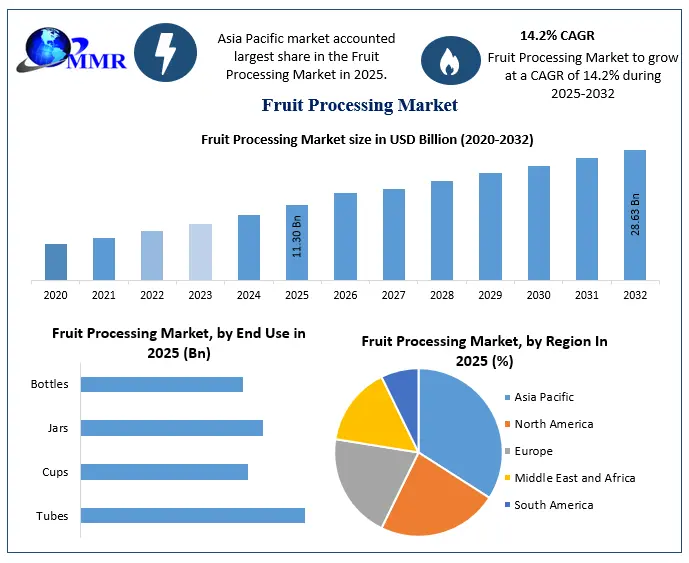 To know about the Research Methodology :- Request Free Sample Report
Ukraine war, Covid-19, and Brexit led to higher import prices
The market of processed fruits has been dominating and will continue to be dominated by number of significant worldwide events in 2020-2022.
Covid-19 Pandemic: The pandemic has impacted all the businesses in the world, including fruit processing business. It created a supply chain crisis and the repercussions of that led to 20% inflation in the processed fruit market. The resulting increase in energy prices, fertilizer prices, and food insecurity are likely to negatively impact global agricultural production. This will also impact developing countries.
Brexit: (the United Kingdom’s withdrawal from the EU) has negatively influenced the
sourcing of processed fruit. All segments except frozen fruit have seen declines in imports since Brexit. Edible nuts imports to the UK declined the most, by an average of 10% annually
since .
War in Ukraine: The industry faced significant problems because of geo-political tensions and interruptions caused by Russia-Ukraine conflict. This directly impacted on the global processed food market.
European Green Deal (EGD): Another important development was the approval of the European Green Deal (EGD) in . This is a set of policies and actions aimed at making the European economy more sustainable and climate-neutral by 2050. The EGD’s Farm to Fork Strategy and Biodiversity Strategy target food production and trade.
Targets that are relevant to processed fruit sourced from developing countries are reducing pesticide use, increasing organic production, and switching to sustainable packaging materials.
Fruit Processing Market Dynamics:
Increasing Demand for Processed Foods Boosts Market Growth
Consumers’ lifestyle become busier, there is a growing demand for convenient and ready-to-eat food products, including processed fruits. The fruit processing market is experiencing substantial growth, driven primarily by the increasing demand for processed foods.
This trend is reflective of evolving consumer lifestyles and preferences, where convenience, accessibility, and ready-to-consumer products shape dietary choices. Processed fruits, in various forms such as juices, canned fruits, dried fruits, and fruit-based snacks, align perfectly with this demand for hassle-free and readily available food choices.
Processed fruits offer consumers the advantage of extended shelf life without compromising on taste or nutritional value. The convenience of having fruits in a processed form eliminates the need for intricate meal preparations or the concern of fruit spoilage, making it an attractive option for consumers seeking quick and nutritious alternatives.
People want easy-to-eat foods is make the fruit processing market grow fast. People like processed foods because they're easy and healthier. This is making the fruit industry come up with new ideas and get bigger, giving chances for both big and small companies.
The most liked fruit products worldwide are raisins, sultana raisins, dried apricots, dried figs, dried prunes, dried cranberries, dried mangoes, dried pineapples, candied orange peel, and candied ginger.
In the United States, the fruits people eat the most are bananas, strawberries, grapes, apples, watermelon, oranges, blueberries, lemons, peaches, avocados, pineapple, cherries, cantaloupe, raspberries, pears, limes, blackberries, clementines, mangoes, and plums.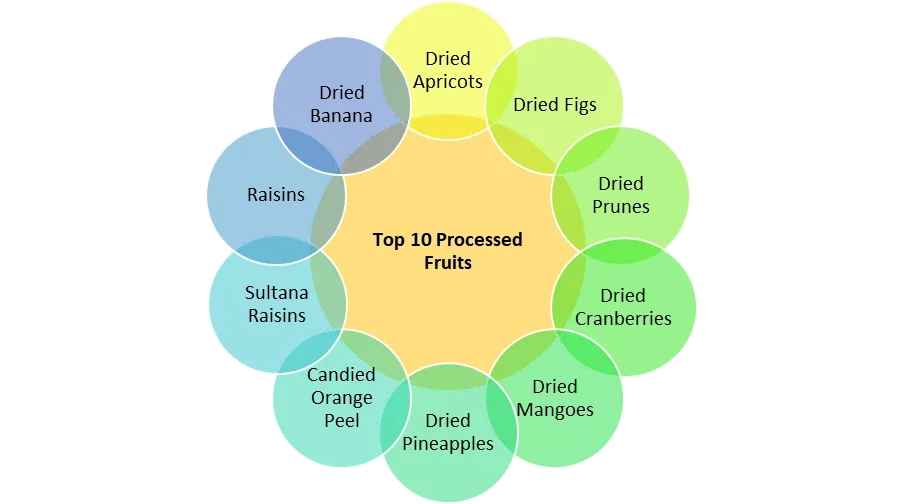
Limited and inconsistent availability of fruits
The limited and inconsistent availability of fruits presents a significant challenge to the growth of the fruit processing market. Seasonal variations in fruit production create a scenario where certain fruits are only available during specific times of the year, leading to challenges in maintaining a steady and reliable supply throughout the year.
This inconsistency poses operational difficulties for fruit processors who strive to meet the demand for processed fruit products consistently. One of the primary issues arising from seasonal fluctuations is the impact on production planning and supply chain management.
Fruit processors must contend with the reality that the bulk of fruit harvests occur within a relatively short period, requiring efficient processing, preservation, and storage to sustain production during non-harvest periods. This often involves substantial investment in storage facilities and preservation technologies to extend the shelf life of fruits to manage inventory effectively.
The dependence on seasonal availability makes the fruit processing industry vulnerable to the effects of unpredictable weather conditions. Adverse weather events such as droughts, floods, and unseasonable frosts lead to reduced fruit yields or even crop failures, causing supply shortages and potential price volatility.
Opportunity
Innovation in Product Development creates lucrative growth opportunities for market growth Innovative processed fruit products are emerging to increase fruit consumption, promote health, and reduce food waste.
These innovations encompass various aspects, including the development of high-value products based on minimally processed fruits, fruit snacks with evaluated bioactive properties, and the integration of non-destructive analysis for quality evaluation.
New or improved processing technologies are being used to ensure safety, increase shelf-life, and maintain the quality attributes of fresh products. Also, creative innovations such as laser-etched produce, rot-preventing fruit sprays, and environmentally friendly packaging are transforming the way fruits are presented and processed, contributing to the development of novel and appealing fruit-based products.
For example, Innovation in the juice category is the introduction of fruit juice drinks as an alternative breakfast food. Smoothies have also transformed the fruit juice category into a new level many companies are now offering a line of smoothies with a variety of fruits and fruit flavors and the category is growing fast.
Also, innovation in canned fruit, Dried fruits, frozen fruits, Fruit Spreads, Fruit confectionery, Fruit-containing dairy products, Fruit-containing non-alcoholic beverages, Fruit-containing alcoholic beverages, and other fruit-containing products creates lucrative growth opportunities for the Market Growth.
These innovations reflect a broader trend in the fruit processing industry towards sustainability, waste reduction, and the utilization of the entire fruit to maximize its benefits.
Fruit Processing Market Segment Analysis:
Based on Product Type, the fresh fruits segment dominates the product type segment of the fruit processing market in the year 2025.The growing consumer preference for natural and minimally processed food products. People who care about their health really like fresh fruits because they're packed with good nutrients, taste great, and have a lively texture.
This category includes lots of different fruits like berries, citrus fruits, tropical fruits, and more, adding a lot of variety to the market. Consumers nowadays are increasingly seeking healthier alternatives and are drawn to products with minimal additives and processing.
The fresh fruits segment aligns with these preferences, offering products that retain the nutritional benefits of whole fruits. Processors often employ technologies such as cold-pressing and gentle pasteurization to maintain the freshness and quality of the fruits while extending their shelf life. Fresh fruits provide the demand for convenience, with pre-cut, packaged fresh fruits gaining popularity. This convenience factor appeals to busy lifestyles, where consumers seek nutritious, on-the-go options.
Rules and Regulations of the Fruit Processing Market
| No | Act | Description |
| 1 | Perishable Agricultural Commodities Act (PACA) | The Perishable Agricultural Commodities Act (PACA) was put into effect following the fruit and vegetable industry's request to foster fair trade. PACA safeguards businesses involved in fresh and frozen fruits and vegetables by instituting and upholding a set of fair business practices. It also aids companies in resolving business disputes. |
| 2 | Food Safety Modernization Act (FSMA) | The Food Safety Modernization Act (FSMA) establishes federal regulatory guidelines for the cultivation, harvesting, and management of fruits and vegetables. Its aim is to prevent microbial contamination and minimize instances of foodborne illnesses linked to fresh produce. |
| 3 | Fresh Produce Procurement Reform Act | The Fresh Produce Procurement Reform Act is a proposed legislation designed to enhance the collaboration between the USDA, U.S. farms, and the nationwide produce supply chain. The goal is to facilitate the distribution of fresh food to individuals in need. This bill specifically emphasizes acquiring produce from various sources, including growers and distributors who are veterans, women-owned, and part of socially disadvantaged segments within the agriculture community. |
Regional Insight
Asia Pacific Region Dominated the Fruit Processing Market in the year 2025 The region benefits from a strong consumer base with diverse preferences for processed fruits due to a mix of demographic, economic, and cultural factors. Countries such as China and India, with their substantial and diverse populations, showcase this phenomenon.
The availability of abundant agricultural resources and diverse climates makes it possible to cultivate a wide variety of fruits, adding to the flexibility of the fruit processing industry. Technological advancements in processing methods, coupled with strategic export initiatives, position Asia-Pacific as a key player in the global supply chain.
Government support and a focus on health-conscious trends further propel the growth of the fruit processing sector, ensuring the region's sustained dominance in this dynamic market.
India’s Fruits Industry
After China, India holds the position of the second-largest fruit producer globally. The country's diverse topography and climate guarantee the availability of fruits throughout the year. During , India produced 107.10 million metric tonnes of fruits.
The area under cultivation of fruits stood at 7.09 million hectares in . India leads the world in the production of bananas, papaya, mango, and guava. Production and export of Indian fruits and vegetables have increased in recent years.
During , India exported fresh fruits worth US$ 750.7 million. India primarily exports its goods to nearby countries such as the UAE, Bangladesh, Pakistan, Saudi Arabia, Sri Lanka, and Nepal. Although India's worldwide market presence is currently only around 1%, its horticultural products are gaining more popularity. This is thanks to improvements in cold chain infrastructure, research, modern post-harvest technologies, supportive government policies, and effective quality control procedures.
Production of Fruits in India
The Indian government is striving hard to build a strong fruit and vegetable processing industry to sustain its market share in the global market. The concept of agri export zones and mega food parks has been conceptualized by the Indian Government to promote the food-processing industry and its sub-sector such as the fruit and vegetable processing industry in India.
The Indian government has considered investing US $ 22.97 million in establishing around 10 mega food parks and offered tax benefits to the concerned sub-sector of the food processing industry. The present fruit and vegetable processing scenario compared to the developed countries is not satisfactory.
According to the MMR Study Report, India has the largest food industry, with major fruit-producing states being Andhra Pradesh, Maharashtra, Madhya Pradesh, Uttar Pradesh, Tamil Nadu, Karnataka, and Gujarat. Fruit production in India rose to 107.10 million tonnes in from 97.97 million tonnes in growing at a compound annual growth rate (CAGR) of 3.0%.
Competitive Landscape
The competitive landscape of the global fruit and vegetable processing market is characterized by a mix of large and medium-sized players vying for market share. Key industry participants, such as Dole Food Company Inc., Agrana, Archer Daniels Midland Company, Greencore Group plc, Kraft Heinz Company, Del Monte Foods, Inc., Conagra Brands, Inc., JBT Corporation, Syntegon Technology GmbH, The Bühler Holding AG, GEA Group AG,Olam International Limited, and Nestlé S.A., contribute significantly to the market's dynamism. These companies shape industry trends through their extensive product portfolios and strategic initiatives.
To maintain and enhance their competitive positions, major players employ diverse strategies. Mergers and acquisitions are prominent, as demonstrated by The Kraft Heinz Company's acquisition of Hemmer in Brazil, expanding its product offerings and market presence. Agrana's strategic move to acquire the fruit preparations business from Taiyo Kagaku Co. illustrates the global expansion strategies pursued by key players, especially in high-potential markets including Asia. Technological innovation is another competitive driver, with companies like Sorma Group introducing cutting-edge solutions such the HyperVision platform for advanced fruit sorting. These strategies reflect the ongoing efforts of industry leaders to adapt to market dynamics, explore new growth avenues, and capitalize on emerging opportunities in the global fruit processing landscape.
Fruit Processing Market Scope Table: Inquire Before Buying
| Global Fruit Processing Market | |||
|---|---|---|---|
| Report Coverage | Details | ||
| Base Year: | 2025 | Forecast Period: | 2026-2032 |
| Historical Data: | 2020 to 2025 | Market Size in 2025: | USD 11.30 Bn. |
| Forecast Period 2026 to 2032 CAGR: | 14.2% | Market Size in 2032: | USD 28.63 Bn. |
| Segments Covered: | by Product Type | Fresh Fresh-Cut Canned Frozen Dried |
|
| by Processing Equipment | Preprocessing Processing Washing Filling Seasoning Packaging |
||
| by End Use | Tubes Cups Jars Bottles |
||
| by Distribution Channel | Retail (supermarkets, hypermarkets) Foodservice (restaurants, cafes) Online Retail |
||
Fruit Processing Market, by Region
North America (United States, Canada, and Mexico)
Europe (UK, France, Germany, Italy, Spain, Sweden, Austria, and the Rest of Europe)
Asia Pacific (China, South Korea, Japan, India, Australia, Indonesia, Malaysia, Vietnam, Taiwan, Bangladesh, Pakistan, and the Rest of APAC)
Middle East and Africa (South Africa, GCC, Egypt, Nigeria, and the Rest of ME&A)
South America (Brazil, Argentina Rest of South America)
Fruit Processing Market, key players
1. Dole Food Company, Inc.
2. Del Monte Foods, Inc.
3. Chiquita Brands International
4. Ardo Group
5. Conagra Brands, Inc.
6. The Kraft Heinz Company
7. Tree Top, Inc.
8. Welch's
9. Seneca Foods Corporation
10. Hain Celestial Group
11. SunOpta Inc.
12. Capricon Food Products India Ltd.
13. SVZ International B.V.
14. Sun-Maid Growers of California
15. Cargill, Incorporated
16. JBT Corporation
17. Kerry Group
18. AGRANA Beteiligungs-AG
19. Bühler Group
20. ITC Limited (India)
FAQs
1] What segments are covered in the Global Fruit Processing Market report?
Ans. The segments covered in the Fruit Processing Market report are based on, Product Type, Processing Equipment, End Use, Distribution Channel, and Regions.
2] Which region is expected to hold the highest share of the Global Fruit Processing Market?
Ans. The Asia Pacific region is expected to hold the highest share of the Fruit Processing Market.
3] What is the market size of the Global Fruit Processing Market by 2032?
Ans. The market size of the Fruit Processing Market by 2032 is expected to reach USD 28.63 Bn.
4] What was the market size of the Global Fruit Processing Market in 2025?
Ans. The market size of the Fruit Processing Market in 2025 was valued at USD 11.30 Bn.
5] Key players in the Global Fruit Processing Market.
Ans. Dole Food Company, Inc., Del Monte Foods, Inc., Chiquita Brands International, Ardo Group, Conagra Brands, Inc., The Kraft Heinz Company, Tree Top, Inc.