
Electroactive Polymers (EAPs) Market: by Type (Conductive Polymers, ICPs, IDPs), by Application (ESD, EMI Shielding, Actuators, Batteries, Sensors), by End-Use Industry - Forecast to 2029
Overview
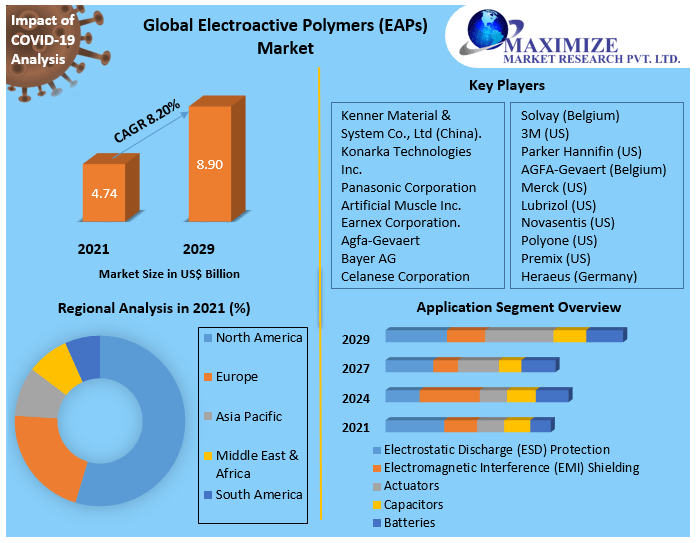
Electroactive Polymers (EAPs) Market size is expected to reach nearly US$ 8.90 Bn. by 2029 with the CAGR of 8.2% during the forecast period.
Electroactive Polymers (EAPs) Market Overview:
The report includes the analysis of impact of COVID-19 lock-down on the revenue of market leaders, followers, and disrupters. Since lock down was implemented differently in different regions and countries, impact of same is also different by regions and segments. The report has covered the current short term and long term impact on the market, same will help decision makers to prepare the outline for short term and long term strategies for companies by region.
To know about the Research Methodology :- Request Free Sample Report
Electoactive Polymers (EAPs) Market Dynamics:
Increasing usage of touchscreen smartphones is augmenting the electro active polymer market. Continuous reduction in the price of these devices, making them more affordable and economically feasible for the end-users belonging to the middle class. This development in the need for touchscreen smartphones will contribute to the growth of the global electroactive polymer market.
Electoactive Polymers (EAPs) Market Segment Analysis:
Electroactive polymers based on type, market has been segmented into conductive plastics, inherently conductive polymers and inherently dissipative polymers. The inherently conductive polymers market is expected to be one of the major contributors for the market growth during the forecast period.
Inherently conductive polymers (ICPs) are sub-segmented into polythiophenes, polyanilines, polyacetylenes, polyphenylene vinylenes (PPV), polyfluorenes, polyphenylene sulfides, polynaphthalenes and others. Large demand for inherently conductive polymers in robotics, artificial muscles, actuators & sensors in the medical, energy harvesting and electrical & electronics industries is expected to drive the growth of this segment.
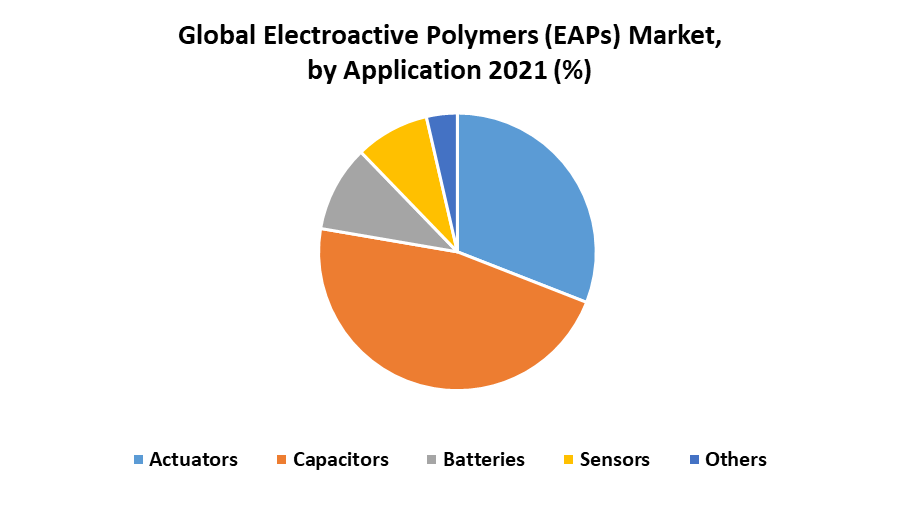
Electroactive polymers based on application, is segmented into electrostatic discharge (ESD) protection, electromagnetic interference (EMI), shielding, actuators, capacitors, batteries, sensors and others. The actuator application segment is expected to hold one of the largest shares of the market for electroactive polymers during the forecast period. Due to large use of electroactive polymers in actuator applications owing to its high operational efficiency over conventional materials.
Electoactive Polymers (EAPs) Market Regional Analysis:
Geographically, Asia Pacific is expected to be one of the largest markets for electroactive polymers and is projected to grow at the high CAGR during the forecast period. This is due to presence of major players of electroactive polymers in this region and growing demand for electronic applications from countries like China, South Korea, Japan and India.
The objective of the report is to present comprehensive analysis of market including all the stakeholders of the industry. The past and current status of the industry with forecasted market size and trends are presented in the report with analysis of complicated data in simple language.
The report covers all the aspects of industry with dedicated study of key players that includes market leaders, followers and new entrants by region.
PORTER, SVOR, PESTEL analysis with the potential impact of micro-economic factors by region on the market have been presented in the report. External as well as internal factors that are supposed to affect the business positively or negatively have been analyzed, which will give clear futuristic view of the industry to the decision makers.
The report also helps in understanding market dynamics, structure by analyzing the market segments, and project the market size. Clear representation of competitive analysis of key players by type, price, financial position, product portfolio, growth strategies, and regional presence in the market make the report investor’s guide.
Electroactive Polymers (EAPs) Market, Key Highlights:
• Electroactive Polymers (EAPs) Market analysis and forecast, in terms of value.
• Comprehensive study and analysis of market drivers, restraints and opportunities influencing the growth of the Electroactive Polymers (EAPs) Market
• Electroactive Polymers (EAPs) Market segmentation on the basis of type, source, end-user, and region (country-wise) has been provided.
• Electroactive Polymers (EAPs) Market strategic analysis with respect to individual growth trends, future prospects along with the contribution of various sub-market stakeholders have been considered under the scope of study.
• Electroactive Polymers (EAPs) Market analysis and forecast for five major regions namely North America, Europe, Asia Pacific, the Middle East & Africa (MEA) and Latin America along with country-wise segmentation.
• Profiles of key industry players, their strategic perspective, market positioning and analysis of core competencies are further profiled.
• Competitive developments, investments, strategic expansion and competitive landscape of the key players operating in the Electroactive Polymers (EAPs) Market are also profiled.
Electoactive Polymers (EAPs) Market Report Scope: Inquire before buying
| Global Electoactive Polymers (EAPs) Market | |||
|---|---|---|---|
| Report Coverage | Details | ||
| Base Year: | 2021 | Forecast Period: | 2022-2029 |
| Historical Data: | 2017 to 2021 | Market Size in 2021: | US$ 4.74 Bn. |
| Forecast Period 2022 to 2029 CAGR: | 8.20% | Market Size in 2029: | US$ 8.90 Bn. |
| Segments Covered: | by Type | • Conductive Plastics o ESD/EMI Compounds o Antistatic Additives o Carbon/Metal Fibers o Carbon Nanotubes o Others • Inherently Conductive Polymers (ICPs) o Polythiophenes o Polyanilines o Polyacetylenes o Polyphenylene Vinylenes (PPV) o Polyfluorenes o Polyphenylene Sulfides o Polynaphthalenes o Others • Inherently Dissipative Polymers (IDPs) |
|
| by Application | • Electrostatic Discharge (ESD) Protection • Electromagnetic Interference (EMI) Shielding • Actuators • Capacitors • Batteries • Sensors • Others |
||
Electoactive Polymers (EAPs) Market, by Region:
• North America
• Europe
• Asia Pacific
• Middle East & Africa
• Latin America
Electoactive Polymers (EAPs) Market Key Players
• Solvay (Belgium)
• 3M (US)
• Parker Hannifin (US)
• AGFA-Gevaert (Belgium)
• Merck (US)
• Lubrizol (US)
• Novasentis (US)
• Polyone (US)
• Premix (US)
• Heraeus (Germany)
• Kenner Material & System Co., Ltd (China).
• Konarka Technologies Inc.
• Panasonic Corporation
• Artificial Muscle Inc.
• Earnex Corporation.
• Agfa-Gevaert
• Bayer AG
• Celanese Corporation
• RTP
• Piezotech S.A
• Premix OY
• Cambridge Display Technology
Frequently Asked Questions:
1. Which region has the largest share in Global Electroactive Polymers (EAPs) Market?
Ans: Asia Pacific region holds the highest share in 2021.
2. What is the growth rate of Global Electroactive Polymers (EAPs) Market?
Ans: The Global Electroactive Polymers (EAPs) Market is growing at a CAGR of 8.20% during forecasting period 2022-2029.
3. What is scope of the Global Electroactive Polymers (EAPs) market report?
Ans: Global Electroactive Polymers (EAPs) Market report helps with the PESTEL, PORTER, COVID-19 Impact analysis, Recommendations for Investors & Leaders, and market estimation of the forecast period.
4. Who are the key players in Global Electroactive Polymers (EAPs) market?
Ans: The important key players in the Global Electroactive Polymers (EAPs) Market are – Solvay (Belgium), 3M (US), Parker Hannifin (US), AGFA-Gevaert (Belgium), Merck (US), Lubrizol (US), Novasentis (US), Polyone (US), Premix (US), Heraeus (Germany), Kenner Material & System Co., Ltd (China)., Konarka Technologies Inc., Panasonic Corporation, Artificial Muscle Inc., Earnex Corporation., Agfa-Gevaert, Bayer AG, Celanese Corporation, RTP, Piezotech S.A, Premix OY, and Cambridge Display Technology
5. What is the study period of this market?
Ans: The Global Electroactive Polymers (EAPs) Market is studied from 2021 to 2029.