
Continuous Glucose Monitoring Market Size, by Type, Component, Demography, Application and Enduser
Overview
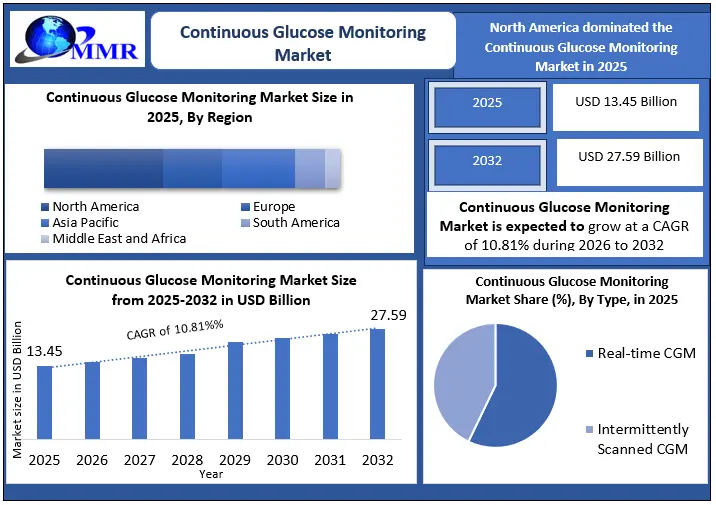
The Global Continuous Glucose Monitoring Market was valued at approximately USD 13.45 billion in 2025 and is projected to reach nearly USD 27.59 billion by 2032, expanding at a CAGR of 10.81% during the forecast period from 2026 to 2032.
As a result, Global diabetes care ecosystem is rapidly shifting toward connected, real-time, and AI-enabled patient monitoring solutions as healthcare providers increasingly prioritize preventive care and personalized disease management. Rising diabetes prevalence, growing adoption of wearable healthcare technologies, expanding reimbursement coverage, and increasing awareness regarding continuous glucose tracking are accelerating demand for advanced glucose monitoring devices worldwide. Continuous glucose monitoring systems are transforming diabetes management by enabling real-time glucose insights, reducing hypoglycemia risks, improving patient adherence, and supporting integration with digital therapeutics and insulin delivery platforms.
The Continuous Glucose Monitoring Market is witnessing substantial growth also due to rising adoption of wearable medical devices, increasing prevalence of Type 1 and Type 2 diabetes, and rapid advancements in sensor technologies. Healthcare systems globally are increasingly integrating real-time glucose monitoring solutions into diabetes management programs to improve patient outcomes and reduce long-term healthcare costs associated with diabetes-related complications.
Technological advancements such as AI-powered predictive analytics, smartphone-connected CGM systems, implantable glucose sensors, cloud-based monitoring platforms, and automated insulin delivery integration are significantly improving device efficiency, patient convenience, and long-term treatment adherence. Increasing investments in digital healthcare infrastructure and telemedicine platforms are further strengthening market penetration across both developed and emerging economies.
Key Highlights of the Continuous Glucose Monitoring Market
• The Real-Time CGM segment accounted for over 65% of the Continuous Glucose Monitoring Market share in 2025, favoured for its continuous, automatic glucose data provision and smartphone integration.
• In 2025, Type 1 diabetes segment dominated for about 55% of CGM users, while Type 2 diabetes CGM adoption is surging with a CAGR exceeding 17%, driven by improved insurance coverage and increasing disease prevalence.
• The Continuous Glucose Monitoring Market growth is reinforced by the growing demand for implantable CGM systems with sensor life exceeding 180 days, and intermittently scanned CGM devices that appeal to cost-conscious patients.
• Asia-Pacific nations such as China, India, and Japan represent key growth hubs, collectively contributing over 25% of the total global Continuous Glucose Monitoring Market demand volume in 2025.
• Globally, demand volume for CGM devices exceeded 4.3 million units in 2025, projected to surpass 12 million units by 2032.
To know about the Research Methodology :- Request Free Sample Report
Continuous Glucose Monitoring Market Dynamics
Surging Diabetes Prevalence to Drive the Continuous Glucose Monitoring Market Growth: The increasing number of diabetes cases in India, China, and the U.S. has made continuous glucose monitoring essential. Cutting-Edge Technological Innovation: Breakthroughs such as AI-powered predictive analytics, implantable sensors lasting up to six months, and seamless integration with insulin pumps are enhancing patient adherence and improving glucose control, transforming diabetes care.
Robust Government & Regulatory Backing: Progressive policies and expanding reimbursement programs in key Continuous Glucose Monitoring Market such as the U.S., Germany, and Australia are significantly improving CGM accessibility. FDA approval of next-generation devices is fast-tracking adoption worldwide.
Rising Diabetes Prevalence and Growing Adoption of Digital Healthcare Technologies to Drive the Continuous Glucose Monitoring Market Growth
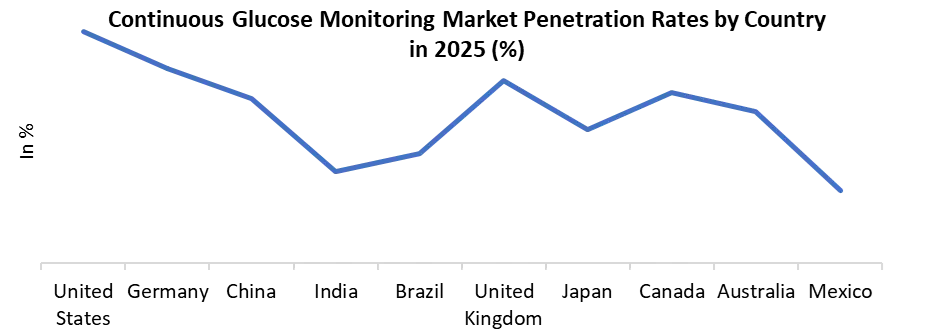
The rising global burden of diabetes continues to remain one of the primary growth drivers for the Continuous Glucose Monitoring Market. According to healthcare estimates, more than 640 million people are projected to be living with diabetes globally by 2030, significantly increasing demand for advanced glucose monitoring solutions. Growing awareness regarding continuous glucose tracking, early disease management, and prevention of severe hypoglycemic events is accelerating adoption of wearable glucose monitoring devices across hospitals, homecare settings, and diabetes clinics.
Additionally, increasing penetration of smartphones, connected healthcare ecosystems, AI-enabled healthcare analytics, and cloud-integrated diabetes management platforms is improving accessibility and usability of CGM systems globally. Integration with insulin pumps, digital therapeutics, and telemedicine platforms is further transforming diabetes care delivery models and strengthening long-term market growth potential.
Continuous Glucose Monitoring Market Opportunity
The Continuous Glucose Monitoring Market growth through the development of affordable CGM solutions, driven by increased R&D investments targeting price-sensitive regions such as India, Brazil, and South Africa. These countries collectively account for over 150 million diabetes patients, creating a vast demand for cost-effective glucose monitoring devices. By addressing accessibility challenges, low-cost CGM technologies are expected to capture a sizable share of the emerging markets segment, accelerating market growth.
Non-invasive CGM technologies are reshaping the market landscape by offering pain-free alternatives to traditional invasive sensors. Innovations in optical and transdermal glucose monitoring devices are anticipated to grow at a CAGR exceeding 18%, broadening adoption among reluctant patient groups. The rising diabetes burden in emerging economies such as China, Mexico, and Indonesia, with China alone reporting over 140 million diagnosed cases, combined with government healthcare initiatives, is creating immense growth opportunities. Integration with artificial pancreas systems, growing at a projected 20% CAGR, is also driving advanced glucose management solutions and boosting continuous glucose monitoring market penetration globally.
Non-Invasive Glucose Monitoring Technologies and AI-Integrated Diabetes Management Platforms to Create Significant Market Opportunities
The growing development of non-invasive glucose monitoring technologies is expected to create substantial growth opportunities across the Global Continuous Glucose Monitoring Market. Emerging technologies including optical sensing, transdermal monitoring, and AI-enabled predictive glucose analytics are improving patient comfort and reducing dependency on traditional invasive monitoring systems.
Simultaneously, increasing adoption of digital therapeutics, connected insulin delivery systems, smartphone-based monitoring applications, and cloud-integrated healthcare platforms is enabling personalized diabetes management and real-time remote patient monitoring. These advancements are expected to significantly expand adoption across pediatric, geriatric, and price-sensitive patient populations globally.
Continuous Glucose Monitoring Market Segment Analysis
Based on the demographic segment, Paediatrics held the largest Continuous Glucose Monitoring Market share in 2025. Continuous innovations such as factory-calibrated sensors for children aged two and above, FDA approvals, and integration with insulin pumps are driving adoption. Expanded school health-plan coverage and targeted public health campaigns are boosting early diagnosis and long-term CGM usage in this high-potential cohort.
The paediatric segment accounted for a significant share of the Continuous Glucose Monitoring Market in 2025 due to rising awareness regarding early diabetes management, increasing adoption of child-friendly wearable devices, and growing availability of factory-calibrated sensors designed specifically for pediatric patients. Expanding insurance coverage and integration of CGM systems with insulin pumps are further supporting long-term adoption across this demographic segment.

Continuous Glucose Monitoring Market Regional Analysis
North America dominated the Continuous Glucose Monitoring Market in 2025, accounting for nearly 42% of global revenue due to high healthcare expenditure, advanced diabetes management infrastructure, strong reimbursement support, and early adoption of wearable healthcare technologies. The United States continues to lead regional growth owing to rising prevalence of Type 1 and Type 2 diabetes, strong insurance coverage for CGM devices, and increasing integration of CGM systems with insulin pumps and digital health platforms.
Europe represented a significant market share driven by ageing populations, increasing diabetes burden, and favorable reimbursement frameworks supporting continuous glucose monitoring adoption. Countries such as Germany, the United Kingdom, France, and Italy are witnessing strong adoption of advanced diabetes management technologies supported by public healthcare systems and rising awareness regarding preventive care.
Asia-Pacific is projected to witness the fastest growth during the forecast period owing to rising healthcare expenditure, increasing urban diabetic populations, expanding middle-class income levels, and improving healthcare accessibility across China, India, Japan, and Southeast Asia. Government healthcare digitization initiatives and growing investments in wearable medical technologies are further supporting market expansion across the region.
Middle East & Africa and South America are gradually emerging as high-potential markets due to increasing diabetes awareness, improving healthcare infrastructure, and rising adoption of digital healthcare monitoring solutions. Growing government focus on chronic disease management and preventive healthcare is expected to support long-term market growth across these regions.
Continuous Glucose Monitoring Market Competitive Landscape:
Leading companies are increasingly focusing on sensor miniaturization, AI-powered predictive analytics, extended sensor lifespan, and integration with digital diabetes management platforms to strengthen competitive positioning. Strategic collaborations with insulin pump manufacturers, telehealth providers, and digital therapeutics companies are accelerating development of fully integrated diabetes care ecosystems globally
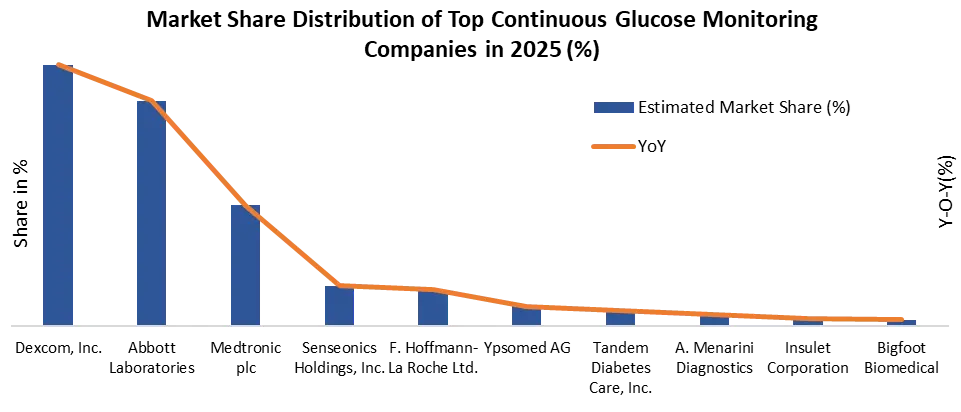
Leading players such as Dexcom, Abbott Laboratories, Medtronic, Senseonics, and Roche Diagnostics collectively account for over 70% of the global Continuous Glucose Monitoring Market. These companies focus heavily on:
• R&D Investments: Annually, top firms invest upwards of USD 200 million to enhance sensor accuracy, battery life, and device miniaturization.
• Strategic Collaborations: Partnerships with insulin pump manufacturers and digital health companies are creating integrated diabetes management ecosystems.
• Geographic Expansion: Targeting the high-growth emerging Continuous Glucose Monitoring Market with localised pricing and supply chain strategies.
• Mergers & Acquisitions: Notable recent deals include Abbott’s growth into implantable sensor technology and Medtronic’s AI analytics platform acquisition to improve CGM data utilization.
Continuous Glucose Monitoring Market Scope: Inquire before buying
| Continuous Glucose Monitoring Market | |||
|---|---|---|---|
| Report Coverage | Details | ||
| Base Year: | 2025 | Forecast Period: | 2026-2032 |
| Historical Data: | 2020 to 2025 | Market Size in 2025: | USD 13.45 Bn. |
| Forecast Period 2026 to 2032 CAGR: | 10.81% | Market Size in 2032: | USD 27.59 Bn. |
| Segments Covered: | by Type | Real-time CGM Intermittently Scanned CGM |
|
| by Component | Sensors Transmitters Receivers / Monitors Others |
||
| by Demography | Adult Paediatrics |
||
| by Application | Type-1 Diabetes Management Type-2 Diabetes Management Gestational Diabetes Others |
||
| by End User | Home care Hospitals & Clinics Others |
||
Continuous Glucose Monitoring Market, by region
North America (United States, Canada and Mexico)
Europe (UK, France, Germany, Italy, Spain, Sweden, Austria and Rest of Europe)
Asia Pacific (China, South Korea, Japan, India, Australia, ASEAN and Rest of APAC)
South America (Brazil, Argentina Rest of South America)
Middle East & Africa (South Africa, GCC, and Rest of ME&A)
Continuous Glucose Monitoring Key Players
1. Dexcom, Inc.
2. Abbott Laboratories
3. Medtronic plc
4. Senseonics Holdings, Inc.
5. F. Hoffmann-La Roche Ltd.
6. A. Menarini Diagnostics
7. Bio-RFID (Know Labs)
8. Indigo Diabetes
9. Profusa, Inc.
10. Liom (Spiden)
11. Nemaura Medical Inc.
12. i-SENS Inc.
13. OSANG Healthcare Co., Ltd.
14. TaiDoc Technology Corporation
15. Zhejiang POCTech Co.,Ltd.
16. Others
Continuous Glucose Monitoring Market - FAQ:
1. What is the size of the Continuous Glucose Monitoring Market in 2025?
Ans: The market was valued at USD 13.45 billion in 2025 and is expected to reach USD 27.59 billion by 2032.
2. Which region leads the Continuous Glucose Monitoring Market?
Ans: North America leads with 42% market share in 2025, followed by rapid growth in the Asia-Pacific region.
3. What factors are driving the growth of the Continuous Glucose Monitoring Market?
Ans: Rising diabetes cases, technological innovations, and strong government support are key growth drivers.
4. Which diabetes type dominates the CGM market?
Ans: Type 1 diabetes accounts for about 55% of CGM users, while Type 2 diabetes is growing rapidly.
5. Who are the top companies in the Continuous Glucose Monitoring Market?
Ans: Leading players include Dexcom, Abbott Laboratories, Medtronic, Senseonics, and Roche Diagnostics.
6. What is driving the growth of the Continuous Glucose Monitoring Market?
Answer: Growth in the Continuous Glucose Monitoring Market is primarily driven by rising diabetes prevalence, increasing adoption of wearable healthcare technologies, expanding reimbursement coverage, technological advancements in sensor accuracy, and growing integration of CGM systems with AI-powered diabetes management platforms and insulin delivery devices.