Caramel Color Market Size by Type, Application, Region – Revenue Pool Analysis, Margin Structure Assessment, Capital Flow Trends, Competitive Benchmarking & Forecast to 2032

1.6%
CAGR (2026-2032)
548.54 USD Mn.
Market Size
309
Report Pages
124
Market Tables

Overview

The Caramel Color Market size was valued at USD 539.90 Million in 2025 and the total Caramel Color revenue is expected to grow at a CAGR of 1.6% from 2026 to 2032, reaching nearly USD 613.00 Million.

Caramel Color Market Overview:

Caramel colour, also known as caramel colouring, is a type of food colouring that is water-soluble. Caramelization is the process of heating carbohydrates (sugars) in the presence of acids, alkalis, or salts. It has a burnt sugar odour and a slightly bitter flavour, and it has been oxidised more thoroughly than caramel candy. Caramel Color available in a variety of colours, ranging from pale yellow to amber to dark brown. One of the oldest and most widely used food colourants for enhancing natural colours, correcting natural colour variations, and restoring colour loss due to light degradation during food preparation and storage is caramel colour.

Caramel colour is one of the world's most widely used food colours. Colas, soy sauce, seasonings, breads, cereals, and other foods and beverages are commonly coloured with it.Caramel Color MarketTo know about the Research Methodology :- Request Free Sample Report
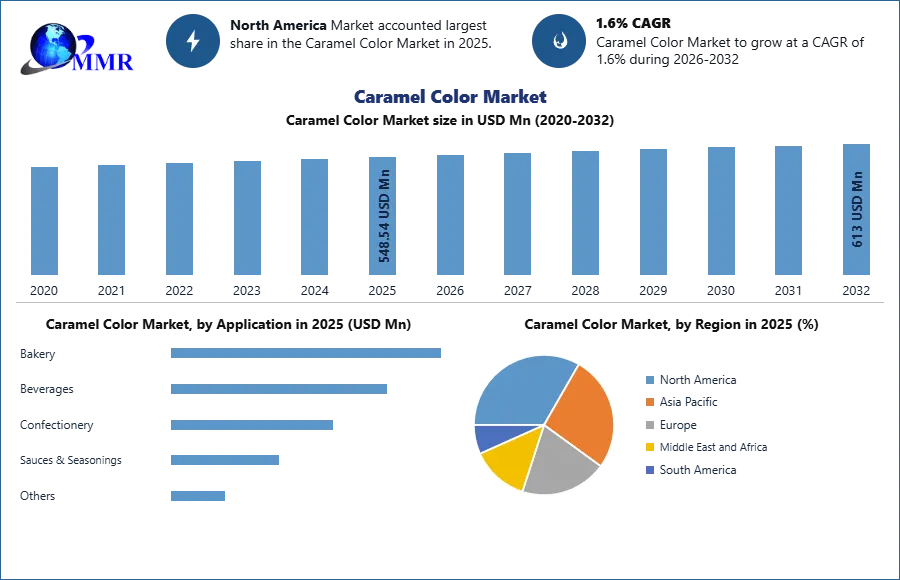
Caramel colours are gaining global popularity as consumers increase their consumption of bread and confectionery items. This ingredient is also commonly found in beverages, where it can be found in liquids and powders in teas, lemonades, fruit drinks, colas, and beer, to name a few. Caramel colours have many applications, and both small and large businesses have been looking for ways to capitalise on current consumer and food trends in order to stay ahead of the competition.

Caramel Color Market Segment Drivers:

As consumer interest in baked goods grows, so does the demand for caramel ingredients. Smaller and bite-sized packaging, as well as ease of preparation, add to the convenience of bakery items. Various baked goods, such as cream-filled biscuits and cakes, are made with organic caramel ingredients and colours, which not only improve the taste but also help to increase their overall appeal and sales.

The world's major manufacturers of caramel ingredient and caramel colour products sell their products through an online platform. Manufacturers offer steep discounts on product sales, resulting in a profitable transaction for buyers. Furthermore, manufacturing companies are developing their own websites for sales or forming partnerships with e-commerce behemoths to sell their products. It is expected that in the future, all of the major players in the caramel ingredient and caramel colour industries will shift their services online in order to increase sales and reach more small and large scale businesses.

Several bakery & confectionery shops, as well as 4- and 5-star hotel chains, serve premium food. Special icing, toppings, and decorations are among the key features that distinguish premium baked goods and, as a result, are key market growth drivers.

This segment also attracts high-end consumers who are eager to spend money on specialty and decorative foods, fueling demand for caramel food colour.

Caramel Color Market Segment Restraints:

The introduction of caramel substitutes has posed a threat to the market in recent years. Concerns about the negative effects of caramel components as a colouring agent have been a significant setback for the company in recent years.

Caramel ingredient use has been exacerbated by a general shift in eating habits, with consumers increasingly preferring healthier, low-carb, and low-sugar meals. This is proving to be a stumbling block for many producers.

Rising prices for caramel components and other raw materials will also limit industry growth. The rise in the cost of the raw materials used to make caramel powder raises the total cost of making caramel colours, which is likely to be a stumbling block in the global expansion of the caramel colour market.

Caramel Color Market Segment Analysis:

The global Caramel Color market is segmented by type and application.

On the basis of application, the Caramel Color market is divided bakery goods, soy sauces, beverage, soft drink, Candy and confectionary and other. Candy and confectionary applications are expected to remain important revenue generators, rising at a CAGR of more than 7% over the assessment period. Beverages are expected to grow at a 9.1 percent CAGR during the forecast period. The rise is attributed to the increased use of caramel food colours in alcoholic beverages and carbonates.

Caramel Color Market Regional Insights:

Regionally the Caramel Color Market is segmented into North America, South America, Europe, Asia Pacific, Middle East & Africa. In North America, the United States is expected to account for 84.7 percent of the market in . Caramel food colour is used in the production of chocolate, so the demand is attributed to the rising demand for chocolate in the United States. Brazil dominates the Latin American market with a 48.5 percent share. Demand for caramel food colour in the Brazilian beverage industry drives the market.

Germany is expected to account for 23.1 percent of the overall market share in Europe in . The food and beverage industry is Germany's fourth largest, and it is expected to drive demand for caramel food colours.

The China market is expected to grow at a CAGR of 7.4 percent in the Asia Pacific region. The rise can be attributed to the increased use of caramel food colours in energy drinks. Energy drinks are becoming increasingly popular among China's younger generations, which will result in an increase in imports in the coming years. Energy drink sales in the country have skyrocketed. Furthermore, with a projected annual growth rate of 10% in , China is one of the world's largest energy drink markets. Furthermore, the caramel food colours market in India is expected to be worth US$ 8,340.5 thousand in . Currently, India is an important market for many companies looking to establish a strong beverage brand. The non-alcoholic beverage market in India is one of the fastest expanding segments, thanks to a number of macroeconomic variables.

Caramel Color Market Competitive Landscape:

Because of the numerous applications of caramel food colour in various items such as drinks, dairy products, meat products, bakery & confectionary products, savoury items & snacks, and many others, the market is expected to grow steadily over the forecast period. The B2B segment is expected to grow in importance and will be critical in creating a favourable environment for growth.

The Chr. Hansen Natural Colors announced the acquisition of the SECNA Natural Ingredients Group in April 2022 to expand its strong pigment portfolio.

GNT Group announced the expansion of its yellow EXBERRY food colouring range for biscuits, custards, and other bakery items in August 2022.

The objective of the Global Caramel Color market report is to present a comprehensive analysis of the Global Caramel Color market to the stakeholders in the industry. The past and current status of the industry with the forecasted market size and trends are presented in the Global Caramel Color market report with the analysis of complicated data in simple language. The report covers all the aspects of the industry with a dedicated study of key players that include market leaders, followers, and new entrants.

PORTER, PESTEL analysis with the potential impact of micro-economic factors of the Global Caramel Color market have been presented in the report. External as well as internal factors that are supposed to affect the business positively or negatively have been analyzed, which will give a clear futuristic view of the industry to the decision-makers.

The Global Caramel Color market report also helps in understanding the Caramel Color market dynamics, structure by analyzing the market segments and project the Caramel Color market size. Clear representation of competitive analysis of key players by product, price, financial position, product portfolio, growth strategies, and regional presence in the Caramel Color market make the report investor’s guide.

Recent Industry Developments

Exact Date Company Development Impact
08 March 2026 Sethness Roquette Unveiled a new technical showcase at Food Ingredients China (FIC) focusing on high-stability caramel for the Asian beverage sector. Strengthens competitive positioning in the fastest-growing regional market through direct technical engagement with local producers.
10 September 2025 Mondelez International Announced a major strategic phase-out of synthetic food dyes in favor of natural alternatives like caramel color. Directly increases B2B demand for high-purity natural caramel colorants among global confectionery giants.
14 March 2025 Cargill, Incorporated Launched the "Caramel Selection" range featuring four new sensorial flavor-blends including "Sweet Dream" and "Butter-Fusion." Blurs the line between colorant and flavor, capturing higher value in the premium chocolate and dairy segments.
02 March 2025 Sethness Roquette Successfully commercialized Class I Powder Caramel Color 1360PW, a dark reddish-brown variant for dry spice blends. Expands clean-label applications into the savory and pet food markets where high-intensity powder is required.

Caramel Color Market Scope: Inquire before buying

Caramel Color Market
Report Coverage Details
Base Year: 2025 Forecast Period: 2026-2032
Historical Data: 2020 to 2025 Market Size in 2025: 548.54 USD Mn
Forecast Period 2026-2032 CAGR: 1.6% Market Size in 2032: 613 USD Mn
Segments Covered: by Type Class I Caramel Color
Class II Caramel Color
Class III Caramel Color
Class IV Caramel Color
by Application Bakery
Beverages
Confectionery
Sauces & Seasonings
Others
by Form Liquid
Powder

Caramel Color Market, by Region:

North America (United States, Canada and Mexico)
Europe (UK, France, Germany, Italy, Spain, Sweden, Austria and Rest of Europe)
Asia Pacific (China, South Korea, Japan, India, Australia, Indonesia, Malaysia, Vietnam, Taiwan, Bangladesh, Pakistan and Rest of APAC)
Middle East and Africa (South Africa, GCC, Egypt, Nigeria and Rest of ME&A)
South America (Brazil, Argentina Rest of South America)

Key Players / Competitors Profiles Covered in Brief in Global Caramel Color Market Report in Strategic Perspective:

  1. Sethness Caramel Products Company
  2. Sensient Technologies Corporation
  3. Ingredion Incorporated
  4. Cargill Incorporated
  5. AIPU Food Industry Co.
  6. Guangzhou Shuangqiao Co.
  7.  Qianhe Food Industry Co. Ltd.
  8. Alvin Caramel Colors Private Ltd.
  9. Megha International
  10. Kolor Jet Chemicals Pvt. Ltd.
  11. Aarkay Food Products Ltd.
  12. Philippine Aminosan Corporation
  13. San Soon Seng Food Industries sdn bhd
  14. Matrix Pharma Chem
  15. Youngsun Food Colorings
  16. Kemfood
  17. EUSA COLORS (Asia) Ltd.
  18. Givaudan
  19. FELIX KOCH OFFENBACH Couleur und Karamel GmbH
  20. Nigay
  21. Metarom
  22. Puratos Group
  23. Sunspray Food Ingredients (Pty) Ltd.
  24. DDW, The Color House
  25. Mascot Food Colours

Table of Contents

1. Caramel Color Market Introduction
1.1. Study Assumption and Market Definition
1.2. Scope of the Study
1.3. Executive Summary
2. Global Caramel Color Market: Competitive Landscape
2.1. MMR Competition Matrix
2.2. Competitive Landscape
2.3. Key Players Benchmarking
2.3.1. Company Name
2.3.2. Business Segment
2.3.3. End-user Segment
2.3.4. Revenue (2025)
2.3.5. Company Locations
2.4. Leading Caramel Color Market Companies, by market capitalization
2.5. Market Structure
2.5.1. Market Leaders
2.5.2. Market Followers
2.5.3. Emerging Players
2.6. Mergers and Acquisitions Details
3. Caramel Color Market: Dynamics
3.1. Caramel Color Market Trends by Region
3.1.1. North America Caramel Color Market Trends
3.1.2. Europe Caramel Color Market Trends
3.1.3. Asia Pacific Caramel Color Market Trends
3.1.4. Middle East and Africa Caramel Color Market Trends
3.1.5. South America Caramel Color Market Trends
3.2. Caramel Color Market Dynamics by Region
3.2.1. North America
3.2.1.1. North America Caramel Color Market Drivers
3.2.1.2. North America Caramel Color Market Restraints
3.2.1.3. North America Caramel Color Market Opportunities
3.2.1.4. North America Caramel Color Market Challenges
3.2.2. Europe
3.2.2.1. Europe Caramel Color Market Drivers
3.2.2.2. Europe Caramel Color Market Restraints
3.2.2.3. Europe Caramel Color Market Opportunities
3.2.2.4. Europe Caramel Color Market Challenges
3.2.3. Asia Pacific
3.2.3.1. Asia Pacific Caramel Color Market Drivers
3.2.3.2. Asia Pacific Caramel Color Market Restraints
3.2.3.3. Asia Pacific Caramel Color Market Opportunities
3.2.3.4. Asia Pacific Caramel Color Market Challenges
3.2.4. Middle East and Africa
3.2.4.1. Middle East and Africa Caramel Color Market Drivers
3.2.4.2. Middle East and Africa Caramel Color Market Restraints
3.2.4.3. Middle East and Africa Caramel Color Market Opportunities
3.2.4.4. Middle East and Africa Caramel Color Market Challenges
3.2.5. South America
3.2.5.1. South America Caramel Color Market Drivers
3.2.5.2. South America Caramel Color Market Restraints
3.2.5.3. South America Caramel Color Market Opportunities
3.2.5.4. South America Caramel Color Market Challenges
3.3. PORTER's Five Forces Analysis
3.4. PESTLE Analysis
3.5. Technology Roadmap
3.6. Regulatory Landscape by Region
3.6.1. North America
3.6.2. Europe
3.6.3. Asia Pacific
3.6.4. Middle East and Africa
3.6.5. South America
3.7. Key Opinion Leader Analysis For Caramel Color Industry
3.8. Analysis of Government Schemes and Initiatives For Caramel Color Industry
3.9. Caramel Color Market Trade Analysis
3.10. The Global Pandemic Impact on Caramel Color Market
4. Caramel Color Market: Global Market Size and Forecast by Segmentation (in USD Mn) 2025-2032
4.1. Caramel Color Market Size and Forecast, by Type (2025-2032)
4.1.1. Class I Caramel Color
4.1.2. Class II Caramel Color
4.1.3. Class III Caramel Color
4.1.4. Class IV Caramel Color
4.2. Caramel Color Market Size and Forecast, by Application (2025-2032)
4.2.1. Bakery
4.2.2. Beverages
4.2.3. Confectionery
4.2.4. Sauces & Seasonings
4.2.5. Others
4.3. Caramel Color Market Size and Forecast, by Form (2025-2032)
4.3.1. Liquid
4.3.2. Powder
4.4. Caramel Color Market Size and Forecast, by Region (2025-2032)
4.4.1. North America
4.4.2. Europe
4.4.3. Asia Pacific
4.4.4. Middle East and Africa
4.4.5. South America
5. North America Caramel Color Market Size and Forecast by Segmentation (in USD Mn) 2025-2032
5.1. North America Caramel Color Market Size and Forecast, by Type (2025-2032)
5.1.1. Class I Caramel Color
5.1.2. Class II Caramel Color
5.1.3. Class III Caramel Color
5.1.4. Class IV Caramel Color
5.2. North America Caramel Color Market Size and Forecast, by Application (2025-2032)
5.2.1. Bakery
5.2.2. Beverages
5.2.3. Confectionery
5.2.4. Sauces & Seasonings
5.2.5. Others
5.3. North America Caramel Color Market Size and Forecast, by Form (2025-2032)
5.3.1. Liquid
5.3.2. Powder
5.4. North America Caramel Color Market Size and Forecast, by Country (2025-2032)
5.4.1. United States
5.4.1.1. United States Caramel Color Market Size and Forecast, by Type (2025-2032)
5.4.1.1.1. Class I Caramel Color
5.4.1.1.2. Class II Caramel Color
5.4.1.1.3. Class III Caramel Color
5.4.1.1.4. Class IV Caramel Color
5.4.1.2. United States Caramel Color Market Size and Forecast, by Application (2025-2032)
5.4.1.2.1. Bakery
5.4.1.2.2. Beverages
5.4.1.2.3. Confectionery
5.4.1.2.4. Sauces & Seasonings
5.4.1.2.5. Others
5.4.1.3. United States Caramel Color Market Size and Forecast, by Form (2025-2032)
5.4.1.3.1. Liquid
5.4.1.3.2. Powder
5.4.2. Canada
5.4.2.1. Canada Caramel Color Market Size and Forecast, by Type (2025-2032)
5.4.2.1.1. Class I Caramel Color
5.4.2.1.2. Class II Caramel Color
5.4.2.1.3. Class III Caramel Color
5.4.2.1.4. Class IV Caramel Color
5.4.2.2. Canada Caramel Color Market Size and Forecast, by Application (2025-2032)
5.4.2.2.1. Bakery
5.4.2.2.2. Beverages
5.4.2.2.3. Confectionery
5.4.2.2.4. Sauces & Seasonings
5.4.2.2.5. Others
5.4.2.3. Canada Caramel Color Market Size and Forecast, by Form (2025-2032)
5.4.2.3.1. Liquid
5.4.2.3.2. Powder
5.4.3. Mexico
5.4.3.1. Mexico Caramel Color Market Size and Forecast, by Type (2025-2032)
5.4.3.1.1. Class I Caramel Color
5.4.3.1.2. Class II Caramel Color
5.4.3.1.3. Class III Caramel Color
5.4.3.1.4. Class IV Caramel Color
5.4.3.2. Mexico Caramel Color Market Size and Forecast, by Application (2025-2032)
5.4.3.2.1. Bakery
5.4.3.2.2. Beverages
5.4.3.2.3. Confectionery
5.4.3.2.4. Sauces & Seasonings
5.4.3.2.5. Others
5.4.3.3. Mexico Caramel Color Market Size and Forecast, by Form (2025-2032)
5.4.3.3.1. Liquid
5.4.3.3.2. Powder
6. Europe Caramel Color Market Size and Forecast by Segmentation (in USD Mn) 2025-2032
6.1. Europe Caramel Color Market Size and Forecast, by Type (2025-2032)
6.2. Europe Caramel Color Market Size and Forecast, by Application (2025-2032)
6.3. Europe Caramel Color Market Size and Forecast, by Form (2025-2032)
6.4. Europe Caramel Color Market Size and Forecast, by Country (2025-2032)
6.4.1. United Kingdom
6.4.1.1. United Kingdom Caramel Color Market Size and Forecast, by Type (2025-2032)
6.4.1.2. United Kingdom Caramel Color Market Size and Forecast, by Application (2025-2032)
6.4.1.3. United Kingdom Caramel Color Market Size and Forecast, by Form (2025-2032)
6.4.2. France
6.4.2.1. France Caramel Color Market Size and Forecast, by Type (2025-2032)
6.4.2.2. France Caramel Color Market Size and Forecast, by Application (2025-2032)
6.4.2.3. France Caramel Color Market Size and Forecast, by Form (2025-2032)
6.4.3. Germany
6.4.3.1. Germany Caramel Color Market Size and Forecast, by Type (2025-2032)
6.4.3.2. Germany Caramel Color Market Size and Forecast, by Application (2025-2032)
6.4.3.3. Germany Caramel Color Market Size and Forecast, by Form (2025-2032)
6.4.4. Italy
6.4.4.1. Italy Caramel Color Market Size and Forecast, by Type (2025-2032)
6.4.4.2. Italy Caramel Color Market Size and Forecast, by Application (2025-2032)
6.4.4.3. Italy Caramel Color Market Size and Forecast, by Form (2025-2032)
6.4.5. Spain
6.4.5.1. Spain Caramel Color Market Size and Forecast, by Type (2025-2032)
6.4.5.2. Spain Caramel Color Market Size and Forecast, by Application (2025-2032)
6.4.5.3. Spain Caramel Color Market Size and Forecast, by Form (2025-2032)
6.4.6. Sweden
6.4.6.1. Sweden Caramel Color Market Size and Forecast, by Type (2025-2032)
6.4.6.2. Sweden Caramel Color Market Size and Forecast, by Application (2025-2032)
6.4.6.3. Sweden Caramel Color Market Size and Forecast, by Form (2025-2032)
6.4.7. Austria
6.4.7.1. Austria Caramel Color Market Size and Forecast, by Type (2025-2032)
6.4.7.2. Austria Caramel Color Market Size and Forecast, by Application (2025-2032)
6.4.7.3. Austria Caramel Color Market Size and Forecast, by Form (2025-2032)
6.4.8. Rest of Europe
6.4.8.1. Rest of Europe Caramel Color Market Size and Forecast, by Type (2025-2032)
6.4.8.2. Rest of Europe Caramel Color Market Size and Forecast, by Application (2025-2032)
6.4.8.3. Rest of Europe Caramel Color Market Size and Forecast, by Form (2025-2032)
7. Asia Pacific Caramel Color Market Size and Forecast by Segmentation (in USD Mn) 2025-2032
7.1. Asia Pacific Caramel Color Market Size and Forecast, by Type (2025-2032)
7.2. Asia Pacific Caramel Color Market Size and Forecast, by Application (2025-2032)
7.3. Asia Pacific Caramel Color Market Size and Forecast, by Form (2025-2032)
7.4. Asia Pacific Caramel Color Market Size and Forecast, by Country (2025-2032)
7.4.1. China
7.4.1.1. China Caramel Color Market Size and Forecast, by Type (2025-2032)
7.4.1.2. China Caramel Color Market Size and Forecast, by Application (2025-2032)
7.4.1.3. China Caramel Color Market Size and Forecast, by Form (2025-2032)
7.4.2. S Korea
7.4.2.1. S Korea Caramel Color Market Size and Forecast, by Type (2025-2032)
7.4.2.2. S Korea Caramel Color Market Size and Forecast, by Application (2025-2032)
7.4.2.3. S Korea Caramel Color Market Size and Forecast, by Form (2025-2032)
7.4.3. Japan
7.4.3.1. Japan Caramel Color Market Size and Forecast, by Type (2025-2032)
7.4.3.2. Japan Caramel Color Market Size and Forecast, by Application (2025-2032)
7.4.3.3. Japan Caramel Color Market Size and Forecast, by Form (2025-2032)
7.4.4. India
7.4.4.1. India Caramel Color Market Size and Forecast, by Type (2025-2032)
7.4.4.2. India Caramel Color Market Size and Forecast, by Application (2025-2032)
7.4.4.3. India Caramel Color Market Size and Forecast, by Form (2025-2032)
7.4.5. Australia
7.4.5.1. Australia Caramel Color Market Size and Forecast, by Type (2025-2032)
7.4.5.2. Australia Caramel Color Market Size and Forecast, by Application (2025-2032)
7.4.5.3. Australia Caramel Color Market Size and Forecast, by Form (2025-2032)
7.4.6. Indonesia
7.4.6.1. Indonesia Caramel Color Market Size and Forecast, by Type (2025-2032)
7.4.6.2. Indonesia Caramel Color Market Size and Forecast, by Application (2025-2032)
7.4.6.3. Indonesia Caramel Color Market Size and Forecast, by Form (2025-2032)
7.4.7. Malaysia
7.4.7.1. Malaysia Caramel Color Market Size and Forecast, by Type (2025-2032)
7.4.7.2. Malaysia Caramel Color Market Size and Forecast, by Application (2025-2032)
7.4.7.3. Malaysia Caramel Color Market Size and Forecast, by Form (2025-2032)
7.4.8. Vietnam
7.4.8.1. Vietnam Caramel Color Market Size and Forecast, by Type (2025-2032)
7.4.8.2. Vietnam Caramel Color Market Size and Forecast, by Application (2025-2032)
7.4.8.3. Vietnam Caramel Color Market Size and Forecast, by Form (2025-2032)
7.4.9. Taiwan
7.4.9.1. Taiwan Caramel Color Market Size and Forecast, by Type (2025-2032)
7.4.9.2. Taiwan Caramel Color Market Size and Forecast, by Application (2025-2032)
7.4.9.3. Taiwan Caramel Color Market Size and Forecast, by Form (2025-2032)
7.4.10. Rest of Asia Pacific
7.4.10.1. Rest of Asia Pacific Caramel Color Market Size and Forecast, by Type (2025-2032)
7.4.10.2. Rest of Asia Pacific Caramel Color Market Size and Forecast, by Application (2025-2032)
7.4.10.3. Rest of Asia Pacific Caramel Color Market Size and Forecast, by Form (2025-2032)
8. Middle East and Africa Caramel Color Market Size and Forecast by Segmentation (in USD Mn) 2025-2032
8.1. Middle East and Africa Caramel Color Market Size and Forecast, by Type (2025-2032)
8.2. Middle East and Africa Caramel Color Market Size and Forecast, by Application (2025-2032)
8.3. Middle East and Africa Caramel Color Market Size and Forecast, by Form (2025-2032)
8.4. Middle East and Africa Caramel Color Market Size and Forecast, by Country (2025-2032)
8.4.1. South Africa
8.4.1.1. South Africa Caramel Color Market Size and Forecast, by Type (2025-2032)
8.4.1.2. South Africa Caramel Color Market Size and Forecast, by Application (2025-2032)
8.4.1.3. South Africa Caramel Color Market Size and Forecast, by Form (2025-2032)
8.4.2. GCC
8.4.2.1. GCC Caramel Color Market Size and Forecast, by Type (2025-2032)
8.4.2.2. GCC Caramel Color Market Size and Forecast, by Application (2025-2032)
8.4.2.3. GCC Caramel Color Market Size and Forecast, by Form (2025-2032)
8.4.3. Nigeria
8.4.3.1. Nigeria Caramel Color Market Size and Forecast, by Type (2025-2032)
8.4.3.2. Nigeria Caramel Color Market Size and Forecast, by Application (2025-2032)
8.4.3.3. Nigeria Caramel Color Market Size and Forecast, by Form (2025-2032)
8.4.4. Rest of ME&A
8.4.4.1. Rest of ME&A Caramel Color Market Size and Forecast, by Type (2025-2032)
8.4.4.2. Rest of ME&A Caramel Color Market Size and Forecast, by Application (2025-2032)
8.4.4.3. Rest of ME&A Caramel Color Market Size and Forecast, by Form (2025-2032)
9. South America Caramel Color Market Size and Forecast by Segmentation (in USD Mn) 2025-2032
9.1. South America Caramel Color Market Size and Forecast, by Type (2025-2032)
9.2. South America Caramel Color Market Size and Forecast, by Application (2025-2032)
9.3. South America Caramel Color Market Size and Forecast, by Form (2025-2032)
9.4. South America Caramel Color Market Size and Forecast, by Country (2025-2032)
9.4.1. Brazil
9.4.1.1. Brazil Caramel Color Market Size and Forecast, by Type (2025-2032)
9.4.1.2. Brazil Caramel Color Market Size and Forecast, by Application (2025-2032)
9.4.1.3. Brazil Caramel Color Market Size and Forecast, by Form (2025-2032)
9.4.2. Argentina
9.4.2.1. Argentina Caramel Color Market Size and Forecast, by Type (2025-2032)
9.4.2.2. Argentina Caramel Color Market Size and Forecast, by Application (2025-2032)
9.4.2.3. Argentina Caramel Color Market Size and Forecast, by Form (2025-2032)
9.4.3. Rest Of South America
9.4.3.1. Rest Of South America Caramel Color Market Size and Forecast, by Type (2025-2032)
9.4.3.2. Rest Of South America Caramel Color Market Size and Forecast, by Application (2025-2032)
9.4.3.3. Rest Of South America Caramel Color Market Size and Forecast, by Form (2025-2032)
10. Company Profile: Key Players
10.1. Sethness Caramel Products Company
10.1.1. Company Overview
10.1.2. Business Portfolio
10.1.3. Financial Overview
10.1.4. SWOT Analysis
10.1.5. Strategic Analysis
10.1.6. Scale of Operation (small, medium, and large)
10.1.7. Details on Partnership
10.1.8. Regulatory Accreditations and Certifications Received by Them
10.1.9. Awards Received by the Firm
10.1.10. Recent Developments
10.2. Sensient Technologies Corporation
10.3. Ingredion Incorporated
10.4. Cargill Incorporated
10.5. AIPU Food Industry Co.
10.6. Guangzhou Shuangqiao Co.
10.7. Qianhe Food Industry Co. Ltd.
10.8. Alvin Caramel Colors Private Ltd.
10.9. Megha International
10.10. Kolor Jet Chemicals Pvt. Ltd.
10.11. Aarkay Food Products Ltd.
10.12. Philippine Aminosan Corporation
10.13. San Soon Seng Food Industries sdn bhd
10.14. Matrix Pharma Chem
10.15. Youngsun Food Colorings
10.16. Kemfood
10.17. EUSA COLORS (Asia) Ltd.
10.18. Givaudan
10.19. FELIX KOCH OFFENBACH Couleur und Karamel GmbH
10.20. Nigay
10.21. Metarom
10.22. Puratos Group
10.23. Sunspray Food Ingredients (Pty) Ltd.
10.24. DDW The Color House
10.25. Mascot Food Colours
11. Key Findings
12. Industry Recommendations
13. Caramel Color Market: Research Methodology
14. Terms and Glossary

Custom Market Research Services

We Will Customise The Research For You, In Case The Report Listed Above Does Not Meet With Your Requirements