
Blood Screening Market by Technology, Product & Service, End User and Region - Global Market Size Estimation, Industry-Wide Analysis, Competitive Landscape Assessment & Long-Term Forecast to 2032
Overview
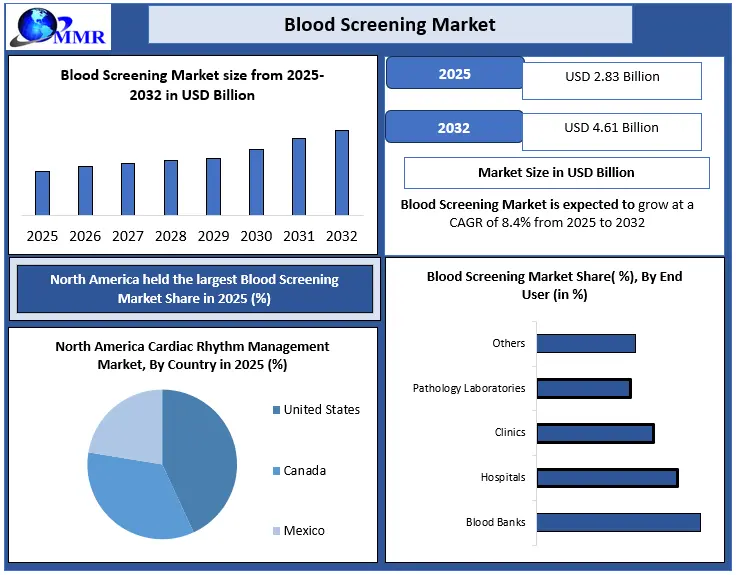
The Blood Screening Market was valued at USD 2.83 billion in 2025 to reach USD 4.61 billion by 2032, growing at a CAGR of 7.22%. Blood Screening uses particular technologies together with their matching reagents to detect infectious diseases and disease markers present in donated blood and patient blood samples, which ensures the safety and purity of blood supplies. The screening procedures rely on three main technologies, which include Nucleic Acid Testing (NAT), Immunoassays, and Next-Generation Sequencing (NGS) as their primary screening technologies.
The testing methods identify HIV, Hepatitis B and C, West Nile Virus, and Syphilis pathogens to protect both blood donors and blood recipients. Blood Screening uses specific technologies and reagents to examine both donated blood and patient blood samples to identify infectious diseases and disease markers before blood transfusions occur. The main detection technologies include Nucleic Acid Testing (NAT), Immunoassays, ELISA, and Next-Generation Sequencing (NGS), which identify pathogens including HIV, Hepatitis B and C, West Nile Virus, and Syphilis.
Key Highlights:
1. The global blood screening market is valued at USD 2.83 billion in 2025 and expected to reach USD 4.61 billion by 2032, growing at a strong 7.22% CAGR.
2. Reagents and kits dominate with 55.62% share in 2025, driven by recurring NAT and immunoassay consumables demand, regulatory validation requirements, and proprietary formulation lock-in across global blood banks.
3. Nucleic Acid Testing (NAT) leads technology adoption with 41.88% share in the year 2025 ensuring early detection of HIV, HBV, and HCV during window periods, maintaining its gold-standard status worldwide.
4. Next-Generation Sequencing is the fastest-growing technology at 11.02% CAGR, enabling multiplex pathogen detection, outbreak surveillance, and advanced genomic insights integrated with AI-driven analytics systems.
5. Infectious disease panels account for 49.05% revenue share in 2025, fueled by rising dengue, Zika, West Nile, and other emerging pathogen outbreaks globally.
6. Blood banks remain the primary end users with 58.15% share, while clinical laboratories grow at 10.22% CAGR due to outsourcing of high-throughput NAT and sequencing workflows.
7. Asia-Pacific is the fastest-growing region at 9.86% CAGR, supported by technological advancements in Japan, India, and China, expanding donor screening programs, and increasing molecular diagnostics adoption.
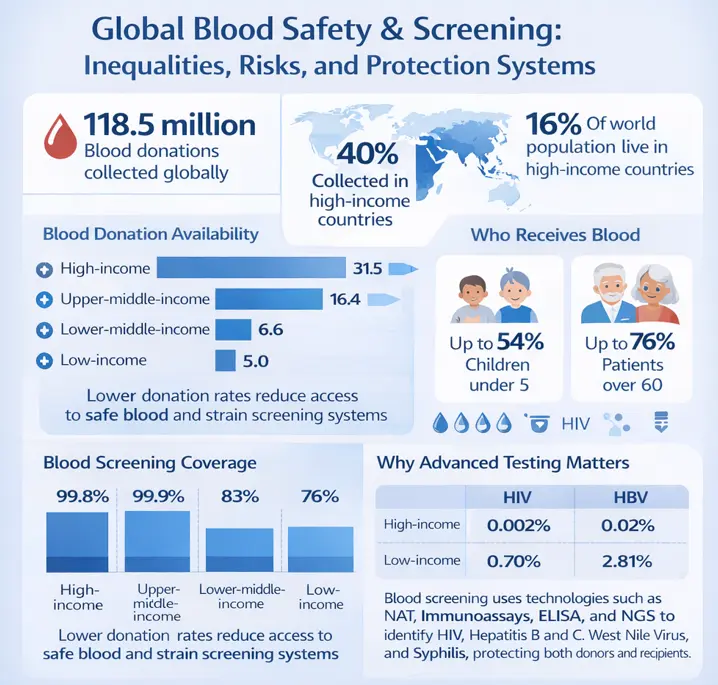
The world gathered 118.5 million blood donations in 2025, with high-income countries providing 40% of the total while representing only 16% of the total global population. Safe blood supply is hindered because donation rates show a difference between high-income areas, which have 31.5 donations per 1,000 people, and low-income areas, which have 5 donations per 1,000 people. Advanced testing methods, which include NAT and Immunoassays and ELISA and NGS, enable the detection of HIV and Hepatitis B/C and West Nile Virus and Syphilis, ensuring the safety of both donors and recipients. The Blood Screening Market experiences growth because low-income countries reveal high detection gaps between HIV and HBV, which creates a need for advanced screening methods.
Current blood screening capabilities arose from technological advances, which involved the development of automation systems and the implementation of AI systems and high-throughput molecular diagnostic testing. Blood screening safeguards the safety of blood transfusions while it produces improved patient health results in hospitals and blood banks, which leads to blood screening market growth throughout North America and worldwide.
 To know about the Research Methodology :- Request Free Sample Report
Blood Screening Market Trends:
Technological Advancements Driving Blood Screening Market Growth:
As molecular diagnostics, automation, and next-generation sequencing (NGS) become more widespread, the global blood screening market is experiencing robust growth. Blood screening ensures the safety of donated blood by detecting infectious diseases such as HIV, Hepatitis B & C, West Nile Virus, and Syphilis. Advanced techniques, particularly Nucleic Acid Testing (NAT) and AI-integrated automation, improve diagnostic accuracy and reduce the window period for detecting transfusion-transmissible infections (TTIs). The rising adoption of these technologies is creating strong demand for both reagents and instruments, as laboratories and hospitals strive for faster, safer, and more reliable blood testing.
Aging Population and Increased Transfusion Demand to Propel Market:
The growing elderly population and the increasing prevalence of chronic diseases are driving higher demand for blood transfusions worldwide. By 2030, the aging population in developed regions will significantly increase the need for blood and blood components, boosting demand for blood screening solutions. Hospitals and blood banks are investing heavily in automation and sensitive molecular diagnostics to ensure safe transfusions, particularly for high-risk patients. This demographic shift, combined with rising surgical procedures and trauma care, ensures a sustained market expansion for blood screening technologies.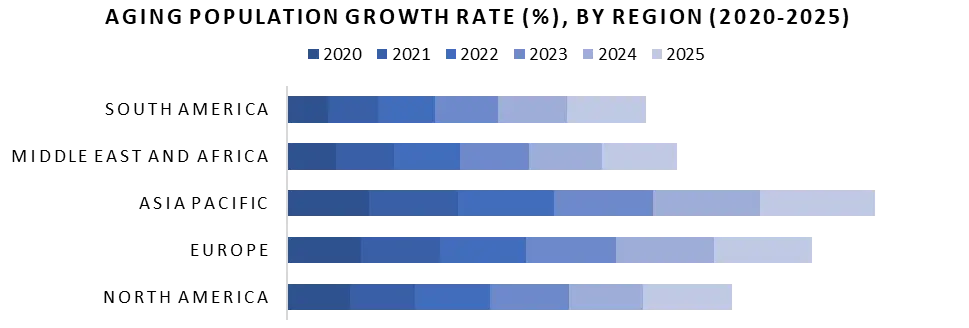
High Testing Costs to Hamper Blood Screening Market
The high costs of advanced blood screening tests and diagnostics may restrict growth. In regions like North America, comprehensive blood screening panels can cost up to USD 500–700 per patient, posing a financial burden for many, particularly in emerging markets with limited healthcare budgets. This cost barrier limits access to essential blood tests, especially for lower-income populations or uninsured individuals. The high price of advanced blood screening technologies and associated procedures could slow the adoption of preventive healthcare practices, particularly in regions where healthcare infrastructure and affordability remain a challenge.
Blood Screening Market Segment Analysis
Product Type: The market is segmented by Reagents & Kits, Instruments, and Software. The Blood Screening Market in 2025 showed Reagents & Consumables as its main segment. The product range includes blood screening kits and reagents, and blood typing consumables, which medical facilities use because of their need to conduct blood transfusions while protecting against HIV, Hepatitis B and C, and Syphilis infectious threats.
The United States and Canada conduct blood screenings for millions of blood units each year. The market shows substantial growth from Devices & Equipment, which includes automated analyzers, NAT platforms, and next-generation sequencing systems, because laboratories increasingly adopt automation to achieve quicker and more precise diagnosis results. The market for Software & Platforms which support laboratory management through predictive analytics and inventory control functions is experiencing rapid expansion. The blood screening market comprises 10–15% of its total value from services, which include instrument maintenance and calibration, and technical support and training functions.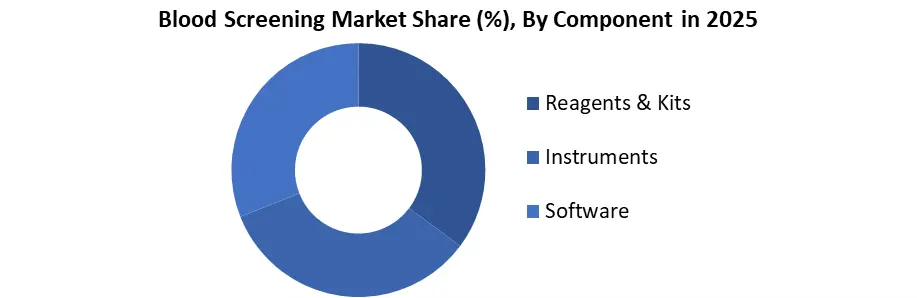 By End User, the Blood Screening Market is segmented into Blood Banks, Hospitals, Clinics, Pathology Laboratories, and Others. Blood Banks dominated in 2025, driven by mandatory screening of donated blood for TTIs and compatibility testing. Millions of units are screened annually, boosting demand for reagents, instruments, and automated platforms. Hospitals follow, using screening for patient-side testing and transfusion management.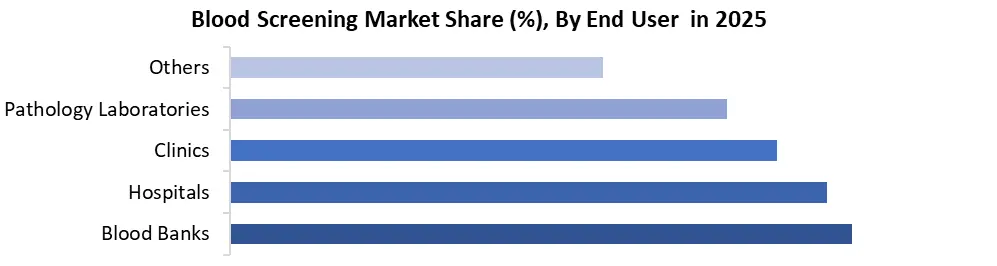
Blood Screening Market Regional Insights
North America experienced its highest Blood Screening Market performance in 2025 which will sustain its dominance until 2035 because of three factors advanced healthcare infrastructure, high blood transfusion volumes, and strict regulatory standards. Blood Banks conduct their required tests for TTIs which include HIV and Hepatitis B and C, Syphilis, and West Nile Virus, while hospitals use their resources to match blood types and find antibodies before transfusions. The market shows increasing demand for three types of products automated instruments and reagents and NAT/NGS platforms. The major companies Abbott and Beckman Coulter, Becton Dickinson, and Grifols develop technologies that improve market efficiency through their products that enable blood screening to proceed with greater safety and speed.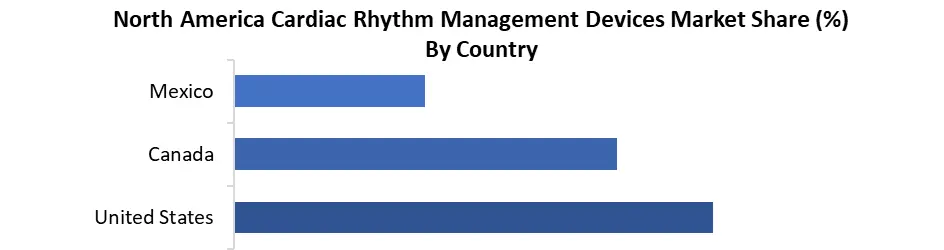
Blood Screening Market Competitive Landscape
• In 2025, the Blood Screening Market will evolve rapidly due to technological advancements, rising blood-related diseases, and early diagnosis practices, with major players like Abbott, Roche, and Siemens Healthineers expanding market share.
• By 2025, Abbott Laboratories (US) will focus on continuous product development, launching advanced blood screening solutions that improve test speed and accuracy, meeting rising demand for rapid infectious disease detection globally.
• In 2025, Roche Diagnostics (CH) leverages biotechnology partnerships to enhance R&D, developing next-generation blood screening assays that address market demands and support innovative diagnostic product creation.
• By 2025, Siemens Healthineers (DE) will invest in digital transformation and AI-driven technologies, improving operational efficiency and diagnostic accuracy, positioning itself as a market innovator with advanced laboratory solutions.
• In 2025, companies maintain strategies via local manufacturing and supply chain management, with moderate market fragmentation allowing key players to leverage innovation and partnerships to preserve market share and scale.
Blood Screening Market Report Scope: Inquire before buying
| Blood Screening Market | |||
|---|---|---|---|
| Report Coverage | Details | ||
| Base Year: | 2025 | Forecast Period: | 2026-2032 |
| Historical Data: | 2020 to 2025 | Market Size in 2025: | USD 2.83 Bn. |
| Forecast Period 2026 to 2032 CAGR: | 7.22% | Market Size in 2032: | USD 4.61 Bn. |
| Segments Covered: | by Product Type | Reagents & Kits Instruments Software |
|
| by Technology | Nucleic Acid Amplification Test (NAT) Serology / Immunoassays Rapid Test Kits Western Blot Assays Next-Generation Sequencing (NGS) |
||
| by Screening Target | Infectious Disease Panels HIV HBV HCV Emerging Pathogens (Zika, WNV, Dengue) Blood Group Typing Rare Antigen Genotyping |
||
| by End-User | Blood Banks Hospitals Clinics Pathology Laboratories Others |
||
Blood Screening Market Key Players
1. Abbott Laboratories
2. F. Hoffmann-La Roche AG
3. Siemens Healthineers
4. Danaher Corporation
5. Beckman Coulter
6. Becton, Dickinson and Company
7. Grifols
8. Bio-Rad Laboratories
9. Hologic, Inc.
10. QIAGEN
11. Thermo Fisher Scientific
12. bioMérieux
13. DiaSorin S.p.A.
14. QuidelOrtho Corporation
15. Sysmex Corporation
16. Mindray Bio-Medical Electronics
17. Immucor, Inc.
18. Cerus Corporation
19. HORIBA Group
20. OraSure Technologies, Inc.
21. Revvity
22. Autobio Diagnostics
23. CTK Biotech, Inc.
24. BIOMEDOMICS INC
25. AccuBioTech
Frequently Asked Questions
1. What are the key factors driving the Blood Screening Market?
The market is driven by increasing blood donations, rising prevalence of transfusion-transmissible infections, adoption of automated screening technologies, and growing demand for rapid and accurate diagnostics.
2. What challenges could limit the growth of the Blood Screening Market?
Market growth may be limited by high costs of advanced instruments and reagents, lack of skilled personnel, regulatory compliance complexities, and low adoption in developing regions.
3. Which region holds the largest share in the Blood Screening Market?
North America holds the largest share due to advanced healthcare systems, high volumes of blood transfusions, stringent regulatory requirements, and widespread use of NAT/NGS platforms.
4. What is the expected market size and growth rate of the Blood Screening Market?
The Blood Screening market was valued at USD 2.83 billion in 2025, and is expected to grow at a CAGR of 7.22%, reaching USD 4.61 billion by 2032 due to rising demand for pacemakers and ICDs.
5. What segments are covered in the Blood Screening Market report?
The market report covers segmentation by Product Type, Technology, and End User.