
Banking Encryption Software Market - Industry Structure Evaluation, Demand Drivers Analysis, Regional Growth Analysis and Identification, Competitive Positioning / Landscape Review & Global Market Size Forecast to 2030
Overview
The Global Banking Encryption Software Market size is expected to reach USD 11.50 billion by 2030, expanding at a CAGR of 9.2% from 2024 to 2030
The global Banking Encryption Software Market is a rapidly growing industry that encompasses various software solutions and systems used to secure sensitive financial data and transactions within the banking sector. These encryption software solutions provide robust protection against unauthorized access, data breaches, and cyber threats, ensuring the confidentiality, integrity, and authenticity of banking information.
With the increasing importance on digital platforms for financial services, such as online banking, mobile banking, and electronic transactions, the need for strong encryption measures has become paramount. The market is witnessing significant growth, driven by the rising concerns regarding data security and privacy, stringent regulatory requirements, and the escalating frequency and sophistication of cyber attacks targeting financial institutions.
Banking encryption software offers a wide range of functionalities, including data encryption, tokenization, secure key management, secure file sharing, secure messaging, and secure communications channels. These solutions enable banks and financial institutions to safeguard customer data, secure financial transactions, protect intellectual property, and ensure compliance with industry regulations and standards.
The Banking Encryption Software Market advancements in encryption technologies, such as symmetric encryption, asymmetric encryption, and homomorphic encryption, which provide enhanced security and performance capabilities. The growing adoption of cloud computing, Internet of Things (IoT) devices, and mobile banking applications has created a higher demand for encryption software solutions to protect data both at rest and in transit.
Leading economies, particularly in North America and Europe, are at the forefront of the global Banking Encryption Software Market. These regions benefit from well-established banking infrastructure, stringent data protection regulations, and a strong focus on cybersecurity. The market is expected to witness substantial growth in the Asia-Pacific region due to the expanding banking sector, increasing digitization of financial services, and growing awareness of cybersecurity threats. As financial institutions continue to digitize their operations, the demand for advanced encryption software solutions is expected to rise, creating significant opportunities for market players across different regions.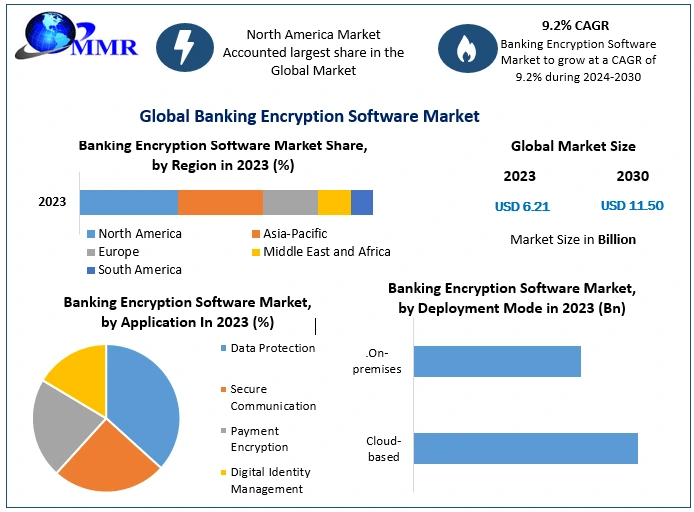 To know about the Research Methodology :- Request Free Sample Report
Banking Encryption Software Market Dynamics:
Market Drivers for the Banking Encryption Software Market:
The Banking Encryption Software Market is being shaped by several factors like the escalating frequency and complexity of cyber attacks targeting financial institutions creating an increased need for robust data security measures. As hackers employ advanced techniques to breach banking systems and steal sensitive information, the demand for encryption software solutions has increased. Banks and financial institutions are increasingly investing in encryption technologies to protect customer data, secure financial transactions, and mitigate the risk of data breaches.
Stringent regulatory requirements imposed by governing bodies in the Banking Encryption Software Market are driving the adoption of encryption software. Regulatory bodies, such as the Financial Industry Regulatory Authority (FINRA) and the Payment Card Industry Data Security Standard (PCI DSS), compel the implementation of strong security measures to safeguard customer information and maintain data privacy. Compliance with these regulations necessitates the use of encryption software solutions that ensure the confidentiality and integrity of financial data. This regulatory push is propelling the demand for banking encryption software in the market.
The increasing digitization of financial services, such as online banking, mobile banking, and digital transactions, has amplified the vulnerability of financial data to cyber threats. The widespread adoption of cloud computing, Internet of Things (IoT) devices, and mobile applications has expanded the attack surface for hackers. To address these risks, banks and financial institutions are deploying encryption software to protect data both at rest and in transit. The need to secure sensitive financial information across various digital platforms is a significant reason driving the growth of the banking encryption software market.
Opportunities for the Banking Encryption Software Market:
The Banking Encryption Software Market presents several promising opportunities for growth and expansion. The rising adoption of blockchain technology within the banking sector provides a fertile ground for encryption software solutions. Blockchain, with its decentralized and immutable nature, offers enhanced security and transparency for financial transactions. Integration of encryption software with blockchain technology ensures secure and private transactions, presenting a valuable opportunity for software vendors in the market. The increasing trend of digital transformation and the emergence of open banking systems also creates avenues for encryption software providers. Open banking initiatives, driven by regulatory changes, enable third-party access to banking data through secure application programming interfaces (APIs). This increased data sharing requires robust encryption to protect sensitive customer information and maintain data privacy. Encryption software vendors capitalize on this opportunity by offering solutions that cater specifically to the unique security requirements of open banking systems.
The growing demand for cloud-based services in the banking industry provides an opportunity for encryption software providers to offer secure cloud encryption solutions. Banks and financial institutions are increasingly migrating their operations to cloud platforms to enhance scalability, efficiency, and cost-effectiveness. However, data security remains a top concern in cloud environments. Encryption software vendors develop innovative solutions that seamlessly integrate with cloud infrastructure, offering end-to-end encryption and secure storage of sensitive banking data.
Restraints for the Banking Encryption Software Market:
One significant restraint is the complexity and cost associated with implementing encryption software solutions within existing banking systems. Many financial institutions operate on legacy infrastructure that may not be compatible with modern encryption technologies. The process of integrating encryption software into complex banking systems is time-consuming and expensive, requiring significant investment in infrastructure upgrades, staff training, and system compatibility testing. These challenges may deter some banks from adopting encryption software, especially smaller institutions with limited resources.
Another restraint is the potential trade-off between security and user experience. Encryption measures, such as data encryption and tokenization, add an extra layer of complexity to banking processes, potentially affecting the user experience. Delays in transaction processing, increased authentication steps, and additional security measures lead to friction and inconvenience for customers. Striking a balance between robust security and seamless user experience is a challenge that encryption software providers need to address to ensure widespread adoption in the banking industry.
Challenges for the Banking Encryption Software Market:
The evolving nature of cyber threats is a primary challenge for the Banking Encryption Software Market. Hackers are developing new techniques and methods to bypass encryption and breach security systems. Encryption software providers must stay ahead of these threats by investing in research and development to enhance encryption algorithms, strengthen key management practices, and develop innovative security solutions. Keeping pace with emerging cybersecurity threats and providing robust protection against them poses an ongoing challenge for encryption software companies. The lack of awareness and understanding of encryption technologies among banking professionals and customers presents a challenge.
Many individuals may not fully comprehend the importance of encryption in securing their financial transactions and data. Educating banking personnel about the benefits and functionalities of encryption software and raising awareness among customers about the role encryption plays in protecting their sensitive information are critical challenges. Encryption software providers need to invest in educational initiatives, training programs, and marketing campaigns to bridge this knowledge gap and promote the adoption of encryption solutions in the banking sector.
Banking Encryption Software Market Trends:
Rising Adoption of Cloud-Based Encryption Solutions
One prominent trend in the Banking Encryption Software Market is the growing adoption of cloud-based encryption solutions. Financial institutions are increasingly leveraging cloud computing to enhance scalability, agility, and cost-efficiency. As banks migrate their operations to the cloud, there is a growing need for encryption software that seamlessly integrates with cloud infrastructure, ensuring secure storage and transmission of sensitive data. Cloud-based encryption solutions provide enhanced accessibility, flexibility, and real-time protection, addressing the evolving demands of the banking industry.
Integration of Artificial Intelligence and Machine Learning
Another significant trend is the integration of artificial intelligence (AI) and machine learning (ML) in banking encryption software. AI and ML technologies have the potential to revolutionize data security by enabling proactive threat detection, automated response mechanisms, and intelligent encryption algorithms. By analyzing vast amounts of data, AI and ML algorithms identify patterns, detect anomalies, and predict potential security breaches. Integration of AI and ML in encryption software enhances its capabilities, making it more robust, adaptive, and effective in combating emerging cyber threats.
Integration with Biometric Authentication
The integration of biometric authentication methods, such as fingerprint recognition and facial recognition, is a significant trend in the Banking Encryption Software Market. Biometric authentication adds an extra layer of security by utilizing unique biological traits for user identification. By integrating biometrics with encryption software, financial institutions enhance the accuracy and reliability of user authentication, mitigating the risk of unauthorized access to sensitive banking data. This trend aligns with the increasing demand for multi-factor authentication and reinforces the overall security of encryption solutions in the banking industry.
Expansion of Blockchain-Based Encryption Solutions
The utilization of blockchain technology in banking encryption software is an emerging trend. Blockchain, with its decentralized and immutable nature, offers inherent security advantages for financial transactions. Integration of encryption software with blockchain technology provide secure and transparent transactional environments, enabling seamless and secure digital transactions. The expansion of blockchain-based encryption solutions in the banking sector holds promise for enhanced data integrity, privacy, and accountability, driving the growth of the market.
Banking Encryption Software Market Segment Analysis
The first segment focuses on the different deployment models used in the banking encryption software market. This includes on-premises deployment, cloud-based deployment, and hybrid deployment. Each model has its unique advantages and considerations, such as data control, scalability, and cost-effectiveness. Understanding the preferences and trends within each deployment model help banking institutions select the most suitable solution for their specific requirements. This segment explores the various encryption types utilized in banking encryption software. It covers symmetric encryption, asymmetric encryption, and hashing algorithms. Each encryption type offers different levels of security and operational characteristics. By analyzing the adoption rates and preferences for each encryption type, market players identify emerging trends and develop products that align with customer needs.
The application segment examines the diverse areas in which banking encryption software is utilized. It includes segments such as data protection, secure communication, payment encryption, and digital identity management. By understanding the specific needs and challenges within each application segment, market participants tailor their offerings to meet the demands of banking institutions seeking enhanced security and compliance. This segment focuses on the end users of banking encryption software. It encompasses retail banks, commercial banks, investment banks, and other financial institutions. Each end user segment may have unique requirements, regulatory obligations, and budget considerations. Analyzing the specific needs and preferences of different end users enables software providers to customize their solutions and gain a competitive edge.
Banking Encryption Software Market Regional Analysis:
North America holds a significant share in the Banking Encryption Software market, driven by the stringent data protection regulations and increasing cybersecurity concerns in the financial sector. The region is home to several established banking institutions and technology companies, fostering a favorable environment for encryption software adoption. The United States, in particular, exhibits robust market growth, fueled by a strong focus on data privacy and cybersecurity measures. Europe represents a mature market for Banking Encryption Software, with a strong emphasis on data protection and compliance. The implementation of the General Data Protection Regulation (GDPR) has heightened the demand for advanced encryption solutions across the banking industry. Countries such as the United Kingdom, Germany, and France lead the adoption of encryption software, driven by the presence of major financial hubs and stringent regulatory frameworks.
The Asia Pacific region presents significant growth opportunities for the Banking Encryption Software market. Rapid digitization, the rise of online banking, and increasing cyber threats have prompted financial institutions in countries like China, India, Japan, and Australia to invest in robust encryption solutions. Government initiatives to strengthen data security, coupled with the expanding customer base in emerging economies, are driving market growth in the region. Latin America is witnessing a steady increase in the adoption of Banking Encryption Software. Financial institutions in countries like Brazil, Mexico, and Argentina are recognizing the importance of safeguarding sensitive customer data and complying with regulatory standards. The region's growing e-commerce sector and digital payment platforms further contribute to the demand for encryption software solutions to secure online transactions and protect customer privacy.
The Middle East and Africa region exhibit promising prospects for the Banking Encryption Software market. Rising investments in the banking sector, coupled with the growing threat of cybercrimes, have stimulated the adoption of encryption software solutions. Countries such as the United Arab Emirates, South Africa, and Saudi Arabia are leading the market growth, driven by their efforts to enhance cybersecurity measures and protect critical financial data.
Banking Encryption Software Market Competitive Landscape
The Banking Encryption Software market exhibits a moderately concentrated market structure, with a few established players holding significant market share. These key players have a strong presence and offer a wide range of encryption software solutions tailored to meet the unique needs of banking institutions. Additionally, there is a presence of smaller niche players that focus on specific segments or regions within the market, contributing to overall market competitiveness. The Banking Encryption Software market presents moderate barriers to entry due to factors such as the need for specialized technical expertise, regulatory compliance requirements, and established brand reputation of key players. Developing and maintaining high-quality encryption solutions require significant investments in research and development, infrastructure, and security certifications. Moreover, stringent data protection regulations in the banking industry necessitate adherence to strict compliance standards, which may pose challenges for new entrants.
The level of competition in the Banking Encryption Software market is high, with both established players and emerging entrants vying for market share. Key competitive factors include product innovation, scalability, data security features, ease of integration, and customer support services. Companies that can deliver comprehensive and robust encryption solutions while addressing evolving customer demands have a competitive advantage. Market players also differentiate themselves through strategic partnerships, customer relationships, and industry expertise, enhancing their market position.
Banking Encryption Software Market Scope: Inquire before buying
| Banking Encryption Software Market | |||
|---|---|---|---|
| Report Coverage | Details | ||
| Base Year: | 2023 | Forecast Period: | 2024-2030 |
| Historical Data: | 2018 to 2023 | Market Size in 2023: | US $ 6.21 Bn. |
| Forecast Period 2024 to 2030 CAGR: | 9.2% | Market Size in 2030: | US $ 11.50 Bn. |
| Segments Covered: | by Deployment Mode | Cloud-based On-premises |
|
| by Encryption Type | Symmetric Encryption Asymmetric Encryption Hashing Algorithms |
||
| by Application | Data Protection Secure Communication Payment Encryption Digital Identity Management |
||
| by End-User | Retail Banks Commercial Banks Investment Banks Other financial institutions |
||
Banking Encryption Software Market, by Region
North America (United States, Canada and Mexico)
Europe (UK, France, Germany, Italy, Spain, Sweden, Austria and Rest of Europe)
Asia Pacific (China, South Korea, Japan, India, Australia, Indonesia, Malaysia, Vietnam, Taiwan, Bangladesh, Pakistan and Rest of APAC)
Middle East and Africa (South Africa, GCC, Egypt, Nigeria and Rest of ME&A)
South America (Brazil, Argentina Rest of South America)
Banking Encryption Software Key Players
North America:
Symantec Corporation (United States)
Cisco Systems, Inc. (United States)
Microsoft Corporation (United States)
McAfee, LLC (United States)
Sophos Group plc (United Kingdom)
Europe:
Thales Group (France)
Gemalto (Netherlands)
Kaspersky Lab (Russia)
ESET, spol. s r.o. (Slovakia)
Check Point Software Technologies Ltd. (Israel)
Asia Pacific:
Trend Micro Incorporated (Japan)
Huawei Technologies Co., Ltd. (China)
Wondershare Technology Co., Ltd. (China)
Digital China Holdings Limited (China)
Infosec Global (India)
Latin America:
Kryptus (Brazil)
AppTec Soluciones (Mexico)
Sequrit (Argentina)
Inova IT Security (Brazil)
Axur (Brazil)
Middle East and Africa:
BeyondTrust Corporation (United Arab Emirates)
Help AG (United Arab Emirates)
Esentire (Canada, with operations in the Middle East and Africa)
Biocatch Ltd. (Israel)
F5 Networks, Inc. (United States, with operations in the Middle East and Africa)
FAQs:
1. What are the growth drivers for the Banking Encryption Software Market?
Ans. Technological advancements, research and development activities, and increasing global connectivity are the major drivers for the Banking Encryption Software Market.
2. What is the major restraint for the Banking Encryption Software Market growth?
Ans. Accuracy and Language Complexity, Privacy and Data Security Concerns are to be the major restraining factor for the Banking Encryption Software Market growth.
3. Which region is expected to lead the global Banking Encryption Software Market during the forecast period?
Ans. North America and Europe are expected to lead the global Banking Encryption Software Market during the forecast period with Asia Pacific to be the fastest growing region of the market.
4. What is the projected market size & growth rate of the Banking Encryption Software Market?
Ans. The Banking Encryption Software Market size was valued at USD 6.21 Billion in 2023 and the total revenue is expected to grow at a CAGR of 9.2 % from 2024 to 2030, reaching nearly USD 11.50 Billion.
5. What segments are covered in the Banking Encryption Software Market report?
Ans. The segments covered in the Banking Encryption Software Market report are Deployment modes, Industry verticals, Organization size, End users.