
Application Integration Market Size by Integration Type, Offering, Application, End-User, Region – Revenue Pool Analysis, Margin Structure Assessment, Capital Flow Trends, Competitive Benchmarking & Forecast to 2030
Overview
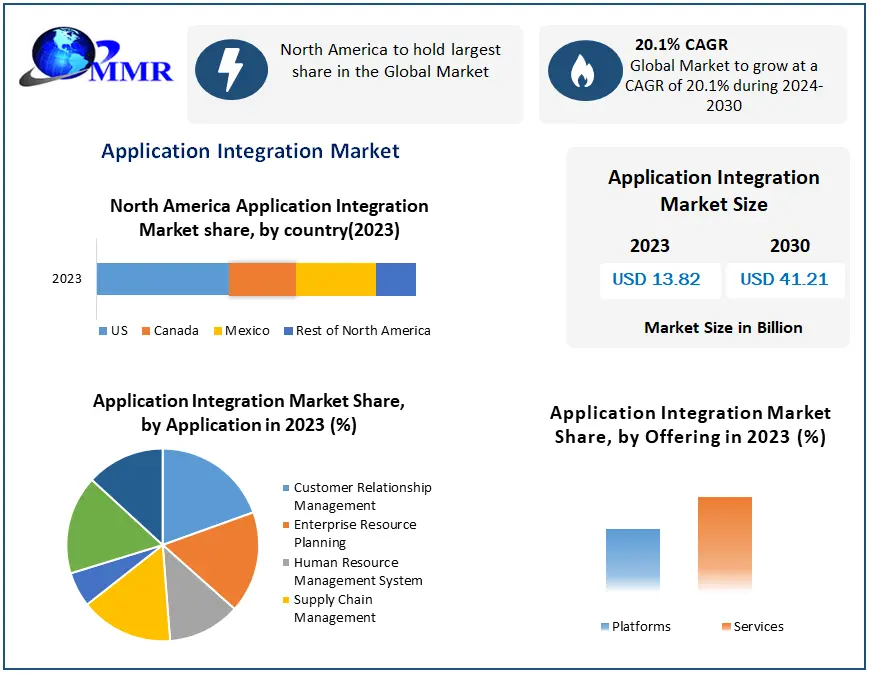
Global Application Integration Market size was valued at USD 13.82 Bn in 2023 and is expected to reach USD 41.21 Bn by 2030, at a CAGR of 20.1% over the forecast period (2024-2030).
Application Integration Market Overview
Application integration is the process of enabling individual applications designed for its specific purpose to work with another application. BY merging and optimizing data and workflows between various software applications, organizations achieve integrations that modernize the infrastructures and support agile business operations. Application integration helps to bridge the between existing on-premises systems and fast-evolving cloud-based enterprise applications.
 To know about the Research Methodology :- Request Free Sample Report
The primary focus of application integration is to enable the sharing and synchronization of data between different systems. This involves ensuring that data from one application can be used by another application without errors or discrepancies. Application integration supports business process automation by connecting various systems involved in specific workflows. Organizations relying on data-driven insights for strategic decision-making. Application integration ensures that data from various sources can be consolidated, cleansed, and analyzed to provide accurate and valuable insights.
Application Integration Market Dynamics
Digital Transformation Initiatives to boost the Application Integration Market growth
Organizations are increasingly undergoing digital transformation to stay competitive in the Application Integration Market. Application integration is crucial for connecting new digital solutions with existing legacy systems, ensuring seamless data flow and unified operations. Businesses rely on accurate and real-time data insights and is expected to boost the Application Integration Market growth. Application integration facilitates data synchronization across platforms, providing a holistic view of operations and customer interactions. Seamlessly integrated applications ensure that customers have consistent experiences across different touchpoints, enhancing satisfaction and loyalty. Application integration streamlines processes, reduces manual interventions and automates workflows. This agility and efficiency lead to quicker response times and optimized resource utilization. In scenarios where companies merge or acquire others, application integration becomes critical to harmonize IT systems and consolidate operations. Integration eliminates redundancy and data silos, leading to cost savings by maximizing the utility of existing software investments. Application integration enables real-time data exchange, empowering businesses to make informed decisions based on the most up-to-date information.
Complexity of Integration to restrain the Application Integration Market growth
Integrating diverse applications with varying data formats, protocols, and architectures is highly complex and time-consuming. Dealing with legacy systems, proprietary software, and ensuring compatibility adds to the complexity. Application integration initiatives often require significant investments in terms of software, tools, skilled personnel, and maintenance. The initial costs and ongoing expenses strain budgets, especially for small and medium-sized enterprises. Integrating different applications increases the attack surface for cyber threats. Ensuring robust security measures across integrated systems is critical to safeguard sensitive data. Integrating applications expose issues related to data quality, consistency, and accuracy. Mismatched data formats or duplication leads to erroneous insights and decisions. Organizations with established processes and systems might resist changes associated with application integration. Cultural and operational changes face resistance from employees and management. Depending heavily on a specific integration solution or vendor lead to vendor lock-in, reducing flexibility and inhibiting future technology changes. Skilled integration experts who understand various technologies and integration methodologies are in high demand but may be in short supply. This shortage hinders implementation and limits the Application Integration Industry growth. Poorly implemented integration lead to performance issues, including latency and slow response times, impacting user experience and productivity. Integration failures disrupt operations, data flow, and decision-making. The potential impact on critical business processes makes thorough testing and contingency planning essential.
Opportunities in Application Integration Market
Organizations striving for digital transformation recognize the need for integrated systems. The opportunity lies in offering comprehensive integration solutions that align with the transformation journey of businesses across industries. With the hybrid cloud model gaining traction, there's a significant opportunity to provide integration solutions that seamlessly connect on-premises systems with cloud-based applications, ensuring data consistency and streamlined processes. The rise of the API economy emphasizes the importance of application interfaces. Creating APIs for seamless integration between various applications can lead to innovative solutions and business models, and presents significant opportunity for the Application Integration Market growth.
Different industries have unique integration requirements. Developing industry-specific solutions tailored to sectors like healthcare, finance, and manufacturing provide customized integration capabilities that address specific pain points. As the Internet of Things (IoT) expands, the need to integrate connected devices, sensors, and platforms presents a substantial opportunity. Enabling seamless data exchange and communication among IoT components enhances operational efficiency. Integrated systems provide a unified data repository, enabling organizations to glean insights and trends from various sources. Offering analytics solutions that leverage this integrated data can provide valuable business intelligence. The adoption of microservices architecture necessitates integration capabilities that allow these distributed services to communicate effectively, presenting an opportunity for integration solutions tailored to microservices environments.
Application Integration Market Trends
An increasing number of applications per company drives the need for application integration, even in the future
Companies tend to use a large number of applications and doesn’t seem to be different any time. A new joint survey by Mulesoft and Deloitte sent ripples all over by stating that 976 applications are used by the companies in average. Among 976 applications only 28% of the applications are integrated. For larger organizations over 2000 employees deployed an average of 187 applications in 2023.
Hybrid and Multi-cloud Integration: Many businesses are adopting a hybrid or multi-cloud approach, using a combination of on-premises and cloud-based applications. Integration solutions that could seamlessly connect and manage applications across these environments are in high demand and is expected to set a trend in the Application Integration industry. Microservices are gaining popularity as a way to design applications as a collection of small, independent services. This approach required efficient integration solutions to connect these microservices and ensure smooth communication and data exchange.
Low-Code and No-Code Integration: The rise of low-code and no-code platforms was empowering business users to create integrations without deep technical knowledge. This trend was speeding up integration development and reducing the burden on IT departments. The adoption of low-code and no-code integration platforms has expanded across industries and business sizes. Organizations of all types are recognizing the benefits of these platforms for rapid application development and integration. Non-technical users, often referred to as "citizen developers," are increasingly using low-code and no-code tools to build applications and integrations that meet their specific needs. This reduces the reliance on IT teams for every development task. Many low-code platforms are building ecosystems around them, offering pre-built connectors, templates, and integration solutions for popular applications and services. This simplifies the process of connecting different systems.
Application Integration Market Segmentation
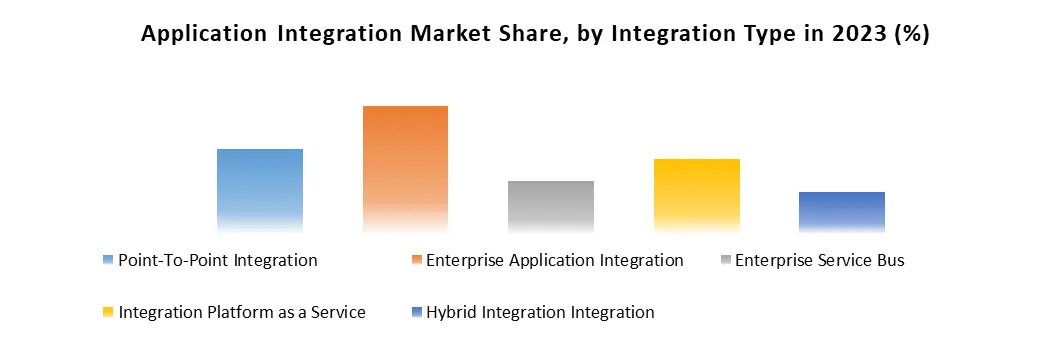
Based on the Integration Type, this segment involves direct connection between two systems or applications for seamless data transfer. It is characterized by simplicity and efficiency, making it suitable for specific, one-to-one integration needs. Point-to-point integration is favored for its cost-effectiveness and quick implementation. It finds applications in scenarios where direct communication between specific systems is crucial, such as data synchronization. Enterprise Application Integration (EAI) focuses on connecting multiple applications within an organization to streamline business processes. It ensures a cohesive flow of information across various departments. The demand for EAI is driven by the need for holistic data visibility and operational efficiency. Organizations seeking to enhance collaboration and data sharing internally are likely to invest in EAI solutions. Enterprise Service Bus (ESB) acts as an intermediary for communication between different applications. It facilitates the integration of diverse applications by providing a centralized hub for data exchange. ESB is crucial for organizations with complex IT architectures. It simplifies communication and data sharing by acting as a mediator, making it a key component in modern integration strategies.
iPaaS provides a cloud-based platform for integrating applications and services. It enables organizations to connect on-premise and cloud-based applications seamlessly. The growing adoption of cloud technologies and the need for flexibility in integration drive the demand for iPaaS. It is particularly attractive to businesses embracing hybrid and multi-cloud environments. Hybrid Integration combines on-premise and cloud-based integration approaches to create a flexible and scalable solution. It allows organizations to leverage the benefits of both environments. With businesses transitioning to hybrid IT architectures, the demand for hybrid integration solutions is rising. It caters to the need for a seamless connection between on-premise and cloud applications.
Based on Offering Segment, integration in BFSI enables seamless communication between different financial applications, enhancing transaction processing, risk management, and customer service. The BFSI sector's need for secure and real-time data exchange drives the demand for integration solutions to improve operational efficiency and regulatory compliance. Integration in retail and eCommerce streamlines the flow of data across online platforms, inventory management, and order processing, enhancing customer experience. The competitive nature of the retail and eCommerce sector and the need for a unified customer experience contribute to the growing demand for integration solutions. Integration in manufacturing facilitates communication between production systems, supply chain management, and other operational processes, optimizing production efficiency. The need for real-time visibility into manufacturing processes and the desire to enhance overall operational efficiency drive the demand for integration solutions in the manufacturing sector.
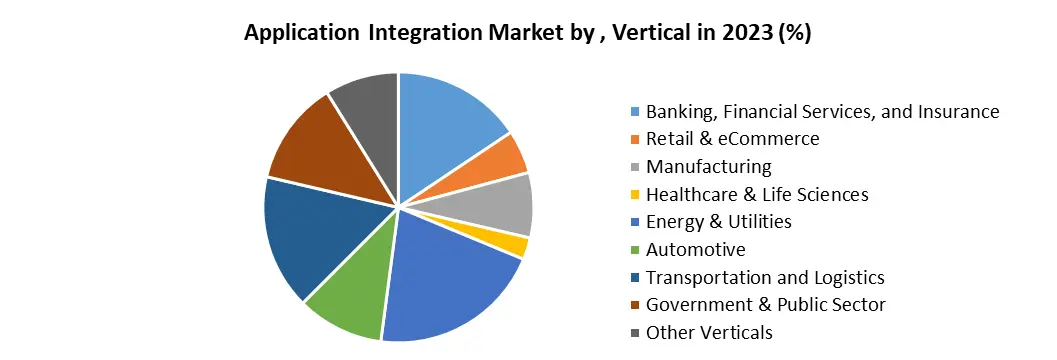
Integration in healthcare and life sciences ensures interoperability between different healthcare systems, improving patient care, and enabling data-driven decision-making. The increasing adoption of digital health solutions and the emphasis on data exchange in healthcare drive the demand for integration solutions in the healthcare and life sciences sector. Integration in the energy and utilities sector facilitates communication between different systems for efficient energy management, grid monitoring, and asset optimization. The transition to smart grids, renewable energy integration, and the need for real-time monitoring drive the demand for integration solutions in the energy and utilities sector.
Application Integration Market Regional Insight
Increasing demand for seamless connectivity to boost the North America Application Integration Market growth
North America dominated the market in 2023 and is expected to hold the largest Application Integration market Share over the forecast period. The North American market has been a dynamic and rapidly evolving landscape driven by the increasing demand for seamless connectivity and efficient data exchange across diverse software systems. The country's robust technological infrastructure and a high concentration of enterprises across various industries have fueled the need for streamlined workflows and data synchronization. Canada is known for its high-technology ecosystem, which significantly contributes to the growth of the market. Canadian businesses, spanning sectors such as finance, healthcare, and manufacturing, have recognized the importance of breaking down silos between applications to optimize processes. As companies look to harness data for informed decision-making, integration has become a linchpin in their strategies. The emphasis on security and compliance has led to the adoption of integration solutions that prioritize data protection while facilitating efficient communication between systems.
Cloud-based integration solutions are gaining significant traction. Businesses are adopting cloud platforms and services to enable more flexible and scalable integration between their applications. The growing importance of Application Programming Interfaces (APIs) was shaping the integration landscape. APIs allow different applications to communicate and exchange data efficiently. Many organizations were dealing with a mix of on-premises and cloud-based applications. Hybrid integration solutions are becoming popular to seamlessly connect these diverse environments. Integrated applications facilitated business process automation. By connecting different systems, companies could automate workflows and reduce manual intervention.
Application Integration Market Competitive Landscape
Application Integration leading companies are active in the market for several years and possess a varied product portfolio, innovative technologies, and strong global sales and marketing networks. . The regions covered in the Application Integration Market report are North America, Europe, Asia-Pacific, and LAMEA. The Application Integration vendors have implemented various organic and inorganic growth strategies such as new product launch, product upgrades, partnerships and agreements, mergers & acquisitions to strengthen the offerings of the market.
In March 2023, Oracle extended its collaboration with NVIDIA to allow the functioning of NVIDIA AI applications and the new Oracle Cloud Infrastructure (OCI) supercluster.
Global Application Integration Market Scope: Inquire before buying
| Global Application Integration Market | |||
|---|---|---|---|
| Report Coverage | Details | ||
| Base Year: | 2023 | Forecast Period: | 2024-2030 |
| Historical Data: | 2018 to 2023 | Market Size in 2023: | US $ 13.82 Bn. |
| Forecast Period 2024 to 2030 CAGR: | 20.1% | Market Size in 2030: | US $ 41.21 Bn. |
| Segments Covered: | by Integration Type | Point-To-Point Integration Enterprise Application Integration Enterprise Service Bus Integration Platform as a Service Hybrid Integration |
|
| by Offering | Platforms Services Professional Services Consulting Integration Support and Maintenance Managed Service |
||
| by Application | Customer Relationship Management Enterprise Resource Planning Human Resource Management System Supply Chain Management Business Intelligence Electronic Health Record Management Other Applications |
||
| by End-User | Banking, Financial Services, and Insurance Retail & eCommerce Manufacturing Healthcare & Life Sciences Energy & Utilities Automotive Transportation and Logistics Government & Public Sector Other Verticals |
||
Application Integration Market, by Region
North America (United States, Canada and Mexico)
Europe (UK, France, Germany, Italy, Spain, Sweden, Austria and Rest of Europe)
Asia Pacific (China, South Korea, Japan, India, Australia, Indonesia, Malaysia, Vietnam, Taiwan, Bangladesh, Pakistan and Rest of APAC)
Middle East and Africa (South Africa, GCC, Egypt, Nigeria and Rest of ME&A)
South America (Brazil, Argentina Rest of South America)
Application Integration Key Players
1. Deloitte
2. IBM
3. Oracle Corporation
4. Dell
5. MuleSoft, LLC
6. SnapLogic
7. SAP SE
8. Informatica
9. TIBCO Software Inc.
10. Workato, Inc
11. Software AG
12. Microsoft Corporation
13. Talend
14. Adeptia
15. ScienceSoft USA Corporation
16. OSI Digital, Inc
17. AHT TECH JSC.
18. Boomi
19. WSO2 LLC
20. Jitterbit
Frequently Asked Questions:
1] What is the growth rate of the Global Application Integration Market?
Ans. The Global Application Integration Market is growing at a significant rate of 20.1 % over the forecast period.
2] Which region is expected to dominate the Global Application Integration Market during the forecast period?
Ans. North America region is expected to dominate the Application Integration Market over the forecast period.
3] What is the expected Global Application Integration Market size by 2030?
Ans. The market size of the Application Integration Market is expected to reach USD 41.21 Bn by 2030.
4] Who are the top players in the Global Application Integration Industry?
Ans. The major key players in the Global Application Integration Market are SnapLogic, SAP SE, Informatica, and TIBCO Software Inc.
5] Which factors are expected to drive the Global Application Integration Market growth by 2030?
Ans. Digital Transformation Initiatives drive the Application Integration Market growth over the forecast period (2024-2030).