
Work Light Market– Industry Structure Evaluation, Demand Drivers Analysis, Regional Growth Analysis and Identification, Competitive Positioning Review & Global Market Size Forecast to 2030
Overview
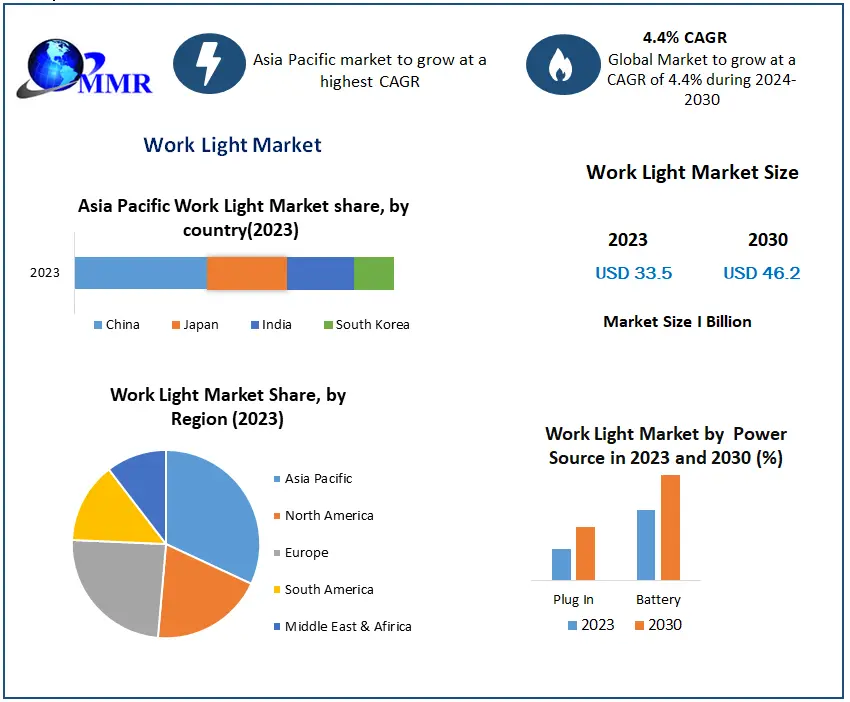
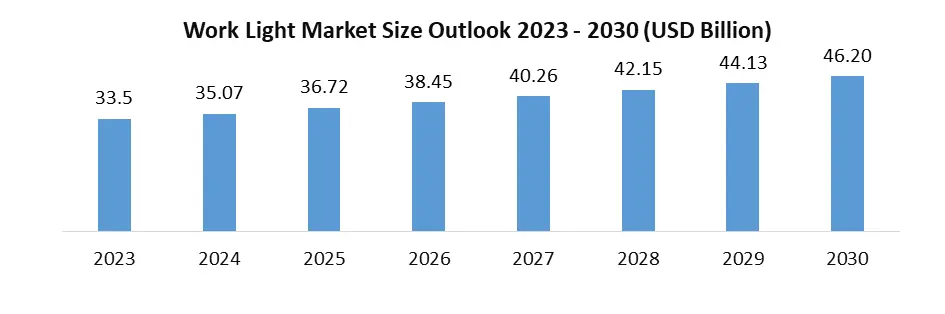
Work Light Market size was valued at USD 33.5 Bn. in 2023 and the total Work Light revenue is expected to grow by 4.4 % from 2024 to 2030, reaching nearly USD 46.20 Bn.
Work Light Market Overview:
The work light market is the industry that involves the production, distribution, and sale of lighting solutions specifically designed to provide illumination in various work environments.
Work lights are extensively used in construction sites during both day and night operations. They provide adequate lighting for tasks such as drilling, welding, cutting, and general construction work. Work lights are commonly employed for outdoor projects like landscaping, road repairs, and maintenance, ensuring work continues even in low-light conditions.
 To know about the Research Methodology :- Request Free Sample Report
Increased construction and infrastructure development activities drive the demand for the work light market. Urbanization, new construction projects, and renovations contribute to the market's growth. As industries expand, there's a rising need for well-lit workspaces to enhance worker safety and efficiency. Manufacturing, automotive, and aerospace sectors, among others, require adequate lighting for detailed tasks. The shift towards energy-efficient and eco-friendly lighting solutions, such as LED-based work lights, is driven by environmental concerns and regulations. The global work lights market is experiencing growth due to several factors, such as the surge in industrial growth, an increase in outdoor events and activities, and the growing automotive industry. Moreover, the increase in demand for energy efficiency and sustainability and the development of emerging countries present new opportunities in the forecast period.
Work Light Market Dynamics:
Work Light Market Drivers:
Rising Demand for Energy-efficient Lighting and the Surge in Industrial Growth
Work lights are specialized lighting fixtures or devices used to illuminate workspaces, job sites, or specific tasks that require additional lighting. These lights are typically designed to provide bright, focused, and adjustable illumination to enhance visibility, improve safety, and optimize productivity in different working conditions. Work lights are commonly used in industries such as construction, manufacturing, automotive, mining, maintenance, and emergency services, where proper lighting is essential for efficient operations. The work light market encompasses a wide range of products, including portable work lights, task lights, handheld lights, floodlights, spotlights, light towers, and other lighting solutions tailored to specific applications. These lights may use various technologies, such as LED (Light Emitting Diode), halogen, fluorescent, or incandescent bulbs, with LED lighting being increasingly popular due to its energy efficiency and durability.
The surge in industrial growth, particularly in sectors such as construction, manufacturing, and maintenance, has propelled the demand for reliable lighting solutions. These industries require enhanced visibility, safety, and productivity, and work light market fulfill these requirements effectively. The rapid expansion of industrial activities worldwide, coupled with urbanization, infrastructure development, and increased investments in the industrial sector, has further boosted the demand for the work light market.
Increase in Outdoor Activities and Events, Growing Automotive Industry Drive The Work Light Market.
The rise in outdoor gatherings, events, and recreational activities is boosting the need for portable and durable work lights. These lights are essential for creating well-lit and inviting outdoor spaces, contributing to the overall experience. The automotive sector requires adequate lighting for manufacturing, repair, and maintenance tasks. As the automotive industry continues to grow, so does the demand for specialized work lights tailored to its unique requirements. Intense competition among manufacturers is driving them to innovate and improve their products continuously in the work light market. This competition benefits consumers by offering a wide range of options with varying features and price points.
Additionally, the growing automotive industry has been a crucial driver of the work lights market. Work lights are extensively utilized in automotive manufacturing, repair shops, and vehicle inspections, providing essential lighting solutions for professionals. The increasing vehicle production, sales, and aftermarket services have contributed to the rising demand for work lights in the automotive sector. Stringent safety and quality regulations in the industry have further boosted the work light market by mandating proper lighting systems in manufacturing and repair processes. The emergence of electric vehicles (EVs) and autonomous vehicles (AVs) has also created opportunities for specialized work lights in charging stations, maintenance, and testing purposes. As the automotive industry continues to evolve, the demand for work lights is expected to remain robust. However, the work lights market is highly competitive, with numerous manufacturers vying for market share. This intense competition leads to price wars, reduced profit margins, and difficulties in differentiating products.
Work Light Market Restraints:
Fluctuating Raw Material Costs and Limited Consumer Awareness Hamper the Work Light Market
The cost of materials such as LEDs, batteries, and durable casings is subject to volatility. Fluctuations in raw material costs impacted manufacturing expenses and potentially lead to higher prices for consumers. Despite the widespread use of work lights, potential users need to be aware of their benefits or the latest technological features. Educating consumers about the advantages of using work lights and their various applications in hurdle in the work light market.
Work Light Market Opportunities:
Innovative Technology and Availability of Substitutes Develop Opportunity for Work Light Market
The worklight market benefits from the constant evolution of innovative technologies. As new technologies emerge and existing ones advance, manufacturers have the opportunity to enhance the functionality, efficiency, and user experience of work lights. This includes incorporating features like wireless controls, motion sensors, color adjustment, and compatibility with smart home systems. Innovative technologies attract customers seeking modern and efficient solutions and provide manufacturers with a competitive edge in a crowded work light market. By continually pushing the boundaries of work lights, companies create products that stand out and meet evolving consumer expectations. The presence of substitutes in the lighting market drives work light manufacturers to focus on differentiation and quality. These substitutes range from general-purpose lighting products to makeshift alternatives. To remain relevant and attractive to consumers, work light manufacturers offer unique value propositions that these substitutes cannot match. This involves producing rugged and durable work lights specifically designed for industrial use, creating portable and versatile options for outdoor events, or developing specialized lighting for automotive or construction purposes. The availability of substitutes motivates manufacturers to innovate, improve product design, and emphasize the distinct advantages of dedicated work lights over other alternatives.
Energy Efficiency, Sustainability, Industrialization, and urbanization develop Multiple Opportunities in Work Light Market.
As governments and consumers worldwide are more environmentally conscious, there is an amplified demand for lighting solutions that minimize energy consumption and reduce carbon footprints. Manufacturers that focus on developing energy-efficient work lights, utilizing LED technology, smart controls, and other innovations, tap into this trend and cater to environmentally conscious customers. This not only aligns with global sustainability goals but offers cost savings to users over the long term through reduced energy bills. The expansion of urbanization and industrialization in evolving markets presents a substantial growth opportunity for the work light industry. As these regions undergo economic development and infrastructural improvements, there's a higher demand for reliable and efficient lighting solutions for construction sites, factories, and outdoor events.
Work Light Market Segment Analysis:
Based on Technology, The Conventional segment dominated the Work Light market in the year 2029 and is expected to continue its dominance during the forecast period. Factors such as energy and construction laws, service rebates, and consumer demand for goods that offer low energy and maintenance costs often drive the segment
Furthermore, the LED segment is expected to grow fastly during the forecast period. The growing penetration of LEDs is considered due to the growing advantages, including high brightness and energy efficiency. The demand is likely to drive via replacement versus a new implementation competition. All these factors are likely to propel the growth of LED work lights during the forecast period.
Based on End-Users, The Industry segment dominated the Work Light market in the year 2029 and is expected to continue its dominance during the forecast period. Vendors have been focusing on the industrial IoT revolution through its cloud-based IoT platforms. Thus, they have combined intelligent lighting, smart sensors, and software to develop new efficiencies and real-world ROI for industrial environments worldwide. The increased focus to decrease carbon emissions is diversifying energy dependency and decreasing the cost. This transaction is likely fuelling the demand for innovative work-light products.
Furthermore, the Construction segment is expected to grow fast during the forecast period. It plays a vital role in the attraction and retention of the customer base. Construction, a significant contributor to the tertiary sector in India, is currently emerging as a thriving industry as the country has become a preferred destination for numerous local and foreign tourists.
Based on Power Source, The Battery segment dominated the work light market in the year 2029 and is expected to continue its dominance during the forecast period. The global work lights market revenue maintains its lead position throughout the forecast period. The popularity of battery-powered work lights has increased due to advances in battery technology, particularly lithium-ion batteries, which have improved the performance and runtime of these lights.
Furthermore, the Plug-In segment is expected to grow fastly during the forecast period. owing to the rise of e-commerce and online sales channels, which have expanded market reach. Energy efficiency and sustainability considerations are driving the adoption of plug-in work lights.
Market Competitive Landscape:
Work Light Market share is fragmented due to the presence of local and global players. Philips Lighting, Osram, and HARMAN International (Samsung) are the key leading vendors. The market is highly concentrated in developed countries, such as the US and other Western European countries, while it is in its nascent stage in developing economies such as China and India. Key players increase their footprint, regional vendors will find it increasingly difficult to compete with them, especially in terms of technology and customer base. Key players compete in terms of products, technology, and reach. Therefore, vendors must expand their geographical presence, while reviving domestic demand to achieve sustained growth.
Work Light Market Regional Insights:
Asia-Pacific, the revenue of the Asia-Pacific region dominated the global market share and is expected to continue its dominance during the forecast period. The government initiatives in Asia-Pacific towards the construction of commercial, industrial, and residential infrastructure have created a demand for lights that are utilized in the construction industry, which positively impacts the work lights market. The region is characterized by rapid urbanization, the mining of coal for power generation, and the presence of most of the developing countries. These factors are driving the demand for various lights, which led to the demand for the work lights market in the Asia-Pacific. The APAC region is the most diverse area in the world, the region has high prospects for work-light market participants. A booming real estate sector, favorable policy policies, expanded support for high-efficiency lighting, and the ongoing replacement of established outdoor lighting is projected to push the demand dynamically.
Europe, Work Light Market in This Region is continuously growing fast during the forecast period due to its thriving construction, manufacturing, and automotive industries. The Demand for LED-based work Lights has increased due to their energy efficiency, durability, and brightness. Additionally, there has been a growing emphasis on safety regulation in the workplace, driving the adoption of better lighting solutions.
Global Work Light Market Scope: Inquire before buying
| Global Work Light Market | |||
|---|---|---|---|
| Report Coverage | Details | ||
| Base Year: | 2023 | Forecast Period: | 2024-2030 |
| Historical Data: | 2018 to 2023 | Market Size in 2023: | US $ 33.5 Bn. |
| Forecast Period 2024 to 2030 CAGR: | 4.4% | Market Size in 2030: | US $ 46.20 Bn. |
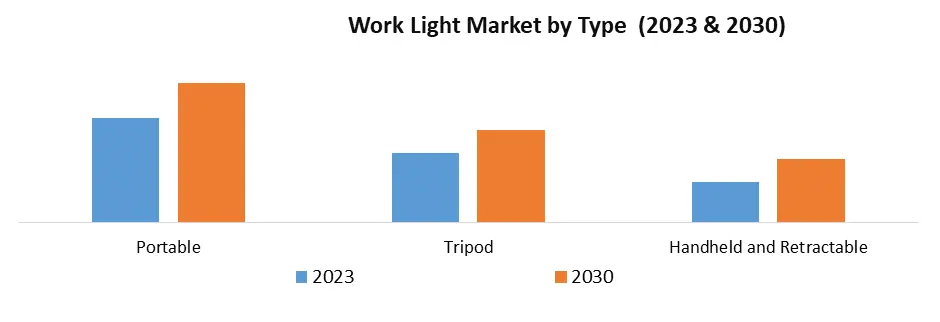
| Segments Covered: | by Technology | Integrated LED Halogen Fluorescent |
|
| by Type | Portable Tripod Handheld and Retractable |
||
| by Power Source | Plug-In Battery |
||
| by End-User | Construction Warehouses Manufacturing Mining Others |
||
Work Light Market, by Region
North America (United States, Canada and Mexico)
Europe (UK, France, Germany, Italy, Spain, Sweden, Austria and Rest of Europe)
Asia Pacific (China, South Korea, Japan, India, Australia, Indonesia, Malaysia, Vietnam, Taiwan, Bangladesh, Pakistan and Rest of APAC)
Middle East and Africa (South Africa, GCC, Egypt, Nigeria and Rest of ME&A)
South America (Brazil, Argentina Rest of South America)
Work Light Market Key Players:
1. Gentos Co., Ltd.,
2. Horpol J.I.A.T.
3. Scangrip North America Inc.,
4. LEDLENSER,
5. Hugo Brennenstuhl GmbH & Co
6. KIRA Leuchten GmbH,
7. AIS LED,
8. Luxgend Electronics Co., Ltd.
9. HARMAN International (Samsung)
10. Osram
11. Philips (Signify)
12. Absen America
13. Altman Lighting
14. Antari
15. Apollo Design Technology
16. Ayrton
17. Blizzard Lighting
Frequently Asked Questions:
1) What is a work light?
Ans. a work light is a high-intensity light fixture that is used to illuminate the stage for the benefit of technicians. Technicians use these lights, rather than the stage lights for a number of reasons.
2) What will be the market value of Work lights in the forecast period 2023 to 2030?
Ans. The market value of Work Lights in 2030 is expected to be $46.2 billion.
3) What is the Main Driver of the Work Lights Market?
Ans. Developments in the automotive industry are the Main drivers of the Work lights Market.
4) What are the uses of work lights?
Ans.Because hanging and handheld work lights allow you to bring light into tight spaces, they are perfect for automotive work, attics, crawl spaces, and anywhere bright light is needed in a restricted area. Integrated LED: Provides bright, crisp light while using a fraction of the energy of other lighting technologies.
5) Which is the Dominant Region of the Work Light Market in 2030?
Ans. Asia Pacific is the most dominant region of the work light market in 2030.