
In-vehicle Infotainment Market- Industry Structure Evaluation, Demand Drivers Analysis, Regional Growth Analysis and Identification, Competitive Positioning Review & Global Market Size Forecast to 2030
Overview
In-vehicle Infotainment Market size was valued at USD 3.55 Bn. in 2023 and the total revenue is expected to grow at 10.9% of CAGR through 2024 to 2030, reaching USD 7.34 Bn.
In-vehicle Infotainment Market Overview:
Information and entertainment are exhibited through touchscreen displays, button panels, and audio/video interfaces by in-car infotainment systems. They enable hands-free access to emails, texts, and phone calls for drivers when used in combination with smartphone integration services. In order to access their favorite music playlists and other digital libraries, drivers may also link their devices. In-car entertainment systems in certain cars may even include monitors for middle or backseat passengers to use.
These allow back passengers to watch movies or play video games while the car is stationary or moving. During the forecast period, automakers are actively competing to install innovative infotainment systems for their upcoming car models. For its next-generation infotainment systems, companies including Mitsubishi Motors Corporation, Nissan Motor Co. Ltd., and Groupe Renault have decided to use the Android OS (operating system) from Google Inc. In addition, the requirement for seamless phone communication with systems and changing customer behavior are expected to drive up prices for IVI (In-Vehicle Infotainment).
The growing need for advanced safety features, self-driving vehicles, digital cockpits for driver assistance, and entertainment is driving the automotive infotainment industry forward. The key drivers of the growth of the vehicle infotainment industry are also changing customer preferences toward technologically advanced solutions. Every vehicle needs a chipset because it makes it possible for automobiles to navigate, communicate, and control. Due to the use of chipsets in automobiles, a major restriction was created. Global market growth is significantly impacted by rising smartphone penetration and strong internet connectivity.
The report has addressed the impact of cybersecurity and high cost on the in-vehicle infotainment market and its high demand in the automobile industry by countries.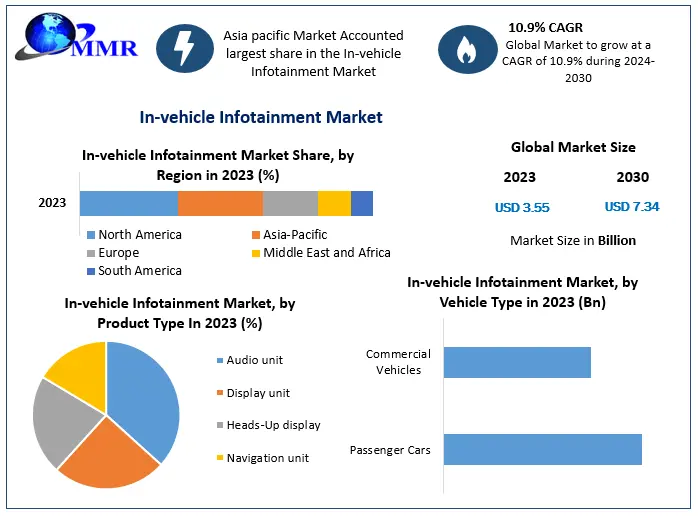 To know about the Research Methodology :- Request Free Sample Report
In-vehicle Infotainment Market Dynamics:
Dealing with cyberattacks is a Major Concern
The growth of linked services increases the number of touchpoints exposed to cyber-attacks. As a result, high-tech in-vehicle infotainment (IVI) systems might increase the danger of cybercrime. To protect critical vehicle data and onboard IVI systems, brands must develop security solutions that focus on authentication processes, access control permissions, and virus scanning. They must also verify that data is not compromised while being processed. The pillars of the vehicle security strategy include defining unsecure data transfer channels and preventing unauthorized modifications to autonomous systems.
In the example of Chrysler's Jeep, two researchers were able to hack into Jeep, allowing them to upgrade software in 1.4 million vehicles. Tesla and Nissan Lead are other examples of the danger of cyberattacks in-vehicle infotainment systems.to address these some OMEs are taking up as a challenge, suppliers have developed a number of techniques to decrease risk while allowing OEMs to provide a wide range of infotainment options that satisfy consumers' expectations. These solutions are often integrated into the entire security strategy for the linked platform.
First-tier supplier Continental has adopted a multilayered strategy that incorporates cyber security into product development from the start. This begins with a thorough risk assessment of each new project to verify that goods and services are secure and meet all standards and requirements. According to Andreas Wolf, head of Continental's Body & Security business area, the firm refers to this process as "security and privacy threat analysis, risk assessment, and risk treatment," which includes not only the original development but also the risk assessment and risk treatment.
Using a similar strategy Argus, an Israeli cyber security company believes that various solutions focusing on different elements of the connected automobile ecosystem must be combined to provide full, end-to-end security; a single product alone would not provide effective protection. Similarly, German security services suppliers ESCRYPT, Panasonic, and more companies’ strategic planning and development are detailed covered in the report.
Smartphones and telematics driving the market
The desire for in-vehicle connection and telematics has driven technology advancements with the goal of improving both the passengers' and drivers' overall in-vehicle experiences. Consumers expected the same experience from their in-car entertainment and information systems, particularly with regard to the user interface, as they increased the amount of time they spent using their own mobile devices. By 2023, sales of smartphones are expected to reach 6.6 billion devices, and by 2025, 7.3 billion units.
The number of smartphones using Android operating systems increased by 49.8% between 2017 and 2023. Low-cost vehicle sales have reduced the cost of the Android-based chipsets used in these in-vehicle systems, advancing the market for Android OS in automotive in-vehicle infotainment systems.
Apple Inc., Airbiquity Inc., Bayerische Motoren Werke AG (BMW), Delphi Automotive LLP, Ford Motor Co., Microsoft Corp., TATA Consultancy Services Ltd., Toyota Motor Corp., Verizon Communications Inc., and AT&T Inc. are a few companies that fall under this category which help in-vehicle infotainment drive the market growth.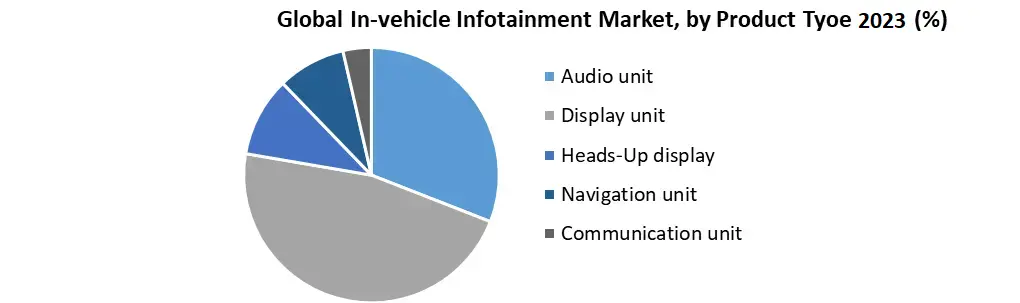 To meet customer demand for connection, many automakers have already started working on smartphone integration. OEMs are expected to focus on strengthening their position in the marketplace as several players from the telecom and software sectors enter the connected automobile infotainment. Audi of America and Verizon Business Group cooperated in January 2023 to develop and offer embedded in-vehicle Wi-Fi and sophisticated connectivity to future Audi vehicles.
Audi's connect CARE will come standard in the A4 and A5 models and will include Verizon's Unlimited internet connection powered by Verizon's 4G LTE network. more details of smartphone penetration and their latest development are covered in a report. Programmable features and services are available to customers with connected infotainment systems. OEM software has been developed to give customers a seamless experience on the cloud, in their cars, and on their smartphones. Cloud technologies are important drivers of advancements in in-vehicle infotainment in the automobile industry, and this is a key contributor to the infotainment industry.
High cost and annual subscription fees for in-vehicle infotainment system
Yearly membership is required for infotainment features like navigation, satellite radio, auto diagnostics, Wi-Fi hotspot, roadside assistance, and real-time traffic information. Before eventually requiring payment, these services often offer a free trial period during which customers can get accustomed to the benefits they offer. Basic membership doesn't come cheap, but over time, the money spent might mount up.
There will also be additional fees for various subscription options, software upgrades, and other services. For instance, unlimited internet costs $25 a month, while the Audi Connect PLUS package, which includes a Wi-Fi hotspot, online radio, and Amazon Music, costs around $10. The Audi Connect PRIME package, on the other hand, costs roughly $199 for six months and $499 for a year and includes Google Earth, Amazon Alexa, natural voice recognition, traffic information, traffic light information, myAudi Destinations, and parking information.
One of the key obstacles to the in-vehicle infotainment market's growth is the increased cost of annual service subscriptions, together with the cost of software upgrades and subscription model upgrades.
Market restraints
Currently, interactive information and entertainment systems are installed in vehicles for entertainment and navigational reasons. The touchscreen infotainment, on the other hand, might distract drivers and raise the risk of an accident. To change the music, change the channel, set up the next navigation, or turn on/off the radio, the system does not require the driver to look away from the road and at the screen. During the expected term, these issues would restrain the market for automobile infotainment systems.
In-vehicle Infotainment Market Segment Analysis:
Based on Product Type, the In-vehicle Infotainment Market is segmented into Audio units, Display units, Heads-Up Displays, Navigation units, and Communication units. Display units held the largest market share in 2023. TFT (Thin Film Transistors) or LCD (Liquid Crystal Display) is used in the display unit/infotainment unit, which offers the user various forms of information (navigation, weather forecast, internet, etc.) and enjoyment (video and audio).
The display/infotainment unit's size typically ranges from 2 to 20 inches. The basic car display unit is between three and five inches. The average screen size of mid-segment vehicles is 7 inches. A simple touch screen and occasionally audio-video interfaces are used to provide clients with access to safety features, navigation, vehicle diagnostics, and other entertainment services.
Also, the size of infotainment system screens is increasing with each new model launch as it adds a premium element to the car and is now a key factor to take into account when buying a new car. Additionally, premium automakers are stepping up their attempts to create infotainment systems to a completely new level. Additionally, premium and luxury vehicles are more likely to have screens larger than 8 inches.
As an illustration, Mercedes-Benz introduced the S-Class in 2023 with a 12.8-inch OLED screen that featured haptic feedback. Furthermore, a 12.3-inch touchscreen system will be available on the Lexus RX SUV. Most of the most recent models include iDrive 7, BMW's newest infotainment system, as a standard or optional feature. Additionally, some new cars will have many screens to provide a more comfortable and individualized experience. The installation of infotainment/display units across all vehicle types is expected to be driven by all of these variables.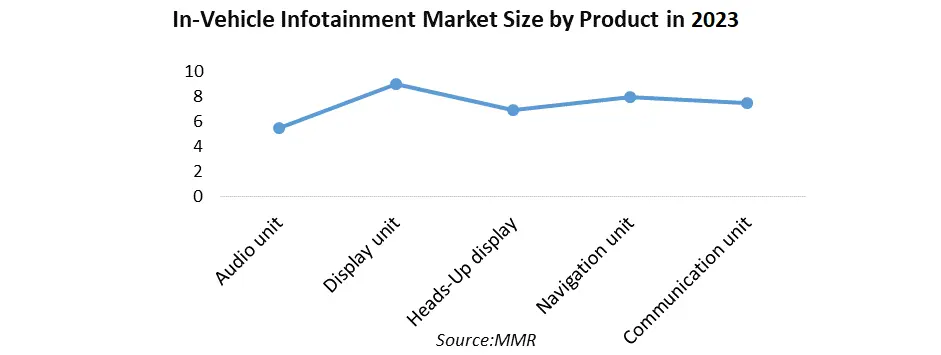 Based on the vehicle type, based on segment passenger vehicles held the largest market share in 2023. The number of passenger cars is rapidly rising in North America and the developing economies of Asia Pacific. This is explained by an increase in utility vehicle demand in densely populated nations like China, India, and Japan.
The passenger vehicle segment is being driven by strong demand for crossovers, SUVs, and hatchbacks, which is expected to have a positive impact on the market for automotive infotainment systems. The global passenger vehicle market is being driven by rising consumer purchasing power and preferences for private transportation. Luxury vehicles have more technology and safety features and their luxurious interiors require cutting-edge infotainment systems. Luxury automobile sales are influenced by the subscription-based services, better sales, and financing choices that automakers offer to consumers. Additionally, businesses like Uber and OLA are working to maintain a sizable market share by attempting to make long journeys more enjoyable and comfortable by enhancing the technology in passenger vehicles.
Based on the connectivity type, the In-vehicle Infotainment Market is segmented into3G,4G, and 5G. 5G is expected to dominate the market during the forecast period. The brand-new mobile network standard 5G will make it possible for vehicles to perform entirely new tasks and more. Future mobility and automated driving will be made possible, as well as improved multimedia and entertainment systems for automobiles.
Due to increased bandwidths of up to 10 Gbit/s and an estimated latency in data transfer of less than 1 millisecond, 5G means, for example, real-time vehicle-to-vehicle communication in the future. However, it is also conceivable for the vehicle's software and applications to receive over-the-air upgrades in almost real time.
5G connectivity will enable seamless and lag-free video and music streaming, as well as the integration of weather predictions and traffic information, among other infotainment features. The benefits of 5G connectivity include faster data transfer and lower operational costs. Global automakers are concentrating on the rollout of 5G connections due to these features. Additionally, the 5G network offers real-time data that enables the driver to make decisions instantly, boosting the dependability of in-vehicle infotainment and lowering latency.
In-vehicle Infotainment Market Regional Insights:
The Asia pacific dominated the market with a 45% share in 2023. The in-vehicle infotainment market is expected to witness significant growth at a CAGR of xx % through the forecast period. China, India, Japan, South Korea, and the rest of Asia Pacific are included in the Asia Pacific region for the in-vehicle infotainment market analysis. Additionally, the Asia Pacific region now has additional prospects for advanced infotainment services thanks to expanding GDP, infrastructure investments, rising per capita income, a growing preference for comfort and leisure, and government incentives for FDIs. These countries' tech-savvy populaces desire a better, more connected driving experience.
In order to provide customers with dependable, secure, and performance-oriented in-vehicle infotainment, major automobile manufacturers in this region are concentrating on creating and innovating modern electronic and semiconductor solutions. In the Asia Pacific market, even mid-range automobiles come with the best-in-class infotainment.
China, one of the countries in the Asia-Pacific region, had a sizable portion of the region's automotive market thanks to the country's highest decade-over-decade vehicle sales. Due to automakers' increasing focus on new energy vehicles (NEV), it is projected that the country will continue to have strong vehicle sales during the forecast period.
The need for infotainment systems in the country is being driven by the transition from basic audio systems to touchscreen infotainment systems that enable a variety of services, including navigation, Apple CarPlay, Android Auto, and telematics. China is one of the world's largest marketplaces for automobiles, and in 2023, more than 20.17 million passenger cars were sold there, representing a 5.89% annual fall from sales in 2019. China is one of the world's top vehicle producers despite the Covid-19 pandemic and economic tensions with the United States, which presents an excellent chance for infotainment systems to establish a presence in the Chinese auto industry. Additionally, China shipped more than 35 million passenger car infotainment systems in 2023, including entertainment displays, center consoles, head-up displays (HUD), clusters, and a few other electronic parts.
At the World Artificial Intelligence Conference in July 2022, China's automotive industry took the lead in the development of smart cockpits with more than 82,300 patent applications, followed by Japan and the United States with 31,900 and 19,300 applications, respectively. Voice recognition, multiple drive functions, and navigation systems are some of the key technologies included in intelligent car cockpits, which are fast becoming a significant component in the current driving experience.
Strategic partnership and investments
The vehicle infotainment industry is expected to see new growth potential as a result of partnerships and collaborations between e-commerce businesses and automakers. For example, in January 2022, Stellantis NV and Amazon.com Inc. worked together to produce the cars and trucks outfitted with the Amazon software dashboard and deploy them into the fleet of Amazon delivery vehicles. These cars will have an entertainment system and use the Amazon cloud service to gather data in real-time. Collaboration & partnership between e-commerce companies and automobile manufacturers are expected to create new growth opportunities for major players in the automotive infotainment market.
For instance, in May 2022, ECARX, a global mobility tech company, entered into a merger agreement with COVA Corp., as a leader in the design, development, and delivery of intelligent vehicle technology. ECARX develops hardware and software solutions that are essential for the development of connected, automated, and electrified mobility, which it supplies to the global automotive industry as it rapidly transforms to meet evolving consumer demands. This merger and acquisition will be beneficial to both the companies and their consumers.
Prominent automobile manufacturers are working closely with software development companies for developing a technologically advanced solution that provides an edge over their competitors. In January 2022, General Motors and Cruise took a strategic move by entering into a long-term partnership with Microsoft to accelerate its sales and incorporate cloud computing for self-driving vehicles. The strategic partnership is expected to bring innovations in self-driving vehicles and create new growth opportunities for the automotive infotainment market. A merger agreement between COVA Corp. and ECARX, a leading global mobile technology company, was reached in May 2022. ECARX is a pioneer in the creation, expansion, and distribution of intelligent vehicle technology.
ECARX develops hardware and software solutions that enable connected, automated, and electric mobility. The global automobile sector, which is rapidly changing to meet shifting consumer demands, is then given access to these technologies. This merger and acquisition will be profitable for the companies as well as for their customers. Leading market players are looking to expand their existing production facilities in emerging markets and are making strategic investments in technological innovation and R&D initiatives to increase brand equity. Companies are also focusing on diversifying their product portfolio and are moving away from single sales channels to increase market growth and profitability.
Are there any Opportunities for a startup in a time of crisis?
There hasn’t been much progress in the In-vehicle infotainment market's start-up environment. Nobody is prepared to spend because of the rising usage of electric vehicles and the demand for next-generation vehicles also leading market players reducing the upcoming market oppurchunitys and competitions. There is high competition between tire 1, and tire 2 suppliers too. There is no future for new upcoming players.
The companies involved in mergers and acquisitions will benefit, as well as their customers. Leading market companies are trying to enhance the size of their current production facilities in developing economies and are investing strategically in technological advancement and R&D projects to boost brand equity. To boost market growth and profitability, businesses are also concentrating on expanding their product variety and phasing out solitary sales channels.
More country-wise market analyses by small, medium, and large manufacturers, and suppliers of the in-vehicle infotainment market are covered in the report.
In-vehicle Infotainment Market Scope: Inquire before buying
| In-vehicle Infotainment Market | |||
|---|---|---|---|
| Report Coverage | Details | ||
| Base Year: | 2023 | Forecast Period: | 2024-2030 |
| Historical Data: | 2018 to 2023 | Market Size in 2023: | US $ 3.55 Bn. |
| Forecast Period 2024 to 2030 CAGR: | 10.9% | Market Size in 2030: | US $ 7.34Bn. |
| Segments Covered: | by Product Type | 1. Audio unit 2. Display unit 3. Heads-Up display 4. Navigation unit 5. Communication unit |
|
| by Vehicle Type | 1. Passenger Cars 2. Commercial Vehicles |
||
| by Connectivity Type | 1. 3G 2. 4G 3. 5G |
||
| by Component | 1. Infotainment Unit 2. Control Panel 3. Head-Up Display 4. Telematics Control Unit |
||
| by Form Factor | 1. Embedded 2. Tethered 3. Integrated |
||
| by Operating System | 1. Linux 2. QNX 3. Microsoft 4. Others |
||
In-vehicle Infotainment Market by Region
North America (United States, Canada and Mexico)
Europe (UK, France, Germany, Italy, Spain, Sweden, Austria, Turkey, Russia and Rest of Europe)
Asia Pacific (China, India, Japan, South Korea, Australia, ASEAN and Rest of APAC)
Middle East and Africa (South Africa, GCC, Egypt, Nigeria and Rest of ME&A)
South America (Brazil, Argentina, Columbia and Rest of South America)
In-vehicle Infotainment Market Key Players are:
1. Harman International Industries Inc.(US)
2. Visteon Corporation(US)
3. Garmin Ltd.(US)
4. Aptiv PLC(US)
5. Continental AG (Germany)
6. Robert Bosch GmbH (Germany)
7. Clarion Co., Ltd.(Japan)
8.. Alpine Electronics Inc.(Japan)
9. Pioneer Corporation(Japan)
10. Panasonic Corporation(Japan)
11. Mitsubishi Electric Corporation(Japan)
12. Kenwood Corporation(Japan)
13. FUJITSU TEN Limited(Japan)
14. Denso Corporation (Japan)
15. Delphi Automotive LLP(Ireland)
16. MMI Navigation(UK)
17. Samsung Electronics (South Korea)
18. Magnetic Marelli SpA (Italy)
Frequently Asked Questions:
1. What does infotainment mean in a car?
Ans. The goal of in-car infotainment systems is to provide enjoyment and information using touchscreen displays, button panels, and audio/video interfaces. They enable hands-free access to emails, texts, and phone calls for drivers when used in conjunction with smartphone integration services.
2. What is an infotainment screen?
Ans. An infotainment system typically takes the form of a touchscreen or display that's mounted in (or on) the dashboard in the middle of the car. These have increased in size over the past few years, with some as large (or even larger) than the tablet you have at home.
3. How does a car infotainment system work?
Ans. functions with Bluetooth or a USB cord. Once connected, it displays the home screen of your phone on the digital dashboard display of your car, allowing you to access calls and music while you're driving. Similar to Apple CarPlay and Android Auto, MirrorLink offers several apps made expressly for usage in vehicles.
4. What are the features available in the in-vehicle infotainment system?
Ans. Offering navigational tools while driving, managing audio/visual entertainment content, providing entertainment for the backseat, and connecting with smartphones for a hands-free experience with voice commands are typical elements of an in-vehicle infotainment system.
5. Which infotainment system is best for a car?
Ans. UConnect – a number of Stellantis items are the best overall.
UConnect is excellent in many ways, but its main strength is how easy and uncomplicated it is to use. One of the most important components of any infotainment system interface, if not the most important component overall, is ease of use.
6. What is floating infotainment system?
Ans. Comparatively speaking, floating screens are placed higher than dashboard-integrated screens. They are now closer to the driver's line of sight as a result. None of the functionalities require you to look below them in order to be adjusted. The driver is free to never look away from the road. 16 Jun 2021.