
Television Market Size by Distribution Channel, Technology, End User, Region – Revenue Pool Analysis, Margin Structure Assessment, Capital Flow Trends, Competitive Benchmarking & Forecast to 2030
Overview
The Television Market size was valued at USD 101.75 Billion in 2023 and the total Television revenue is expected to grow at a CAGR of 8.2% from 2024 to 2030, reaching nearly USD 176.65 Billion.
The global television market has grown leaps and bounds, expanding its presence into the lives of billions. In the vast realm of consumer electronics, where pixels weave narratives and screens emit vibrant imagery, the television market stands as a captivating domain of innovation and entertainment. Like a grand symphony conducted by technology, this market has witnessed harmonious progress over the years, continually enchanting audiences worldwide. As the curtains rise on this market overview, a symphony of statistics unveils itself. From the humble cathode-ray tubes of yesteryears to the sleek, ultra-high-definition displays of today, televisions have evolved into mesmerizing works of art, seamlessly blending technology with aesthetics.
 To know about the Research Methodology :- Request Free Sample Report
The television market has become a bustling ecosystem, where established behemoths and agile newcomers vie for attention. Giants such as Sony, Samsung, and LG have gracefully embraced cutting-edge technologies, orchestrating a chorus of OLED, QLED, and Micro LED displays that dance with vivid colours, deep blacks, and stunning contrast ratios. These technological marvels now adorn the walls of homes, casting spellbinding images that breathe life into storytelling. The market has witnessed a spirited march towards larger displays, enveloping viewers in immersive worlds. Gone are the days when 32-inch televisions ruled the roost. Today, gargantuan screens measuring 55 inches or more adorn living rooms, transforming them into private theatres. Yet, even as sizes grow, sleek bezel-less designs and minimalistic aesthetics have redefined the visual landscape, elevating televisions to objects of desire.
The television market has been touched by the magical wand of connectivity, fusing screens with the power of the internet. Smart televisions have emerged as the pied pipers of entertainment, luring viewers with streaming services, video-on-demand platforms, and a plethora of apps. With a simple flick of a remote, users can summon a wealth of content, transforming their televisions into gateways to infinite possibilities. As the symphony reaches its crescendo, the television market faces new frontiers and challenges. The rise of streaming services and cord-cutting has disrupted traditional broadcast models, demanding adaptability from industry players. Furthermore, the pursuit of sustainability has struck a chord, urging manufacturers to compose eco-friendly harmonies by reducing energy consumption and embracing recyclable materials. Amidst this orchestration of innovation and adaptation, the television market continues to captivate audiences across the globe. As technology marches forward, it intertwines with our desire for immersive experiences, stirring our emotions and kindling our imaginations. From the humblest of living rooms to the grandest of theatres, the television market continues to paint the world in a symphony of pixels, inviting us all to join in the spectacle of visual storytelling.
Television Market Dynamics
Television Market Drivers
Like celestial forces guiding the stars, a constellation of market drivers propels the television market towards new heights. Innovation, that elusive muse, dances with technology, urging manufacturers to weave captivating narratives of progress. Consumer demand, a restless tide of desires, seeks ever-bigger screens, sharper resolutions, and immersive experiences that transcend reality. Connectivity, the invisible thread that weaves the digital tapestry, beckons viewers with streaming services and boundless content at their fingertips. Meanwhile, environmental consciousness casts its verdant spell, nudging manufacturers towards sustainable practices. These market drivers, intertwined and harmonious, propel the television market forward, captivating audiences with an enchanting blend of technology, entertainment, and conscience. These factors drive the television market growth.
Television Market Trends & Opportunities
In the mesmerizing tapestry of the television market, an intricate pattern of trends and opportunities unfurls, creating a kaleidoscope of possibilities. One trend illuminates the path towards 8K resolution, inviting viewers into realms of unparalleled visual splendour. Another trend embraces the fusion of artificial intelligence, transforming televisions into intuitive companions that anticipate and cater to individual preferences. The advent of modular displays presents a canvas for creativity, empowering users to sculpt their viewing experiences. Moreover, the rise of augmented reality offers a tantalizing glimpse into a future where televisions blur the boundaries between virtual and real. Amidst these trends, opportunities abound, inviting industry players to compose symphonies of innovation and capture the hearts and imaginations of viewers worldwide. All these aspects boost the television market trend in the forecast period.
Television Market Restraints & Challenges
In the labyrinthine realm of the television market, a few formidable shadows cast their presence as restraints and challenges. One such spectre emerges in the form of fierce competition, where industry players engage in an intricate dance, vying for attention and market share. Economic fluctuations, like unpredictable tempests, can dampen consumer spending and pose hurdles to growth. Technological obsolescence lurks as a silent adversary, rendering once cutting-edge televisions obsolete in the blink of an eye. Regulatory complexities weave a tangled web, demanding compliance and navigating a landscape of standards and certifications. Yet, amidst these challenges, those with resilience and ingenuity seize the opportunity to compose harmonies of innovation that resonate amidst the market's symphony. These factors hampers the demand of the television market.
Television Market Segment Analysis
By Distribution Channel:
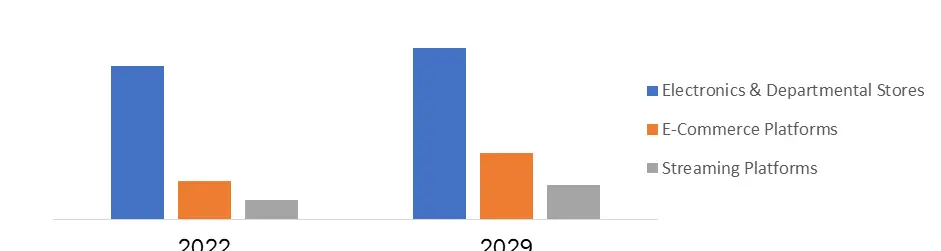
Amidst the bustling ecosystem of the television market, a symphony of segmentation emerges, delineating diverse distribution channels that orchestrate the journey of televisions into the hands of consumers. The first movement unveils the realm of brick-and-mortar retailers, where electronics stores and departmental outlets stand as physical gateways to visual delight, offering personalized experiences and hands-on exploration. The digital strains resound with the rise of e-commerce platforms, where virtual shelves teem with televisions, accessible with a few clicks and delivered to doorsteps with convenience. Streaming platforms, a melodic harmony of content and commerce, extend their reach, offering televisions as bundled packages, effortlessly bridging the gap between entertainment and ownership. Within this symphony of distribution, each channel weaves its own melodious offering, resonating with diverse audiences in a harmonious duet of accessibility and choice.
By Technology:
Within the captivating symphony of the television market, a mesmerizing tapestry of segmentation emerges, delineating distinct genres based on the harmonies of technology. The first note resounds with the resolute hum of LED, lighting up screens with energy-efficient brilliance that enchants cost-conscious viewers. Quantum dots lend their luminescent hues to QLED, painting vibrant colours on the canvas of displays, while OLED whispers softly, offering inky blacks and ethereal contrasts that leave audiences breathless. The melody of Micro LED orchestrates a future where minuscule pixels unite to form grand visuals, while the symphony of 8K resolution seduces the senses, crafting an immersive experience that transcends reality itself. As this technological symphony unfolds, viewers are immersed in a market alive with innovation, each strain captivating hearts and minds in its own unique way.
Global Television Market by Distribution Channel, 2023 Vs 2030 (US$ Bn)
By End-User:
The market segmentation based on end-user industry unveils a captivating tapestry of diverse sectors that weave their own unique narratives within the realm of television. In the realm of hospitality, televisions become conduits of comfort and entertainment, adorning hotel rooms and luxury suites, offering guests a respite from the world. The corporate domain embraces televisions as vital tools, empowering businesses with digital signage and immersive presentations, creating impactful visual experiences. Healthcare, with its nurturing embrace, employs televisions as companions, offering comfort and distraction to patients during their healing journeys. Retail, the bustling stage of commerce, employs televisions as captivating displays, guiding customers through immersive experiences that inspire purchase decisions. From education to transportation, each industry embraces televisions, crafting their own chapters within the grand symphony of visual storytelling, shaping experiences and enriching lives.
Television Market: Regional Segment Analysis
Asia-Pacific:
The Asia-Pacific Television Market, a vast and dynamic landscape, showcases a mix of affordability and innovation. Here, a diverse range of preferences emerges, from budget-friendly options to high-end televisions catering to tech enthusiasts. The region displays a fondness for vibrant displays, gaming capabilities, and an inclination towards online streaming and content consumption.
North America:
In North America Television Market, a technologically advanced realm, the televisions flourish as a centrepiece of entertainment, with a penchant for large screens and cutting-edge features. USA & Canada are the clear leaders in this market. Streaming services and smart TVs reign supreme, catering to the ever-evolving demands of cord-cutters and tech-savvy viewers.
Europe:
European Television Market, a tapestry of diverse cultures, embraces sleek designs and premium aesthetics. The region champions OLED and QLED technologies, emphasizing superior image quality and immersive experiences. With a penchant for sports broadcasts and cinematic storytelling, European viewers seek televisions that deliver vivid colours and lifelike visuals.
South America:
The South America Television Market exudes a vibrant spirit, where televisions serve as a vibrant source of entertainment. Market preferences vary across the region, with a blend of affordability and feature-rich offerings resonating with consumers. Sports, telenovelas, and local programming capture the hearts of viewers, shaping their television choices.
Middle-East & Africa:
Africa and the Middle East Television Market exhibit a mosaic of preferences, influenced by cultural diversity and varying economic conditions. Large-screen displays, energy-efficient models, and integrated connectivity resonate with consumers in these regions. Local content, including dramas, reality shows, and cultural programming, holds great significance in shaping the television landscape.
Competitive Landscape in Television Industry
In the vast theatre of the television market, a dramatic tableau unfolds, showcasing a fiercely competitive landscape that commands attention. Like actors on a stage, industry giants and nimble challengers step into the spotlight, each seeking to captivate audiences with their unique performances. At center stage, longstanding titans such as Sony, Samsung, and LG engage in a mesmerizing dance of innovation and brand legacy. These seasoned actors, armed with deep pockets and vast resources, set the benchmark for technological advancements and push the boundaries of visual excellence.
Yet, the theatre also welcomes fresh faces, emerging players who dare to challenge the status quo. Upstarts like TCL and Hisense emerge as rising stars, captivating audiences with their affordable yet feature-rich offerings, injecting new energy and vibrancy into the market. Within this competitive landscape, each performer brings their own unique strengths and specialties. Some excel in display technologies, crafting screens that dazzle with vivid colours and precise details. Others channel their prowess into smart capabilities, weaving seamless connectivity and intuitive user experiences into the fabric of their televisions.
The plot thickens as streaming giants like Amazon, Roku, and Google cast their influence on the market. These players, both collaborator and competitor, create their own narrative, curating content ecosystems and vying for control over the digital entertainment landscape. As the curtains rise and fall, the competitive landscape in the television market continues to evolve. Mergers, acquisitions, and strategic partnerships add unexpected twists and turns to the plot, shaping the trajectory of the market. Consumer preferences, technological breakthroughs, and shifting market dynamics set the stage for fierce rivalries and constant innovation. In this theatre of competition, only the most adaptable, visionary, and audience-centric performers will triumph. The race for supremacy in the television market is a thrilling spectacle, where each player strives to steal the show, leaving audiences spellbound and eager for the next act to unfold.
Television Market Scope:Inquire Before Buying
| Global Television Market | |||
|---|---|---|---|
| Report Coverage | Details | ||
| Base Year: | 2023 | Forecast Period: | 2024-2030 |
| Historical Data: | 2018 to 2023 | Market Size in 2023: | US $ 101.75 Bn. |
| Forecast Period 2024 to 2030 CAGR: | 8.2% | Market Size in 2030: | US $ 176.65 Bn. |
| Segments Covered: | by Distribution Channel | Electronics & Departmental Stores E-Commerce Platforms Streaming Platforms |
|
| by Technology | LED QLED OLED Micro LED |
||
| by End User | Domestic Families Hotels Corporate Healthcare Retail Education Transportation |
||
Television Market, by Region
North America (United States, Canada and Mexico)
Europe (UK, France, Germany, Italy, Spain, Sweden, Austria, Turkey, Russia and Rest of Europe)
Asia Pacific (China, India, Japan, South Korea, Australia, ASEAN and Rest of APAC)
Middle East and Africa (South Africa, GCC, Egypt, Nigeria and Rest of ME&A)
South America (Brazil, Argentina, Columbia and Rest of South America)
Key Players: Television Industry
1. Sony
2. Samsung
3. LG
4. TCL
5. Hisense
6. Panasonic
7. Philips
8. Sharp
9. Vizio
10. Toshiba
11. Sony Bravia
12. Xiaomi
13. Skyworth
14. Haier
15. Hitachi
16. Grundig
17. JVC
18. RCA
19. Sceptre
20. Vestel
21. Funai
22. Akai
23. Changhong
24. Polaroid
25. Insignia
FAQs:
1. What are the growth drivers for the Television Market?
Ans. The growth drivers for the Television Market stem from the relentless pursuit of technological innovation, with advancements in display technologies, smart capabilities, and connectivity fuelling consumer demand for enhanced visual experiences. Also, the rising popularity of streaming services and the increasing adoption of high-definition and ultra-high-definition content contribute to the market's expansion, captivating viewers with a wealth of on-demand entertainment options.
2. What is the major restraint for the Television Market growth?
Ans. One major restraint for the Television Market growth is the intensifying competition among manufacturers and brands, leading to price wars and shrinking profit margins. Also, the shift towards alternative devices and platforms for content consumption, such as smartphones and tablets, poses a challenge to the traditional television market by diverting consumer attention and potentially impacting sales.
3. Which region is expected to lead the global Television Market during the forecast period?
Ans. Asia-Pacific Television Market is expected to lead the globally, during the forecast period.
4. What was the Global Television Market size in 2023?
Ans. The Global Television Market size was USD 101.75 Billion in 2023
5. What segments are covered in the Television Market report?
Ans. The segments covered in the Television Market report are by Distribution Channel, Technology, End-User, and Region.