
Global Sports Apparel Market by Type, Traveller, Purpose, Booking Type, Travel Industry and Service Type – Forecast to 2034
Overview
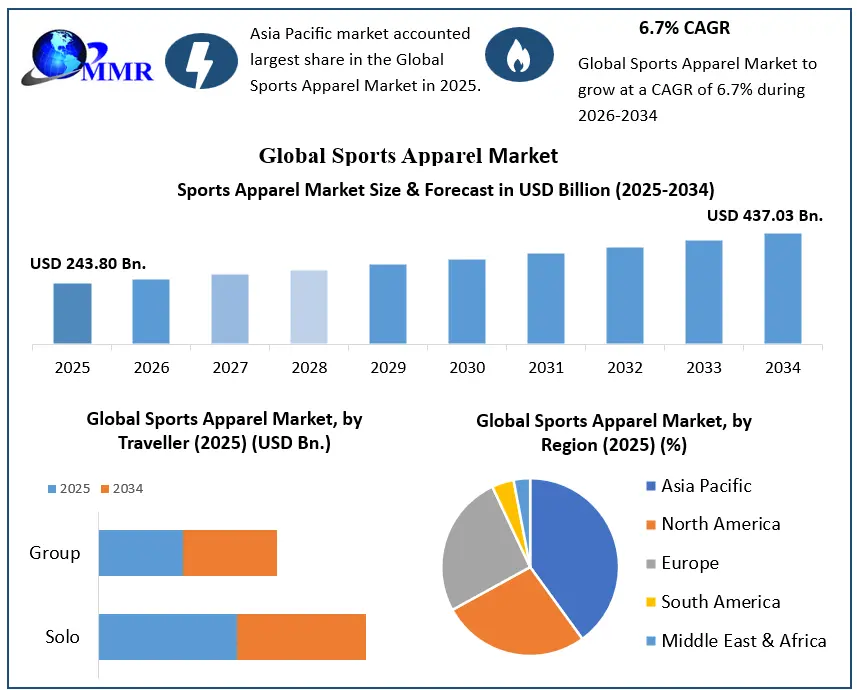
The Sports Apparel Market size was valued at USD 243.80 Billion in 2025 and the total Sports Apparel revenue is expected to grow at a CAGR of 6.7% from 2025 to 2034, reaching nearly USD 437.03 Billion by 2034.
Sports Apparel Market Overview:
Sports apparel is designed clothing tailored for physical activities and sports. Most sports demand Sports apparel for comfort and safety measures tailored to the specific activity. Sports apparel includes range of garments such as tracksuits, shorts, T-shirts, polo shirts, swimsuits, wetsuits, ski suits, and leotards. Specialized footwear like trainers, football boots, riding boots, and ice skates are essential components in this Sports Apparel Market. Beyond its functional use, sportswear has found its place casually, reflecting a blend of style and functionality.
With the evolution of the economy and increasing disposable income, consumer’s preferences have changed and therefore there is rise in popularity of leisure wear. The Sports Apparel Market is catering to the rising demand of consumers, providing various apparels tailored according to their personal choice with consumer’s preference being the major driving force. Growing awareness on health and fitness and consumers placing greater importance on maintaining an active lifestyle are another reason for growing demand for sports apparel in market.
The rising influence of sports like basketball, baseball and soccer and increase in strict focus over health among people has led North America to hold the dominating market share in Sports apparel market globally. With a CAGR of around 7-8%, US is major contributor to the dominance of North America. Key companies such as Under Armour, Adidas AG, Nike, Inc., PUMA SE, Ralph Lauren Corporation, and Fila Holdings Corp in North America are catering to rising demand of active lifestyle culture and fitness-conscious population.
The Sports Apparel Market is characterized by a mix of notable domestic and international players. Leading companies such as VF Corporation, Amer Sports Corporation, Adidas AG, Nike Inc., Puma SE, Under Armour Inc., Lululemon Athletica, Columbia Sportswear Company, Anta International Group Holdings Ltd, Li Ning Company Limited, and others prominently feature in the Sports Apparel Market. To maintain a competitive edge, these businesses are expanding their budgets for marketing research and development, as well as enhancing their distribution channels.
Sports Apparel Market Growth and Share Analysis
To know about the Research Methodology :- Request Free Sample Report
Sports Apparel Market Dynamics:
The growing fitness awareness driving sport apparel market:
The demand for sports apparel is driven by rising fitness awareness. The sports apparel market is growing due to the availability of products that offer enhanced features such as temperature control, moisture management, and performance-boosting appearances, which reduce discomfort and lower the threat of injury. Consumers are screening and increasing their acceptance to pay a premium for these additional benefits. Also, the rising wealth in the emerging sports apparel market is driving demand for sports apparel, indicating a wealthier consumer base.
Drivers for growth in sports apparel market also include factors such as rising levels of education, increased international travel, and exposure to information through cable television and the internet. These elements contribute to consumers becoming more health-conscious, as evidenced by the increase of health clubs, gymnasiums, and fitness centres.
New Innovation Entries:
Innovation stands as a key driver in the global sports apparel market, enabling product differentiation and enhancing participant performance in sports. Features like advanced technical fabrications, innovative design, and product development predominantly position sports apparel as premium-priced products. Drivers for the global sports apparel market growth include the increasing demand among consumers for innovative, high-quality products that offer superior performance. Market competitors are actively introducing sport-specific wear for various activities such as basketball, football, rugby, trail running, and golf, leveraging advancements in technology. These innovations are expected to drive significant growth in the sports apparel market during the forecast period.
Aggressive Advertisement and Celebrity Authorizations
Opportunity lies in the sports apparel market as leading players continuously refine and update their strategies to navigate intense competition. Achieving sustainability and retaining a dominant market position requires comprehensive competitive strategies from these companies. A significant component of their marketing approach involves endorsements and kit sponsorships. For example, Nike Inc., a prominent sports apparel company, collaborates with top global athletes like Cristiano Ronaldo, Neymar, and LeBron James for brand endorsements and to promote various sports products and apparel lines. These companies often sponsor uniform kits for numerous sports clubs and teams worldwide. The aggressive advertising campaigns associated with these partnerships contribute to driving growth in the sports apparel market.
Sports Apparel Market Segment Analysis:
Global Sports Apparel Market, by Purpose
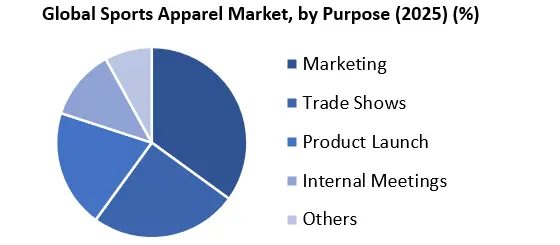
In the Global Sports Apparel Market, the Marketing segment supports demand for promotional sportswear, branded athletic clothing, and customized performance apparel through corporate branding campaigns and sports sponsorships. The Internal Meetings segment drives demand for corporate sportswear, team uniforms, and branded activewear used in employee engagement programs and organizational events. The Trade Shows segment creates opportunities for sports apparel manufacturers to showcase innovative athletic wear, sustainable sportswear, and advanced performance fabrics while strengthening brand visibility. The Product Launch segment promotes new sportswear collections, fitness clothing, and technologically advanced sports apparel through promotional campaigns and retail events. Meanwhile, the Others segment includes sports tournaments, promotional activities, community fitness events, and recreational programs, supporting the expansion of the global athletic apparel industry.
Global Sports Apparel Market, by Service Type
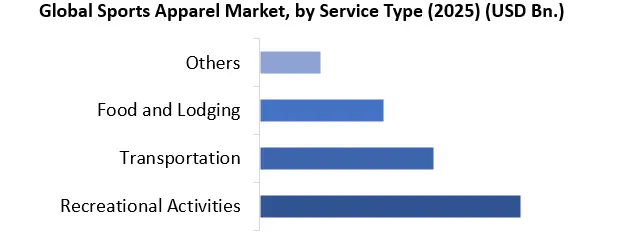
In the Global Sports Apparel Market, the Transportation segment supports sportswear distribution, athletic apparel logistics, and supply chain management through efficient transportation networks and e-commerce delivery services. The Food and Lodging segment generates demand for branded sports uniforms, fitness apparel, and customized activewear across hotels, resorts, wellness centers, and hospitality facilities. The Recreational Activities segment drives demand for performance sportswear, gym clothing, outdoor athletic apparel, and athleisure wear through increasing participation in fitness activities, sports tourism, and recreational events. Meanwhile, the Others segment includes promotional merchandise, corporate sportswear, and event-specific athletic clothing, supporting sports apparel industry growth and brand expansion.
Sports Apparel Market Regional Insights:
In the regional analysis, North America represent 40 % of the market share in 2025 and is expected to reach CAGR of 6.58% during the forecast period. The growing emphasis on health consciousness and the rising popularity of active lifestyles are key drivers for the sports apparel market in this region. By 2025, the market in the United States alone is expected to reach USD 63.4 billion. Also, Japan and Canada arise as significant global market, with growth rates 3.1% and 3.4%, respectively, for the forecast period. Germany is poised to experience a CAGR of approximately 3.8% within Europe, also the high income and strong sports other countries like France, UK, hold the largest share in market.
During the forecast period, the Asia Pacific region is set to experience the highest growth, driven by the rapidly evolving retail infrastructure and the increasing disposable income of consumers. China leads in demand, fueled by its growing population. Additionally, changing lifestyles, rising disposable incomes, and heightened health awareness actively contribute to the expansion of the sports apparel market in this region.
Competitive Landscapes:
In this segment, the Sports Apparel market is characterized by tier-1, tier-2, and local players. Tier-1 and tier-2 players, including global brands like Adidas, Nike, Inc., Puma SE, Under Armour, Inc., Ralph Lauren, Umbro Ltd., Fila, Lululemon Athletica, New Balance, and Columbia Sportswear Company, possess extensive product portfolios and global reach. These companies lead the global sports apparel industry due to their strategic innovations and expansive regional presence. To enhance their market positions and broaden their consumer base, these businesses employ strategies such as expansion, launching new products, and forming alliances. Adidas, with operations in nearly every country worldwide, leads the sporting goods industry and operates 170 subsidiaries.
Adidas and Reebok focus on apparel, and accessories, while Taylor Made concentrates on golf equipment and apparel. Puma, with its sports apparel, enables individuals to achieve their goals. With a presence in 120 countries and employing over 10,000 people, Puma aims to establish itself as the leading manufacturer in sports lifestyle. Nike aims to lead the world in sporting goods apparel, equipment, and footwear, employing over 30,000 people across more than 160 countries. Based in Boston, MA, New Balance leads as a global athletic products company. With 4,000 employees worldwide and its products available in over 120 countries, New Balance stands out as a leader in footwear and athletic apparel. This companies are compete in sports apparel market on factors of product quality, brand reputation, pricing range, marketing strategies and new innovations.
Sports Apparel Market Scope: Inquiry Before Buying
| Sports Apparel Market | |||
|---|---|---|---|
| Report Coverage | Details | ||
| Base Year: | 2025 | Forecast Period: | 2026-2034 |
| Historical Data: | 2020 to 2025 | Market Size in 2025: | USD 243.80 Bn. |
| Forecast Period 2026 to 2034 CAGR: | 6.7% | Market Size in 2034: | USD 437.03 Bn. |
| Segments Covered: | by Type | Managed Business Travel Unmanaged Business Travel |
|
| by Traveller | Solo Group |
||
| by Purpose | Marketing Internal Meetings Trade Shows Product Launch Others |
||
| by Booking Type | Online Travel Agencies Direct Bookings Corporate Travel Management Companies |
||
| by Travel Industry | Government Corporate |
||
| by Service Type | Transportation Food and Lodging Recreational Activities Others |
||
Sports Apparel Market, by Region:
North America (United States, Canada, and Mexico)
Europe (UK, France, Germany, Italy, Spain, Sweden, Austria, and the Rest of Europe)
Asia Pacific (China, South Korea, Japan, India, Australia, Indonesia, Malaysia, Vietnam, Taiwan, Bangladesh, Pakistan, and the Rest of APAC)
Middle East and Africa (South Africa, GCC, Egypt, Nigeria, and the Rest of ME&A)
South America (Brazil, Argentina Rest of South America)
Sports Apparel Market, Key Players:
- Carlson Wagonlit Travel (CWT) Solutions Inc.
- Booking Holdings Inc.
- Expedia Group, Inc.
- BCD Group
- Global Business Travel Inc.
- Airbnb Inc.
- JPMorgan Chase & Co. (Frosch Travel)
- Corporate Travel Management Ltd. (CTM)
- Travel Leaders Group
- Fareportal Inc.
- Tumodo
- Aviareps
- com Group
- Tuniu
- Cncn Travel
- eLong
- Lvmama
- Tongcheng Network Technology Co.
- Tujia
- Xiaozhu
- Klook
- Huoli
- China International Travel Service Corp.
- MakeMytrip
- Yatra
- Cleartrip
- EaseMyTrip
- Goibibo
- Thomas Cook
- TravelPerk
FAQs:
1. What are the growth drivers for the Sports Apparel market?
Ans. The increasing health awareness, new innovation and to increase visibility, credibility, and engagement, companies.
2. What are the top players operating in the Sports Apparel Market?
Ans. The Major Key players are Nike, Adidas, Under Armour, Puma, VF, Anta, Columbia Sports Apparels, Lululemon Athletica, Amer Sports, ASICS, Hanes brands, PEAK, Ralph Lauren, 361sport.
3. Which region is expected to lead the global Sports Apparel during the forecast period?
Ans. North America is expected to lead in global Sports Apparel Market during the forecast period.
4. What was the Global Sports Apparel Market size in 2025?
Ans: The Global Sports Apparel Market size was USD 243.80 Billion in 2025.
5. What segments are covered in the report?
Ans. The segments covered in the Sports Apparel report are product Type, End-use, Distribution Channel, and Region.