
Potato Chips Market by Type, Flavor, Distribution Channel and Region – Global Market Size Estimation, Industry-Wide Analysis, Competitive Landscape Assessment & Long-Term Forecast to 2032
Overview
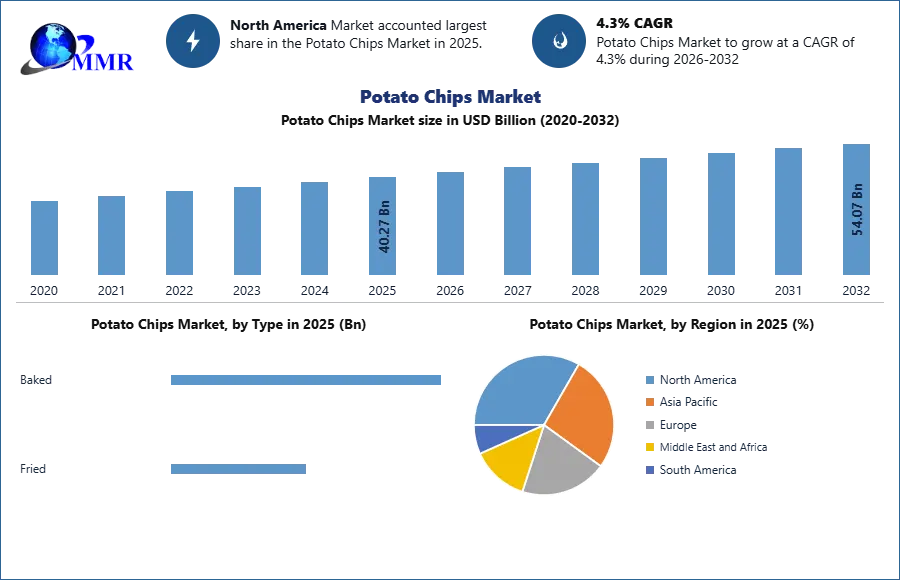
The Potato Chips Market size was valued at USD 40.27 Billion in 2025 and the total Potato Chips revenue is expected to grow at a CAGR of 4.3% from 2026 to 2032, reaching nearly USD 54.07 Billion.
Potato Chips Market Overview
Potato chips, a beloved snack enjoyed by people of all ages, are thin slices of potatoes that have been deep-fried or baked. The Potato Chips Industry spans the globe, enjoying widespread consumption across North America, Europe, Asia-Pacific, and other regions. Local nuances and preferences play a pivotal role in steering product innovation and flavor diversity within different markets. Changing consumer behavior in the Potato Chips Market is influenced by a growing awareness of health and wellness. Some consumers are actively seeking healthier snack options, leading to the development of baked, reduced-fat, and organic potato chips. Potato Chips leading manufacturers respond by emphasizing nutritional aspects, such as reduced fat content and the use of non-GMO ingredients. The industry offers an extensive array of potato chip varieties, ranging from classic salted to flavored (barbecue, sour cream, and onion, cheese, etc.), baked, kettle-cooked, and healthier alternatives. Consumer curiosity about unique and exotic flavors propels Potato Chips companies to experiment with innovative seasoning options.
 To know about the Research Methodology :- Request Free Sample Report
The market includes various types of potato chips, such as traditional fried chips, baked chips, kettle-cooked chips, and specialty or flavored chips. Different variants cater to diverse consumer preferences and health considerations. Segmentation involves categorizing the market based on factors like type, flavor, distribution channel, and region. This allows for a detailed analysis of specific segments and their individual dynamics. The Potato Chips Market scope involves an examination of major players in the industry, including multinational corporations and regional or artisanal brands. Competitive strategies, market share, and innovations from these players contribute to the overall landscape.
Potato Chips Market Dynamics
Demand and Supply Dynamics for Potato Chips to boost the Potato Chips Market growth
The Potato Chips market, a thriving and globally adored sector within the snack industry, is propelled by a host of influential drivers, shaping its growth and transformation. At the core of the market's momentum is the interplay of demand and supply for Potato Chips. The ever-changing consumer landscape and their increasing penchant for convenient, on-the-go snacks have elevated the demand for potato chips. This surge in demand, in turn, propels manufacturers to innovate and optimize their supply chains to meet the evolving market dynamics. Technological prowess is a key driver in the production of Potato Chips. Innovations in Potato Chips manufacturing processes, including precision slicing and frying technologies, have led to increased efficiency, consistent quality, and a broader variety of chip textures and flavors. These technological advancements contribute significantly to meeting the growing demand for diverse and high-quality potato chips, which increase the Potato Chips Market Share.
Potato chip packaging innovations constitute a driving force in enhancing the consumer experience and contributing to overall market growth. Environmentally friendly packaging options, resealable packs, and visually appealing designs are innovations that influence purchasing decisions. These packaging advancements align with consumer preferences for sustainable and convenient options, driving the market forward. The advent of e-commerce has revolutionized the retail landscape, including the Potato Chips industry. Online platforms provide a convenient avenue for consumers to access a wide range of potato chip varieties in the market. The e-commerce boom emerges as a significant distribution channel, contributing to market growth, accessibility, and the ability to reach a broader audience. Effective marketing and branding strategies wield considerable influence over consumer choices in the Potato Chips market. Successful campaigns that spotlight unique flavors, quality ingredients, and engaging narratives contribute to brand loyalty. Social media platforms amplify these marketing efforts, enabling companies to connect with a broader audience and further drive market growth. The social aspect of snacking remains a steadfast contributor to the enduring popularity of potato chips. Whether enjoyed at social gatherings, movie nights, or sporting events, chips have become a staple in recreational settings. This social and recreational dimension fosters consistent demand, positioning potato chips as the go-to snack for various occasions.
Macroeconomic Factors to restraint the Potato Chips Market growth
Macroeconomic factors affecting the potato chips market are inflation, currency fluctuations, and economic downturns. These factors impact consumer purchasing power and overall demand. Potato Chips Manufacturers face challenges in adjusting pricing strategies and maintaining profitability during economic uncertainties, which is expected to restraint the Potato Chips Market growth. Regulatory frameworks, including health and labeling regulations, pose challenges for the industry. Increased scrutiny on nutritional content, ingredient labeling, and health claims necessitates compliance efforts from manufacturers. Adapting to evolving regulatory landscapes requires investments in research, development, and potentially reformulation of products. The market is fiercely competitive, with established giants and emerging players vying for Potato Chips market share. Intense competition exert downward pressure on prices, affecting profit margins for manufacturers. Maintaining a competitive edge requires continuous innovation, strategic marketing, and operational efficiency. Environmental considerations, including sustainable sourcing, packaging waste, and carbon footprint, present challenges for the Potato Chips industry. Consumers are increasingly eco-conscious, demanding environmentally friendly practices. Adhering to sustainability standards requires investments in eco-friendly packaging, responsible sourcing, and waste reduction initiatives.
Potato Chips Market Trends
Healthier Alternatives: Consumer awareness of health and wellness has led to a demand for healthier snack options. Potato chip manufacturers are responding by introducing baked, reduced-fat, low-sodium, and organic variants to cater to health-conscious consumers.
Innovative Flavors: Flavor innovation remains a key trend in the market. Consumers are increasingly interested in unique and exotic flavors. Manufacturers are experimenting with a wide range of seasonings, including global and gourmet-inspired options, to differentiate their products.
Snacking for Mental Well-being: The concept of "snackertainment" has gained traction, emphasizing the role of snacks, including potato chips, in providing moments of enjoyment and relaxation. Consumers are looking for snacks that contribute to their overall mental well-being and provide a satisfying indulgence.
Functional Ingredients and Claims: Some potato chip products feature functional ingredients, such as fortified vitamins, minerals, or other nutritional additives. Manufacturers are incorporating health-oriented claims to appeal to consumers looking for snacks with specific nutritional benefits.
Transparent Labeling and Clean Ingredients: Consumers are increasingly scrutinizing product labels, leading to a demand for transparency and clean ingredient lists. Potato chip manufacturers are responding by clearly communicating the origins of ingredients and avoiding artificial additives.
Potato Chips Market Segment Analysis
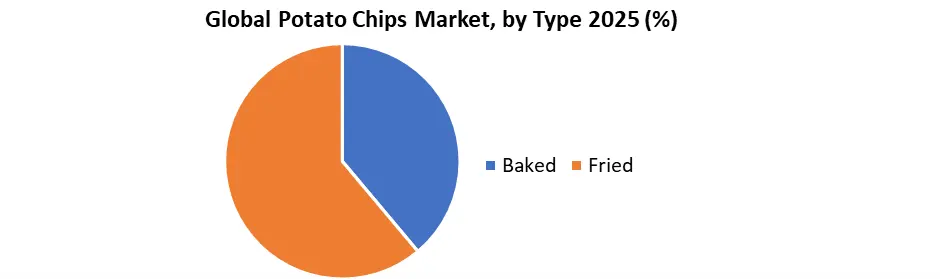
Based on Type, the market is segmented into Baked, and Fried. Fried segment dominated the market in 2023 and expected to hold the largest Potato Chips Market share over the forecast period. The fried segment in the Potato Chips market refers to potato chips that are traditionally cooked by deep-frying thin slices of potatoes. This method involves immersing potato slices in hot oil, resulting in a crispy and flavorful snack. The fried segment has been a longstanding and popular category in the snack industry, offering a classic and indulgent option for consumers. Fried potato chips are known for their classic, crispy texture that many consumers find satisfying. The deep-frying process creates a thin and crunchy chip that has become a hallmark of the traditional potato chip experience. The frying process allows for a diverse range of flavor options. Potato Chips Manufacturers experiment with various seasonings and coatings to create unique and innovative flavors, appealing to different consumer preferences. Packaging for fried potato chips is designed to maintain the freshness and crispiness of the chips. Innovations in packaging include features like resealable bags to preserve the quality of the chips over multiple sittings.
Based on Flavor, the market is segmented into Plain/Salted, Barbecue, Cheese, Sour Cream & Onion, Spicy, and Others. The flavored segments collectively held the largest Potato Chips Market share in 2023 and are expected to dominate the market over the forecast period. These segments have gained popularity due to their ability to offer unique and exciting taste experiences, catering to changing consumer demands for variety and innovation in snack options. The flavored categories encompass a diverse array of taste profiles, ranging from savory and spicy to tangy and bold. Common flavors include barbecue, sour cream & onion, cheese, jalapeño, salt & vinegar, and various regional or ethnic-inspired seasonings. In response to the growing demand for healthier snack options, some flavored potato chips focus on using natural ingredients and incorporating cleaner flavor profiles, such as herbs, spices, and vegetable-based seasonings. Additionally, these segments often include limited-edition or seasonal varieties, where manufacturers introduce special flavors for holidays, events, or collaborations with popular brands to create buzz and drive consumer interest.
Potato Chips Market Regional Insights
Consumer preference for potato chips in North America to boost the regional potato chips market growth
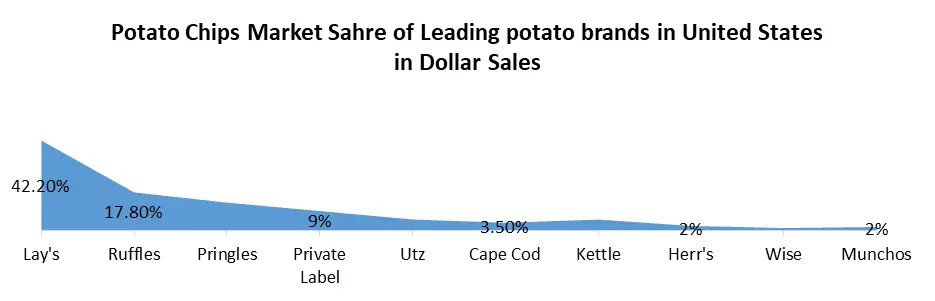
The North America potato chips market is significantly influenced by ever-evolving consumer preferences. The potato chips industry in the U.S. on the rise and is expected to grow significantly over the forecast period. Each country in North America brings its own set of regional flavors and cultural influences to the potato chips market. The United States Potato Chips market reflects a melting pot of flavors, with diverse options ranging from classic salted to globally inspired tastes. Leading Potato Chips Companies particularly in the United States, play a central role in shaping the North America potato chips market. Frito-Lay, a subsidiary of PepsiCo, stands out as a dominant force with popular brands like Lay's and Ruffles. The extensive distribution networks and brand recognition of these major players contribute to their market influence. These companies leverage their market presence to introduce new flavors, engage consumers through marketing campaigns, and maintain a competitive edge.
In Canada, a mix of international and local manufacturers caters to the country's multicultural population, offering flavors tailored to regional preferences. Mexico Potato Chips Manufacturers embraces bold and traditional flavors, with an inclination toward spicy and tangy profiles. The incorporation of regional influences adds a layer of complexity and richness to the market. The increasing awareness of health and wellness among consumers has a notable impact on the North America potato chips industry. Health-conscious trends drive the demand for healthier alternatives, including baked, reduced-fat, and organic potato chips. Consumers are seeking snacks that align with their well-being goals, prompting manufacturers to adapt their product portfolios to meet these evolving preferences. This shift towards healthier options reflects a broader societal emphasis on balanced and mindful snacking. The rise of e-commerce has brought about a transformation in the distribution channels of potato chips in North America. Online retail platforms provide consumers with convenient access to a wide array of potato chip varieties. E-commerce has become a significant driver of market accessibility, offering a platform for both major and smaller brands to reach a broader audience. The ease of online purchasing and the ability to explore diverse options contribute to the overall growth of the market.
Potato Chips Market Competitive Landscape
The competitive landscape of the potato chips market is marked by a diverse array of players vying for market share and consumer attention. While potato chips key players significantly influence the industry, numerous other participants contribute to the market's dynamism. The potato chips market is home to a multitude of manufacturers, ranging from global giants to regional and local players. This diversity ensures a broad range of products catering to different tastes and preferences. Beyond major corporations, regional and artisanal brands play a crucial role in the competitive landscape. These brands often focus on unique flavors, premium ingredients, and a more personalized approach to Potato chips production. Retailers often have their own private label potato chip brands. These private labels contribute to the competitive landscape by providing alternative, store-branded options that may compete on factors such as price and quality. Some players differentiate themselves by emphasizing sustainable practices. This includes using eco-friendly packaging materials, sourcing potatoes from sustainable farms, and reducing the environmental impact of their operations. Understanding and catering to regional preferences is crucial for success in the competitive potato chips market. Potato chips companies that tailor their products to specific tastes prevalent in different regions gain a competitive advantage.
Recent Industry Developments
| Exact Date | Company | Development | Impact |
|---|---|---|---|
| 12 March 2026 | PepsiCo | The company confirmed the full closure of its Rancho Cucamonga manufacturing plant by June 2026 as part of a wider North American restructuring. | This move aims to centralize production into more automated hubs to combat rising operational costs and shifting snack demand. |
| 20 March 2026 | Calbee | Launched the "Jaga Borda Chips" Charcoal-Grilled Scallop Butter Soy Sauce flavor, a premium seasonal collaboration available at Tokyo Station. | The launch reinforces the premiumization trend and utilizes "destination-based" marketing to drive high-margin sales in Asia. |
| 02 February 2026 | Calbee | Announced a phased price revision for its potato chips and snack products in Japan, scheduled to begin on June 1, 2026. | Retail price increases of 5–10% are expected to offset volatile raw material costs and sustain profit margins. |
| 19 September 2025 | Intersnack Group | Broke ground on a €25 million potato chips factory expansion in Hercegovac, Croatia, set for completion by late 2026. | The project will double annual production capacity to 10,000 tons, strengthening the company's foothold in the Adria region. |
| 04 August 2025 | Calbee | Introduced the "Hokkaido First-Dig" limited-edition potato chips, focusing on peak-sugar-content potatoes from the northern harvest. | This strategy leverages vertical integration with farmers to justify a 20% price premium through freshness-based branding. |
| 14 May 2025 | Kellanova (Pringles) | Partnered with Miller Lite to launch three beer-infused limited-edition flavors, including Beer Can Chicken and Grilled Beer Brat. | The partnership focuses on cross-category marketing to capture seasonal summer sales and expand flavor-profile boundaries. |
Potato Chips Market Report Scope : Inquire Before Buying
| Potato Chips Market | |||
|---|---|---|---|
| Report Coverage | Details | ||
| Base Year: | 2025 | Forecast Period: | 2026-2032 |
| Historical Data: | 2020 to 2025 | Market Size in 2025: | 40.27 USD Billion |
| Forecast Period 2026-2032 CAGR: | 4.3% | Market Size in 2032: | 54.07 USD Billion |
| Segments Covered: | by Type | Baked Fried |
|
| by Flavor | Plain / Salted Barbecue Cheese Sour Cream & Onion Spicy Others |
||
| by Distribution Channel | Supermarkets/Hypermarkets Convenience Stores Online Retail Specialty Stores Others |
||
| by Packaging Type | Bags Cans Boxes Others |
||
Potato Chips Market by Region
North America (United States, Canada and Mexico)
Europe (UK, France, Germany, Italy, Spain, Sweden, Austria and Rest of Europe)
Asia Pacific (China, South Korea, Japan, India, Australia, Indonesia, Malaysia, Vietnam, Taiwan, Bangladesh, Pakistan and Rest of APAC)
Middle East and Africa (South Africa, GCC, Egypt, Nigeria and Rest of ME&A)
South America (Brazil, Argentina Rest of South America)
Key Players / Competitors Profiles Covered in Brief in Global Potato Chips Market Report in Strategic Perspective:
- PepsiCo
- Kellogg Co.
- Calbee
- The Kraft Heinz Company
- Diamond Foods
- Intersnack Group
- Lorenz Bahlsen Snack-World GmbH & Co KG
- The Campbell’s Company
- Utz Brands Inc.
- General Mills Inc.
- Burts Snacks Ltd.
- Bikaji Foods International Ltd.
- Balaji Wafers Pvt Ltd.
- Orkla ASA
- Old Dutch Foods Ltd.
- Great Lakes Potato Chip Co.
- Herr Foods Inc.
- Snyder's-Lance
- Wise Foods Inc.
- Popchips
- Notions Group
- Kiwi Foods
- Tayto Group Ltd.
- J&J Snack Foods Corp.
- Great River