Global Low Calorie Dip Market Size by Form, Type, End User, and Distribution Channel – Segment-Level Market Assessment, Growth Opportunity Analysis, Competitive Landscape & Forecast to 2032

6.8%
CAGR (2026-2032)
308.08 USD Mn.
Market Size
305
Report Pages
139
Market Tables

Overview

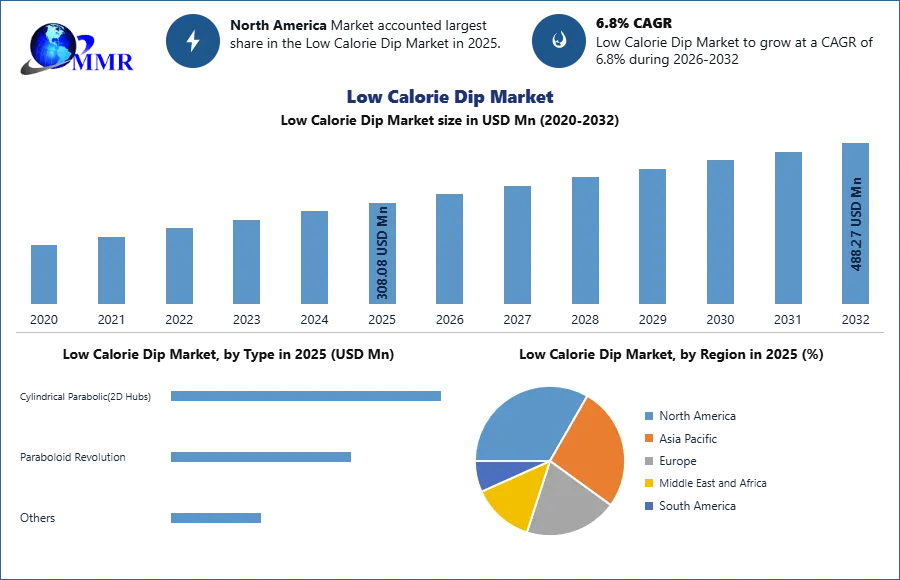
The Low Calorie Dip Market size was valued at USD 308.08 Million in 2025 and the total Low Calorie Dip Market is expected to grow at a CAGR of 6.8% from 2026 to 2032, reaching nearly USD 488.27 Million.

A low calorie dip is a type of dip that is made with ingredients that are lower in calories compared to traditional dips. These dips are often used as a healthier alternative to regular dips, which can be high in calories and fat. Low calorie dips can be made with a variety of ingredients, such as low-fat or non-fat Greek yogurt, cottage cheese, or hummus. They can also include herbs and spices for added flavor, as well as vegetables for extra nutrition and fiber. Examples of low calorie dips include salsa, guacamole made with mashed avocado, Greek yogurt dip with herbs, or hummus made with chickpeas and tahini. These dips are often used as a healthy snack or as a topping for vegetables, crackers, or whole grain bread.

The increasing awareness of health and fitness among consumers is a positive trend that has the potential to reduce the prevalence of chronic health problems worldwide. However, it is important to continue to promote access to healthy food options and physical activity opportunities for all individuals, regardless of their income or geographic location. The increased awareness of the importance of a healthy diet and the trend towards plant-based and low-fat food choices may lead to an increase in demand for low calorie dips market towards the north.

There is a growing awareness among consumers about the negative health consequences of consuming highly processed foods, including those that are high in calories, salt, and additives. This has led many consumers to become more mindful of the food they eat, and to seek out healthier options that are minimally processed and closer to their natural state. As a result, the expansion of the low calorie dip industry may be hampered by the negative perception of processed foods among consumers. Manufacturers will need to address these concerns and provide reassurance to consumers that their products are healthy and made with natural, minimally processed ingredients.Low Calorie Dip Market Growth PotentialTo know about the Research Methodology :- Request Free Sample Report
Low Calorie Dip industry Competitive Landscapes:

The low calorie dip market is becoming increasingly competitive, with many new products entering the market. The competitive landscape of the market is characterized by the presence of both established players and new entrants, who are all competing to gain market share and meet the growing demand for healthier food options. Companies offer a range of low calorie dips in different flavors and varieties, catering to the diverse tastes and preferences of consumers.

They are also investing in innovation and new product development, to stay ahead of the competition and meet the evolving needs of consumers. In addition to these established players, there are also many new entrants in the market, who are looking to gain a foothold and capture market share. These companies are often focused on niche or specialty products, such as vegan or gluten-free dips, and are targeting specific consumer segments.

For example, Chobani, the Greek yogurt company, has recently expanded its product line to include a range of low calorie dips. Chobani launched a new line of Chobani Complete yogurt-based dips, which are low in calories and high in protein. The Chobani Complete dips come in four different flavors: Buffalo Style, Jalapeño Ranch, Smoked Onion Parmesan, and Four-Pepper Salsa. Each serving of the dips contains between 25-30 calories, and 2-3 grams of protein, making them a healthy and convenient snack option. Chobani has positioned these dips as a healthier alternative to traditional dips, which are often high in calories, fat, and sodium.

The company has also emphasized the use of natural ingredients and the absence of artificial preservatives or flavors in their product. The launch of Chobani Complete dips is part of the company's broader strategy to expand its product line beyond Greek yogurt, and offer a wider range of healthy and convenient food options to consumers. With the growing demand for low calorie and high protein foods, Chobani is well-positioned to capitalize on this trend and gain market share in the competitive low calorie dip market.

Low Calorie Dip Market Dynamics:

The growing demand for healthier food diets lead to an increase in the demand of low calorie dips in the market.

Consumers are becoming more health-conscious and are seeking out products that align with their dietary preferences and goals. Low calorie dips can offer a healthier alternative to traditional high-calorie dips, making them an attractive option for health-conscious consumers. Additionally, the trend towards plant-based diets is likely to drive demand for low calorie dips made with plant-based ingredients like beans, nuts, or vegetables. These dips can offer a flavourful and healthy alternative to traditional dairy-based dips, and can appeal to consumers looking for more plant-based options.

As a result, food manufacturers and retailers may start to offer a wider range of low calorie dips to cater to this growing demand. This could include new flavors and varieties made with healthier and more plant-based ingredients, as well as increased marketing efforts to promote the health benefits of low calorie dips which is driving the Low Calorie Dip Market during the forecast period.

The increasing availability and variety of low calorie dips to drive the growth of the market.

The increasing availability and variety of low calorie dips is a key factor driving the growth of the Low Calorie Dip market. Food manufacturers and retailers are recognizing the growing demand for healthier food options and are responding by offering a wider range of low calorie dips in different flavors and varieties. With the increasing popularity of plant-based diets, food manufacturers are also introducing plant-based dips that are lower in calories and fat than traditional dairy-based dips.

This provides consumers with a wider range of options to choose from, catering to the diverse tastes and preferences of individuals who may have dietary restrictions or preferences. In addition, food manufacturers are also focusing on introducing innovative low calorie dip flavors and combinations, such as avocado or beetroot dip, which may appeal to consumers who are looking for unique and flavourful options. This helps to keep the market fresh and exciting, and ensures that consumers continue to be interested in purchasing and trying new low calorie dips.

Low calorie dips are convenient and easy to use, making them a popular choice for consumers who are looking for healthy snacks or meal options.

The convenience and versatility of low calorie dips is also a key factor driving the growth of the Low calorie dips market. Low calorie dips are easy to use and can be incorporated into a variety of meals and snacks, making them a popular choice among consumers who are looking for healthy and convenient options. As a dip, low calorie dips can be paired with a variety of foods, such as fresh vegetables, crackers, or chips, providing a tasty and healthy snack option. They can also be used as a spread on sandwiches or wraps, adding flavor and nutrition to these meals. The convenience and versatility of low calorie dips make them an appealing option for consumers who are looking for healthy and convenient food choices that can be easily incorporated into their daily routines.

Low calorie dips have a shorter shelf-life than their higher calorie counterparts.

The shelf-life and preservation of low calorie dips can be a challenge for manufacturers, as they may not contain the same preservatives or additives as their higher calorie counterparts. Preservatives and additives are commonly used in food products to extend their shelf-life and ensure that they remain safe for consumption over an extended period of time.

However, many consumers are looking for healthier and more natural food options, which may not contain these preservatives or additives. As a result, manufacturers of low calorie dips need to find alternative ways to preserve their products without compromising on taste or quality. Some manufacturers use natural preservatives, such as lemon juice or vinegar, to help extend the shelf-life of their products. Others use innovative packaging techniques, such as vacuum-sealing or modified atmosphere packaging, to help prevent the growth of bacteria and extend the shelf-life of their products. Ultimately, the challenge for manufacturers is to find a way to preserve their low calorie dips without compromising on taste or quality, while also meeting the expectations of consumers who are looking for healthier and more natural food options.

The trend towards organic products is a growing factor in the Low Calorie Dip Market

The trend towards organic products is a growing factor in the Low Calorie Dip Market, as consumers become more conscious of the impact of their food choices on their health and the environment. The benefits associated with organic products, such as the absence of harmful chemicals and GMO ingredients, have become a key selling point for many consumers, especially those who are health-conscious and environmentally aware. The rise in demand for organic products is reflected in the global revenue generated from the organic market, as well as the number of organic producers worldwide. As more consumers seek out organic products, manufacturers and retailers are responding by offering organic options in various categories, including low calorie dips. This trend towards organic products is likely to continue to shape the Low Calorie Dip Market during the forecast period.

Low Calorie Dip Market Segment Analysis:

By Form, The Conventional form held the low‑calorie dip market in 2025, leveraging well-established production processes that prioritize affordability, scalability, and familiarity for consumers. These dips are produced using traditional farming methods, with a focus on cost-efficient ingredients, making them accessible to a broad consumer base. Conventional low‑calorie dips offer an array of options, including reduced‑fat versions of classic favorites like ranch, salsa, and hummus. These products are readily available in supermarkets, convenience stores, and mass retail outlets. Major brands are continually innovating with new low‑calorie formulations to meet rising health-conscious demands while retaining flavor and texture. The segment thrives due to lower pricing compared to organic alternatives, frequent promotions, and long shelf life. As consumers increasingly seek healthier alternatives, conventional brands are incorporating better ingredients, such as natural flavorings and preservatives, to remain competitive. Despite challenges from organic and plant‑based alternatives, conventional dips dominate the market due to price competitiveness and wide availability.

By Type, The Vegetable-Based dip dominated type in low‑calorie dip market in 2025, with increasing popularity among consumers looking for natural, nutrient-dense alternatives to traditional creamy dips. These dips feature vegetables such as tomatoes, bell peppers, cucumbers, and spinach, often combined with herbs and spices for flavor enhancement. Vegetable-based dips like salsa, roasted red pepper spreads, and carrot dip are not only low in calories but also rich in vitamins, minerals, and antioxidants, making them an attractive option for health-conscious individuals. The rising trend of plant-based eating and vegetable-forward diets contributes to the growth of this segment. Furthermore, vegetable dips can be served with a variety of accompaniments, from chips to raw vegetables, expanding their appeal. As consumers become more health-focused and mindful of their calorie intake, vegetable-based dips are becoming an essential part of many snack and meal occasions, driving this segment to remain dominant in the market.

Low Calorie Dip Market Regional Insights:

North America dominated the Low Calorie Dip Market in 2025 and is expected to continue its dominance over the forecast period. The high awareness regarding health and wellness, which has led to a growing demand for low calorie and healthier food options. This trend has boosted the demand for low-calorie dips in the region. Additionally, there is a rising trend of snacking and on-the-go consumption, which is driving the demand for convenient and healthy snacking options like low calorie dips. The region's food and beverage market is rapidly growing due to changes in consumer work and lifestyles, which has led to an increase in the frequency of eating out. Moreover, the rise in youth population and increasing awareness about organic farming and the trend of consuming pesticide-free food are contributing to the growth of the low calorie dip market in the region.

Recent Industry Developments

Exact Date Company Development Impact
13 February 2025 Kite Hill The company launched its #DairyFreeFeb national campaign to promote its zero-sugar Greek yogurt and plant-based spreads as high-protein, low-calorie alternatives. This initiative aims to capture the Millennial and Gen Z demographic by emphasizing nutritional density and environmental sustainability.
10 August 2025 Chobani LLC Chobani finalized the acquisition of Daily Harvest, integrating a vast portfolio of non-dairy, portion-controlled frozen bowls and dips into its distribution network. The move diversifies Chobani’s presence in the better-for-you snacking segment, moving beyond traditional yogurt into the broader functional dip market.
18 August 2025 Good Foods Group The company partnered with Taylor Farms to launch Elote-Style Snack Pack Dips, featuring a Greek-yogurt base to maintain a low calorie count. This strategic collaboration leverages high-pressure processing (HPP) technology to offer clean-label, refrigerated snacks to the retail sector.
26 September 2025 Good Foods Group Good Foods officially debuted its Cheddar Jalapeño Bacon Dip across Costco regions in the U.S. and Canada, targeting the tailgating and social gathering market. The launch increases market penetration in the bulk-buy retail segment with products that emphasize real ingredients and no artificial preservatives.
28 January 2026 General Mills The company announced a major R&D shift toward functional ingredients like fiber and adaptogens within its refrigerated condiment and dip lines. By prioritizing wellness-focused innovation, the company seeks to rejuvenate growth in the better-for-you category amid shifting consumer health trends.

Low Calorie Dip Market Scope: Inquire before buying

Low Calorie Dip Market
Report Coverage Details
Base Year: 2025 Forecast Period: 2026-2032
Historical Data: 2020 to 2025 Market Size in 2025: 308.08 USD Mn
Forecast Period 2026-2032 CAGR: 6.8% Market Size in 2032: 488.27 USD Mn
Segments Covered: by Form Conventional
Organic
by Type Vegetable-Based Dips
Dairy-Based Dips
Legume-Based Dips
Plant-Based Dips
Others
by Distribution Channel Hypermarkets and Supermarkets
Specialty Stores
E-Commerce
Others
by End User Household
Foodservice
HoReCa
Others

Low Calorie Dip Market, by Region

North America (United States, Canada and Mexico)
Europe (UK, France, Germany, Italy, Spain, Sweden, Austria, Turkey, Russia and Rest of Europe)
Asia Pacific (China, India, Japan, South Korea, Australia, ASEAN and Rest of APAC)
Middle East and Africa (South Africa, GCC, Egypt, Nigeria and Rest of ME&A)
South America (Brazil, Argentina, Columbia and Rest of South America)

Key players/Competitors profiles covered in the Low Calorie Dip market report in strategic perspective

  1. Bolthouse Farms
  2. Cedar's Mediterranean Foods Inc.
  3. Chobani LLC
  4. Cibo Naturals LLC
  5. ConAgra Brands Inc.
  6. Dean Foods Company
  7. Frito-Lay Inc.
  8. Garden Fresh Gourmet
  9. General Mills Inc.
  10. Hain Celestial Group Inc.
  11. Kraft Foods Group Inc.
  12. Nestle USA Inc.
  13. Sabra Dipping Co. LLC
  14. The Clorox Company
  15. The J.M. Smucker Company
  16. PepsiCo, Inc.
  17. Strauss Group, Inc.
  18. GreenSpace Brands
  19. Good Karma Foods
  20. Rigoni di Asiago S.R.L.
  21. Winegreens World
  22. Kite Hill
  23. Focus Brands LLC
  24. Good Foods Group, LLC
  25. Wholly Guacamole

Table of Contents

1. Low Calorie Dip Market Introduction
1.1. Study Assumption and Market Definition
1.2. Scope of the Study
1.3. Executive Summary
2. Global Low Calorie Dip Market: Competitive Landscape
2.1. MMR Competition Matrix
2.2. Competitive Landscape
2.3. Key Players Benchmarking
2.3.1. Company Name
2.3.2. Business Segment
2.3.3. End-user Segment
2.3.4. Revenue (2025)
2.3.5. Company Locations
2.4. Leading Low Calorie Dip Market Companies, by market capitalization
2.5. Market Structure
2.5.1. Market Leaders
2.5.2. Market Followers
2.5.3. Emerging Players
2.6. Mergers and Acquisitions Details
3. Low Calorie Dip Market: Dynamics
3.1. Low Calorie Dip Market Trends by Region
3.1.1. North America Low Calorie Dip Market Trends
3.1.2. Europe Low Calorie Dip Market Trends
3.1.3. Asia Pacific Low Calorie Dip Market Trends
3.1.4. Middle East and Africa Low Calorie Dip Market Trends
3.1.5. South America Low Calorie Dip Market Trends
3.2. Low Calorie Dip Market Dynamics by Region
3.2.1. North America
3.2.1.1. North America Low Calorie Dip Market Drivers
3.2.1.2. North America Low Calorie Dip Market Restraints
3.2.1.3. North America Low Calorie Dip Market Opportunities
3.2.1.4. North America Low Calorie Dip Market Challenges
3.2.2. Europe
3.2.2.1. Europe Low Calorie Dip Market Drivers
3.2.2.2. Europe Low Calorie Dip Market Restraints
3.2.2.3. Europe Low Calorie Dip Market Opportunities
3.2.2.4. Europe Low Calorie Dip Market Challenges
3.2.3. Asia Pacific
3.2.3.1. Asia Pacific Low Calorie Dip Market Drivers
3.2.3.2. Asia Pacific Low Calorie Dip Market Restraints
3.2.3.3. Asia Pacific Low Calorie Dip Market Opportunities
3.2.3.4. Asia Pacific Low Calorie Dip Market Challenges
3.2.4. Middle East and Africa
3.2.4.1. Middle East and Africa Low Calorie Dip Market Drivers
3.2.4.2. Middle East and Africa Low Calorie Dip Market Restraints
3.2.4.3. Middle East and Africa Low Calorie Dip Market Opportunities
3.2.4.4. Middle East and Africa Low Calorie Dip Market Challenges
3.2.5. South America
3.2.5.1. South America Low Calorie Dip Market Drivers
3.2.5.2. South America Low Calorie Dip Market Restraints
3.2.5.3. South America Low Calorie Dip Market Opportunities
3.2.5.4. South America Low Calorie Dip Market Challenges
3.3. PORTER's Five Forces Analysis
3.4. PESTLE Analysis
3.5. Technology Roadmap
3.6. Regulatory Landscape by Region
3.6.1. North America
3.6.2. Europe
3.6.3. Asia Pacific
3.6.4. Middle East and Africa
3.6.5. South America
3.7. Key Opinion Leader Analysis For Low Calorie Dip Industry
3.8. Analysis of Government Schemes and Initiatives For Low Calorie Dip Industry
3.9. Low Calorie Dip Market Trade Analysis
3.10. The Global Pandemic Impact on Low Calorie Dip Market
4. Low Calorie Dip Market: Global Market Size and Forecast by Segmentation (in USD Mn) 2025-2032
4.1. Low Calorie Dip Market Size and Forecast, by Form (2025-2032)
4.1.1. Conventional
4.1.2. Organic
4.2. Low Calorie Dip Market Size and Forecast, by Type (2025-2032)
4.2.1. Vegetable-Based Dips
4.2.2. Dairy-Based Dips
4.2.3. Legume-Based Dips
4.2.4. Plant-Based Dips
4.2.5. Others
4.3. Low Calorie Dip Market Size and Forecast, by Distribution Channel (2025-2032)
4.3.1. Hypermarkets and Supermarkets
4.3.2. Specialty Stores
4.3.3. E-Commerce
4.3.4. Others
4.4. Low Calorie Dip Market Size and Forecast, by End User (2025-2032)
4.4.1. Household
4.4.2. Foodservice
4.4.3. HoReCa
4.4.4. Others
4.5. Low Calorie Dip Market Size and Forecast, by Region (2025-2032)
4.5.1. North America
4.5.2. Europe
4.5.3. Asia Pacific
4.5.4. Middle East and Africa
4.5.5. South America
5. North America Low Calorie Dip Market Size and Forecast by Segmentation (in USD Mn) 2025-2032
5.1. North America Low Calorie Dip Market Size and Forecast, by Form (2025-2032)
5.1.1. Conventional
5.1.2. Organic
5.2. North America Low Calorie Dip Market Size and Forecast, by Type (2025-2032)
5.2.1. Vegetable-Based Dips
5.2.2. Dairy-Based Dips
5.2.3. Legume-Based Dips
5.2.4. Plant-Based Dips
5.2.5. Others
5.3. North America Low Calorie Dip Market Size and Forecast, by Distribution Channel (2025-2032)
5.3.1. Hypermarkets and Supermarkets
5.3.2. Specialty Stores
5.3.3. E-Commerce
5.3.4. Others
5.4. North America Low Calorie Dip Market Size and Forecast, by End User (2025-2032)
5.4.1. Household
5.4.2. Foodservice
5.4.3. HoReCa
5.4.4. Others
5.5. North America Low Calorie Dip Market Size and Forecast, by Country (2025-2032)
5.5.1. United States
5.5.1.1. United States Low Calorie Dip Market Size and Forecast, by Form (2025-2032)
5.5.1.1.1. Conventional
5.5.1.1.2. Organic
5.5.1.2. United States Low Calorie Dip Market Size and Forecast, by Type (2025-2032)
5.5.1.2.1. Vegetable-Based Dips
5.5.1.2.2. Dairy-Based Dips
5.5.1.2.3. Legume-Based Dips
5.5.1.2.4. Plant-Based Dips
5.5.1.2.5. Others
5.5.1.3. United States Low Calorie Dip Market Size and Forecast, by Distribution Channel (2025-2032)
5.5.1.3.1. Hypermarkets and Supermarkets
5.5.1.3.2. Specialty Stores
5.5.1.3.3. E-Commerce
5.5.1.3.4. Others
5.5.1.4. United States Low Calorie Dip Market Size and Forecast, by End User (2025-2032)
5.5.1.4.1. Household
5.5.1.4.2. Foodservice
5.5.1.4.3. HoReCa
5.5.1.4.4. Others
5.5.2. Canada
5.5.2.1. Canada Low Calorie Dip Market Size and Forecast, by Form (2025-2032)
5.5.2.1.1. Conventional
5.5.2.1.2. Organic
5.5.2.2. Canada Low Calorie Dip Market Size and Forecast, by Type (2025-2032)
5.5.2.2.1. Vegetable-Based Dips
5.5.2.2.2. Dairy-Based Dips
5.5.2.2.3. Legume-Based Dips
5.5.2.2.4. Plant-Based Dips
5.5.2.2.5. Others
5.5.2.3. Canada Low Calorie Dip Market Size and Forecast, by Distribution Channel (2025-2032)
5.5.2.3.1. Hypermarkets and Supermarkets
5.5.2.3.2. Specialty Stores
5.5.2.3.3. E-Commerce
5.5.2.3.4. Others
5.5.2.4. Canada Low Calorie Dip Market Size and Forecast, by End User (2025-2032)
5.5.2.4.1. Household
5.5.2.4.2. Foodservice
5.5.2.4.3. HoReCa
5.5.2.4.4. Others
5.5.3. Mexico
5.5.3.1. Mexico Low Calorie Dip Market Size and Forecast, by Form (2025-2032)
5.5.3.1.1. Conventional
5.5.3.1.2. Organic
5.5.3.2. Mexico Low Calorie Dip Market Size and Forecast, by Type (2025-2032)
5.5.3.2.1. Vegetable-Based Dips
5.5.3.2.2. Dairy-Based Dips
5.5.3.2.3. Legume-Based Dips
5.5.3.2.4. Plant-Based Dips
5.5.3.2.5. Others
5.5.3.3. Mexico Low Calorie Dip Market Size and Forecast, by Distribution Channel (2025-2032)
5.5.3.3.1. Hypermarkets and Supermarkets
5.5.3.3.2. Specialty Stores
5.5.3.3.3. E-Commerce
5.5.3.3.4. Others
5.5.3.4. Mexico Low Calorie Dip Market Size and Forecast, by End User (2025-2032)
5.5.3.4.1. Household
5.5.3.4.2. Foodservice
5.5.3.4.3. HoReCa
5.5.3.4.4. Others
6. Europe Low Calorie Dip Market Size and Forecast by Segmentation (in USD Mn) 2025-2032
6.1. Europe Low Calorie Dip Market Size and Forecast, by Form (2025-2032)
6.2. Europe Low Calorie Dip Market Size and Forecast, by Type (2025-2032)
6.3. Europe Low Calorie Dip Market Size and Forecast, by Distribution Channel (2025-2032)
6.4. Europe Low Calorie Dip Market Size and Forecast, by End User (2025-2032)
6.5. Europe Low Calorie Dip Market Size and Forecast, by Country (2025-2032)
6.5.1. United Kingdom
6.5.1.1. United Kingdom Low Calorie Dip Market Size and Forecast, by Form (2025-2032)
6.5.1.2. United Kingdom Low Calorie Dip Market Size and Forecast, by Type (2025-2032)
6.5.1.3. United Kingdom Low Calorie Dip Market Size and Forecast, by Distribution Channel (2025-2032)
6.5.1.4. United Kingdom Low Calorie Dip Market Size and Forecast, by End User (2025-2032)
6.5.2. France
6.5.2.1. France Low Calorie Dip Market Size and Forecast, by Form (2025-2032)
6.5.2.2. France Low Calorie Dip Market Size and Forecast, by Type (2025-2032)
6.5.2.3. France Low Calorie Dip Market Size and Forecast, by Distribution Channel (2025-2032)
6.5.2.4. France Low Calorie Dip Market Size and Forecast, by End User (2025-2032)
6.5.3. Germany
6.5.3.1. Germany Low Calorie Dip Market Size and Forecast, by Form (2025-2032)
6.5.3.2. Germany Low Calorie Dip Market Size and Forecast, by Type (2025-2032)
6.5.3.3. Germany Low Calorie Dip Market Size and Forecast, by Distribution Channel (2025-2032)
6.5.3.4. Germany Low Calorie Dip Market Size and Forecast, by End User (2025-2032)
6.5.4. Italy
6.5.4.1. Italy Low Calorie Dip Market Size and Forecast, by Form (2025-2032)
6.5.4.2. Italy Low Calorie Dip Market Size and Forecast, by Type (2025-2032)
6.5.4.3. Italy Low Calorie Dip Market Size and Forecast, by Distribution Channel (2025-2032)
6.5.4.4. Italy Low Calorie Dip Market Size and Forecast, by End User (2025-2032)
6.5.5. Spain
6.5.5.1. Spain Low Calorie Dip Market Size and Forecast, by Form (2025-2032)
6.5.5.2. Spain Low Calorie Dip Market Size and Forecast, by Type (2025-2032)
6.5.5.3. Spain Low Calorie Dip Market Size and Forecast, by Distribution Channel (2025-2032)
6.5.5.4. Spain Low Calorie Dip Market Size and Forecast, by End User (2025-2032)
6.5.6. Sweden
6.5.6.1. Sweden Low Calorie Dip Market Size and Forecast, by Form (2025-2032)
6.5.6.2. Sweden Low Calorie Dip Market Size and Forecast, by Type (2025-2032)
6.5.6.3. Sweden Low Calorie Dip Market Size and Forecast, by Distribution Channel (2025-2032)
6.5.6.4. Sweden Low Calorie Dip Market Size and Forecast, by End User (2025-2032)
6.5.7. Austria
6.5.7.1. Austria Low Calorie Dip Market Size and Forecast, by Form (2025-2032)
6.5.7.2. Austria Low Calorie Dip Market Size and Forecast, by Type (2025-2032)
6.5.7.3. Austria Low Calorie Dip Market Size and Forecast, by Distribution Channel (2025-2032)
6.5.7.4. Austria Low Calorie Dip Market Size and Forecast, by End User (2025-2032)
6.5.8. Rest of Europe
6.5.8.1. Rest of Europe Low Calorie Dip Market Size and Forecast, by Form (2025-2032)
6.5.8.2. Rest of Europe Low Calorie Dip Market Size and Forecast, by Type (2025-2032)
6.5.8.3. Rest of Europe Low Calorie Dip Market Size and Forecast, by Distribution Channel (2025-2032)
6.5.8.4. Rest of Europe Low Calorie Dip Market Size and Forecast, by End User (2025-2032)
7. Asia Pacific Low Calorie Dip Market Size and Forecast by Segmentation (in USD Mn) 2025-2032
7.1. Asia Pacific Low Calorie Dip Market Size and Forecast, by Form (2025-2032)
7.2. Asia Pacific Low Calorie Dip Market Size and Forecast, by Type (2025-2032)
7.3. Asia Pacific Low Calorie Dip Market Size and Forecast, by Distribution Channel (2025-2032)
7.4. Asia Pacific Low Calorie Dip Market Size and Forecast, by End User (2025-2032)
7.5. Asia Pacific Low Calorie Dip Market Size and Forecast, by Country (2025-2032)
7.5.1. China
7.5.1.1. China Low Calorie Dip Market Size and Forecast, by Form (2025-2032)
7.5.1.2. China Low Calorie Dip Market Size and Forecast, by Type (2025-2032)
7.5.1.3. China Low Calorie Dip Market Size and Forecast, by Distribution Channel (2025-2032)
7.5.1.4. China Low Calorie Dip Market Size and Forecast, by End User (2025-2032)
7.5.2. S Korea
7.5.2.1. S Korea Low Calorie Dip Market Size and Forecast, by Form (2025-2032)
7.5.2.2. S Korea Low Calorie Dip Market Size and Forecast, by Type (2025-2032)
7.5.2.3. S Korea Low Calorie Dip Market Size and Forecast, by Distribution Channel (2025-2032)
7.5.2.4. S Korea Low Calorie Dip Market Size and Forecast, by End User (2025-2032)
7.5.3. Japan
7.5.3.1. Japan Low Calorie Dip Market Size and Forecast, by Form (2025-2032)
7.5.3.2. Japan Low Calorie Dip Market Size and Forecast, by Type (2025-2032)
7.5.3.3. Japan Low Calorie Dip Market Size and Forecast, by Distribution Channel (2025-2032)
7.5.3.4. Japan Low Calorie Dip Market Size and Forecast, by End User (2025-2032)
7.5.4. India
7.5.4.1. India Low Calorie Dip Market Size and Forecast, by Form (2025-2032)
7.5.4.2. India Low Calorie Dip Market Size and Forecast, by Type (2025-2032)
7.5.4.3. India Low Calorie Dip Market Size and Forecast, by Distribution Channel (2025-2032)
7.5.4.4. India Low Calorie Dip Market Size and Forecast, by End User (2025-2032)
7.5.5. Australia
7.5.5.1. Australia Low Calorie Dip Market Size and Forecast, by Form (2025-2032)
7.5.5.2. Australia Low Calorie Dip Market Size and Forecast, by Type (2025-2032)
7.5.5.3. Australia Low Calorie Dip Market Size and Forecast, by Distribution Channel (2025-2032)
7.5.5.4. Australia Low Calorie Dip Market Size and Forecast, by End User (2025-2032)
7.5.6. Indonesia
7.5.6.1. Indonesia Low Calorie Dip Market Size and Forecast, by Form (2025-2032)
7.5.6.2. Indonesia Low Calorie Dip Market Size and Forecast, by Type (2025-2032)
7.5.6.3. Indonesia Low Calorie Dip Market Size and Forecast, by Distribution Channel (2025-2032)
7.5.6.4. Indonesia Low Calorie Dip Market Size and Forecast, by End User (2025-2032)
7.5.7. Malaysia
7.5.7.1. Malaysia Low Calorie Dip Market Size and Forecast, by Form (2025-2032)
7.5.7.2. Malaysia Low Calorie Dip Market Size and Forecast, by Type (2025-2032)
7.5.7.3. Malaysia Low Calorie Dip Market Size and Forecast, by Distribution Channel (2025-2032)
7.5.7.4. Malaysia Low Calorie Dip Market Size and Forecast, by End User (2025-2032)
7.5.8. Vietnam
7.5.8.1. Vietnam Low Calorie Dip Market Size and Forecast, by Form (2025-2032)
7.5.8.2. Vietnam Low Calorie Dip Market Size and Forecast, by Type (2025-2032)
7.5.8.3. Vietnam Low Calorie Dip Market Size and Forecast, by Distribution Channel (2025-2032)
7.5.8.4. Vietnam Low Calorie Dip Market Size and Forecast, by End User (2025-2032)
7.5.9. Taiwan
7.5.9.1. Taiwan Low Calorie Dip Market Size and Forecast, by Form (2025-2032)
7.5.9.2. Taiwan Low Calorie Dip Market Size and Forecast, by Type (2025-2032)
7.5.9.3. Taiwan Low Calorie Dip Market Size and Forecast, by Distribution Channel (2025-2032)
7.5.9.4. Taiwan Low Calorie Dip Market Size and Forecast, by End User (2025-2032)
7.5.10. Rest of Asia Pacific
7.5.10.1. Rest of Asia Pacific Low Calorie Dip Market Size and Forecast, by Form (2025-2032)
7.5.10.2. Rest of Asia Pacific Low Calorie Dip Market Size and Forecast, by Type (2025-2032)
7.5.10.3. Rest of Asia Pacific Low Calorie Dip Market Size and Forecast, by Distribution Channel (2025-2032)
7.5.10.4. Rest of Asia Pacific Low Calorie Dip Market Size and Forecast, by End User (2025-2032)
8. Middle East and Africa Low Calorie Dip Market Size and Forecast by Segmentation (in USD Mn) 2025-2032
8.1. Middle East and Africa Low Calorie Dip Market Size and Forecast, by Form (2025-2032)
8.2. Middle East and Africa Low Calorie Dip Market Size and Forecast, by Type (2025-2032)
8.3. Middle East and Africa Low Calorie Dip Market Size and Forecast, by Distribution Channel (2025-2032)
8.4. Middle East and Africa Low Calorie Dip Market Size and Forecast, by End User (2025-2032)
8.5. Middle East and Africa Low Calorie Dip Market Size and Forecast, by Country (2025-2032)
8.5.1. South Africa
8.5.1.1. South Africa Low Calorie Dip Market Size and Forecast, by Form (2025-2032)
8.5.1.2. South Africa Low Calorie Dip Market Size and Forecast, by Type (2025-2032)
8.5.1.3. South Africa Low Calorie Dip Market Size and Forecast, by Distribution Channel (2025-2032)
8.5.1.4. South Africa Low Calorie Dip Market Size and Forecast, by End User (2025-2032)
8.5.2. GCC
8.5.2.1. GCC Low Calorie Dip Market Size and Forecast, by Form (2025-2032)
8.5.2.2. GCC Low Calorie Dip Market Size and Forecast, by Type (2025-2032)
8.5.2.3. GCC Low Calorie Dip Market Size and Forecast, by Distribution Channel (2025-2032)
8.5.2.4. GCC Low Calorie Dip Market Size and Forecast, by End User (2025-2032)
8.5.3. Nigeria
8.5.3.1. Nigeria Low Calorie Dip Market Size and Forecast, by Form (2025-2032)
8.5.3.2. Nigeria Low Calorie Dip Market Size and Forecast, by Type (2025-2032)
8.5.3.3. Nigeria Low Calorie Dip Market Size and Forecast, by Distribution Channel (2025-2032)
8.5.3.4. Nigeria Low Calorie Dip Market Size and Forecast, by End User (2025-2032)
8.5.4. Rest of ME&A
8.5.4.1. Rest of ME&A Low Calorie Dip Market Size and Forecast, by Form (2025-2032)
8.5.4.2. Rest of ME&A Low Calorie Dip Market Size and Forecast, by Type (2025-2032)
8.5.4.3. Rest of ME&A Low Calorie Dip Market Size and Forecast, by Distribution Channel (2025-2032)
8.5.4.4. Rest of ME&A Low Calorie Dip Market Size and Forecast, by End User (2025-2032)
9. South America Low Calorie Dip Market Size and Forecast by Segmentation (in USD Mn) 2025-2032
9.1. South America Low Calorie Dip Market Size and Forecast, by Form (2025-2032)
9.2. South America Low Calorie Dip Market Size and Forecast, by Type (2025-2032)
9.3. South America Low Calorie Dip Market Size and Forecast, by Distribution Channel (2025-2032)
9.4. South America Low Calorie Dip Market Size and Forecast, by End User (2025-2032)
9.5. South America Low Calorie Dip Market Size and Forecast, by Country (2025-2032)
9.5.1. Brazil
9.5.1.1. Brazil Low Calorie Dip Market Size and Forecast, by Form (2025-2032)
9.5.1.2. Brazil Low Calorie Dip Market Size and Forecast, by Type (2025-2032)
9.5.1.3. Brazil Low Calorie Dip Market Size and Forecast, by Distribution Channel (2025-2032)
9.5.1.4. Brazil Low Calorie Dip Market Size and Forecast, by End User (2025-2032)
9.5.2. Argentina
9.5.2.1. Argentina Low Calorie Dip Market Size and Forecast, by Form (2025-2032)
9.5.2.2. Argentina Low Calorie Dip Market Size and Forecast, by Type (2025-2032)
9.5.2.3. Argentina Low Calorie Dip Market Size and Forecast, by Distribution Channel (2025-2032)
9.5.2.4. Argentina Low Calorie Dip Market Size and Forecast, by End User (2025-2032)
9.5.3. Rest Of South America
9.5.3.1. Rest Of South America Low Calorie Dip Market Size and Forecast, by Form (2025-2032)
9.5.3.2. Rest Of South America Low Calorie Dip Market Size and Forecast, by Type (2025-2032)
9.5.3.3. Rest Of South America Low Calorie Dip Market Size and Forecast, by Distribution Channel (2025-2032)
9.5.3.4. Rest Of South America Low Calorie Dip Market Size and Forecast, by End User (2025-2032)
10. Company Profile: Key Players
10.1. Bolthouse Farms
10.1.1. Company Overview
10.1.2. Business Portfolio
10.1.3. Financial Overview
10.1.4. SWOT Analysis
10.1.5. Strategic Analysis
10.1.6. Scale of Operation (small, medium, and large)
10.1.7. Details on Partnership
10.1.8. Regulatory Accreditations and Certifications Received by Them
10.1.9. Awards Received by the Firm
10.1.10. Recent Developments
10.2. Cedar's Mediterranean Foods Inc.
10.3. Chobani LLC
10.4. Cibo Naturals LLC
10.5. ConAgra Brands Inc.
10.6. Dean Foods Company
10.7. Frito-Lay Inc.
10.8. Garden Fresh Gourmet
10.9. General Mills Inc.
10.10. Hain Celestial Group Inc.
10.11. Kraft Foods Group Inc.
10.12. Nestle USA Inc.
10.13. Sabra Dipping Co. LLC
10.14. The Clorox Company
10.15. The J.M. Smucker Company
10.16. PepsiCo
10.17. Inc.
10.18. Strauss Group
10.19. GreenSpace Brands
10.20. Good Karma Foods
10.21. Rigoni di Asiago S.R.L.
10.22. Winegreens World
10.23. Kite Hill
10.24. Focus Brands LLC
10.25. Good Foods Group
10.26. LLC
10.27. Wholly Guacamole
11. Key Findings
12. Industry Recommendations
13. Low Calorie Dip Market: Research Methodology
14. Terms and Glossary

Custom Market Research Services

We Will Customise The Research For You, In Case The Report Listed Above Does Not Meet With Your Requirements