
LoRa and LoRaWAN IoT Market Size – Industry Structure Evaluation, Demand Drivers Analysis, Regional Growth Analysis and Identification, Competitive Positioning Review & Global Market Size Forecast to 2030
Overview
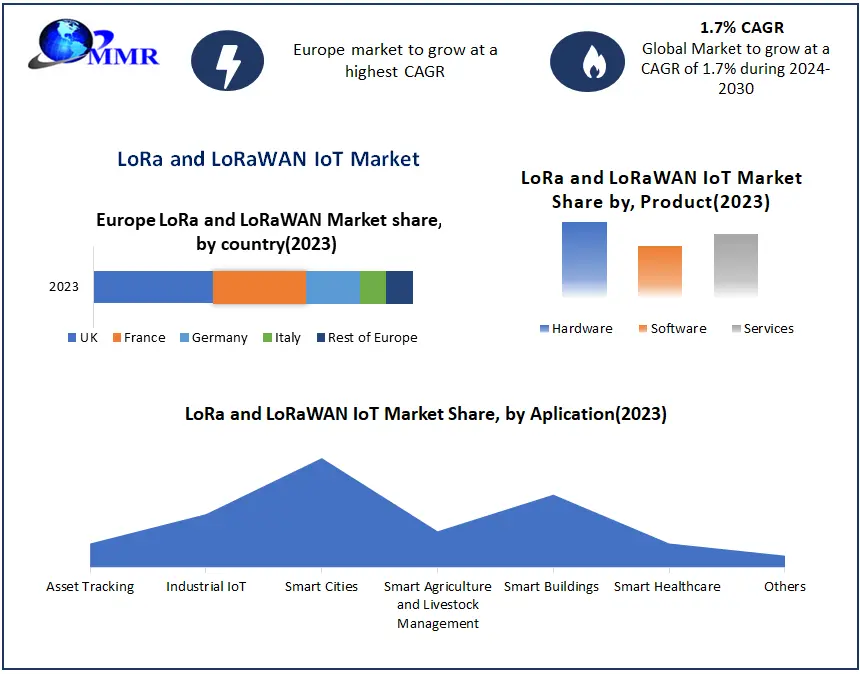
Global LoRa and LoRaWAN Market size was valued at USD 3.66 Tn in 2023 and LoRa and LoRaWAN market revenue is expected to reach USD 4.12 Tn by 2030, at a CAGR of 1.7% over the forecast period.
LoRa and LoRaWAN IoT Market Overview
The global landscape of IoT low-power wide-area networks (LoRaWANs) has witnessed a remarkable surge, with the number of publicly accessible LoRaWAN networks increasing by an impressive 66%. This growth is attributed to several key factors, primarily driven by the concerted efforts of governments and businesses to advance the adoption of LoRa and LoRaWAN technology within the IoT sphere.
Government investment and initiatives has played an essential role in propelling the LoRa and LoRaWAN IoT market forward. Governments worldwide have embarked on ambitious Smart City initiatives aimed at enhancing urban services and infrastructure. These initiatives seek to harness the power of IoT to transform cities into more efficient, sustainable, and responsive ecosystems. LoRa and LoRaWAN technologies have emerged as scalable and cost-effective solutions for various Smart City applications, catalysing the LoRa and LoRaWAN IoT Market growth.
 To know about the Research Methodology :- Request Free Sample Report
The market involves the utilization of LoRa, a long-range wireless communication technology designed for low-power, wide-area networks. LoRa enables long-distance communication with minimal power consumption, making it suitable for IoT devices. LoRa and LoRaWAN technology find applications across various vertical markets, including agriculture, smart cities, logistics and supply chain, healthcare, industrial automation, and environmental monitoring. The market operates globally, with deployments of LoRa and LoRaWAN networks in different geographic regions. Regional variations may exist in terms of regulatory frameworks, spectrum availability, and specific use cases. The fundamental characteristics of LoRa and LoRaWAN—low power consumption and wide-area coverage—are key aspects of the LoRa and LoRaWAN IoT market scope. These features make it suitable for IoT deployments where devices need to operate on battery power for extended periods.
LoRa and LoRaWAN IoT Market Dynamics
Scalability and Network Density to boost the LoRa and LoRaWAN IoT Market growth
LoRaWAN networks can scale to accommodate a large number of devices, making it a scalable solution for IoT deployments. The technology supports a variety of applications, from a few devices to massive deployments, ensuring flexibility and adaptability. LoRa technology offers cost-effective connectivity, making it an attractive option for IoT applications. The long-range capabilities reduce the need for a dense network of infrastructure, resulting in lower deployment costs and drives the LoRa and LoRaWAN IoT Market. LoRa and LoRaWAN find applications across diverse verticals, including smart cities, agriculture, industrial IoT, logistics, healthcare, and environmental monitoring.
The versatility of the technology drives its adoption in various industries.
LoRa (Long Range) and LoRaWAN (Low Power Wide Area Network) technologies have emerged as transformative forces in the IoT (Internet of Things) landscape, driving significant market growth. Their distinctive features such as long-range connectivity, low power consumption, scalability, and cost-effectiveness, have rendered them indispensable in numerous sectors including agriculture, smart cities, logistics, and industrial automation. These characteristics, combined with other unique benefits, have propelled their rapid adoption, making them central to the IoT revolution. A key factor underpinning the widespread adoption of LoRa and LoRaWAN is their exceptional cost efficiency, which significantly boosts the LoRa and LoRaWAN IoT Market growth. In an era where businesses seek to implement IoT solutions at scale, LoRa's ability to connect myriad devices across expansive geographic areas presents a compelling value proposition. Its cost-effectiveness reduces the barriers to entry for organizations looking to embrace IoT on a grand scale, making it a preferred choice for those aiming to maximize the potential of IoT technology while optimizing operational expenses.
LoRaWAN stands out as a cornerstone of the IoT ecosystem due to its inherent scalability. In an IoT landscape characterized by continuous expansion and a growing number of devices and sensors, LoRaWAN seamlessly adapts its architecture to accommodate this growth. This adaptability is of paramount importance as industries harness the transformative power of IoT and extend their digital footprint. The capability to scale effortlessly, a hallmark of LoRaWAN, becomes a strategic asset in this dynamic landscape. One of the defining attributes of LoRa and LoRaWAN is their remarkable versatility, spanning diverse applications such as supply chain management, smart metering, asset tracking, and environmental monitoring. This adaptability is a driving force behind their widespread adoption. Organizations find in LoRa and LoRaWAN the flexibility to tailor solutions to their specific needs, leading to increased operational efficiency and data-informed decision-making.
Interference and Congestion with limited Bandwidth to limit the LoRa and LoRaWAN IoT Market Growth
LoRa technology, while efficient for low data rate applications, has limited bandwidth compared to other wireless communication technologies. This limitation is a constraint for applications requiring high data throughput. In regions with a high density of LoRaWAN deployments or other wireless networks, interference and congestion may occur, affecting the performance and reliability of communication between devices and gateways. Spectrum regulations vary across regions, and obtaining the necessary spectrum for LoRaWAN networks challenging for LoRa and LoRaWAN IoT industry. Regulatory hurdles slow down the deployment process in some areas. While LoRaWAN networks incorporate security features, concerns persist, particularly regarding potential vulnerabilities in IoT devices and networks. Ensuring robust end-to-end security remains a challenge.
The growing popularity of cellular IoT technologies, such as NB-IoT and LTE-M, poses competition to LoRaWAN. Cellular networks offer higher data rates and wider coverage in some cases, impacting the adoption of LoRaWAN in certain scenarios. Integrating LoRaWAN with existing networks and systems is challenging for some organizations, which limits the LoRa and LoRaWAN IoT Market Growth.
Compatibility issues and the need for seamless integration with other communication technologies hinder adoption. The technology landscape is dynamic, and advancements in other wireless technologies impact the competitive positioning of LoRa and LoRaWAN. Staying competitive requires continual innovation.
Opportunities in LoRa and LoRaWAN IoT Market
Increasing Use in Smart Cities, Smart Buildings & Smart Healthcare
LoRa (Long Range) and LoRaWAN (Long Range Wide Area Network) technologies are making significant inroads in the IoT (Internet of Things) landscape by contributing versatile solutions for a wide array of applications. They have found their place in the realm of smart buildings, smart cities, smart healthcare, smart agriculture, and environmental monitoring, enabling intelligent and efficient use of resources across various sectors. The potential for LoRa and LoRaWAN technologies in the IoT market is immense. They stand out as powerful enablers for applications including smart cities, agriculture, industrial monitoring, asset tracking, and more due to their unique combination of long-range, low-power communication capabilities. These technologies excel in scenarios where battery life and connectivity in remote extended or challenging environments are prerequisites.
LoRa and LoRaWAN are particularly well-suited for applications that demand extended battery life, and connectivity in remote or isolated locations, which presents an opportunity for the LoRa and LoRaWAN IoT market growth. They set themselves apart by connecting devices over vast distances while consuming minimal energy. This capability is a game-changer for applications in sectors including agriculture, where remote sensors and monitoring play an essential role in optimizing crop management and resource utilization. The demand for efficient and cost-effective connectivity options including LoRa and LoRaWAN, is expected to surge as more companies adopt IoT solutions. The ability to cover expansive areas with minimal infrastructure is a compelling factor, making these technologies a preferred choice for applications in challenging terrains, remote agricultural fields and isolated regions where traditional connectivity options fall short.
LoRa and LoRaWAN IoT Market Regional Insight
Europe dominated the LoRa and LoRaWAN IoT Market in 2023 and is expected to continue its dominance over the forecast period. Europe was an early adopter of IoT technologies and various European countries and cities have made substantial investments in smart city initiatives, industrial automation, and agriculture. This investment has driven the growth of LoRaWAN networks to support these applications. European countries often have regulatory frameworks that promote IoT technology and wireless communications. LoRa and LoRaWAN, being low-power, wide-area technologies, align well with these regulations. Europe boasts a strong ecosystem of technology providers, network operators and device manufacturers specializing in IoT. This ecosystem has fostered innovation and accelerated the development and deployment of LoRa and LoRaWAN solutions.
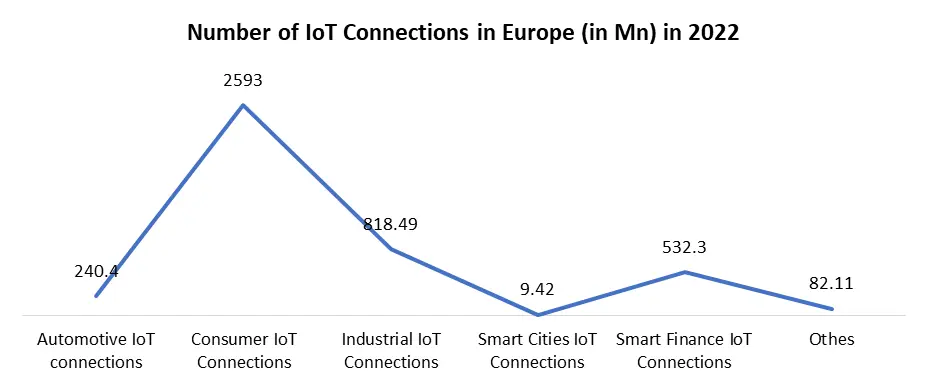
Many European cities have partnered with private entities to deploy LoRaWAN networks for several applications, creating a conducive environment for growth. Public-private collaborations have led to the rapid expansion of LoRaWAN coverage. Europe places a strong focus on sustainability and environmental responsibility, which drives the LoRa and LoRaWAN IoT Market in Europe. LoRa's energy-efficient and low-power characteristics align with the continent's focus on green technologies, making it an attractive choice for IoT applications. The competitive landscape in the region has driven technology providers to innovate and offer cost-effective solutions in LoRa and LoRaWAN IoT Market. This competition has led to a vibrant LoRa and LoRaWAN market in the region. European standards organizations have played a role in promoting interoperability and standardization in the IoT space, including LoRaWAN, making it easier for different devices and networks to work together. Some European governments have launched initiatives to support the development and deployment of IoT technologies. These initiatives often include funding for IoT projects and accelerating LoRa and LoRaWAN IoT market growth.
LoRa and LoRaWAN IoT Market Segment Analysis
Based on Product, the market is segmented into Hardware, Software, and Services. The hardware segment dominated the LoRa and LoRaWAN IoT Market in 2023 and is expected to continue the dominance over the forecast period. Hardware components serve as the building blocks for establishing the physical infrastructure of LoRa and LoRaWAN networks. This includes LoRa transceivers, gateways, sensors, and end devices, which are essential for enabling long-range, low-power communication between devices. Hardware stands as the bedrock upon which the entire IoT ecosystem is constructed. Sensors, a crucial subset of hardware components, are instrumental in data collection within IoT deployments. In several IoT applications, an array of sensors is deployed to monitor and measure diverse parameters, encompassing temperature, humidity, air quality, motion, and others. These sensors, being hardware devices, constitute the foundational elements of data collection. Gateways, another essential hardware component, operate as bridges connecting end devices to network servers. They undertake the task of receiving data from end devices and subsequently forwarding it to central servers. Gateways assume a critical role in ensuring network coverage and facilitating data aggregation.
In LoRa and LoRaWAN IoT, the integration of LoRa WiFi and IoT LoRaWAN connectivity reinforces the connectivity options, paving the way for efficient data, IoT applications often necessitate the physical deployment of sensors, gateways, and various other devices in the field. This tangible aspect underscores the transmission and communication. This emphasis on hardware is fundamental in creating a robust and dependable infrastructure that forms the backbone of IoT advancements.
Based on Application, the market is segmented into Asset Tracking, Industrial IoT, Smart Cities, Smart Agriculture and Livestock Management, Smart Buildings, Smart Healthcare, and Others. The smart cities segment is expected to hold the largest LoRa and LoRaWAN IoT Market share over the forecast period. The Smart Cities segment includes a diverse range of IoT devices and sensors integrated into city infrastructure. These devices include smart streetlights, environmental sensors, waste management systems, water quality monitors, parking sensors, and more. These components contribute to make urban operations more efficient and sustainable. The primary goal of deploying LoRaWAN in Smart Cities is to improve operational efficiency and promote sustainability. LoRa and LoRaWAN technology serve as a communication backbone, connecting a myriad of IoT devices and sensors deployed across the city, which significantly boost the LoRa and LoRaWAN IoT Market growth. These devices collect and transmit data, enabling city administrators to monitor, analyze, and optimize various aspects of urban life. The deployment of LoRaWAN enables cities to collect real-time data from distributed sensors. This data is then processed and analyzed to gain insights into various urban functions, allowing for proactive decision-making and efficient resource allocation.
LoRa and LoRaWAN IoT Market Competitive Landscape
Continuous innovation in LoRa and LoRaWAN technology, including advancements in chipsets, network infrastructure, and device management, is a key factor for competitiveness. LoRa and LoRaWAN IoT Companies that can provide extensive LoRaWAN network coverage, either through partnerships or direct deployments, have a competitive edge. Global coverage is crucial for industries with widespread IoT deployments. Providers offering end-to-end solutions, encompassing devices, connectivity, and application platforms, are positioned favorably in the LoRa and LoRaWAN IoT market. Expertise in specific verticals, such as Smart Cities, agriculture, or industrial IoT, allows companies to tailor solutions to the unique requirements of those industries. Offering cost-effective solutions for both infrastructure and devices is a significant factor, especially in large-scale IoT deployments.
LoRa and LoRaWAN IoT Market Scope: Inquire Before Buying
| Global LoRa and LoRaWAN IoT Market | |||
|---|---|---|---|
| Report Coverage | Details | ||
| Base Year: | 2023 | Forecast Period: | 2024-2030 |
| Historical Data: | 2018 to 2023 | Market Size in 2023: | US $ 3.66 Tn. |
| Forecast Period 2024 to 2030 CAGR: | 1.7% | Market Size in 2030: | US $ 4.12 Tn. |
| Segments Covered: | by Product | Hardware Software Services |
|
| by Application | Asset Tracking Industrial IoT Smart Cities Smart Agriculture and Livestock Management Smart Buildings Smart Healthcare Others |
||
| by End User | Retail Manufacturing Healthcare Energy & Utilities Residential Others |
||
LoRa and LoRaWAN IoT Market, by Region
North America (United States, Canada and Mexico)
Europe (UK, France, Germany, Italy, Spain, Sweden, Austria, Turkey, Russia and Rest of Europe)
Asia Pacific (China, India, Japan, South Korea, Australia, ASEAN and Rest of APAC)
Middle East and Africa (South Africa, GCC, Egypt, Nigeria and Rest of ME&A)
South America (Brazil, Argentina, Columbia and Rest of South America)
LoRa and LoRaWAN IoT Key Players Include:
Global:
1. Semtech Corporation (California, USA)
2. The Things Industries (Amsterdam, Netherlands)
3. Actility (Paris, France)
4. Laird Connectivity (Ohio, USA)
5. Link Labs(Maryland, USA)
6. Cisco Systems, Inc (California, USA)
7. Huawei Technologies Co., Ltd.(Guangdong, China)
8. Bosch.IO (Stuttgart, Germany)
North America:
1. Senet, Inc. ( New Hampshire, USA)
2. MachineQ (Comcast)(Pennsylvania, USA)
3. Laird Connectivity (US)
Asia Pacific:
1. NEC Corporation(Japan)
2. Tata Communications (India)
3. Advantech (Taiwan)
4. Murata (Japan)
Frequently Asked Questions and Answers:
1. What are the key drivers of growth in the LoRa and LoRaWAN IoT market?
Ans: The growth is driven by government initiatives, Smart City projects, and the scalability and cost-effectiveness of LoRaWAN networks. These technologies find applications in various sectors, including agriculture, logistics, healthcare, and industrial automation.
2. What challenges does the LoRa and LoRaWAN IoT market face?
Ans: Challenges include limited bandwidth, interference, and congestion in high-density areas. Regulatory variations and concerns about security vulnerabilities in IoT devices also pose challenges. Competition from cellular IoT technologies and integration issues with existing networks are additional hurdles.
3. In which regions has the LoRa and LoRaWAN IoT market seen significant growth?
Ans: Europe dominated the market in 2023, driven by early IoT adoption, government support, and a strong ecosystem. European countries' focus on sustainability aligns well with the energy-efficient characteristics of LoRa technology.
4. Which application segment is expected to hold the largest market share?
Ans: The smart cities segment is anticipated to hold the largest share, incorporating diverse IoT devices and sensors into city infrastructure to improve efficiency and sustainability.