
Liquid Handling System Market Size by Type, Product, Application, End-User, Region, Industry-Wide Analysis, Competitive Landscape Assessment & Long-Term Forecast to 2029
Overview
Liquid Handling System Market was valued at USD 4.33 Billion in 2022 and is expected to reach USD 6.44 Billion by 2029 at a CAGR of 5.8 % during the forecast period.
The Liquid Handling Systems are commonly used in pharmaceutical, life science, and biochemical clinical and research laboratory for testing purposes. Liquid Handling Systems can efficiently perform basic, monotonous everyday activities as well as complex pipetting tasks. Laboratory automation is new to life sciences. Large-scale pharmaceutical companies have used liquid-handling robots for drug discovery and development. The market's growth is primarily driven by industrial growth in the pharma-biotech sector, rising R&D investment by biopharma companies, and increasing life science research. However, limited automation adoption among small and medium-sized laboratories may restraint the liquid handling system market growth.
The Liquid Handling System Market report forecasts revenue growth at global, and country levels and provides an analysis of the latest industry trends in each of the sub-segments during the forecast period. MMR has segmented the global drug discovery Service market report based on Type, Product, Application, End-user, and region. The report contains strategic profiling of top key players in the market, a wide-ranging analysis of their core competencies, and their strategies like new product launches, growths, agreements, joint ventures, partnerships, and acquisitions that apply to the businesses.
Tecan Group Ltd., Hamilton Co., Eppendorf AG, Gilson Incorporated, Danaher Corporation, Thermo Fisher Scientific, Inc., Sartorius AG, Aurora Biomed, Inc. and Agilent Technologies, Inc. among others are Some of the key players operating in the liquid handling system market. They are adopting strategic formulations such as forward integration, new product development, geographical expansion, and research collaborations to garner maximum revenue share and promote company growth. Our team of analysts can also provide you with data in excel files and pivot tables or can assist you in creating presentations from the data sets available in the report.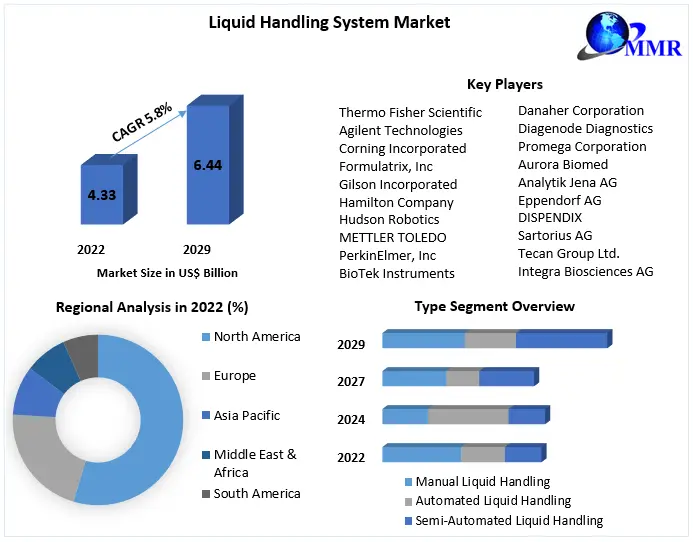 To know about the Research Methodology :- Request Free Sample Report
Liquid Handling System Market Dynamics:
The growing number of research studies in the biopharmaceutical industry combined with an increase in clinical trials
There has been an increase in research and development efforts as well as significant investment in the creation of innovative treatments that provide significant medical advantages. Considering that just 12% of drugs participating in clinical trials are approved by the US FDA, the number of approved pharmaceuticals is extremely high and growing. This reflects the increasing instances of R&D activities in the biopharmaceutical sector, which are expected to grow in the near future. The increase in research activity is connected to an increase in demand for fluid handling devices, which are critical for accurately dispensing liquid samples.
According to the Pharmaceutical Research and Manufacturers of America (PhRMA) report, R&D investment has risen dramatically in recent years, accounting for 18% in the last decade, and the amount has been soaring in recent years. According to the ClinicalTrials.gov database, about 6,516 clinical studies were active in the United States in 2021. Over 920,000 people took part in these clinical trials. Thus, increased investments in drug discovery and development, as well as an increasing number of clinical trials to find innovative treatments for a variety of chronic diseases, show the potential need for clinical research liquid handling systems.
Clinical advantages offered by automated liquid handling systems
Automated liquid handling systems provide clinical advantages when handling sensitive, reactive, or volatile liquids. The systems are designed to deliver precise and reliable clinical outcomes using automated software and to some extent provide self-operational capabilities. Automated workstations can be customized to meet unique needs.
The Automated fluid handling systems minimize the number of errors, shorten the hands-on time, and improve productivity and consistency. Automated liquid handlers are expected to positively affect the development of the liquid handling system market due to their high flexibility, higher capacity, dynamic volume range, and high manufacturing quality standards.
Global expansion of pharmaceutical & biotechnology industries
The pharmaceutical and biotechnology industries are growing at a significant rate across the globe. In December 2021, the Pharma Times reported that pharma sales in the 60 biggest markets were expected to grow at a CAGR of 4.8 % to reach USD 1.5 trillion. Market growth has been boosted by initiatives taken by global pharmaceuticals & biopharma companies, partnerships with IT, clinical research in IT, digital supply chain & manufacturing, pharmacovigilance software, and mergers & acquisitions.
Liquid handling systems are widely utilized in the pharmaceutical and biotechnology sectors for a variety of research activities including high-throughput screening, absorption, distribution, metabolism, excretion (ADME) screening, sample distribution, and target validation. The rise in these industries is therefore expected to support growth in the liquid handling system market.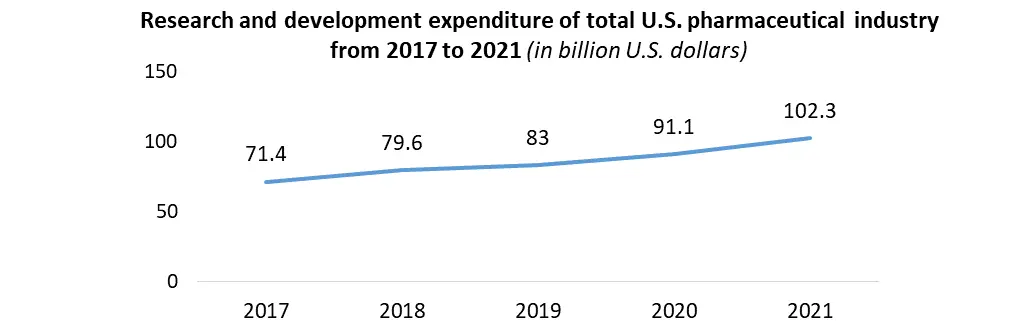 The adoption of artificial intelligence in automated liquid handling
Manufacturers are currently focused on semi-automated solutions to enable the automation of laboratories with restricted budgets that do not allow for end-to-end automation. Such systems operate by push buttons, providing greater simplicity of use and flexibility than a manual pipette. Furthermore, artificial intelligence (AI) is changing the way modern laboratory function. The current focus is on improving process security features to meet rising regulatory requirements. Such software updates are usually required to be modified in order to allow for appropriate protocol customization without compromising capabilities. The use of artificial intelligence in automated liquid handling to control various stages of the operation and to take advantage of the capability of internet connectivity to interact with the handlers remotely provided further lucrative opportunities during the forecast period.
Market Restraint
The possibility of errors in automated liquid handling systems may hamper the growth of the market during the forecast period. Furthermore, the lack of skilled people in the handling of the system is also expected to decrease product demand during the forecast period.
Liquid Handling System Market Segment Analysis:
By Product, the Pipettes segment accounted for around 29.2 % of the liquid handling system market share in 2022 owing to its widespread use and capacity to handle viable amounts of liquid samples. Pipettes are in high demand because of their cost-effective performance, dependability, high level of precision, and low maintenance requirements. Furthermore, the development and commercialization of electronic pipettes by several players in the liquid handling system market are expected to increase the use of these instruments.
By Application, the drug discovery segment is expected to reach USD 1.76 billion by 2027, owing to the rising demand for innovative therapies and personalized medicine. Advances in science and technology have resulted in a shift in traditional therapies and increased adoption and demand for customized medicine based on a patient's molecular profile and genetic composition. Personalized medicines have the potential to deliver faster diagnosis and more effective therapy with fewer side effects. The growing number of drug development projects is expected to drive up demand for fluid handling systems, as these systems are an important element of the drug discovery process, particularly in screening millions of compounds. Increasing flow, consistency, and dependability, as well as simplifying screening procedures with the use of sophisticated liquid handling instruments, ensure accuracy and drive product usage.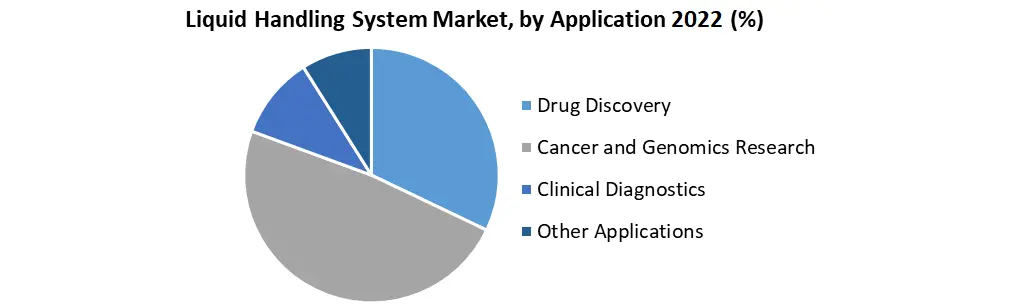 By End-user, the research and academic institutions segment accounted for USD 898 million in the liquid handling system market in 2020, owing to the growing acceptance of liquid handling equipment in research laboratories and rising research volume. In research and academic laboratories, liquid handling systems play an important role in fields such as protein crystallization, gene sequencing, antibody testing, and drug screening. These instruments are utilized for transferring assays in different containers in a variety of vital jobs in research and development. Furthermore, the major contribution of research efforts at academic institutes is expected to boost the product adoption.
The contract research organizations are expected to witness healthy growth due to the rising funding for R&D and increasing outsourcing services by pharmaceutical companies for research activities. Contract research organizations are adopting this technology to improve their lab capabilities. According to the Association of Clinical Research Organizations, more than half of CROs do outsource clinical trial work to the pharmaceutical sector. The fundamental advantage of liquid handling systems is that they help to minimize both person-to-person and day-to-day variability. The growth in contract research activities will enhance demand in the liquid handling system market over the forecast period.
Regional Insights
In the North American region, the Liquid Handling System Market market is expected to grow during the forecast period owing to the High number of ongoing R&D projects and accessibility to technologically advanced products. The United States dominated the North American liquid handling system market in 2020 and is predicted to reach USD 1.48 billion by 2027 due to the presence of significant biopharmaceutical companies in the country, a large number of current R&D initiatives, and easy access to technologically advanced products.
According to the Pharmaceutical Research and Manufacturers of America (PhRMA) research report, over 7,000 drugs are in the development phase, with over 9,500 current clinical development programs. The National Institutes of Health (NIH) and the Defense Advanced Research Projects Agency (DARPA) both provide financial assistance for the growth of research activities. Furthermore, the use of collaborative research approaches by large biopharmaceutical companies to accelerate R&D efforts is predicted to raise demand for liquid handling instruments.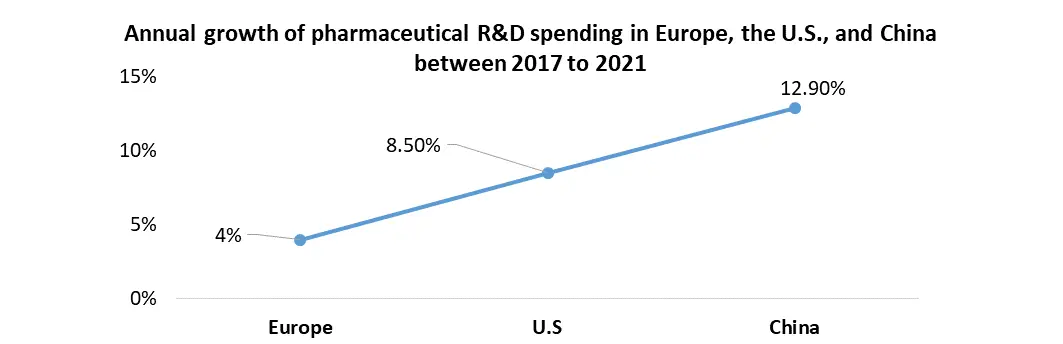 Asia Pacific Liquid Handling System Market is expected to have a significant market share during the forecast period. The growth of local biotech companies, increased financing support, CFDA reform in China, and price reform in Japan (affecting both off-patent and on-patent products) are expected to propel the biopharmaceutical sector forward. The fast advancement of biopharma and biotechnology firms, as well as CROs and CDMOs in countries such as Japan and China is expected to drive growth in the APAC region during the forecast period.
Liquid Handling System Market Scope: Inquire before buying
| Liquid Handling System Market | |||
|---|---|---|---|
| Report Coverage | Details | ||
| Base Year: | 2022 | Forecast Period: | 2023-2029 |
| Historical Data: | 2018 to 2022 | Market Size in 2022: | US $ 4.33 Bn. |
| Forecast Period 2023 to 2029 CAGR: | 5.8% | Market Size in 2029: | US $ 6.44 Bn. |
| Segments Covered: | by Type | Manual Liquid Handling Automated Liquid Handling Semi-Automated Liquid Handling |
|
| by Product | Automated Workstations Pipettes Dispensers Burettes Others |
||
| by Application | Drug Discovery Cancer and Genomics Research Clinical Diagnostics Other Applications |
||
| by End-User | Pharmaceutical and Biotechnology Industry Contract Research Organization Academic Institutes Others |
||
by Region
North America (United States, Canada and Mexico)
Europe (UK, France, Germany, Italy, Spain, Sweden, Austria and Rest of Europe)
Asia Pacific (China, South Korea, Japan, India, Australia, Indonesia, Malaysia, Vietnam, Taiwan, Bangladesh, Pakistan and Rest of APAC)
Middle East and Africa (South Africa, GCC, Egypt, Nigeria and Rest of ME&A)
South America (Brazil, Argentina Rest of South America)
Top Leading Competitors in the Liquid Handling System Market are:
1. Thermo Fisher Scientific, Inc. (US)
2. Agilent Technologies, Inc (US)
3. Corning Incorporated (US)
4. Formulatrix, Inc. (US)
5. Gilson Incorporated (US)
6. Hamilton Company (US)
7. Hudson Robotics, Inc (US)
8. METTLER TOLEDO (US)
9. PerkinElmer, Inc. (US)
10.BioTek Instruments (US)
11.Danaher Corporation (US)
12.Diagenode Diagnostics (US)
13.Promega Corporation (US)
14.Aurora Biomed, Inc (Canada
15.Analytik Jena AG (Germany)
16.Eppendorf AG (Germany)
17.DISPENDIX (Germany)
18.Sartorius AG (Germany)
19.Tecan Group Ltd. (Switzerland)
20.Integra Biosciences AG (Switzerland)
21.AlphaHelix Technologies AB (Sweden)
22.SciRobotics Ltd. (Israel)
1. Which is the potential market for Liquid Handling systems in terms of the region?
Ans. In the Asia Pacific region, the fast advancement of biopharma and biotechnology firms, as well as CROs and CDMOs in countries such as Japan and China are expected to drive the market.
2. What is expected to drive the growth of the Liquid Handling System market in the forecast period?
Ans. The growing number of research studies in the biopharmaceutical industry combined with an increase in clinical trials is a major factor driving the market growth during the forecast period.
3. What is the projected market size & growth rate of the Liquid Handling System Market?
Ans. The total Liquid Handling System Market was valued at USD 4.33 Billion in 2022 and is expected to reach USD 6.44 Billion by 2029 at a CAGR of 5.8% during the forecast period.
4. What segments are covered in the Liquid Handling System Market report?
Ans. The segments covered are Type, Product, Application, End-user, and region.