
Industrial Automation Oil and Gas Market Size – Industry Structure Evaluation, Demand Drivers Analysis, Regional Growth Analysis and Identification, Competitive Positioning Review & Global Market Size Forecast to 2032
Overview
Global Industrial Automation Oil and Gas Market to reach USD 23.54 Bn by 2032 from USD 17.07 Bn in 2025 at 4.7 % CAGR
Industrial Automation Oil and Gas Market Overview:
The industrial automation oil & gas market has evolved from a cost-saving tool into a strategic backbone for navigating supply volatility, regulatory pressures, and operational complexity. As global oil demand reached 103.84 million barrels per day (mb/d) in 2024, fueled by Non-OECD Asia, China, India, the Middle East, Africa, and Latin America, the pressure to optimize operations and protect margins intensified. Simultaneously, global oil supply is projected to rise by 3.0 mb/d in 2025 and 2.4 mb/d in 2026, emphasizing the critical role of automation, AI-driven analytics, and predictive maintenance in maximizing asset efficiency.
Industrial Automation Oil & Gas Market Key Highlights
• 89% of oil & gas companies invest in data analytics to improve production efficiency.
• Operational efficiency has increased by an average of 25% across global oil operations due to automation.
• The AI in oil & gas market is projected to reach USD 5.28 billion by 2030.
• 80% of offshore platforms operate with digital automation systems, enhancing safety and reliability.
• Integration of Industrial Automation: SCADA systems, DCS, PLC, IIoT, robotics, digital twins, and AI-powered monitoring are now integral across upstream, midstream, and downstream oil & gas operations.
• Digital Transformation in Oil & Gas: By 2024, 78% of oil & gas companies had implemented digital transformation strategies.
• Focus on Asset Management: 70% of oil & gas companies are focusing on asset management and maintenance, emphasizing automation's role in reducing unplanned downtime and optimizing production.
• Impact on Operations: Automation is helping extend equipment life and optimize production across the sector.
• Global Reach: Automation investments are reshaping operations from offshore platforms in Saudi Arabia and Brazil to refineries in India, China, the US, and South Korea.
• Real-Time Monitoring & Predictive Maintenance: Automation enables real-time monitoring, predictive maintenance, and energy-efficient production optimization, enhancing operational efficiency.

To know about the Research Methodology :- Request Free Sample Report
Industrial Automation Oil and Gas Market Dynamics
Operational Efficiency Under Price Pressure boost the market growth: With Brent crude averaging USD 63–65/bbl in late 2025, oil companies face ongoing margin pressure. Industrial automation, predictive maintenance, and AI-enabled monitoring reduce maintenance costs by up to 20% and extend equipment lifespan by 18%, enabling reliable and cost-efficient operations across upstream, midstream, and downstream segments.
Integration and Change Management Failures limit the Industrial Automation Oil & Gas industry growth: Despite automation’s high ROI potential, nearly 30% of digital transformation initiatives fail due to poor system integration, workforce resistance, and cybersecurity gaps, particularly in legacy infrastructures in Russia, Africa, and Latin America. Overcoming these barriers is critical for realizing full automation benefits.
Autonomous Operations and AI Adoption create lucrative growth opportunities to Industrial Automation Oil & Gas Market: Autonomous Operations and AI Adoption
By 2026, 60% of oil companies plan to deploy AI-driven exploration, drilling, and production optimization solutions. Emerging markets such as India, China, and the Middle East are increasingly adopting digital-by-design facilities, creating opportunities for enhanced decision-making, reduced downtime, and higher asset utilization.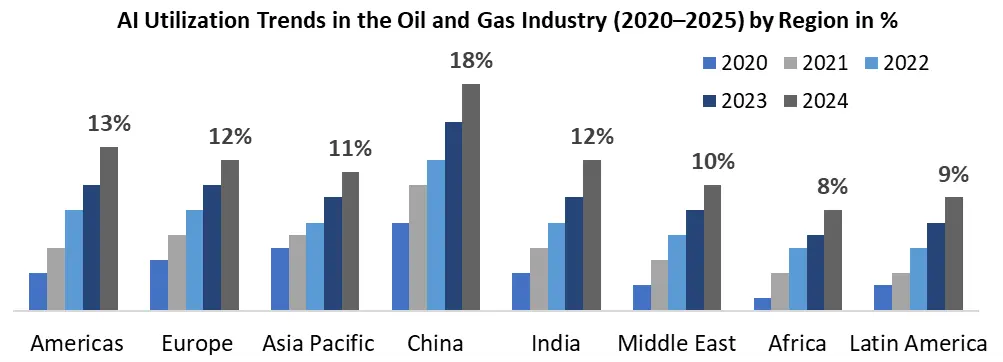
Industrial Automation Oil and Gas Market segment analysis
By Stream: The upstream segment leads the market in 2025 due to high capital intensity, operational complexity, and safety risks in exploration and production. Automation technologies optimize drilling, reservoir monitoring, and predictive maintenance, delivering higher production and operational safety. While midstream focuses on pipeline monitoring and transport efficiency, and downstream leverages automation for refining, terminal operations, and energy efficiency, upstream continues to lead in investment and technology penetration, driven by the demand for cost reduction and operational reliability.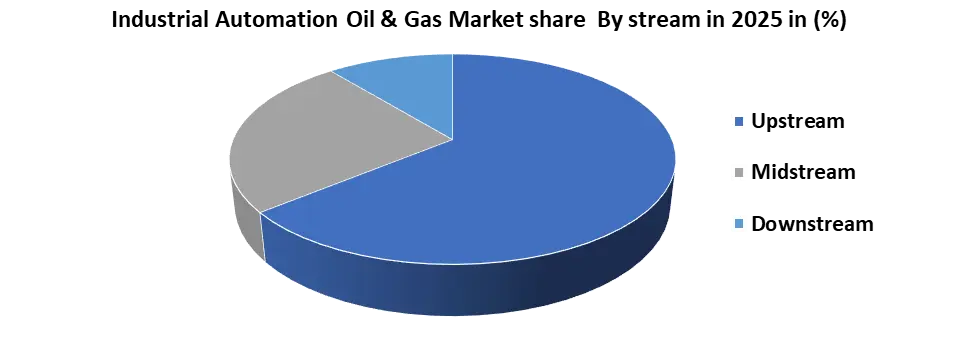
Industrial Automation Oil and Gas Market Regional Analysis
Asia-Pacific was led the market in 2025 due to refinery expansions, rapid oil consumption growth, and large-scale digitalization initiatives. China built 58 million barrels of crude stocks in 2024, while India continues expanding refining capacity. Investments in smart refineries and energy-efficient operations are key growth drivers.
• North America: The US leads in upstream automation, digital drilling, and LNG terminal automation, while Canada and Mexico modernize aging assets through cloud SCADA and predictive maintenance.
• Middle East: With OPEC crude production at 28.99 mb/d in November 2025, countries like Saudi Arabia are heavily investing in AI-driven production optimization and advanced control systems to maintain cost leadership.
• Europe: Tightening regulations and weaker demand push operators toward automation-driven efficiency, emissions monitoring, and compliance systems.
• Africa & South America: Nations like Nigeria, Angola, Brazil, Venezuela, and Colombia implement remote monitoring, mobile SCADA, and centralized control rooms to manage production volatility and infrastructure challenges.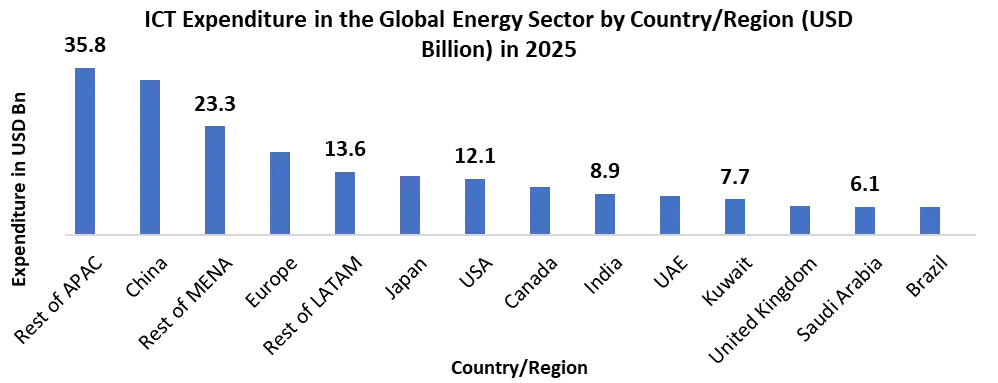
Industrial Automation Oil and Gas Market: Competitive Landscape and Strategic Growth
The global Industrial Automation Oil & Gas Market was dominated by key industrial technology leaders investing in AI, digital twins, cloud SCADA, and predictive maintenance to enhance operational efficiency, safety, and sustainability. Over the past five years, Emerson Electric, Siemens, Schneider Electric, Honeywell, and ABB have achieved high single-digit annual growth, driven by digital oilfield adoption and innovative automation solutions.
Key Players and Strategic Highlights:
• Emerson Electric – DeltaV DCS and redesigned SaaS SCADA mobile app enabling remote operations, route-based inspections, and alarm management.
• Siemens – AI-driven analytics, digital twins, and cybersecurity for LNG and refining automation in Europe, Middle East, and Asia.
• Schneider Electric – EcoStruxure platform integrating energy management and decarbonization.
• Honeywell – Experion and Forge platforms for predictive maintenance and autonomous operations.
• ABB – Robotics, electrification, and advanced control systems for offshore and subsea assets.
Major Countries in Oil and Gas:
| Producers | Exporters | Importers |
| US | Saudi Arabia | China |
| Saudi Arabia | Russia | India |
| Russia | Iraq | Japan |
| UAE | UAE | South Korea |
| Iraq | Kuwait | OECD Europe |
| Canada | Nigeria | US |
| Brazil |
Case studies show ADNOC (UAE) generated USD 500 million via AI, while drone inspections reduced safety incidents for offshore operators.
Top 5 Countries by Proven Natural oil & Gas Reserves (2024)
Industrial Automation Oil and Gas Market Scope: Inquiry Before Buying
| Industrial Automation Oil and Gas Market | |||
|---|---|---|---|
| Report Coverage | Details | ||
| Base Year: | 2025 | Forecast Period: | 2026-2032 |
| Historical Data: | 2020 to 2025 | Market Size in 2025: | USD 17.07 Bn. |
| Forecast Period 2026 to 2032 CAGR: | 4.7% | Market Size in 2032: | USD 23.54 Bn. |
| Segments Covered: | by Component | Industrial Robots Control Valves Field Instruments HMI (Human Machine Interface) Industrial PC Process Analyzer Intelligent Pigging Vibration Monitoring |
|
| by Solutions | SCADA (Supervisory Control and Data Acquisition) PLC (Programmable Logic Controller) DCS (Distributed Control System) MES (Manufacturing Execution System) Functional Safety PAM (Plant Asset Management) |
||
| by Stream | Upstream Midstream Downstream |
||
| by Application | Drilling Production Refining Pipeline Monitoring |
||
Industrial Automation Oil and Gas key players
Schneider Electric SE
Siemens AG
ABB Ltd.
Honeywell International Inc.
Emerson Electric Co.
Rockwell Automation Inc.
Yokogawa Electric Corporation
General Electric Company (GE Digital)
Mitsubishi Electric Corporation
Endress+Hauser Group
National Oilwell Varco (NOV)
Schlumberger Limited
Baker Hughes Company
Weatherford International plc
TechnipFMC plc
Cameron International (Schlumberger)
Omron Corporation
Fanuc Corporation
Kongsberg Gruppen ASA
Eaton Corporation
Robert Bosch GmbH
Hitachi, Ltd.
Thermo Fisher Scientific Inc.
KROHNE Messtechnik GmbH
VEGA Grieshaber KG
Cisco Systems, Inc.
AVEVA Group plc
Aspen Technology, Inc.
Metso Corporation
SMC Corporation
FAQ
1)What is Industrial Automation in the Oil & Gas industry?
Ans: It refers to using technologies like SCADA, DCS, PLCs, IIoT, AI, and robotics to monitor, control, and optimize operations across upstream, midstream, and downstream segments.
2)Why is Industrial Automation important for Oil & Gas companies?
Ans: Automation improves operational efficiency, safety, predictive maintenance, and asset reliability, reducing costs and minimizing unplanned downtime.
3)What is the market size and growth forecast?
Ans: The market is projected to grow from USD 17.07 billion in 2025 to USD 23.54 billion by 2032, at a CAGR of 4.7%, driven by AI and digital transformation adoption.
4.) Which segments dominate the market?
Ans: The upstream segment leads due to high capital intensity, operational complexity, and safety risks, while midstream and downstream focus on pipeline and refining efficiency.
5)Who are the key players in the Industrial Automation Oil & Gas Market?
Ans: Top companies include Schneider Electric, Siemens, ABB, Honeywell, Emerson Electric, Rockwell Automation, Yokogawa, and GE Digital.