
Head and Neck Cancer Market Size by Drug Class, Therapy Type, Route of Administration, Diagnosis Method, Distribution Channel, Region, Industry-Wide Analysis, Competitive Landscape Assessment & Long-Term Forecast to 2032
Overview
Head and Neck Cancer Market size was valued at USD 3.43 Billion in 2024, and the total Head and Neck Cancer Market revenue is expected to grow by 10.5% from 2025 to 2032, reaching nearly USD 7.62 Billion
Head and Neck Cancer Market Overview
Head and Neck Cancer (HNC) refers to a group of malignancies affecting the oral cavity, pharynx, larynx, and related regions. Major risk factors include tobacco, alcohol, HPV infection, and environmental exposures. Early detection and multidisciplinary treatment are critical to improving survival and quality of life for patients. The rising prevalence, increasing patient awareness, and advances in therapeutic options drive the Head and Neck Cancer Market growth. HNC accounts for a significant portion of global cancer cases, with risk factors such as tobacco and alcohol use, HPV infections, and environmental pollutants contributing to its burden.
The treatments, including surgery, radiotherapy, chemotherapy, targeted therapy, and immunotherapy, are supported by evolving diagnostic tools such as imaging technologies, liquid biopsies, and molecular testing, which boost the Head and Neck Cancer Market. Innovations in targeted and immunotherapeutic agents have revolutionized the treatment landscape, providing personalized solutions with enhanced efficacy and reduced side effects. Regional healthcare infrastructure improvements, government awareness initiatives, and growing investment from pharmaceutical and biotechnology companies are facilitating wider access to advanced therapies, particularly in emerging economies. The favorable reimbursement policies and insurance coverage are improving patient compliance and treatment adoption.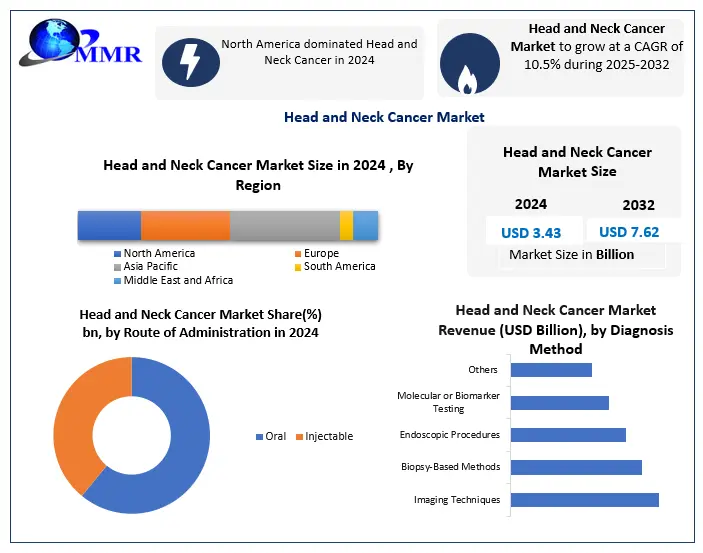 To know about the Research Methodology :- Request Free Sample Report
Head and Neck Cancer Market Dynamics:
Increasing prevalence of Head and Neck Cancer to drive Head and Neck Cancer Market Growth
Head and neck cancers, which involve malignancies of the oral cavity, pharynx, larynx, and salivary glands, account for a substantial proportion of cancer-related morbidity and mortality worldwide. 10,000 new cases are diagnosed annually, with risk factors such as tobacco use, excessive alcohol consumption, human papillomavirus (HPV) infections, and environmental exposures contributing to this growing burden. The increasing incidence is compounded by the aging global population, urbanization, and lifestyle changes, which create a heightened demand for effective diagnostic, surgical, and pharmacological interventions. Advances in precision medicine, immunotherapy, and targeted therapies are driving the Head and Neck Cancer Market growth by offering personalized treatment options with improved outcomes and fewer adverse effects.
The innovations in early detection technologies, including liquid biopsies and advanced imaging modalities, are enabling timely intervention, reducing disease progression, and enhancing survival rates, which drives Head and Neck Cancer Market growth. Regional healthcare infrastructure improvements, government initiatives for cancer awareness, and increasing investment by pharmaceutical and biotechnology companies are accelerating the availability and accessibility of HNC therapies, particularly in emerging markets. The rising patient awareness, favorable reimbursement policies, and expanded insurance coverage are enhancing patient compliance and driving higher adoption of advanced treatment regimens.
High Treatment Costs and Limited Access to hamper the Head and Neck Cancer Market Growth
The management of HNC requires a multidisciplinary approach involving surgery, radiation therapy, chemotherapy, targeted therapy, and immunotherapy, all of which contribute to substantial treatment expenses. Advanced therapies, particularly targeted and immunotherapeutic agents, while offering improved efficacy and survival rates, are often priced at a premium, making them unaffordable for large segments of the population, especially in low- and middle-income countries. In addition to financial barriers, limited access to specialized cancer care centers, diagnostic facilities, and trained oncologists restricts timely treatment initiation and reduces patient adherence to recommended regimens. Geographic disparities, inadequate healthcare infrastructure, and long waiting periods for appointments exacerbate these challenges, particularly in rural and underserved regions. Insurance coverage gaps and out-of-pocket expenses add another layer of complexity, preventing many patients from receiving optimal care. These barriers not only affect patient outcomes but also slow Head and Neck Cancer Market adoption of innovative therapies, constraining overall growth.
Head and Neck Cancer Market Segmentation:
Based on the Drug Class, the market is segmented into the EGFR Inhibitors, PD-1/PD-L1 Inhibitors, Mitotic Inhibitors and Others. EGFR Inhibitors dominated the Head and Neck Cancer Market in 2024. Epidermal Growth Factor Receptor (EGFR) is overexpressed in a significant proportion of head and neck tumors, driving cancer cell proliferation, angiogenesis, and survival. Monoclonal antibodies targeting EGFR, such as cetuximab (Erbitux), have demonstrated improved overall survival and progression-free survival, particularly when combined with radiotherapy or chemotherapy. The robust clinical evidence supporting EGFR inhibitors, coupled with their wide regulatory approvals in North America, Europe, and Asia-Pacific, contributes to the segment’s leading position. The ongoing clinical trials evaluating novel EGFR-targeting agents and combination therapies with immunotherapies, such as PD-1/PD-L1 inhibitors, to overcome resistance mechanisms, drive the Head and Neck Cancer Market growth. EGFR inhibitors are increasingly integrated into personalized medicine strategies, where biomarker analysis helps identify patients most to benefit from therapy, enhancing treatment outcomes and patient adherence.
Based on the Therapy Type, the market is categorized into the Chemotherapy Agents, Targeted Therapies, Immunotherapy and Others. Immunotherapy is expected to dominate the Head and Neck Cancer Market over the forecast period. Immunotherapy has ability to engage the immune system in selectively targeting tumor cells. Immune checkpoint inhibitors, particularly pembrolizumab and nivolumab, have significantly improved outcomes for patients with recurrent or metastatic HNSCC, providing longer overall survival and more durable responses compared to conventional chemotherapy. The adoption of immunotherapy has been accelerated by regulatory approvals in major markets and guideline endorsements from leading oncology societies such as NCCN and ASCO, establishing it as a standard of care for eligible patients. Beyond monotherapy, numerous clinical trials are investigating combination approaches, integrating immunotherapy with targeted therapies, chemotherapy, or radiotherapy to enhance efficacy and overcome resistance. Personalized treatment is gaining traction, with biomarker-driven strategies such as PD-L1 expression analysis guiding patient selection and optimizing response rates, which boosts Head and Neck Cancer Market growth. Immunotherapy offers a more favorable safety profile relative to traditional chemotherapy, with lower systemic toxicity and better quality-of-life outcomes.
Head and Neck Cancer Market Regional Insights:
North America dominated the Head and Neck Cancer Market in 2024 and is expected to continue its dominance over the forecast period. The Head and Neck Cancer Industry in North America is witnessing significant growth, driven by increasing incidence rates, advancements in targeted therapies, and expanding adoption of immuno-oncology treatments. According to the National Cancer Institute, approximately 72,680 individuals in the United States are expected to be diagnosed with cancers of the oral cavity, pharynx, or larynx in 2025, with around 16,680 deaths expected, highlighting the substantial disease burden. Key subtypes in the region include laryngeal, oropharyngeal, nasopharyngeal, hypopharyngeal, salivary gland, lip and oral cavity, paranasal sinus, and metastatic squamous neck cancers with occult primary, each contributing to the Head and Neck Cancer Market demand. The prevalence of risk factors such as tobacco and alcohol use, along with rising HPV-associated cancers, supports the need for innovative treatment options.
The availability of advanced therapeutics, including checkpoint inhibitors like pembrolizumab and nivolumab, targeted small molecules, and monoclonal antibodies, improves survival and quality of life. The region benefits from well-established healthcare infrastructure, extensive R&D investments, and active clinical trials exploring combination therapies, biomarker-driven approaches, and precision medicine. Tele-oncology and digital health solutions are enhancing patient monitoring, adherence, and access to specialist care, particularly in underserved areas. Leading Head and Neck Cancer players such as Merck & Co., Bristol-Myers Squibb, Eli Lilly, AstraZeneca, and F. Hoffmann-La Roche are actively pursuing collaborations, acquisitions, and pipeline expansions to strengthen their market position.
Head and Neck Cancer Market Competitive Landscape
The Head and Neck Cancer Market competitive landscape is characterized by intense activity among global pharmaceutical and biotechnology companies, driven by innovations in immunotherapy, targeted therapies, and precision medicine. Leading players such as Merck & Co., Bristol-Myers Squibb, Eli Lilly, AstraZeneca, F. Hoffmann-La Roche, Sanofi, and Takeda are heavily investing in research and development to expand their oncology portfolios, with a strong focus on PD-1/PD-L1 checkpoint inhibitors, monoclonal antibodies, and novel small-molecule targeted therapies. Collaborations with academic institutions and cancer centers, such as Aprea Therapeutics’ partnership with MD Anderson, highlight the strategic alliances aimed at advancing early-stage drug candidates and personalized treatment approaches. Additionally, acquisitions and licensing agreements are being actively pursued to strengthen pipelines and access cutting-edge technologies, exemplified by Eli Lilly’s acquisition of Scorpion Therapeutics’ PI3Kα-targeted program, which targets head and neck cancers among other tumor types.
Clinical trials remain a major competitive tool, with companies exploring combination therapies and biomarker-driven strategies to enhance efficacy and patient outcomes. For instance, the LEAP-010 trial by Merck and Eisai, evaluating KEYTRUDA plus LENVIMA, reflects ongoing efforts to optimize first-line therapies for recurrent or metastatic HNSCC.
Head and Neck Cancer Market Key Trends
| Key Trend | Description |
| Progress in Immunotherapy & Targeted Therapies | Checkpoint inhibitors such as nivolumab and pembrolizumab are improving survival and quality of life for patients with advanced disease. Personalized targeted therapies are being integrated into clinical practice, allowing oncologists to tailor treatments based on the genetic profiling of tumors. This precision-driven approach accelerates therapeutic decisions, enhances efficacy, and reduces unnecessary toxicity, representing a significant advancement in patient-centered oncology care. |
| Precision Medicine & Biomarkers | Precision medicine is transforming HNC management through the use of biomarkers and molecular diagnostics. Techniques like genomic profiling and liquid biopsies enable earlier cancer detection, accurate patient stratification, and real-time monitoring of treatment response. By identifying genetic and molecular characteristics of tumors, clinicians can select therapies with higher likelihoods of success, minimize adverse effects, and optimize outcomes. |
| Digital Health & Tele-Oncology | Digital health and tele-oncology are reshaping HNC patient care by improving access, monitoring, and treatment adherence. Virtual consultations, remote patient monitoring, and digital adherence tools allow timely interaction with specialists, particularly for patients in rural or underserved areas. Tele-oncology facilitates continuous care, follow-ups, and symptom management without requiring frequent hospital visits. These innovations enhance patient engagement and reduce delays in treatment. |
Head and Neck Cancer Market Key Developments
• On March 11, 2025, Aprea Therapeutics announced an agreement with MD Anderson Cancer Center to explore APR-1051, a WEE1 kinase inhibitor, for HPV-positive and HPV-negative HNSCC exhibiting replication stress markers, with early preclinical studies supporting potential efficacy. Additionally, July 2025 studies at UC Davis are investigating a combination of pembrolizumab (Keytruda), losartan, and stereotactic body radiation therapy (SBRT) to enhance immune response and reduce recurrence in recurrent HNC. These advancements reflect a trend toward personalized, targeted, and combination therapies aiming to improve outcomes and tolerability in HNC patients.
• As of January 13, 2025, Eli Lilly declared the acquisition of Scorpion Therapeutics’ cancer program in a deal valued up to $2.5 billion, marking a strategic expansion of its oncology pipeline. The acquisition centers on STX-478, a targeted therapy designed to inhibit PI3Kα gene mutations implicated in breast, gynecological, and head and neck cancers (HNC). This moves leverages Lilly’s financial strength from its obesity and diabetes portfolio to strengthen its presence in oncology. Scorpion Therapeutics will spin out a separate company, retaining other drug candidates and employees. This development reflects ongoing efforts by major pharmaceutical companies to accelerate precision medicine approaches in HNC, focusing on genetically defined patient populations and novel targeted therapies.
Scope of the Head and Neck Cancer Market: Inquire before buying
| Head and Neck Cancer Market | |||
|---|---|---|---|
| Report Coverage | Details | ||
| Base Year: | 2024 | Forecast Period: | 2025-2032 |
| Historical Data: | 2019 to 2024 | Market Size in 2024: | USD 3.43 Bn. |
| Forecast Period 2025 to 2032 CAGR: | 10.5% | Market Size in 2032: | USD 7.62 Bn. |
| Segments Covered: | by Drug Class | EGFR Inhibitors PD-1/PD-L1 Inhibitors Mitotic Inhibitors Others |
|
| by Therapy Type | Chemotherapy Agents Targeted Therapies Immunotherapy Others |
||
| by Route of Administration | Oral Injectable |
||
| by Diagnosis Method | Imaging Techniques Biopsy-Based Methods Endoscopic Procedures Molecular or Biomarker Testing Others |
||
| by Distribution Channel | Hospital Pharmacies Retail Pharmacies Online Others |
||
Head and Neck Cancer Key players:
North America
1. Merck & Co., Inc.
2. Eli Lilly and Company
3. Bristol-Myers Squibb Company
4. AstraZeneca PLC
5. Sanofi S.A.
6. Teva Pharmaceuticals Industries Ltd.
7. Pfizer Inc.
8. Regeneron Pharmaceuticals
9. GlaxoSmithKline (GSK)
10. Johnson & Johnson (Janssen Biotech)
Europe
1. F. Hoffmann-La Roche Ltd.
2. AstraZeneca PLC
3. Sanofi S.A.
4. Teva Pharmaceuticals Industries Ltd.
5. Bristol-Myers Squibb Company
6. Eli Lilly and Company
7. Merck & Co., Inc.
8. Takeda Pharmaceutical Company Limited
9. Novartis
10. Pfizer Inc.
Asia Pacific
1. Merck & Co., Inc.
2. Eli Lilly and Company
3. Sanofi S.A.
4. Takeda Pharmaceutical Company Limited
5. Teva Pharmaceuticals Industries Ltd.
6. F. Hoffmann-La Roche Ltd.
7. AstraZeneca PLC
8. Bristol-Myers Squibb Company
9. Clinigen Group PLC
10. BeiGene Ltd.
FAQs:
1. What is the market size of the Global Head and Neck Cancer Market in 2024?
Ans. The market size Global Head and Neck Cancer Market in 2024 was USD 3.43 billion.
2. What are the segments of the Global Head and Neck Cancer Market?
Ans. The Global Head and Neck Cancer Market is divided into Drug Class, Therapy type, Route of Administration, Diagnosis Method and Distribution Channel.
3. What is the study period of the Head and Neck Cancer Market?
Ans. The Global Head and Neck Cancer Market is studied from 2024 to 2032.
4. Which region is expected to hold the largest Global Head and Neck Cancer Market share during the forecast period?
Ans. North America is expected to hold the largest Global Head and Neck Cancer Market share during the forecast period.
5. What is the market size of the Global Head and Neck Cancer Market in 2024?
Ans. The Global Head and Neck Cancer Market Size was USD 3.43 billion in 2024.