
Spa Market- Industry Structure Evaluation, Demand Drivers Analysis, Regional Growth Analysis and Identification, Competitive Positioning Review & Global Market Size Forecast to 2032
Overview
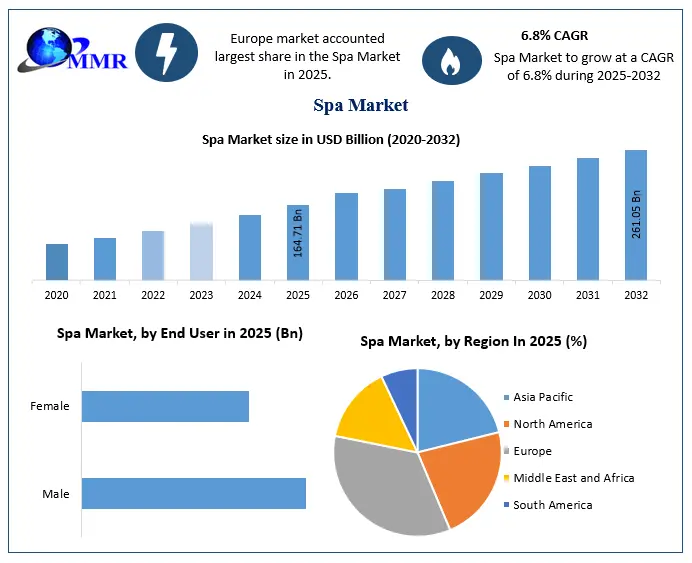
The Spa Market size was valued at USD 164.71 Billion in 2025 and the total Spa revenue is expected to grow at a CAGR of 6.8% from 2026 to 2032, reaching nearly USD 261.05 Billion by 2032.
Spa Market Overview
A spa is a wellness facility offering relaxation, treatments, massages, facials, and beauty services to improve physical, mental, and emotional well-being. The global spa market has evolved into one of the fastest-growing segments of the beauty and wellness industry, driven by rising demand for spa services, holistic wellness, and medical spa treatments. The industry includes day spas, hotel and resort spas, destination spas, thermal spring spas, and luxury spa facilities, all contributing to the expansion of the wellness and spa Industry. Growth is fueled by the increasing popularity of massage therapy, facial treatment services, anti-aging solutions, and AI-powered personalized wellness plans, particularly across North America, Europe, and Asia-Pacific.
The surge in wellness tourism, which generated USD 650 billion in 2024, significantly boosts revenue for spa tourism markets, especially in countries like the USA, Germany, Japan, France, Thailand, and the UAE. Digital disruption, including online and mobile spa bookings, subscription-based wellness models, and the adoption of spa management software, has streamlined the spa services market and improved minimally invasive procedures such as Botox, fillers, laser treatments, and IV therapy.
 To know about the Research Methodology :- Request Free Sample Report
Trend: Rise of Medical & Technology-Integrated Wellness Spas
The most influential spa industry trends are the rapid rise of medical spas (med spas) and technology-integrated spa services, outpacing traditional day spa markets and hotel spa segments. The adoption of AI in spa services, virtual diagnostics, and digital skin analysis tools has led to highly personalized spa treatments, especially in the anti-aging market, LED therapy facials, regenerative wellness programs, and advanced laser skin treatment services. Millennials and Gen Z increasingly prefer customized beauty and wellness plans, with over 60% of spa-goers in 2024 choosing AI-driven or tech-enhanced procedures for skin rejuvenation, stress relief, or body contouring.
Medical spas are also becoming integrated with IV therapy, hormone-balancing treatments, and regenerative wellness solutions, contributing to the global shift toward prevention-based healthcare. In Europe and the Asia-Pacific region, particularly Germany, Japan, South Korea, and Singapore, the trend toward thermal spring spa technology, oxygen therapy, and advanced hydrotherapy has strengthened the thermal and mineral spa market. In the Middle East, super-premium resorts in the UAE and Saudi Arabia are integrating luxury wellness retreats with digital wellness ecosystems, attracting high-spending spa tourists. This trend is supported by rising demand for corporate wellness spa programs, advanced booking platforms, and digital subscription-based spa services.
Growing Wellness Tourism & Lifestyle Shifts to Drive Spa Market
A major driver of the global spa industry growth is the accelerating shift toward wellness tourism, which recorded over 1 billion wellness-focused trips in 2024 and is forecast to reach 1.5 billion by 2030, directly boosting demand for destination spas, hotel and resort spas, and luxury spa retreats. As consumers increasingly prioritize preventive health, emotional well-being, and rejuvenation over material consumption, the wellness and spa market has become a critical part of global travel spending. Rising stress levels reported by 70% of working adults globally, combined with sedentary lifestyles and digital fatigue, have escalated demand for massage therapy, aromatherapy, hydrotherapy treatments, body scrubs & wraps, and facial treatment services. High disposable income in regions like North America, Europe, and the Middle East fuels spending on premium and luxury spa experiences, while Asia-Pacific benefits from rapidly expanding middle-class wellness consumers.
Countries such as Japan (onsen market), India (Ayurvedic spa market), Thailand (spa tourism), and China (hot spring spa industry) are at the center of global spa tourism expansion. The corporations investing in employee well-being are integrating corporate wellness and spa programs, leading to increased adoption of spa vouchers, subscription spa packages, and group spa experiences. The strong growth outlook for medical spas, fueled by demand for non-invasive aesthetic procedures, enhances market momentum. With the spa services market aligning closely with wellness tourism growth, the sector is positioned for continued expansion across massage therapy markets, facial treatment segments, and holistic wellness markets worldwide.
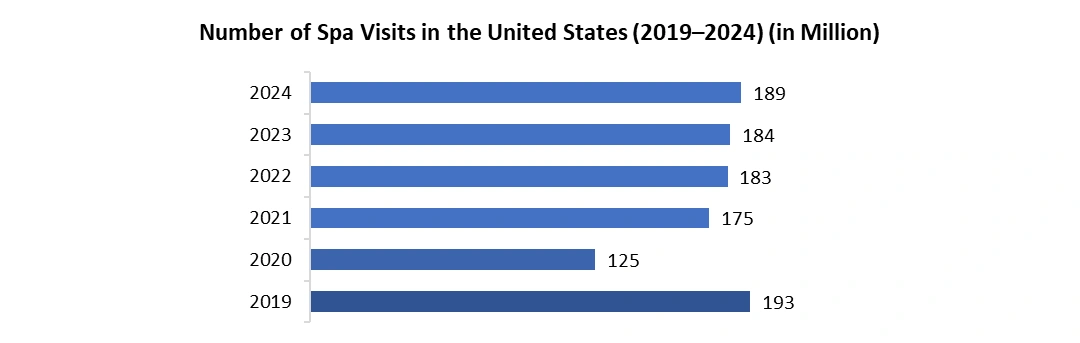
The number of spa visits in the United States rose steadily from 2019–2024, driven by growing wellness tourism, rising stress levels, and lifestyle shifts toward preventive health, self-care, and relaxation-focused spa and wellness experiences.
 Talent Shortages & Operational Costs to the Restraint Spa Market Growth
One of the major restraints limiting spa market growth is the persistent therapist shortage in the spa industry, with over 35–40% of global spa operators reporting difficulties hiring qualified massage therapists, aestheticians, and wellness professionals in 2024. Rising operating expenses, including wages, energy costs for thermal and hydrotherapy equipment, property rental rates, and compliance costs for medical spa regulations, strain profitability. In regions like North America and Europe, the high cost of certified specialists increases service prices, reducing accessibility for middle-income consumers.
The training and certification requirements in laser skincare, Botox and fillers, and regenerative wellness treatments make it challenging for smaller spas to offer high-demand medical services. Seasonal tourism fluctuations also impact the hotel and resort spa market, particularly in Southeast Asia, South America, and Mediterranean regions, where occupancy levels vary significantly throughout the year. Digital disruption and AI-driven self-care technologies, while beneficial, also create pressure for traditional spas to upgrade equipment and software, adding to capital expenses.
Spa Market Segment Analysis
By Type, the market is segmented into the Salon Spa, Hotel & Resort Spa, Medical Spa, Destination Spa, Mineral Spa and Others. Salon Spa is expected to dominate the Spa Market over the forecast period. The widespread availability of salon spas in urban, suburban, and semi-urban areas, making them the most accessible and affordable spa option among all spa types. Salon spas offer a comprehensive mix of massage therapy, facial treatments, body scrubs, hair and beauty services, and quick wellness rituals, which cater to the daily lifestyle needs of millennials, working professionals, and women, who represent nearly 65–70% of spa consumers globally.
The leadership of salon spas is their operational flexibility and lower setup costs compared to hotel and resort spas or destination spas, enabling rapid expansion across regions such as Asia-Pacific, North America, and Europe. With the increasing adoption of digital spa bookings, mobile apps, and subscription-based spa packages, the Salon Spa segment has seen a significant rise in repeat customers and short-duration wellness visits. The strong growth in male grooming, express wellness services, and Ayurvedic/holistic treatments in emerging countries such as India, China, Thailand, and Brazil strengthens the segment’s Spa Market presence.

By Service Type, the market is categorized into the Massage Therapies, Facial Treatments, Body Scrubs & Wraps, Medical & Cosmetic Procedures and Others. Massage dominated Spa Market over the forecast period. The universally demanded spa service addresses core consumer needs: stress reduction, relaxation, pain relief, muscle recovery, and mental wellness. The popularity of massage therapy spans all age groups, income levels, and spa types, ranging from salon spas and hotel & resort spas to destination spas and medical spas. The segment benefits strongly from rising stress levels among working adults—over 70% stress-related issues globally, which increases reliance on massages for physical and emotional recovery. The growth of wellness tourism, valued at more than USD 650 billion in 2025, strengthens demand for premium massage services across luxury resorts, cruise spas, and international wellness retreats.
Massage therapy offers spas the advantage of high profitability and repeat customer visits. Specialized techniques such as deep tissue, Swedish, Thai massage, aromatherapy massage, and sports massage attract a diverse customer base, including athletes, corporate travelers, and health-conscious consumers. The rising adoption of AI-powered massage chairs, robotic massage devices, and digital wellness diagnostics is also expanding service efficiency and personalization.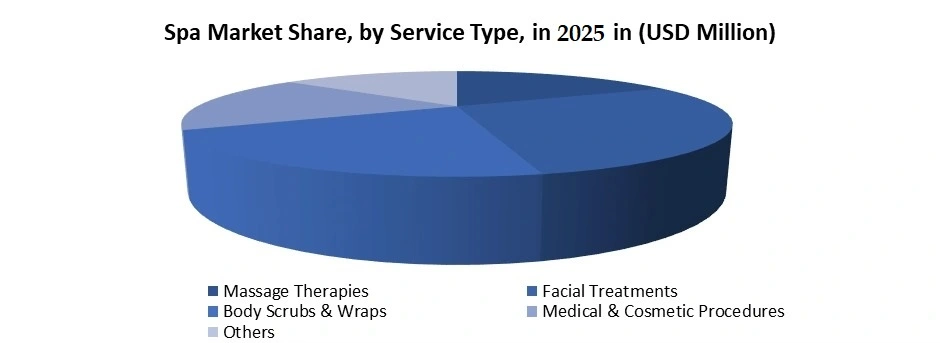
Spa Market Regional Insights
Europe dominated the Spa Market in 2025 with the largest Market share. Asia Pacific is the fastest-growing region for the Spa Industry over the forecast period. The long-standing wellness culture, extensive thermal spring spa industry, and high demand for luxury spa services across Germany, France, Italy, the UK, Switzerland, and the Nordic countries. Countries such as Germany, with over 350+ thermal and mineral spas, and France, known for its thalasso therapy centers, significantly contribute to spa tourism, making Europe the global leader in wellness tourism market revenue, accounting for nearly 30% of worldwide wellness trips. The region excels in premium massage therapy market services, anti-aging treatment markets, facial treatment segments, and advanced hydrotherapy spa markets, driven by high consumer spending and strong spa customer demographics among women, millennials, and older adults seeking holistic rejuvenation. Europe is also a hub for luxury wellness retreat trends, with brands such as Lanserhof, Six Senses, Canyon Ranch, and Four Seasons wellness spas influencing global standards.
Europe leads the global spa market with strong wellness tourism and premium spa offerings, while the UK hosts top destination spas such as Lime Wood, Claridge’s, Cliveden House, Chewton Glen, Coworth Park, Ragdale Hall, The Newt, Beaverbrook, Gleneagles, and Broughton Sanctuary.
Top 10 Destination Spas in the UK
| Rank | Spa Name | Location | Score |
| 1 | Lime Wood | Hampshire | 99.02 |
| 2 | Claridge’s | London | 98.91 |
| 3 | Cliveden House | Berkshire | 98.89 |
| 4 | Chewton Glen Hotel & Spa | Hampshire | 96.03 |
| 5 | Coworth Park | Berkshire | 95 |
| 6 | Ragdale Hall Spa | Leicestershire | 94.88 |
| 7 | The Newt in Somerset | Somerset | 94.77 |
| 8 | Beaverbrook | Surrey | 94.12 |
| 9 | Gleneagles | Perthshire | 93.89 |
| 10 | Broughton Sanctuary | Yorkshire | 93.33 |
Asia Pacific is the fastest-growing region in the global spa industry, driven by rising disposable income, expanding middle-class wellness spending, and strong growth in the Asia Pacific spa market. Key markets include the Japanese onsen market, the Chinese hot spring market, the India market, and the booming Southeast Asia spa tourism in Thailand, Indonesia, and Vietnam. Demand is fueled by preferences for massage therapy, Ayurvedic treatments, facial skincare, medical spas, and the luxury destination market growth, supported by digital spa booking platforms and wellness retreats.
Spa Market Competitive Landscape
The global spa market is highly competitive and fragmented, dominated by international hotel chains, luxury wellness resorts, medical spa operators, and large day spa franchises. Leading players such as Marriott International, Four Seasons, Hilton, Mandarin Oriental, Accor, Six Senses, and Hyatt strengthen their market position through premium hotel and resort spa services, wellness retreats, and personalized treatment innovations. The medical spa industry is led by brands such as Lanserhof, Canyon Ranch, Therme Group, and Mandara Spa, focusing on advanced aesthetic and anti-aging treatments. Mass-market franchises such as Massage Envy and regional chains in Asia and Europe offer affordable spa services, intensifying price competition.
• In December 2024, Marriott International’s Luxury Group announced a pipeline of 260+ luxury hotels and resorts, with over 30 openings planned for 2025. This expansion strengthens Marriott’s focus on integrating premium wellness and spa services across its luxury brands. New properties will feature advanced hotel and resort spas, destination-style wellness centers, medical-spa-inspired treatments, and personalized programs. With growing demand for massage therapy, facials, and holistic wellness, Marriott enhances its competitive position in the global spa industry.
• In January 2025, Four Seasons announced a global expansion plan targeting 180 properties by 2033, solidifying its leadership in the luxury spa and wellness tourism market. A key initiative is the launch of Four Seasons Yachts, debuting in January 2026, featuring ultra-luxury suites, hydrotherapy zones, spa rooms, and personalized wellness programs. This move extends the brand’s spa and wellness offerings beyond traditional resorts, emphasizing experiential luxury and strengthening its influence across the global spa services Market.
Spa Market Scope: Inquiry Before Buying
| Global Spa Market | |||
|---|---|---|---|
| Report Coverage | Details | ||
| Base Year: | 2025 | Forecast Period: | 2026-2032 |
| Historical Data: | 2020 to 2025 | Market Size in 2025: | USD 164.71 Bn. |
| Forecast Period 2026 to 2032 CAGR: | 6.8% | Market Size in 2032: | USD 261.05 Bn. |
| Segments Covered: | by Type | Salon Spa Hotel & Resort Spa Medical Spa Destination Spa Mineral Spa Others |
|
| by Service Type | Massage Therapies Facial Treatments Body Scrubs & Wraps Medical & Cosmetic Procedures Others |
||
| by End User | Male Female |
||
| by Distribution Channel | Offline/On-site Bookings Online/ Mobile App Bookings |
||
Spa Market, by Region
North America (United States, Canada, and Mexico)
Europe (UK, France, Germany, Italy, Spain, Sweden, Austria, and the Rest of Europe)
Asia Pacific (China, South Korea, Japan, India, Australia, Indonesia, Malaysia, Vietnam, Taiwan, Bangladesh, Pakistan, and the Rest of APAC)
Middle East and Africa (South Africa, GCC, Egypt, Nigeria, and the Rest of ME&A)
South America (Brazil, Argentina Rest of South America)
Spa Key Players
1. Marriott International
2. Four Seasons Hotels & Resorts
3. Mandarin Oriental Hotel Group
4. Hilton Worldwide Holdings
5. Hyatt Hotels Corporation
6. InterContinental Hotels Group
7. Starwood Hotels & Resorts Worldwide
8. Ritz Carlton Hotel Company
9. Shangri La Hotels and Resorts
10. Rosewood Hotels & Resorts
11. Six Senses Hotels Resorts Spas
12. COMO Hotels & Resorts
13. Banyan Tree Holdings
14. Anantara Hotels, Resorts & Spas
15. Waldorf Astoria Hotels & Resorts
16. St. Regis Hotels & Resorts
17. Canyon Ranch
18. ESPA International
19. Mandara Spa
20. Massage Envy Franchising LLC
21. Lanserhof Group
22. Siam Wellness Group
23. Therme Group
24. Kempinski Hotels S.A.
25. Radisson Hotel Group
26. Accor S.A.
27. Fairmont Hotels & Resorts
28. Clarins Group
29. Gaia Retreat & Spa
30. Rancho La Puerta
Frequently Asked Questions:
1] What is the growth rate of the Global Spa Market?
Ans. The Global Spa Market is growing at a significant rate of 6.8 % during the forecast period.
2] Which region is expected to dominate the Global Spa Market?
Ans. Europe is expected to dominate the Spa Market during the forecast period.
3] What was the Global Spa Market size in 2025?
Ans. The Spa Market size is expected to reach USD 164.71 billion in 2025.
4] What is the expected Global Spa Market size by 2032?
Ans. The Spa Market size is expected to reach USD 261.05 billion by 2032.
5] Which are the top players in the Global Spa Market?
Ans. The major players in the Global Spa Market are Marriott International, Four Seasons Hotels & Resorts, Mandarin Oriental Hotel Group, Hilton Worldwide Holdings, Hyatt Hotels Corporation and Others.
6] What are the factors driving the Global Spa Market growth?
Ans. The Global Spa Market is driven by rising wellness tourism, growing demand for medical and aesthetic treatments, increasing disposable income, digital spa bookings, holistic wellness trends, and expanding luxury hotel and resort spa offerings.