
Seasoning and Spices Market - Industry Structure Evaluation, Demand Drivers Analysis, Regional Growth Analysis and Identification, Competitive Positioning Review & Global Market Size Forecast to 2034
Overview
Global Seasoning and Spices Market size was valued at USD 21.38 Bn in 2025 and is expected to reach USD 31.91 Bn by 2034, at a CAGR of 4.55 % over the forecast period.
Seasoning and Spices Market Overview
Seasoning and spices are fundamental elements in the culinary world that transform bland and ordinary dishes into flavourful, aromatic, and enticing culinary experiences. Seasoning and spices have a rich and storied history that spans thousands of years. They were highly prized and sought after in ancient times and were often considered as valuable as currency. Spices like black pepper, cinnamon, and cardamom were so valuable that they fuelled trade routes and exploration, with journeys like the Silk Road and the Age of Exploration driven by the quest for these precious flavor enhancers.
Many cuisines have developed unique seasoning blends or spice mixes, which significantly contribute for the Seasoning and Spices Market growth. For instance, curry powder in Indian cuisine, za'atar in Middle Eastern cuisine, and chili powder in Mexican cuisine. These blends often combine several spices and herbs to create complex flavors. While not an herb or spice, salt is one of the most essential seasonings. It enhances the natural flavors of ingredients and is used both in cooking and as a finishing touch.
Eastern European spices have been gaining recognition for their unique and diverse flavor profiles. Countries like Hungary are famous for their paprika, which adds a rich and smoky dimension to various dishes. Similarly, Russia's use of dill and caraway seeds imparts a distinct flavor to their cuisine. The Eastern European spices market is witnessing increased demand as people embrace the authenticity and uniqueness of these flavors. The desire for farm-to-table dining experiences has encouraged the use of freshly harvested herbs and spices to provide a burst of vibrant, natural flavors to culinary creation. 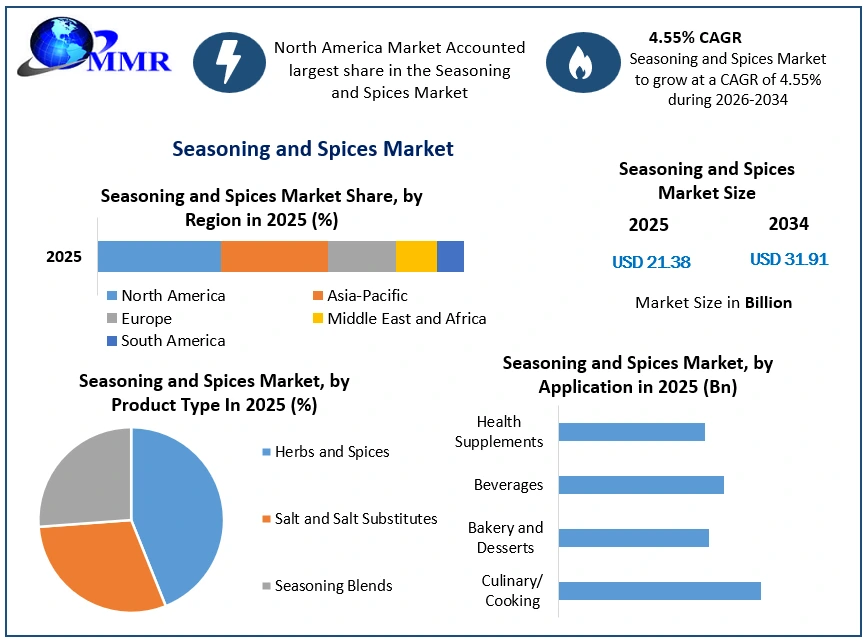
To know about the Research Methodology :- Request Free Sample Report
Seasoning and Spices Market Dynamics
Increasing Demand for seasoning and Spices Market to boost the Seasoning and Spices Market growth
Spice brands and manufacturers are instrumental in shaping the seasoning and spices market. Their commitment to quality, innovation, and the development of unique spice blends and formulations has a significant impact on the industry. These entities often source, process, and package spices, ensuring that they reach consumers in their purest form. The reputation and reliability of well-established spice brands and manufacturers contribute to consumer trust and loyalty, which is expected to boost the Seasoning and spices market growth.
Innovations in spice packaging solutions play a pivotal role in enhancing the market. Effective packaging solutions not only preserve the freshness and quality of spices but also offer convenience and visual appeal. The packaging of spices often includes airtight seals, resealable pouches, and clear labels that allow consumers to see the product's quality and quantity. Attractive and functional packaging encourages consumers to explore different spices and experiment with new flavors in their culinary endeavors. The COVID-19 pandemic led to a significant increase in home cooking and culinary adventures. People who previously relied on dining out turned to their kitchens to create restaurant-quality meals. This surge in home cooking has driven the demand for herbs and spices, both fresh and dried, as consumers seek to elevate their home-cooked dishes and replicate the flavors they love.
The globalization of food culture and cross-cultural influences have spurred a growing appreciation for diverse spices and flavor profiles. The fusion of different cuisines and culinary traditions has created a demand for an array of herbs and spices that were previously less known in certain regions. This has broadened the horizons of the spice market and fuelled its Seasoning and Spices Market growth. The rise of specialized spice blends has captivated culinary enthusiasts and home cooks alike. Spice brands and manufacturers are creating unique and innovative spice blends that cater to specific flavor profiles or culinary themes.
These blends simplify the cooking process for consumers, providing them with a ready-made combination of spices that harmonize well together. As a result, consumers can effortlessly create complex and flavorful dishes. Sustainability and ethical sourcing practices are increasingly becoming essential in the spice market. Consumers are more conscious of the environmental and social impact of their food choices. As a result, they seek spices that are sustainably sourced and support fair trade practices. Spice brands and manufacturers that prioritize sustainability and ethical sourcing are likely to gain a competitive edge.
Supply Chain Complexities to restraint the Seasoning and Spices Market growth
One of the significant restraints in the seasoning and spices market is the intricacy of the supply chain. The timing of spice harvest is crucial as spices are harvested at specific stages of maturity to ensure the best flavor and aroma. This requires careful planning to align the harvest with the market demand. Harvesting too early or too late can result in lower quality and undesirable flavors. The seasonality of spice cultivation leads to fluctuations in supply and demand.
Certain spices have limited growing seasons, and the mismatch between supply and demand can result in price volatility and potential shortages. Additionally, climatic factors such as droughts or floods can impact spice yields. Spice supply chains can be vulnerable to global events and disruptions. Natural disasters, political instability, and, as witnessed in recent times, the global COVID-19 pandemic, can disrupt the flow of spices from producers to consumers. These disruptions can lead to supply shortages and increase the prices of spices.
Price volatility is a significant restraint in the seasoning and spices market, affecting both suppliers and consumers. The prices of spices, particularly those subject to weather-related risks, can be highly variable. Weather events such as droughts, floods, and pest outbreaks can significantly impact spice yields and lead to shortages, driving up prices. Market speculation and geopolitical events in spice-producing regions can also cause fluctuations in prices. This volatility can make it challenging for spice brands and manufacturers to maintain price stability and predict cost trends, potentially affecting profit margins and pricing strategies.
The evolving preferences of consumers pose a restraint on the seasoning and spices market. As consumer awareness grows, there is an increasing demand for transparency, authenticity, and clean labeling in spice products. The need for continuous monitoring and adherence to evolving regulatory changes can be burdensome for businesses, particularly smaller spice producers who may have limited resources for compliance. Navigating the regulatory landscape can be a significant restraint for businesses in the seasoning and spices market. Different regions and countries have their own regulations and standards regarding the import, export, labeling, and safety of spice products.
Seasoning and Spices Market Regional Insight
Diversification in the spices industry to boost the North America Seasoning and Spices Market growth
The North America Seasoning and Spices Market is a dynamic and ever-evolving industry influenced by a multitude of factors that contribute to its growth and diversification. The innovation in spice packaging solutions is another significant driver of the North America Seasoning and Spices Market. Attractive and functional packaging encourages consumers to explore different spices and experiment with new flavors in their culinary endeavors. These packaging innovations are pivotal in enhancing the consumer experience and promoting the use of spices in everyday cooking.
The rising demand for organic products is a significant driver of the North America Seasoning and Spices Market. Consumers are increasingly seeking organic spices, which are grown without synthetic pesticides or fertilizers and follow sustainable agricultural practices. Organic spices are perceived as more natural, environmentally friendly, and healthier. This shift in consumer preferences aligns with the broader trend of embracing organic and sustainable food choices. As a result, the organic spices market has been expanding in North America, with more farmers and spice producers transitioning to organic practices to meet this growing demand.
The Northeastern states favor herbs like thyme and rosemary for their seafood dishes. The availability and appreciation of regional spice varieties create a vibrant and dynamic market, catering to the diverse tastes of consumers across the continent. The North America Seasoning and Spices Market benefits from the trend of culinary exploration and increased home cooking. The COVID-19 pandemic has accelerated the shift toward home cooking, with more individuals experimenting with new recipes and flavors in their own kitchens. As people seek to replicate the diverse tastes they enjoy at restaurants and explore global cuisines, the demand for a variety of spices has grown.
The internet and social media platforms provide a wealth of information and inspiration, encouraging consumers to try new spices and seasonings in their culinary endeavors. Health and wellness trends are a significant driver for increasing North America Seasoning and Spices Market share. As individuals become more health-conscious, they seek ways to enhance the nutritional value of their meals without compromising on taste. Spices, with their potential health benefits, have become a natural choice to add flavor while maintaining a healthful lifestyle. Spices are increasingly viewed as a way to make dishes both delicious and nutritious, aligning with the broader consumer focus on holistic well-being. Spice brands and manufacturers are continually introducing innovative product offerings to captivate consumers.
These include unique spice blends, seasoning mixes, and ready-to-use sauces and condiments that simplify cooking and inspire culinary creativity. Consumers appreciate the convenience of these products, which enhance the flavor of their meals effortlessly. The introduction of new and exciting spice blends often leads to an increase in consumer experimentation and adoption of different spices.
Seasoning and Spices Market Recent Industry Development
| Date | Company | Development | Impact |
|---|---|---|---|
| 09 December 2025 | McCormick & Company, Inc. | The company launched its annual 2026 Flavor Forecast and officially introduced Black Currant as the Flavor of the Year to shape global retail and foodservice culinary portfolios. | The launch guides upcoming consumer product innovation toward complex profiles that bridge sweet, tart, and savory applications. |
| 14 January 2026 | Kerry Group plc | The group released its 2026 Global Taste Charts powered by its proprietary end-to-end digital platform KerryNow. | The digital platform streamlines product development by tracking flavor cross-pollination trends, including a 120% surge in Gochujang and Bulgogi formulations for savory snacks, sauces, and meals. |
| 23 March 2026 | Sensient Technologies Corporation | The company officially broke ground on a massive 29,000-square-foot facility expansion at its main processing headquarters in St. Louis, Missouri. | This facility upgrade forms part of a multi-continental $250 million investment network designed to ramp up processing capacity for botanical raw materials and natural clean-label formulations. |
| 31 March 2026 | McCormick & Company, Inc. / Unilever PLC | The companies entered into a definitive agreement to combine McCormick with Unilever's global Foods business (excluding India) in a transaction valuing Unilever Foods at an enterprise value of approximately $44.8 billion. | The combination creates a scaled, global flavor powerhouse holding iconic herbs, spices, and seasonings portfolios with pro forma revenues of $20 billion based on fiscal year 2025 performance. |
| 01 July 2026 | Solina USA | The savory flavor manufacturer completed the strategic acquisition of Epicurean Butter, a developer of flavored compound culinary butters. | The deal directly accelerates Solina's capability to offer ready-to-use, herb-and-spice-infused flavor solutions across commercial foodservice and retail segments. |
Seasoning and Spices Market Segment Analysis
Based on Product Type, the market is segmented into Herbs, Spices, Salt and Salt Substitutes, and Seasoning Blends. Herbs and Spices segment dominated the market in 2025 and is expected to hold the largest Seasoning and Spices Market share over the forecast period. The herbs and spices segment in the Seasoning and Spices Market is a fundamental and diverse category, encompassing a wide range of flavorful ingredients that are integral to culinary traditions worldwide. This segment plays a pivotal role in enhancing the taste, aroma, and overall appeal of various dishes.
The herbs and spices market can be further dissected into subcategories, such as fresh market spices and dried spices, each with its unique characteristics and contributions. The segment is influenced by numerous spice brands and manufacturers who work tirelessly to provide high-quality and flavorful products to consumers, which is expected to boost the Seasoning and Spices Market growth. The fresh market spices segment caters to consumers who prioritize authenticity and are willing to incorporate a touch of nature's bounty into their dishes. However, it is essential to note that fresh market spices have a shorter shelf life compared to dried spices and often need to be used promptly to capture their full potential.
The herbs and spices segment is heavily influenced by the presence of numerous spice brands and manufacturers. These entities play a critical role in curating, processing, packaging, and distributing herbs and spices to consumers. Their commitment to quality, sourcing practices, and flavor consistency is essential in maintaining the integrity of the herbs and spices market. The competition among spice brands and manufacturers drives innovation and quality improvements within the segment. They are continually seeking ways to meet the evolving preferences and tastes of consumers, whether it's through sustainable sourcing, eco-friendly packaging, or the introduction of new and exciting spice blends.
Based on Application, the market is segmented into Culinary/ Cooking, Bakery and Desserts, Beverages, and Health Supplements. Culinary/ cooking is expected to hold the largest Seasoning and Spices Market share over the forecast period. Culinary and cooking applications have the broadest consumer base, including home cooks, professional chefs, and foodservice establishments. Most households regularly use spices and seasonings to enhance the flavor of their meals. Spices play a fundamental role in various global cuisines, and the culinary segment caters to a wide range of cooking styles and flavor preferences.
Whether it's Indian curries, Mexican salsas, or Italian pasta sauces, spices are integral to these culinary traditions. Culinary spices are used in daily meal preparation, making them an essential part of the kitchen. This consistent use ensures a steady and high demand for spices and seasonings. Home cooks are increasingly open to experimenting with different spices and flavor combinations, driven by culinary curiosity and access to global recipes through the internet. This encourages the exploration of new spice varieties, which is expected to boost the Seasoning and Spices industry growth.
Based on End-user, the market is segmented into Home Consumers, Food Manufacturers, Foodservice Industry, and Health & Wellness Industry. Home Consumer dominated the market in 2025 and is expected to hold the largest Seasoning and Spices Market share over the forecast period. Home consumers represent the largest consumer base for seasoning and spices. The general population, including households and individuals, is the primary target for spice companies. The sheer number of home consumers significantly contributes to the dominance of this segment.
Spices are an integral part of daily cooking for most households. They are used in a wide range of culinary preparations, from everyday meals to special occasions. This frequent and consistent use by home consumers ensures a steady demand for spices drives the Seasoning and Spices Market. Home cooks and food enthusiasts are increasingly exploring different cuisines and flavors in their home kitchens. The desire to experiment with diverse spice blends and seasonings drives the demand for a variety of spices. Home consumers often prefer to use spices that align with their regional and cultural culinary traditions. This diversity in preferences further drives the demand for a wide range of spices.
Seasoning and Spices Market Competitive Landscape
The competitive landscape of the seasoning and spices market is characterized by intense rivalry among various players striving for market share and consumer loyalty. Market dynamics, including consumer preferences, product innovations, and global trade, play a significant role in shaping the competitive environment. Competing Seasoning and Spices companies offer a wide array of seasoning and spice products, including herbs, spices, seasoning blends, and specialty spice varieties. These products cater to different culinary traditions and preferences. Continuous product innovation is a focal point of competition.
Companies introduce new spice blends, unique flavors, and packaging innovations to attract and retain consumers. The quality and sourcing of spices are critical for competing in the market. Companies often emphasize the use of high-quality, sustainably sourced, and organic spices to meet consumer demands. Strong branding and marketing strategies are employed to differentiate products. Companies invest in marketing campaigns, digital presence, and advertising to create brand recognition and consumer trust. Seasoning and Spices manufacturers often seek certifications, such as organic, non-GMO, fair trade, and gluten-free, to meet specific consumer preferences and distinguish their products.
Seasoning and Spices Market Scope: Inquire before buying
| Global Seasoning and Spices Market | |||
|---|---|---|---|
| Report Coverage | Details | ||
| Base Year: | 2025 | Forecast Period: | 2026-2034 |
| Historical Data: | 2020 to 2025 | Market Size in 2025: | US $ 21.38 Bn. |
| Forecast Period 2026 to 2034 CAGR: | 4.55% | Market Size in 2034: | US $ 31.91 Bn. |
| Segments Covered: | by Product Type | Herbs and Spices Salt and Salt Substitutes Seasoning Blends |
|
| by Application | Culinary/ Cooking Bakery and Desserts Beverages Health Supplements |
||
| by End-Use | Home Consumers Food Manufacturers Foodservice Industry Health and Wellness Industry |
||
| by Distribution Channel | Foodservice Retail |
||
Seasoning and Spices Market, by Region
North America (United States, Canada and Mexico)
Europe (UK, France, Germany, Italy, Spain, Sweden, Austria and Rest of Europe)
Asia Pacific (China, South Korea, Japan, India, Australia, Indonesia, Malaysia, Vietnam, Taiwan, Bangladesh, Pakistan and Rest of APAC)
Middle East and Africa (South Africa, GCC, Egypt, Nigeria and Rest of ME&A)
South America (Brazil, Argentina Rest of South America)
Key Players are:
1. Mc Cormick & Company Inc
2. The Kraft Heinz Company
3. Olam International
4. Unilever
5. Ajinomoto Co., Inc.
6. Everest Spices
7. Olam International
8. Döhler GmbH
9. Associated British Foods Plc (ABF)
10. Knorr (Nestlé)
11. Badia Spices, Inc.
12. Frontier Co-op
13. ARIAKE JAPAN CO., LTD.
14. Synthite Industries Ltd.
15. Simply Organic
16. The Watkins Co.
17. British Pepper & Spice Co.
18. Baria Pepper
19. Charoen Pokphand Foods Public Company Limited
20. Royal Spices
21. Karimix
FAQs:
1. What is the significance of seasoning and spices in culinary traditions?
Ans: Seasoning and spices are fundamental elements that transform bland and ordinary dishes into flavorful, aromatic, and enticing culinary experiences. They have a rich history and were highly prized in ancient times.
2. How have culinary traditions influenced the Seasoning and Spices Market growth?
Ans: Many cuisines have developed unique seasoning blends or spice mixes, such as curry powder, za'atar, and chili powder, to create complex flavors. This diversity significantly contributes to the market's growth.
3. What role do spice brands and manufacturers play in the seasoning and spices market?
Ans: Spice brands and manufacturers are instrumental in shaping the market. They source, process, and package spices, ensuring quality and purity, which builds consumer trust and contributes to market growth.
4. How have innovations in spice packaging solutions impacted the market?
Ans: Innovative packaging solutions preserve freshness and quality, offer convenience, and enhance visual appeal. Airtight seals, resealable pouches, and clear labels encourage consumers to explore different spices, promoting market growth.
5. How has the demand for home cooking affected the seasoning and spices market?
Ans: The surge in home cooking, accelerated by the COVID-19 pandemic, has driven the demand for herbs and spices. Consumers seek to elevate their home-cooked dishes, replicate restaurant-quality flavors, and experiment with new spices.