
Optical Communication and Networking Market – Industry Structure Evaluation, Demand Drivers Analysis, Regional Growth Analysis and Identification, Competitive Positioning Review & Global Market Size Forecast to 2032
Overview
The Optical Communication and Networking Market size was valued at USD 28.61 Billion in 2024 and the total Optical Communication and Networking revenue is expected to grow at a CAGR of 8.7% from 2025 to 2032, reaching nearly USD 55.77 Billion.
Optical Communication and Networking Market Overview:
Optical Communication and Networking Market is expected to reach US$ 47.20 Bn. by . Optical networking is a form of communication that employs light-based signals to send data via a variety of telecommunications networks. This report focuses on the different segments of the Optical Communication and Networking market (Component, Technology, Application, Data Rate, Vertical, and Region). This report offers a detailed analysis of the top industry participants and geographic regions (North America, Asia Pacific, Europe, Middle East & Africa, and South America). It offers a thorough examination of the phenomenal modern-era growth in the many sectors. Figures, graphics, and slideshows emphasise the essential data analysis from 2019 to 2024. The market drivers, restraints, opportunities, and challenges for Optical Communication and Networking are examined in this report. The MMR report's investment suggestions are based on a thorough examination of the current competitive environment in the Optical Communication and Networking market. To know about the Research Methodology :- Request Free Sample Report
Optical Communication and Networking Market Dynamics:
Increased need for small, energy-saving transceivers
For various applications in the metro network, data centre connectivity, long haul applications, and other areas that call for optical transceivers to be compatible with the complicated network, optical transceiver manufacturers are focusing more on R&D. From OEMs like Fujitsu Optical Components and Broadcom, small and energy-efficient optical transceivers are readily available. Small and compact optical modules are expected to have increased market growth as a result of this trend because of their high level of data communication at a faster rate. These factors offer the industry for optical communication and networking equipment significant growth potential for optical transceivers.
Network complexity has increased
The use of connectivity ICs is enhancing as a result of the availability of numerous protocols and platforms as well as consistent specifications for compact networks. The Internet of Things (IoT) devices, which are used in optical communication networks, are an example of a product based on emerging technology in which both hardware and software play a crucial role. The network is made more complex by the use of ICs and IoT devices. Likewise, drop modules, variable optical attenuators, and tap power monitors must be fixed in a single small unit for network monitoring and control.
The network has become more sophisticated as a result of the accelerating connectivity speed and rising number of high-bandwidth connections through fixed and wireless networks. In order to facilitate interoperability and free up space inside the network, all of these factors are driving the demand for increasingly compact form factors. The current network architecture is disjointed and prioritizes joint consumer-centric approaches above domain-specific growth. To reduce network complexity, which restrains the growth of the market for optical communication and networking equipment, businesses need to take a more inventive and network-oriented approach.
Development of telecom infrastructure in emerging markets
The growth of the telecommunications infrastructure will be very advantageous for developing countries. There is a rising need for smart devices and other related applications as a result of IoT, AI, and Big Data. The capture, translation, and transmission of data into useful information—which is essential for the reinforcement of urban infrastructure—is made possible by the integrated technologies across telecommunications industries. A high-speed fiber optics network that can quickly and efficiently transfer vast volumes of data between two points serves as the foundation for this kind of infrastructure development. High-bandwidth oriented fiber optical cables combined with optical transceivers are necessary for the deployment of the 5G and 6G networks to ensure secure and dependable data transfers. Thus, the growth of optical communication infrastructure across developing countries is expected to be the key factor driving the optical communication and networking market during the forecast period.
Optical Communication and Networking Market Segment Analysis:
The Optical Communication and Networking Market is segmented by Component, Technology, Application, Data Rate, and Vertical.
Based on the Component, the market is segmented into Optical Fibers, Optical Transceivers, Optical Amplifiers, Optical Switches, Optical Splitters, Optical Circulators, and Others. Optical Transceivers segment is expected to hold the largest market share of xx% by 2032. The adoption of technical innovations like AI, machine learning, and 5G communication, which cause a surge in data traffic and a resulting demand for large-scale data centres, are primarily responsible for this growth. The need for data centres is rising as more people use the internet on smartphones and other connected devices and as cloud computing becomes a common method of IT deployment. These factors are expected to boost the optical transceiver segment growth during the forecast period.
Optical Fibers segment is expected to grow rapidly at a CAGR of xx% during the forecast period 2025-2032. Fiber optic cables are utilized as sensors to measure and keep an eye on a wide range of variables, as well as for lighting and imaging. Additionally, fibre optic cables are utilized in testing, development, and research. Imaging in difficult-to-reach regions, EMI-affected wiring, temperature, pressure, and other measuring sensors, as well as automotive and industrial wiring, all make use of optical fibre.
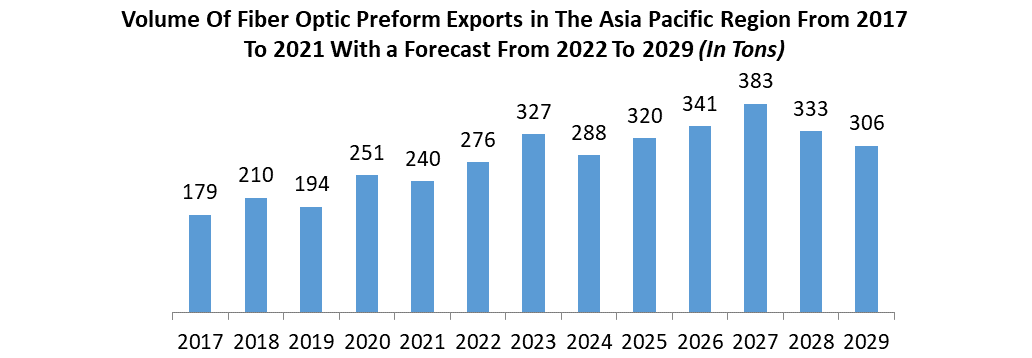
Based on the Application, the market is segmented into TELECOM, Data Center, and Enterprise. TELECOM segment is expected to grow rapidly at a CAGR of xx% during the forecast period 2025-2032. The telecommunications industry makes extensive use of optical communication and networking. The continued requirement from the telecom sectors for huge amounts of data transmission, high bandwidth, speedy transmission, and other requirements is one of the main factors driving growth in the market for optical communication and networking in the telecommunications industry. These expectations encourage market participants in optical networking to develop new products so they can offer extra benefits like reduced start up and operating expenses. Optical Communication & Networking improves manageability, scalability, and efficiency while making service provisioning easier and supporting a variety of new, high-bandwidth applications. These are the key factors that are expected to drive the growth of the Telecom segment in the Optical Communication and Networking Market during the forecast period.
Based on the Technology, the market is segmented into SONET/SDH, WDM, CWDM, DWDM, and Fiber Channel. SONET/SDH Technology segment is expected to grow rapidly at a CAGR of xx% during the forecast period 2025-2032. The Synchronous Optical Network (SONET) standard governs the synchronous transfer of data through optical fibres. SONET is, in other words, a digital communication protocol that is standardised. A fibre optic line can be used for SONET to multiplex and transmit several data streams. For massive telecom networks, SONET offers the finest performance, most data-efficient architecture, and widest adoption. Global communication networks now have it as their foundation. The data rate at which SONET operates is very high.
Optical Communication and Networking Market Regional Insights:
North American region is expected to dominate the Optical Communication and Networking Market during the forecast period 2025-2032. The North American region is expected to hold the largest market share of xx% by 2032. The Americas have become a key region for data centres and cloud computing. The market for optical communication and networking equipment is its major consumer. The increased use of cutting-edge optical technologies, such quantum optics, in the region's industries, businesses, and airlines can also be credited with the market growth. The US has a large number of significant market participants and substantial defence spending, which are additional key factors for the market growth in the region.
Asia Pacific region is expected to grow rapidly at a CAGR of xx% during the forecast period 2025-2032. With 1.16 billion subscribers, India is the second-largest telecommunications market in the world and has had rapid growth over the past ten years, according to the Indian Brand Equity Foundation (IBEF). The need for fibre optic cables in the region is increasing as a result of meeting user expectations such a high adoption rate for wireless connectivity and developments in the IoT (Internet of Things) space. Additionally, the availability of major market companies who provide optical fibres, electric fibre cables, and other optical network components, such Fujikura Ltd. and Furukawa Electric Co. Ltd., boosts the market growth of optical networking and communication.
The objective of the report is to present a comprehensive analysis of the Global Optical Communication and Networking Market to the stakeholders in the industry. The past and current status of the industry with the forecasted market size and trends are presented in the report with the analysis of complicated data in simple language. The report covers all the aspects of the industry with a dedicated study of key players that include market leaders, followers, and new entrants.
PORTER, PESTEL analysis with the potential impact of micro-economic factors of the market has been presented in the report. External as well as internal factors that are supposed to affect the business positively or negatively have been analyzed, which will give a clear futuristic view of the industry to the decision-makers.
The reports also help in understanding the Global Optical Communication and Networking Market dynamic and structure by analyzing the market segments and projecting the Global Optical Communication and Networking Market size. Clear representation of competitive analysis of key players by Distribution Channel, price, financial position, product portfolio, growth strategies, and regional presence in the Optical Communication and Networking Market make the report investor’s guide.
Optical Communication and Networking Market Scope: Inquire before buying
| Optical Communication and Networking Market | |||
|---|---|---|---|
| Report Coverage | Details | ||
| Base Year: | 2024 | Forecast Period: | 2025-2032 |
| Historical Data: | 2019 to 2024 | Market Size in 2024: | USD 28.61 Bn. |
| Forecast Period 2025 to 2032 CAGR: | 8.7% | Market Size in 2032: | USD 55.77 Bn. |
| Segments Covered: | by Component | Optical Fibers Optical Transceivers Optical Amplifiers Optical Switches Optical Splitters Optical Circulators Others |
|
| by Technology | SONET/SDH WDM CWDM DWDM Fiber Channel |
||
| by Application | TELECOM Data Center Enterprise |
||
| by Data Rate | Up To 40 GBPS Greater Than 40 Gbps To 100 Gbps Greater Than 100 Gbps |
||
| by Vertical | BFSI Government Healthcare Cloud Energy & Utilities Others |
||
Optical Communication and Networking Market, by Region
North America (United States, Canada and Mexico)
Europe (UK, France, Germany, Italy, Spain, Sweden, Austria and Rest of Europe)
Asia Pacific (China, South Korea, Japan, India, Australia, Indonesia, Malaysia, Vietnam, Taiwan, Bangladesh, Pakistan and Rest of APAC)
Middle East and Africa (South Africa, GCC, Egypt, Nigeria and Rest of ME&A)
South America (Brazil, Argentina Rest of South America)
Optical Communication and Networking Market, Key Players
This report provides an in-depth analysis of the competitive landscape of the optical communication and networking companies, driven by the rising demand for high-speed internet, cloud services, and data centers. It offers insights into major players like Cisco Systems, Huawei Technologies, and Juniper Networks, highlighting their technological innovations, strategic initiatives, and market positioning. The analysis covers product advancements, mergers and acquisitions, and recent developments, emphasizing how these companies are enhancing data transmission speeds, network efficiency, and scalability to meet the needs of sectors such as telecom, data centers, and enterprises.
1. Ciena
2. ADVA Optical Networking
3. Ericsson
4. Corning
5. Oclaro
6. Mitsubishi Electric
7. Huawei
8. Cisco
9. Sumitomo
10. Nokia
11. Amazon
12. Apple
13. Microsoft
14. Google
15. Facebook
16. Infinera
17. NEC
18. Calix
19. ADTRAN
20. ZTE
Frequently Asked Questions:
1] Which region is expected to hold the highest share in the Optical Communication and Networking Market?
Ans. The North American region is expected to hold the highest share in the Optical Communication and Networking Market.
2] Who are the top key players in the Optical Communication and Networking Market?
Ans. Ciena, ADVA Optical Networking, Ericsson, Corning, Oclaro, and Mitsubishi Electric are the top key players in the Optical Communication and Networking Market.
3] Which segment is expected to hold the largest market share in the Optical Communication and Networking Market by 2032?
Ans. Optical Transceivers segment is expected to hold the largest market share in the Optical Communication and Networking Market by 2032.
4] What is the market size of the Optical Communication and Networking Market by 2032?
Ans. The market size of the Optical Communication and Networking Market is expected to reach USD 55.77 Bn. by 2032.
5] What was the Global Optical Communication and Networking Market size in 2024?
Ans: The Global Optical Communication and Networking Market size was USD 28.61 Billion in 2024.