
Nuclear Medicine/Radiopharmaceuticals Market - Industry Structure Evaluation, Demand Drivers Analysis, Regional Growth Analysis and Identification, Competitive Positioning Review & Global Market Size Forecast to 2032
Overview
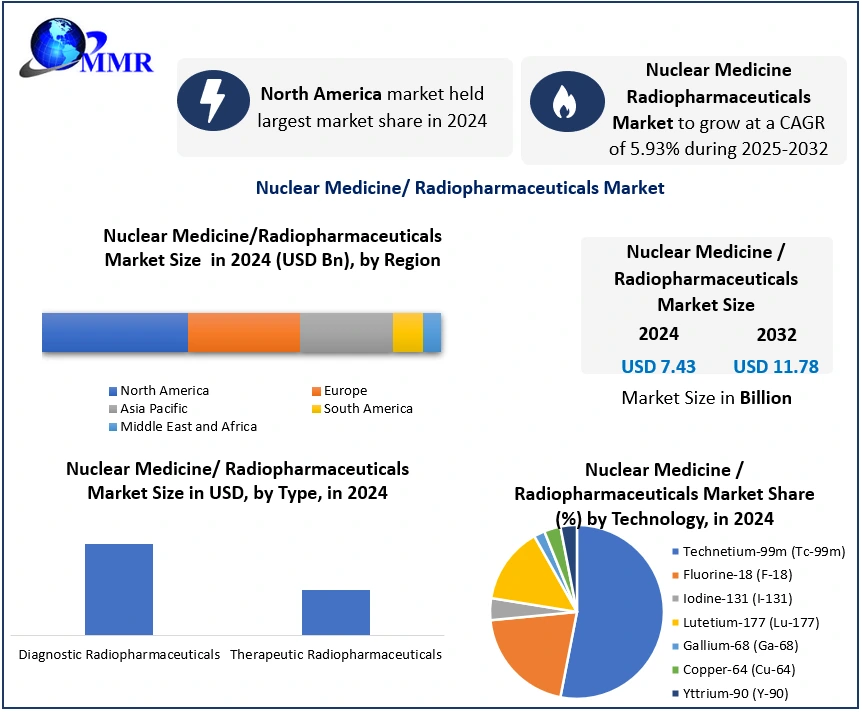
Global Nuclear Medicine/Radiopharmaceuticals Market size was valued at USD 7.43 Billion in 2024 and is expected to grow at a CAGR of 5.93% from 2025 to 2032, reaching nearly USD 11.78 Billion in 2032
Global Nuclear Medicine/Radiopharmaceuticals Market Overview:
Nuclear Medicine Radiopharmaceuticals are radioactive compounds used for diagnostic imaging (PET, SPECT) and targeted therapy. They consist of a radioisotope (e.g., Tc-99m, F-18, Lu-177) bound to a biological molecule, enabling disease detection at molecular levels or precise radiation delivery to tumors. Key applications include oncology, cardiology, and neurology, driving advancements in personalized medicine. Demand for nuclear medicine radiopharmaceuticals is rising due to increasing cancer prevalence, aging populations, and adoption of theranostics. Supply faces challenges from short isotope half-lives, reactor dependency, and complex logistics. The cyclotron and generator-based production are expanding, demand growth outpaces supply, creating regional shortages—especially for Lu-177 and Ac-225 therapies.
 To know about the Research Methodology :- Request Free Sample Report
North America leads the Nuclear Medicine/Radiopharmaceuticals market, driven by advanced healthcare infrastructure, widespread adoption of theranostics, and high investment in medical technology. The region benefits from a robust network of hospitals, diagnostic centers, and research institutes, which accelerates the integration of innovative radiopharmaceuticals and imaging technologies. Europe holds the second position, supported by strong research and development capabilities, well-established regulatory frameworks, and growing collaborations between academic institutions and industry players. This environment fosters the development of novel radiopharmaceuticals and advanced imaging solutions. Asia-Pacific is the fastest-growing region, fueled by rapid healthcare expansion, increasing awareness of nuclear medicine, rising prevalence of chronic diseases, and government initiatives promoting advanced diagnostics. Emerging markets in China, India, and Japan are witnessing substantial investments in nuclear imaging infrastructure.
Nuclear Medicine/Radiopharmaceuticals Market Recent Trend
1. Theranostics Boom
• Combining diagnostics + therapy (e.g., Ga-68 for imaging + Lu-177 for treatment).
• FDA approvals: Pluvicto (Lu-177 PSMA) for prostate cancer, Lutathera for neuroendocrine tumors.
• New targets: FAP inhibitors for pan-cancer applications.
2. Shift to Alpha Emitters
• Ac-225, Ra-223, Pb-212 gaining traction for precision therapy.
• Higher efficacy but supply chain challenges (limited Ac-225 production).
Nuclear Medicine/Radiopharmaceuticals Market Dynamics:
Rising Demand for Precision Cancer Theranostics to Drive the Nuclear Medicine/Radiopharmaceuticals Market
The nuclear medicine/radiopharmaceuticals market is experiencing significant growth, driven by the rising demand for precision cancer theranostics. Theranostics, which combines therapy and diagnostics, is revolutionizing oncology by enabling targeted diagnosis and personalized treatment, improving patient outcomes while minimizing side effects. The increasing incidence of cancer globally, coupled with advancements in molecular imaging and targeted radiotherapy, is accelerating the adoption of radiopharmaceuticals in clinical settings.
Precision cancer theranostics uses radioisotopes to detect and treat malignancies with high specificity. This approach facilitates early detection of tumors, accurate staging, and real-time monitoring of treatment efficacy. For example, the use of positron emission tomography (PET) tracers such as fluorodeoxyglucose (FDG) and novel theranostic agents like Lutetium-177 and Gallium-68 have gained widespread clinical acceptance. These agents are particularly effective in treating cancers like prostate, thyroid, and neuroendocrine tumors, where conventional therapies often show limited effectiveness. The growth of the Nuclear Medicine/Radiopharmaceuticals market is propelled by technological advancements in imaging modalities, expanding clinical research, and supportive government initiatives to enhance nuclear medicine infrastructure. Additionally, collaborations between pharmaceutical companies and research institutions are leading to the development of innovative radiopharmaceuticals with better safety and efficacy profiles.
Short Half-Life & Supply Chain Challenges Hampered the Nuclear Medicine/Radiopharmaceuticals Market Growth
The radiopharmaceutical market faces significant challenges due to the inherently short half-life of many key isotopes, which directly impacts production, logistics, and distribution. For instance, Fluorine-18 (F-18) has a half-life of only 110 minutes, while Gallium-68 (Ga-68) lasts just 68 minutes. Such brief stability periods necessitate rapid synthesis, quality control, and delivery to hospitals or imaging centers, often within a few hours. This tight window limits geographic reach and requires sophisticated cold-chain logistics, increasing operational complexity and costs. Many radiopharmaceuticals depend on specialized production facilities such as nuclear reactors or cyclotrons, which are expensive to build and maintain. Limited availability of these facilities contributes to frequent supply shortages, as observed with isotopes like Actinium-225 (Ac-225) used in targeted therapies. Any disruption due to maintenance, regulatory delays, or geopolitical issues can create bottlenecks, affecting patient access and treatment schedules. Regulatory compliance complicates the supply chain. Radiopharmaceuticals are subject to stringent rules from authorities such as the FDA, EMA, and local nuclear regulatory bodies, encompassing production, transportation, and administration. These regulations ensure safety but also lengthen approval processes and add administrative burdens. High production and distribution costs, coupled with the need for highly trained personnel, further constrain market expansion. Specialized handling, radiation safety measures, and waste management protocols add layers of complexity and expense. Smaller markets or remote regions often struggle to gain access, limiting the global reach of Nuclear Medicine/Radiopharmaceuticals Market.
Rising Demand for Radiopharmaceuticals in Neurological and Cardiovascular Imaging in Nuclear Medicine/Radiopharmaceuticals Market
Traditionally, radiopharmaceuticals have been utilized in oncology for diagnostic imaging and targeted therapies. However, the increasing prevalence of neurological disorders, such as Alzheimer’s disease, Parkinson’s disease, and epilepsy, is driving demand for advanced imaging agents capable of early detection and monitoring of disease progression. Positron Emission Tomography (PET) and Single Photon Emission Computed Tomography (SPECT) tracers, such as Fluorine-18 (F-18) labeled compounds, are increasingly being employed to visualize amyloid plaques, tau proteins, and other biomarkers, enabling more accurate diagnosis and personalized treatment strategies. This trend is expected to fuel growth in Nuclear Medicine/Radiopharmaceuticals Market adoption within neurology.
The cardiovascular diseases, which remain the leading cause of mortality globally, offer substantial market potential. Radiopharmaceuticals such as Technetium-99m (Tc-99m) agents are widely used in myocardial perfusion imaging to assess blood flow and detect ischemic regions of the heart. Innovations in targeted tracers for detecting vulnerable plaques, assessing cardiac metabolism, and monitoring post-intervention outcomes are expanding the utility of radiopharmaceuticals beyond conventional imaging. These developments not only improve patient outcomes but also increase the clinical adoption of radiopharmaceutical diagnostics in cardiology. Moreover, the convergence of molecular imaging with artificial intelligence and precision medicine is enhancing the ability to quantify disease states, predict therapeutic responses, and optimize individualized treatment plans. The growing aging population and rising incidence of chronic neurological and cardiovascular disorders support this Nuclear Medicine/Radiopharmaceuticals Market Growth.
Nuclear Medicine/Radiopharmaceuticals Market Segment Analysis
Based on End-User
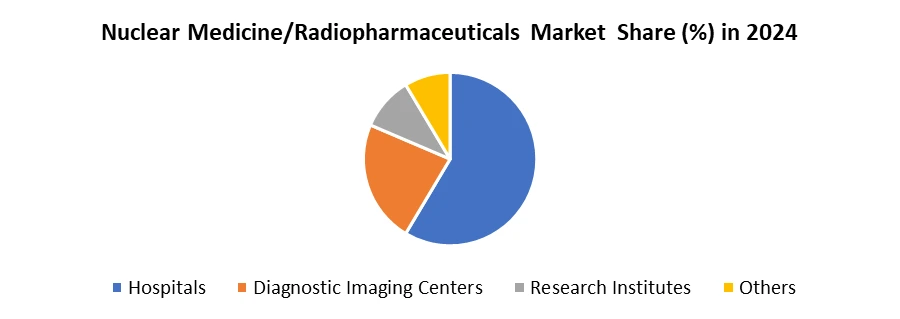
Nuclear Medicine/Radiopharmaceuticals Market is segmented into Hospitals, Diagnostic Imaging Centers, Research Institutes and Others. The hospitals segment dominated the Nuclear Medicine/Radiopharmaceuticals Market in 2024 and is expected to hold the largest market share over the forecast period. Their dominance stems from being primary care centers equipped with advanced imaging technologies (PET/CT, SPECT), in-house radiopharmacies, and the capability to administer both diagnostic and therapeutic radiopharmaceuticals. The rising prevalence of cancer and cardiovascular diseases drives hospital adoption, supported by established insurance coverage and government healthcare investments.
Nuclear Medicine/Radiopharmaceuticals Market Regional Insights
North America held the largest share of the global nuclear medicine/ radiopharmaceuticals market in 2024, driven by a combination of advanced healthcare infrastructure, technological adoption, and strong research and development capabilities. The region benefits from a well-established network of hospitals, diagnostic centers, and specialized laboratories, enabling rapid deployment and utilization of radiopharmaceuticals for both diagnostic and therapeutic purposes. The high prevalence of chronic diseases, particularly cancer, cardiovascular disorders, and neurological conditions, further fuels demand for advanced imaging agents and targeted therapies. Technetium-99m (Tc-99m) and Fluorine-18 (F-18) are widely used isotopes in the region, primarily for SPECT and PET imaging. Meanwhile, therapeutic isotopes like Lutetium-177 (Lu-177) and Yttrium-90 (Y-90) are gaining traction due to the rising adoption of targeted radionuclide therapies in oncology. The presence of leading pharmaceutical and biotechnology companies investing heavily in isotope production, innovative tracers, and personalized medicine strengthens North America’s market position. Moreover, supportive regulatory frameworks, reimbursement policies, and government initiatives for cancer treatment and advanced diagnostics facilitate Nuclear Medicine/Radiopharmaceuticals Market growth. Increasing collaborations between hospitals, research institutions, and radiopharmaceutical manufacturers further enhance access and innovation.
Nuclear Medicine/Radiopharmaceuticals Market Competitive Landscape
The global Nuclear Medicine/Radiopharmaceuticals Market is led by five key players driving innovation and market expansion. Novartis AG dominates through its advanced theranostics portfolio, including FDA-approved therapies like Pluvicto (Lu-177 PSMA) and Lutathera (Lu-177 DOTATATE). Siemens Healthineers follows with cutting-edge PET/CT imaging systems and radiopharmaceutical production solutions. Cardinal Health secures a strong position as a leading supplier of diagnostic and therapeutic isotopes, including Tc-99m generators. Curium Pharma specializes in nuclear medicine diagnostics, offering widely used agents like FDG and Ga-68 DOTATOC. Rounding out the top five, Lantheus Holdings focuses on precision diagnostics with products such as Pylarify (PSMA-PET) and Definity (ultrasound contrast). These companies compete through strategic acquisitions (e.g., Novartis-Endocyte), AI-integrated imaging, and expanded radiopharmaceutical pipelines, collectively shaping the future of cancer theranostics and diagnostic advancements.
Nuclear Medicine/Radiopharmaceuticals Market Recent Development
| Date | Company Name | Headquarter Country | Recent Development |
| 15-Mar-2024 | Novartis AG | Switzerland | FDA granted priority review for expanded use of Pluvicto (Lu-177 PSMA-I&T) in early-stage prostate cancer |
| 28-Feb-2024 | Lantheus Holdings | USA | Launched Pylarify AI analytics platform for automated PSMA-PET image interpretation |
| 10-Jan-2024 | Siemens Healthineers | Germany | Installed 50th PETtrace cyclotron system worldwide to boost radiopharmaceutical production |
| 05-Dec-2023 | Curium Pharma | France | Signed research collaboration with Mayo Clinic for novel Ga-68/Lu-177 theranostics |
| 22-Nov-2023 | Cardinal Health | USA | Opened new Tc-99m generator manufacturing facility in Missouri to address shortages |
Nuclear Medicine/Radiopharmaceuticals Market Scope: Inquire before buying
| Global Nuclear Medicine/Radiopharmaceuticals Market | |||
|---|---|---|---|
| Report Coverage | Details | ||
| Base Year: | 2024 | Forecast Period: | 2025-2032 |
| Historical Data: | 2019 to 2024 | Market Size in 2024: | USD 7.43 Bn. |
| Forecast Period 2025 to 2032 CAGR: | 5.93% | Market Size in 2032: | USD 11.78 Bn. |
| Segments Covered: | by Type | Diagnostic Radiopharmaceuticals Therapeutic Radiopharmaceuticals |
|
| by Isotope | Technetium-99m (Tc-99m) Fluorine-18 (F-18) Iodine-131 (I-131) Lutetium-177 (Lu-177) Gallium-68 (Ga-68) Others (Copper-64, Yttrium-90, etc.) |
||
| by Technology | Single Photon Emission Computed Tomography (SPECT) Positron Emission Tomography (PET) Hybrid Imaging |
||
| by Procedure | Diagnostic Procedures PET Imaging SPECT Imaging Therapeutic Procedures Targeted Alpha Therapy (TAT) Peptide Receptor Radionuclide Therapy (PRRT) Radioimmunotherapy |
||
| by Application | Oncology Cardiology Neurology Orthopedics Others |
||
| by End User | Hospitals Diagnostic Imaging Centers Research Institutes Others |
||
Nuclear Medicine/Radiopharmaceuticals Market, by Region
North America (United States, Canada and Mexico)
Europe (UK, France, Germany, Italy, Spain, Sweden, Austria and Rest of Europe)
Asia Pacific (China, South Korea, Japan, India, Australia, Indonesia, Malaysia, Vietnam, Taiwan, Bangladesh, Pakistan and Rest of APAC)
Middle East and Africa (South Africa, GCC, Egypt, Nigeria and Rest of ME&A)
South America (Brazil, Argentina Rest of South America)
Nuclear Medicine/Radiopharmaceuticals Market Key Players
North America Nuclear Medicine/Radiopharmaceuticals Market Key Players
1. Lantheus Holdings, Inc. (USA)
2. Cardinal Health (USA)
3. GE HealthCare (USA)
4. Curium Pharma (USA/France – Major NA presence)
5. Jubilant Radiopharma (USA)
6. NorthStar Medical Radioisotopes (USA)
Europe Nuclear Medicine/Radiopharmaceuticals Market Key Players
1. Novartis AG (Advanced Accelerator Applications - AAA) (Switzerland)
2. Siemens Healthineers (Germany)
3. Bayer AG (Germany)
4. Curium Pharma (France)
5. ITM Isotope Technologies Munich SE (Germany)
6. Eckert & Ziegler (Germany)
Asia Pacific Nuclear Medicine/Radiopharmaceuticals Market Key Players
1. China Isotope & Radiation Corporation (CIRC) (China)
2. Jubilant Pharma Limited (India/Singapore)
3. Dongcheng Pharmaceutical Group (China)
4. Sinotau Pharmaceutical Group (China)
Middle East and Africa Nuclear Medicine/Radiopharmaceuticals Market Key Players
1. Neptunium (South Africa)
2. NTP Radioisotopes (South Africa)
South America Nuclear Medicine/Radiopharmaceuticals Market Key Players
1. Instituto de Pesquisas Energéticas e Nucleares (IPEN) (Brazil)
2. Comisión Nacional de Energía Atómica (CNEA) (Argentina)
Frequently Asked Questions:
1. What is the growth rate of Nuclear Medicine/Radiopharmaceuticals Market?
Ans: The Global Nuclear Medicine/Radiopharmaceuticals Market is growing at a CAGR of 9 % during forecasting period 2025-2032.
2. What segments are covered in Nuclear Medicine/Radiopharmaceuticals market?
Ans: Global Nuclear Medicine/Radiopharmaceuticals Market is segmented into by Type, Isotope, Technology, Procedure, Applications, End User, and Region.
3. Who are the key players in Nuclear Medicine/Radiopharmaceuticals market?
Ans: Lantheus Holdings, Inc., Jubilant Radiopharma, Siemens Healthineers and China Isotope & Radiation Corporation are the top key players in the Nuclear Medicine/Radiopharmaceuticals market.
4. What is the study period of this market?
Ans: The Global Market is studied from 2024 to 2032.