
Industrial Boilers Market Size by Boiler Type, Fuel Type, Function, End-User, Boiler Horesepower, Region, Industry-Wide Analysis, Competitive Landscape Assessment & Long-Term Forecast to 2032
Overview
The Industrial Boilers Market size was valued at USD 16.24 Billion in 2024 and the total Industrial Boilers revenue is expected to grow at a CAGR of 3.35% from 2025 to 2032, reaching nearly USD 21.14 Billion.
Industrial boilers are advanced and specialized systems for effective heat generation and its transfer to a wide range of industrial processes. These machines are a robust framework for many industries in supplying thermal energy to a wide range of applications, such as energy creation and chemical production. Industrial boilers are meant to generate steam or hot water via the burning of approved fuel content. This heat energy is subsequently used in industrial processes, electricity generation, or heating. The industrial boilers market includes two major types of boilers based on their structural design, water tube boilers and fire tube boilers. The choice between water tube and fire tube boilers depends on factors such as pressure requirements, fuel type, and intended application. The applications included in the industrial boilers market cover a broad spectrum of industries, each relying on these systems for specific thermal requirements. In power generation, industrial boilers are used to produce steam to drive turbines, ultimately generating electricity. The efficiency and reliability of industrial boilers directly impact the overall performance of power plants and drive the industrial boilers market potential.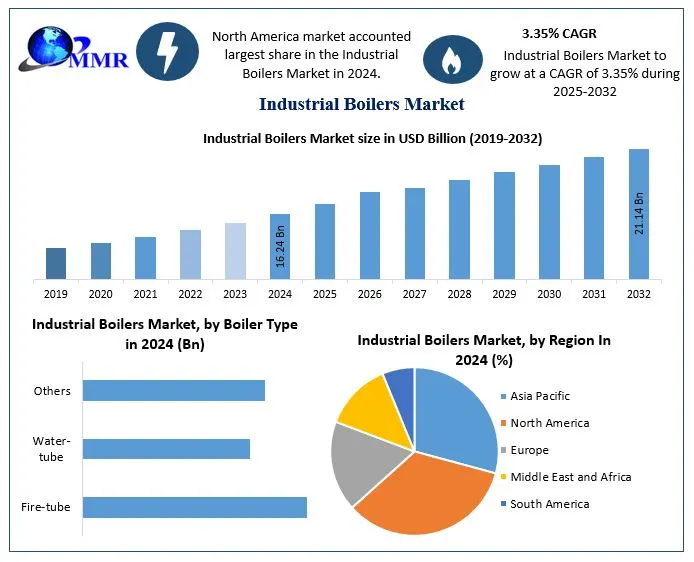 To know about the Research Methodology :- Request Free Sample Report
Further, the demand for industrial boilers market is notably high in various sectors, including oil refining, petrochemicals, and chemical manufacturing, where they are essential for precise temperature control and the generation of high-pressure steam. Additionally, the food and beverage industry heavily relies on industrial boilers to meet the demands of cooking, sterilization, and pasteurization processes. The pharmaceutical sector experiences a substantial demand for steam boilers, crucial for critical processes like drug manufacturing and sterilization, emphasizing the need for stringent hygiene and temperature control. Similarly, the textile and paper industries contribute to the industrial boilers market demand for industrial boilers, utilizing them for steam generation in their manufacturing processes. The environmental impact of industrial operations has become a major concern, prompting a shift towards cleaner and more sustainable energy sources. This transition is reflected in the adoption of alternative fuels for the industrial boilers market industry. Biomass boilers, for example, use organic materials like wood or agricultural residues as fuel, offering a renewable and carbon-neutral energy source. The integration of such alternative fuels aligns with global initiatives to reduce carbon emissions and promote environmentally friendly industrial practices. Thus, such initiatives drive the industrial boilers market growth.
Industrial Boilers Market Dynamics
Expansion of industrial boilers in end-use industries
The growth and diversification of end-use sectors, such as oil refining, petrochemicals, chemical manufacturing, food and beverage, pharmaceuticals, textiles, and paper, contribute to a sustained and robust demand for industrial boilers market. Industrial boilers are used in the oil refining and petrochemical industries where processes needing accurate temperature controls as well as steam pressures are performed. Due to increasing urbanization and industrialization, global demand for refined petroleum products has remained on the upward trend. For instance, the rapid development of emerging economies such as China and India results in increased demand for refined products turning their refineries into large-scale ones. However, with the increasing size of this infrastructure, there is a corresponding necessity for large and highly efficient industrial boilers to feed the steam and thermal energy requirements that go on increasing. As the chemical industry grows as a result of increased demand for various chemical products including specialty chemicals and petrochemicals, the industrial boilers market is expected to propel in providing the required thermal energy fueling reactions and separation processes.
The food and beverage industry is considered a significant segment that heavily depends on industrial boilers. The need to cook food, sterilize equipment, and pasteurize fluids makes boilers an important element in the food processing and safety field. With the increase in the world’s population, changing food habits, and a rise in demand for processed and packaged food products, the food and beverage industries have grown. With the growth of food processing factories to cater to this demand, the requirement for effective and trusted industrial boilers becomes important and drives the industrial boilers market growth. For instance, the rise of the packaged food industry in North America and Europe has seen rising investments in food processing facilities, which stimulates the need for industrial boilers in those regions. Boilers in food processing employ a range of fuels, including coal, fluidized beds, biomass, and gas/oil-fired options. This flexibility allows food processing facilities to choose the most suitable and cost-effective fuel source based on their specific requirements and energy considerations. The ability to adapt to different fuel sources enhances the efficiency and sustainability of the industrial boilers used in the food industry, aligning with the sector's growing emphasis on environmental responsibility.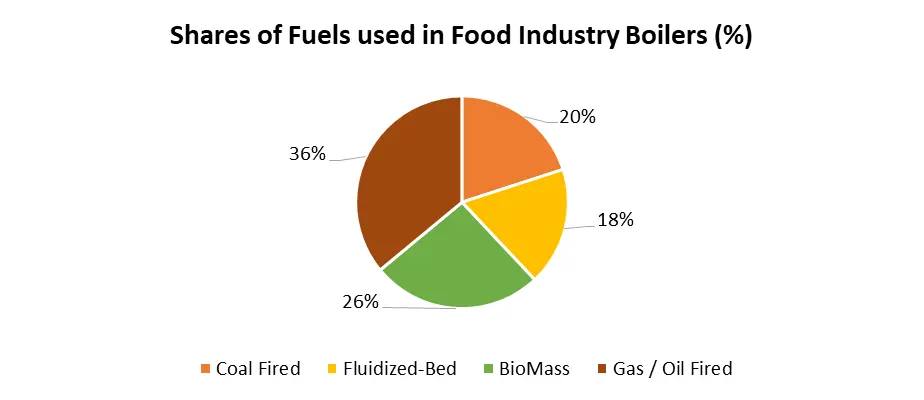 Further, tower industrial boilers have a wide application in the pharmaceutical industry and are key components in critical processes such as the manufacture of drugs and sterilization. The manufacturing of medicinal products needs high levels of hygiene and very specific temperature control which is provided by industrial boilers. As the production of pharmaceutical facilities is increased to supply adequate medicinal products, the demand for high-end, and functional industrial boilers market continues to grow. Similarly, the textile and paper industries need industrial boilers to derive steam during their manufacturing processes. Textile manufacturing is quite energy-intensive due to processes such as dyeing and finishing and requires a significant amount of thermal energy. Industrial boilers provide the heat needed by this industry. As disposable income and urbanization increase in emerging economies, the demand for textiles and apparel rises to help the textile industry proliferate production facilities. In the Middle East, the growth of oil and gas industries drives the expansion of refineries and petrochemical plants. Countries like Saudi Arabia and the United Arab Emirates are investing significantly in the development of downstream sectors, leading to an increased requirement for industrial boilers. The pharmaceutical industry in the Middle East is also expanding, supported by a rising population and increased healthcare spending, contributing to the demand for industrial boilers in the region.
Technological advancements in industrial boilers
Technological advancements in industrial boilers have emerged as a pivotal driver in the industrial boilers market, reshaping the landscape of this critical component of industrial processes. These advancements are propelled by the imperative to enhance efficiency, reduce environmental impact, and meet evolving industry demands. A transformative element is the fact of integration of smart and digital technologies into boilers that run industrial processes. The boilers come with sensors, automation, and connectivity innovations which change the way industries view thermal energy generation. These smart boilers apply the current data and analytics to the operations in order to allow the boiler to operate at its best, as well as host the general activities to govern all the boiler working parameters monitoring, and the prediction of the possible boiler issues to enhance the proactive and data-driven approach in the boiler management. Thus, such smart features in boilers are expected to propel industrial boilers market growth.
Furthermore, improvement in combustion technology is a crucial aspect of the technological development of industrial boilers. Many advanced combustion systems like low NOx burners and staged combustion systems, both lead to emission reduction and increased overall combustion efficiency. The rising attention to environmental sustainability is the innovation, regarding air quality, these innovations are aimed at preventing nitrogen oxide formation during the combustion process. The introduction of low NOx burners provides two main benefits for industries since these burners allow complying with the strictest emission standards while guaranteeing excellent combustion performances. In addition, the integration of advanced materials is another critical aspect of technological innovation in the industrial boilers market. The use of high-performance alloys and coating increases the durability as well as corrosion and wear resistance of boiler components. It does not only increase the life span of industrial boilers but also the cost of maintenance after this intervention will reduce significantly, which is a great advantage for industries. For instance, the application of corrosion-resistant materials in boiler tubes and heat exchangers guarantees the integrity of these vital components for a long time in severe operating environments.
Moreover, the introduction of modular and compact boiler designs indicates a revolution in the industrial boilers market growth. These modular systems provide unparalleled ability to install, manage, and scale as necessary, making it easy for industries to respond to evolving demands, as needed. The use of modular allows for reduced maintenance and upgrade and provides a cost-effective solution to the business. This innovation in industrial design guarantees that the industrial boilers can fit well in the changing needs and dynamics of the modern manufacturing process. Biomass, biogas, and hydrogen are becoming increasingly popular as promising alternatives to conventional fossil fuels. This move is in accordance with the global objectives, which are to prevent the increasing dependence on limited resources and to reduce the pressure industrial activities impose on the environment. Heating systems running on biomass boilers, for example, use organic matter such as wood pellets or agricultural waste as fuel providing industries with an ecological and carbon-neutral way to reduce their carbon footprint.
Global Industrial Boilers Market Segment Analysis:
Based on Boiler Type, the fire-tube segment is estimated to account for the largest share of the industrial boilers market in 2024 and is projected to dominate the market by 2032. Fire-tube boilers are more fuel efficient and have efficient operations in comparison to water-tube boilers. Water-tube industrial boiler market will grow on account of rising industrial sector investments. Long operating life, prominent safety features, and high-capacity range make these steam-generating units suitable for industrial applications. Growing demand for energy-efficient systems will further fuel the market growth.
Based on Fuel Type, the natural gas segment is leading the industrial boilers market in 2024 and will stay dominant throughout the forecast period. Natural gas & and biomass-based boilers are the first choices to replace coal-based boilers in developed countries owing to their low cost. Shut down of coal-based power plants and industrial boilers has hindered the coal-based fuel market. The natural gas & and biomass-based industrial boilers are also used in developing countries like Saudi Arabia, the UAE, Egypt, and Nigeria as natural gas is easily available.
Industrial Boilers Market Regional Insights:
North America dominated the market in 2024 and is expected to hold the largest industrial boilers market share over the forecast period. The regional dominance is attributed to the robust industrial infrastructure, technological advancements, and stringent environmental regulations prevalent in countries like the United States and Canada. The well-established manufacturing sectors, including oil and gas, chemicals, and food processing, contribute significantly to industrial boilers market growth. North America's commitment to sustainable practices, coupled with a growing emphasis on cleaner energy solutions, has propelled the adoption of advanced boiler technologies. The region's proactive approach toward upgrading aging boiler infrastructure, coupled with a focus on energy efficiency, positions North America as a key player steering the trajectory of the industrial boiler market during the forecast period.
As North America continues to lead the industrial boilers market, it is crucial to consider the evolving landscape of energy demand projections in U.S. manufacturing until 2050. Projections for boilers annual energy demand are likely to be influenced by a confluence of factors, including advancements in technology, changes in manufacturing output, and a shift towards more sustainable and efficient energy sources. The industry is expected to witness a trend towards greater energy efficiency and a reduction in carbon emissions, aligning with broader sustainability goals.
Global Industrial Boilers Market Scope: Inquire before buying
| Global Industrial Boilers Market | |||
|---|---|---|---|
| Report Coverage | Details | ||
| Base Year: | 2024 | Forecast Period: | 2025-2032 |
| Historical Data: | 2019 to 2024 | Market Size in 2024: | USD 16.24 Bn. |
| Forecast Period 2025 to 2032 CAGR: | 3.35% | Market Size in 2032: | USD 21.14 Bn. |
| Segments Covered: | by Boiler Type | Fire-tube Water-tube Others |
|
| by Fuel Type | Natural Gas Oil Coal Others |
||
| by Function | Hot Water Steam |
||
| by End-User | Food & Beverages Chemical & Petrochemical Oil & Gas Power Generation Others |
||
| by Boiler Horesepower | 10-150 BHP 150-300 BHP 300-600 BHP Above 600 BHP |
||
Industrial Boilers Market, by Region
North America (United States, Canada and Mexico)
Europe (UK, France, Germany, Italy, Spain, Sweden, Austria and Rest of Europe)
Asia Pacific (China, South Korea, Japan, India, Australia, Indonesia, Malaysia, Vietnam, Taiwan, Bangladesh, Pakistan and Rest of APAC)
Middle East and Africa (South Africa, GCC, Egypt, Nigeria and Rest of ME&A)
South America (Brazil, Argentina Rest of South America)
Industrial Boilers Market Key Players
1. Ross Boilers (India)
2. Forbes Marshall Pvt. Ltd. (India)
3. Fulton Boiler Works, Inc. (United States)
4. IBL Group (India)
5. Cheema Boilers Limited (India)
6. Tecor Boilers Pvt. Ltd. (India)
7. Clayton Industries(United States)
8. Maanya (India)
9. Superior Boiler (United States)
10. Indtex Boiler Pvt. Ltd. (India)
11. Par Techno-Heat Pvt. Ltd (India)
12. KIP Enterprises (India)
13. SAZ BOILERS (India)
14. Thermax Limited (India)
15. John Wood Group PLC. (Scotland)
16. IHI Corporation (Japan)
17. Mitsubishi Hitachi Power Systems, Ltd. (Japan)
18. ALFA LAVAL (India)
19. ANDRITZ (Austria)
20. Vapor Power (United States)
Frequently Asked Questions:
1. What is the growth rate of the global industrial boilers market?
Ans: The global industrial boilers market is growing at a CAGR of 3.35% during forecasting period 2025-2032
2. Which regions show dynamic growth in the Industrial Boilers Market?
Ans: The Industrial Boilers Market experiences dynamic growth in North America, Europe, Asia-Pacific, and Latin America. Notably, North America, especially the United States, has been a significant contributor to market revenue.
3. Which segments are included in the industrial boilers market?
Ans: The industrial boiler market is segmented on the basis of boiler type, fuel type, function, end-user, and boiler horsepower.
4. What was the Global Industrial Boilers Market size in 2024?
Ans: The Global Industrial Boilers Market size was USD 16.24 Billion in 2024.
5. Which end-user segment has the largest market share in the Industrial Boilers Market?
Ans: In 2024, the food and beverages segment held the largest market share, due to the higher adoption of boilers in the food industry for pasteurization, distillation, and sterilization processes.