
Fuel Injection Systems Market Size by Vehicle Types, Engine Types, Components, Technology, Region – Segment-Level Market Assessment, Growth Opportunity Analysis, Competitive Mapping & Forecast to 2030
Overview
The Fuel Injection Systems Market size was valued at USD 141.8 Billion in 2023 and the total Fuel Injection Systems Market revenue is expected to grow at a CAGR of 4.7% from 2023 to 2030, reaching nearly USD 195.57 Billion in 2030.
Fuel Injection System is the introduction of fuel in an internal combustion engine’s cylinders. Fuel is injected directly into the cylinders using fuel injection systems, where it is combined with air just before combustion. They reduced emissions, enhanced performance, and more efficient combustion. To know about the Research Methodology :- Request Free Sample Report
The rising population, enriched lifestyles, and demands for Passenger Cars automobiles, all are expected to boost the usage of fuel injection systems. Regulations controlling carbon emissions and growing environmental concerns are driving the need for cleaner, more efficient engines. Sales of Passenger Cars, two-wheelers, heavy commercial vehicles, and light commercial vehicles are likely to flow in the future.
1. As per MMR Analysis, around the World, 82628533 automobiles were sold in 2022, surging the need for substitute fuels like LPG and CNG.
The performance of diesel engines is heavily influenced by their injection system design, and the most advances achieved in diesel engines resulted directly from superior fuel injection system designs. The cost of a diesel injection system represents as much as 30% of the total cost of the engine. Shift towards gasoline engines, which offer benefits such as lower emissions and lower maintenance requirements. An increasingly developing automotive industry driven by rising rates of urbanization and enhanced living standards
North America is the fastest-growing region with a market share of over 33.5% in 2023. The region is expected to grow at a CAGR of 2.8% during the forecast period and maintain its dominance by 2030. North America has a mature market with constant growth. Increasing adoption of gasoline direct injection (GDI) systems. By using GDI top automakers used to increase engine output and regulate the harmful combustion by product.
Fuel Injection Systems Market Dynamics:
Increasing vehicle production to accelerate the Fuel Injection Systems market’s growth
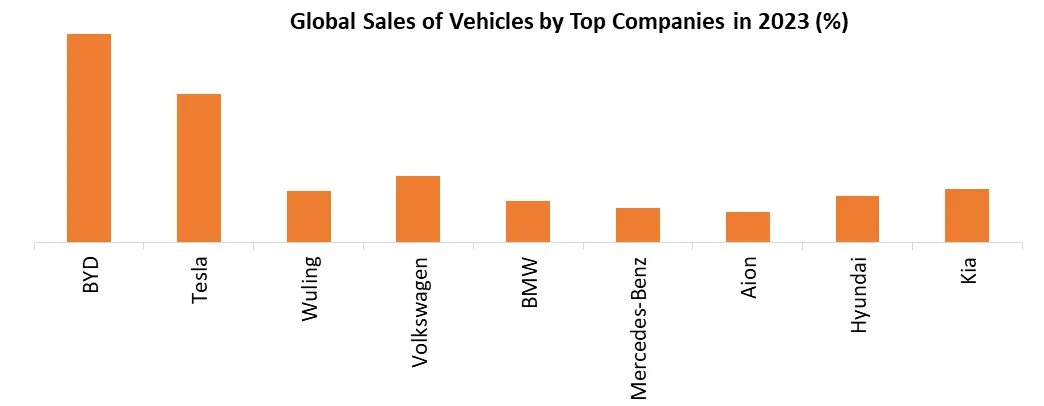
The growth of the automotive fuel injection system market is an enlargement of vehicle production, more cars, trucks, and other vehicles are introduced into the market particularly increasing demand for fuel-efficient and eco-friendly vehicles. For best performance and fuel economy, every vehicle needs a fuel injection system to deliver fuel to the engine efficiently. The urbanization rate is high among middle-class people so demand for passenger cars increases. Manufacturers invest in research and development to produce innovative fuel injection technologies that offer higher fuel efficiency, reduced emissions, and improved performance. The increase in vehicle production provides a larger market for these advanced fuel injection systems. Rising consumer purchasing power and economic growth are linked with increased automobile production. As more consumers afford vehicles, the demand for automobiles rises, leading to an increase in production, which drives the demand for fuel injection systems. As governments around the world tighten their emission standards, automotive manufacturers are increasingly focusing on improving the fuel efficiency of their vehicles. In the automotive industry constantly developing demand for more advanced and efficient fuel injection systems. With higher production volumes, manufacturers control economies of scale reducing per-unit costs for the fuel injection systems Market. Affordability drives the Fuel Injection systems market's demand and development.
Trends:
Increased emphasis on electric powertrains and hybrid vehicles to drive market growth
Rising awareness about climate change and emissions is insistent consumers towards cleaner transportation options. Electric and hybrid vehicles offer significant reductions in both tailpipe emissions and overall greenhouse gas impact. Battery technology is rapidly improving, offering increased range and less charging times so, making electric vehicles more practical and desired. The Fuel Injection Systems market situation for electric and hybrid vehicles is getting better because of strict emission rules and initiatives that promote the use of Electric vehicles. Advancements in hybrid powertrain systems are enhancing efficiency and performance. While the initial cost of electric and hybrid vehicles higher, lower fuel costs and reduced maintenance needs offer long-term savings. Governments and companies are offering many financial incentives to make these vehicles more affordable.
Restraints:
Electric Vehicles Growth Impact on Fuel Injection Systems Market
Increasing importance on the production and usage of electrical vehicles and supporting governmental policies for greener vehicles. The demand for Electric vehicles has a reverting effect on the growth of the fuel injection systems market. Many Consumers shift towards electric vehicles and the demand for traditional fuel injection systems decreases. Electric vehicles do not require fuel injection systems, they use electric motors instead of internal combustion engines. The increasing environmental concerns, and advancements in battery technology
High maintenance costs and complexity in service hamper the growth of the fuel injection systems market. The maintenance of the fuel injection system requires expensive equipment and a time-consuming process. The complexity in fuel injection systems makes repairs and replacements leading to costs for service providers. These factors disappoint consumers from purchasing vehicles with fuel injection systems.
Fuel Injection Systems Market Segment Analysis:
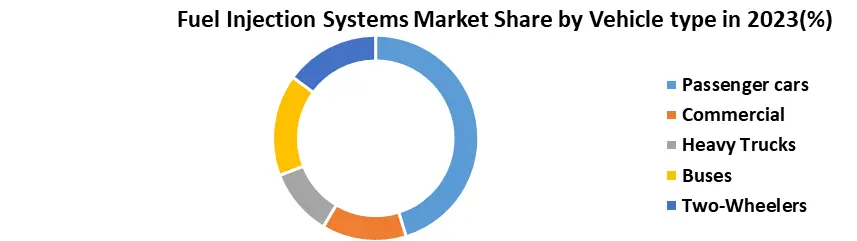
Based on Vehicle Type, the Passenger Cars segment held the largest market share of about 65.3% in the Fuel Injection Systems Market in 2023. According to the MMR analysis, the segment is expected to grow at a CAGR of 6.9% during the forecast period and maintain its dominance till 2030. The Passenger Cars segment has the highest market because of the demand for personal transportation and the rising disposable income. Passenger Cars account for an important share of the automotive market. Direct fuel injection and electronic fuel injection are mostly used in Passenger cars due to efficiency, performance and reduced emissions. The rate of urbanization and availability of convenient facilities are fuel the comfort of Passenger Cars.
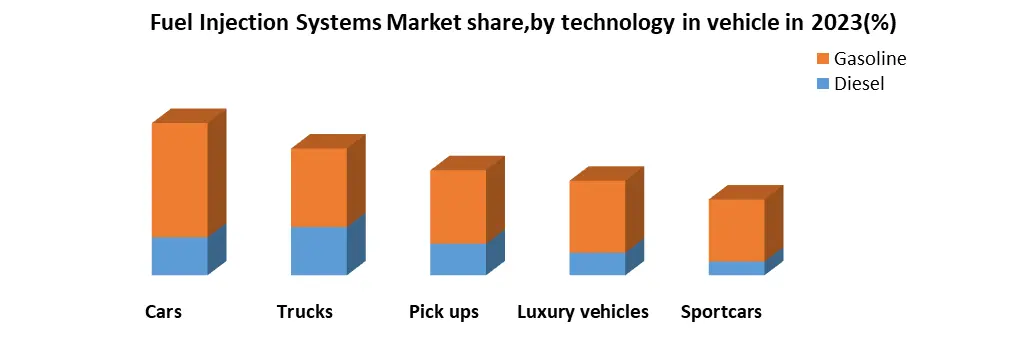
Based on Technology, the Gasoline Injection segment held the largest market share of about 69.4 % in the Fuel Injection Systems Market in 2023 and is expected to maintain its dominance till 2030. Gasoline injection is larger than other technologies because of widely usage of gasoline engines in Passenger Cars and commercial vehicles. Gasoline engines are preferred for their affordability, adaptability, and convenience compared to diesel engines. Port fuel injection systems which are primarily used in gasoline engines offer simpler operating strategies.
Fuel Injection Systems Market of Regional Insights:
Asia-Pacific region dominates the Fuel Injection Systems Market with the largest market share accounting for 45.3% in 2023, the region is expected with a CAGR is 6.8% during the forecast period and maintain its dominance by 2030. Asia-Pacific region dominating because of huge production in China and India. The developing automotive industry, strict pollution regulations, and the growing demand for fuel-efficient vehicles have led to the growth of the Asia-Pacific market. The government takes the initiative to adopt advanced fuel technologies because of to reduce pollution as well as increase fuel efficiency. Rapid industrialization, urbanization, and rising disposable income levels, growing vehicle production boosting the market for fuel injection systems.
1. According to MMR, APAC produced more than 65.4% of the world's light commercial vehicles (LCVs) and passenger cars. Supporting the region's rising production comes a growing demand for passenger cars and light commercial vehicles (LCVs).
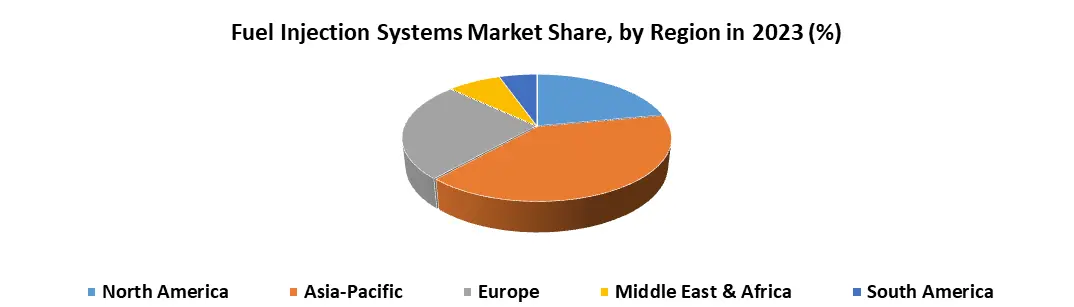
Europe held a market share of about 24.5% in the fuel injection systems Market in 2023 Europe was driven by the strictest emissions regulations like Euro 6 standards, which is higher accuracy and efficiency in the adoption of fuel injection systems. Key players in the region include Continental AG, Bosch, and Magneti Marelli. The market is expected to grow at a CAGR of 4.8% during the forecast period.
Competitive Landscape for the Fuel Injection Systems Market:
The competitive landscape of the Fuel Injection Systems Market is constantly evolving, with new players emerging and established players adapting their strategies with the rapid industrialization in developing countries like China and India, It is estimated that key players have major growth forecasts in the growing usage of Fuel Injection Systems in the industries. The fuel injection systems Market participate through organic growth strategies like product launches, product approvals and expansion, and Inorganic growth strategies involving mergers and acquisitions, partnerships, and collaborations.
1) The advanced PFI system idea was developed by Bosch, a prominent fuel injection company, with improvements in twin injection, the engine emits less gas and is more fuel–efficient. The Fuel injection technology encourages extra fuel savings and complies with new regulatory emission limits such as EU6d.
2) In December 2023, Magneti Marelli company launched its first hydrogen fuel system including specific injectors with patented design and an advanced engine control unit.
3) Combination of gasoline injection with port fuel injection, Bosch offers a solution that provides a significant cost advantage compared to high-pressure direct injection systems.
Fuel Injection Systems Market Scope: Inquire before buying
| Fuel Injection Systems Market | |||
|---|---|---|---|
| Report Coverage | Details | ||
| Base Year: | 2023 | Forecast Period: | 2024-2030 |
| Historical Data: | 2018 to 2023 | Market Size in 2023: | US $ 64.7 Bn. |
| Forecast Period 2024 to 2030 CAGR: | 4.7% | Market Size in 2030: | US $ 102.5 Bn. |
| Segments Covered: | by Vehicle Types | Passenger Commercial Heavy Trucks Buses Two-Wheelers |
|
| by Engine Types | Gasoline Diesel |
||
| by Components | Fuel Injectors Electronic Control Unit Fuel Pressure Regulator Fuel Pump |
||
| by Technology | Gasoline injection Port fuel injection Direct injection Diesel injection |
||
Fuel Injection Systems Market, by Region
North America (United States, Canada and Mexico)
Europe (UK, France, Germany, Italy, Spain, Sweden, Austria and Rest of Europe)
Asia Pacific (China, South Korea, Japan, India, Australia, Indonesia, Malaysia, Vietnam, Taiwan, Bangladesh, Pakistan and Rest of APAC)
Middle East and Africa (South Africa, GCC, Egypt, Nigeria and Rest of ME&A)
South America (Brazil, Argentina Rest of South America)
Fuel Injection Systems Market Key Players:
1. Denso Corporation
2. Delphi Automotive Plc.
3. Hitachi Ltd.
4. Continental AG
5. MagnetiMarelli S.P.A
6. Infineon Technologies AG
7. Edelbrock LLC
8. Keihin Corporation
9. Woodward Inc.
10. Ti Automotive Inc.
11. UCI International Inc.
12. Robert Bosch
13. Toyota
14. BMW
15. Ford Motors
Frequently Asked Questions:
1. Which region has the largest share in the Global Market?
Ans: The Asia Pacific region held the highest share in 2023.
2. What is the growth rate of the Global Market?
Ans: The Global Market is growing at a CAGR of 4.7% during the forecasting period 2023-2030.
3. What is the market size of the Market?
Ans: The Fuel Injection Systems Market size was valued at USD 64.7 Billion in 2023 reaching nearly USD 102.5 Billion in 2030.
4. What segments are covered in the Fuel Injection Systems Market report?
Ans: The segments covered in the Fuel Injection Systems market report are Type, Application, Distribution Channel, and Region.
5. Who are the key players in the Global Fuel Injection Systems Market?
Ans: The important key players in the Global Fuel Injection Systems Market are – Denso Corporation, Delphi Automotive Plc., Hitachi Ltd., Continental AG, Magneti Marelli S.P.A, Infineon Technologies AG, Edelbrock LLC, Keihin Corporation, Woodward Inc., Ti Automotive Inc., UCI International Inc., Robert Bosch, Toyota, BMW, and Ford Motors.