
Food Fortifying Agents Market by Type, Application, Process, and Region – Global Market Size Estimation, Industry‑Wide Analysis, Competitive Landscape Assessment & Long‑Term Forecast to 2030
Overview
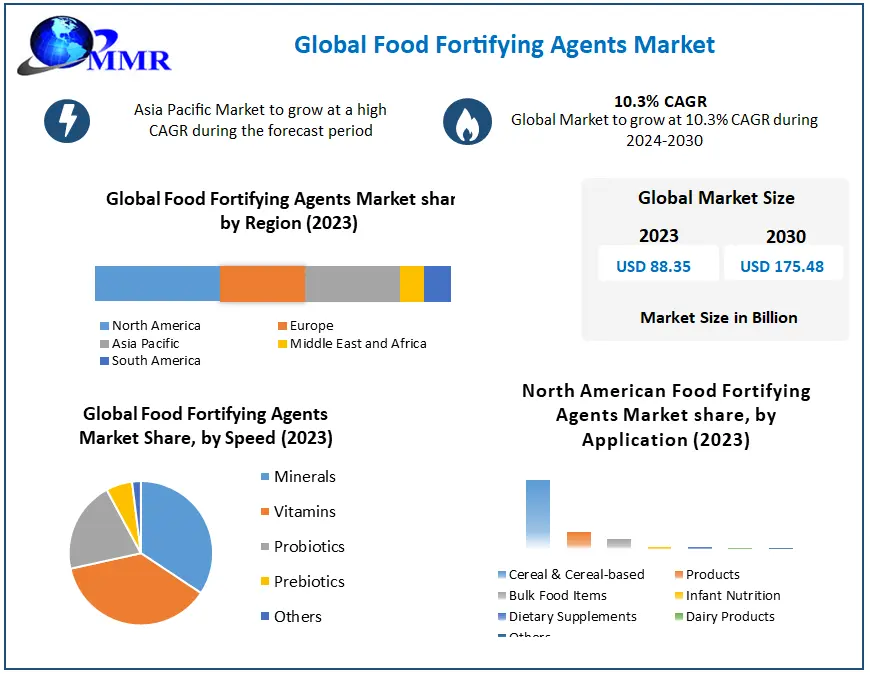
The Global Food Fortifying Agents Market size was valued at USD 88.35 Bn in 2023 and is expected to reach USD 175.48 Bn by 2030, at a CAGR of 10.3%
Food Fortifying Agents Market Overview
Food fortification serves a broader purpose and is carried out for several reasons. Food fortification agents involve enrichment, which aims to replenish the nutrients lost during food processing. In this process, the added amount of nutrients is approximately equal to the natural content in the food before processing. Secondly, fortification is employed to introduce nutrients that naturally occur in the food. In this case, the quantity of added nutrients exceeds the original content present prior to processing. Fortification also serves to standardize the nutrient composition in foods that exhibit variable concentrations. The graphical representation and structural exclusive information showed dominating region of the Food Fortifying Agents Market. The detailed and constructive formation of key drivers, opportunities, and unique segmentation outputs structural and optimistic data. Validated using primary as well as secondary research methodology and scope of the Food Fortifying Agents Market.
 To know about the Research Methodology :- Request Free Sample Report
Food Fortifying Agents Market Dynamics
Nutritional deficiencies and increasing health consciousness are the major drivers of Food Fortifying Agents Market
The removal process of nutrient deficiencies, such as iron deficiency anaemia, vitamin D deficiency, and iodine deficiency, emerges a demand for fortified food products. Food fortification is known as an effective strategic option to overcome these deficiencies and improve public health. Growing consumer awareness and a heightened focus on maintaining a healthy diet and lifestyle have spurred the demand for nutritious food options in the food fortifying agents market. Consumers actively seek fortified foods that offer additional health benefits and fulfill their nutritional requirements. Food fortification provides a competitive advantage for food manufacturers by differentiating their products in the food fortifying agents industry.
Fortified foods cater to specific consumer segments and fulfill the increasing demand for functional foods, thereby enhancing market competitiveness. The expanding global food industry, coupled with rapid urbanization, has heightened the demand for convenient and nutritionally fortified food products. Fortification offers a practical solution to deliver essential nutrients to a large and increasingly urbanized population. Advances in food processing technologies and techniques have simplified the incorporation of fortifying agents into various food products without significantly altering their taste, texture, or appearance. This has broadened the potential for fortification across a diverse range of food categories. Numerous countries have implemented regulations and mandates pertaining to food fortification in order to combat nutrient deficiencies and enhance the overall nutritional status of their populations. These regulations often stipulate the addition of specific nutrients to staple foods or particular food categories.
Plant-Based Fortifying Agents and Microencapsulation Technologies are the emerging opportunities in the food fortifying agents market
With the growing demand for plant-based and vegan food options, there is a rising opportunity for the development of plant-based fortifying agents. Plant-derived sources of vitamins, minerals, and other nutrients can be utilized to meet the fortification needs of plant-based food products, catering to the increasing consumer preference for natural and sustainable ingredients. The application of advanced microencapsulation technologies in food fortification offers new opportunities. Microencapsulation helps protect and deliver fortifying agents, enhancing their stability, bioavailability, and controlled release. The development of innovative microencapsulation techniques opens avenues for fortification in a wider range of food products while maintaining desired sensory attributes in the food fortifying agents market. There is a growing interest in targeted nutrient delivery systems that ensure precise delivery and absorption of fortifying agents in the body. This involves encapsulating the fortifying agents within specific carriers or utilizing nanotechnology-based delivery systems to enhance their efficacy and bioavailability. Targeted nutrient delivery systems provide opportunities for personalized fortification and improved nutrient absorption in the food fortifying agents industry. These emerging opportunities demonstrate the evolving landscape of the food fortifying agents market
Food Fortifying Agents Market Segment Analysis
Application: Iron-fortified cow's milk-based baby formulas have been formulated by adding iron to address the iron requirements of infants or children’s. The addition of extra iron in these formulas has had a prominent impact in recent decades by significantly reducing the prevalence of iron-deficiency anemia during infancy. It is observed that certain infants have insufficient natural reserves of iron, which is an essential mineral important for normal human growth and development in the food fortifying agents market. Iron plays a vital role in numerous physiological processes, including the production of red blood cells (RBCs) and the transportation of oxygen throughout the body. During infancy, iron needs are specifically heightened due to rapid growth and the expansion of blood volume. While breast milk does contain iron, the concentration can vary and may not consistently meet the iron requirements of all infants. In contrast, cow's milk naturally lacks an adequate amount of iron.
The study found that fortified oil significantly increased vitamin A intake, closely aligning with the recommended nutrient intakes. Specifically, fortified oil contributed, on average, 26% of the daily vitamin A requirement for children aged 12 to 23 months, 38-40% for older children, and 29-35% for women. The implementation of large-scale fortification not only resulted in improved vitamin A status among all beneficiaries, but it also led to a significant reduction in vitamin A deficiency. Furthermore, the study observed an increase in the vitamin A content of breast milk among lactating mothers, indicating the positive impact of fortification on the nutritional quality of breast milk in the food fortifying agents market.
In Costa Rica, an evaluation was conducted to assess the impact of iron fortification on the prevalence of anemia. The evaluation found a noteworthy decrease in the national prevalence of anemia among children aged 1-7 years and women of reproductive age. The prevalence of anaemia reduced from 19% to 4% among children and from 18% to 10% among women. Additionally, in children, the prevalence of iron deficiency decreased from 27% to 7%. These findings highlight the significant positive effects of fortification programs on the nutritional status and health outcomes of populations. The study conducted in Indonesia demonstrates the successful contribution of fortified oil in meeting the vitamin A needs of women and children, leading to improved vitamin A status and reduced deficiency. Similarly, the evaluation in Costa Rica showcases the substantial reduction in anemia prevalence and iron deficiency following iron fortification. These results underscore the importance and effectiveness of fortification as a public health strategy to address nutrient deficiencies and improve the well-being of populations. Fortification programs play a crucial role in enhancing nutritional intake, reducing deficiency-related health issues, and promoting overall health and development.
Regional Analysis of Food Fortifying Agents Market
Market Overview, Key Trends and Market opportunities are the major factors that accounts in Regional analysis of Food Fortifying Agents Market
North America is a well-established market for food fortifying agents, driven by increasing consumer awareness of nutrition and health. The region boasts robust regulations and standards for food fortification. Growing demand for functional foods, clean label products, and personalized nutrition is shaping the food fortifying agents market. Plant-based fortifying agents and innovative delivery systems are gaining traction. Focus on fortification of staple foods, expansion of fortification into new product categories, and collaborative partnerships between food manufacturers and research institutions for product development.
Europe is a prominent market for food fortifying agents, characterized by a high level of consumer awareness regarding nutritional deficiencies and the benefits of fortification. The region has stringent regulations governing fortification practices and labeling. Increasing demand for organic and natural fortifying agents, clean label products, and fortified functional beverages. There is a growing interest in personalized nutrition and fortification strategies targeting the aging population in the food fortifying agents market. Development of innovative fortifying agents that address specific health concerns, fostering collaborations between industry players and research institutions for product innovation, and expanding fortification practices in the foodservice sector.
Asia Pacific is experiencing rapid growth in the market, driven by factors such as a burgeoning population, rising disposable incomes, and evolving dietary patterns. The region faces significant challenges related to malnutrition and nutrient deficiencies. Increasing awareness about the importance of fortification in addressing nutrient deficiencies, growing demand for fortified infant formulas and functional foods, and a rising preference for fortified beverages in the food fortifying agents market. Expansion of fortification programs through collaborations with government initiatives, development of fortifying agents tailored to local diets, and investment in research and development to introduce innovative fortification techniques.
Latin America is witnessing steady growth in the market due to improving economic conditions, increasing urbanization, and a rising focus on health consciousness among consumers. Growing demand for fortified dairy products, cereals, and beverages, increased emphasis on fortification for vulnerable population groups like children and pregnant women, and a rising popularity of fortified snacks and functional foods in the food fortifying agents market. Collaboration with local food manufacturers to develop region-specific fortifying agents, expansion of fortification programs targeting prevalent nutrient deficiencies, and increased availability of fortified products in rural areas.
Competitive Landscape of Food Fortifying Agents Market
DSM Biomedical is the world’s unrivaled biomaterials expert and committed partner in driving sustainable innovation in healthcare. Announced its newest sustainability initiative Bio-based Dyneema Purity fiber that leverages its existing UHMWPE Medical Grade. Through a long-term strategic partnership, DSM Biomedical, the world’s unrivaled biomaterials expert and committed partner in driving sustainable innovation in healthcare, and Svelte Medical Systems, a privately-held company engaged in the development of highly deliverable balloon expandable stents, have revolutionized the standard for coronary stenting procedures to treat coronary artery disease (CAD). DSM Biomedical and Dechra partner to fuel innovation in animal injury recovery. DSM Biomedical announces joint collaboration with Dechra Limited for the license and distribution of devices that create isolated solutions of highly concentrated cells and/or platelets for use with horses and companion animals. DSM Biomedical, the world’s unrivaled biomaterials expert and committed partner in driving sustainable innovation in healthcare, reports an important milestone in its partnership with a consortium of physicians and researchers from Maastricht UMC+ and Eindhoven University of Technology to reduce the severe complications of scoliosis patients routinely suffer from corrective surgery.
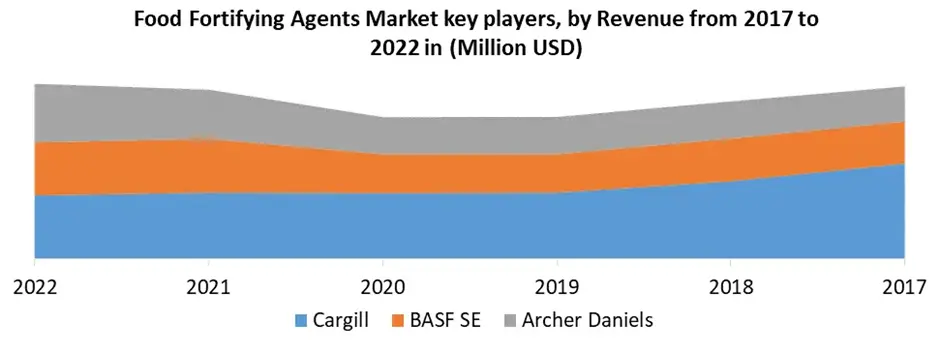
Cargill offers a full range of animal nutrition and management solutions for producers, feed retailers and feed manufacturers. Cargill has partnered with Kotug International to deploy Kotug’s zero emission E-Pusher™ and E-Barges, the world’s first fully electric pusher boat and barges to transport. Cocoa beans from the Port of Amsterdam, the largest cocoa import port in the world, to Cargill’s cocoa factory in Zaandam, the Netherlands. Nov 28th 2022 Cargill announces acquisition of Owensboro Grain Company. Cargill and CARE International partner to improve sustainable agriculture for rural communities in Dak Lak, Vietnam. BASF is the first company to establish a co-located battery materials and recycling center and close the loop in the European battery value chain. Avient and BASF collaborate to bring colored Ultrason® to the global market for high-performance polymers.
Food Fortifying Agents Market Scope: Inquire before buying
| Global Food Fortifying Agents Market | |||
|---|---|---|---|
| Report Coverage | Details | ||
| Base Year: | 2023 | Forecast Period: | 2024-2030 |
| Historical Data: | 2018 to 2023 | Market Size in 2023: | US $ 88.35 Bn. |
| Forecast Period 2024 to 2030 CAGR: | 10.3% | Market Size in 2030: | US $ 175.48 Bn. |
| Segments Covered: | by Type | Minerals Vitamins Probiotics Prebiotics Others |
|
| by Application | Cereal & Cereal-based Products Bulk Food Items Infant Nutrition Dietary Supplements Dairy Products Others |
||
| by Process | Drum Drying Dusting |
||
Food Fortifying Agents Market, by Region
North America (United States, Canada and Mexico)
Europe (UK, France, Germany, Italy, Spain, Sweden, Austria and Rest of Europe)
Asia Pacific (China, South Korea, Japan, India, Australia, Indonesia, Malaysia, Vietnam, Taiwan, Bangladesh, Pakistan and Rest of APAC)
Middle East and Africa (South Africa, GCC, Egypt, Nigeria and Rest of ME&A)
South America (Brazil, Argentina Rest of South America)
Food Fortifying Agents Key Players
1. DSM
2. Cargill, Incorporated
3. BASF SE
4. Archer Daniels Midland Company (ADM)
5. Ingredion Incorporated
6. Kerry Group
7. Lonza Group Ltd.
8. Tate & Lyle PLC
9. Ajinomoto Co., Inc.
10. Koninklijke DSM N.V.
11. Nestlé S.A.
12. DowDuPont Inc.
13. FMC Corporation
14. Chr. Hansen Holding A/S
15. Nutricia (Danone)
Frequently Asked Questions and Answers about Food Fortifying Agents Market
1. What are the market trends in the food fortifying agents industry?
Ans: Market trends in the food fortifying agents industry include the growing demand for clean label and natural fortifying agents, personalized nutrition solutions, and innovative delivery systems. There is also an increased focus on fortification of staple foods, expansion into new product categories, and partnerships for product development. Consumer preferences for functional foods, organic options, and fortified beverages are driving market growth.
2. How can food fortifying agents contribute to public health?
Ans: Food fortifying agents can contribute to public health by addressing nutrient deficiencies and improving the nutritional status of populations. Fortification programs, when properly implemented, can help reduce the prevalence of nutrient-related health conditions, such as vitamin and mineral deficiencies. They can also support the healthy growth and development of children, enhance immune function, and improve overall well-being.
3. What is the future outlook for the food fortifying agents market?
Ans: The food fortifying agents market is expected to grow in the coming years due to increasing consumer awareness about nutrition, rising health concerns, and the need for preventive healthcare. The demand for fortified food products is likely to continue expanding, with a focus on personalized fortification solutions and innovative product formulations. Technological advancements and regulatory support will play crucial roles in shaping the market's future.
4. What are the challenges associated with food fortification?
Ans: 1. Ensuring proper formulation and dosage of fortifying agents to avoid excessive or inadequate fortification.
2. Maintaining the stability and bioavailability of fortified nutrients throughout the product's shelf life.
3. Addressing potential sensory changes or off-flavors that may occur due to fortification.
4. Monitoring and enforcing compliance with fortification regulations to ensure accurate nutrient levels and appropriate labeling.
5. Are there regulations governing the use of food fortifying agents?
Ans: Yes, many countries have regulations and guidelines in place for the use of food fortifying agents. These regulations ensure the safety, quality, and proper labeling of fortified food products. They specify the permissible fortification levels, nutrient declarations, and other requirements that food manufacturers must comply with.