
Finance Cloud Market Size – Industry Structure Evaluation, Demand Drivers Analysis, Regional Growth Analysis and Identification, Competitive Positioning Review & Global Market Size Forecast to 2032
Overview
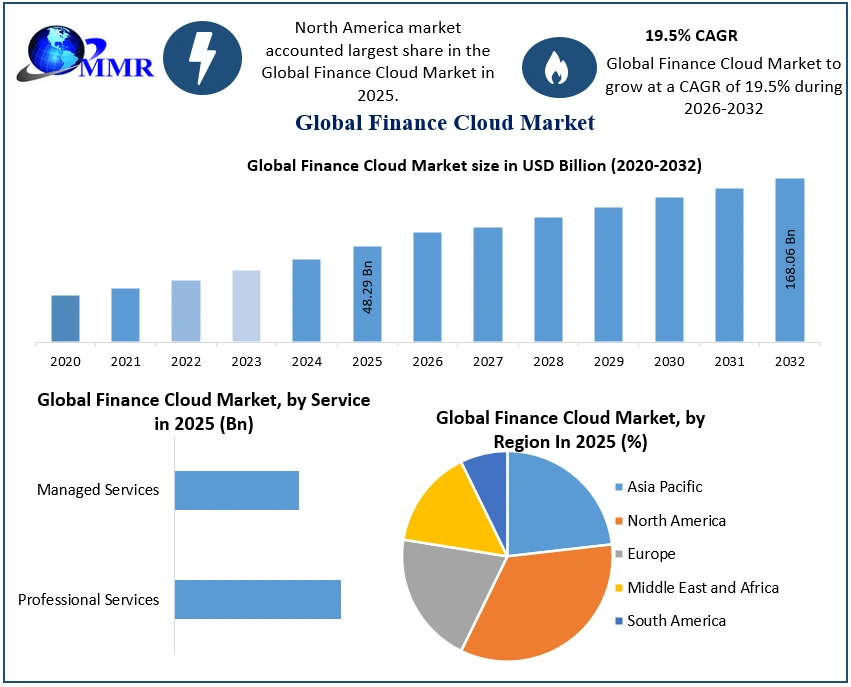
The Finance Cloud Market size was valued at USD 48.29 Billion in 2025 and the total Finance Cloud revenue is expected to grow at a CAGR of 19.5% from 2026 to 2032, reaching nearly USD 168.06 Billion by 2032.
Finance Cloud Market Overview:
The Finance Cloud offers essential system and application infrastructure tailored for open banking, catering to the security needs of both FinTechs and financial institutions. Operating as a network that allows programs to run and be accessed by multiple devices or servers simultaneously, it presents a contemporary suite of robust software solutions designed for comprehensive financial management. This innovative platform employs diverse finance management tools to facilitate tasks such as budget preparation, invoicing, expense tracking, purchase request approvals, and payment handling which drives the growth of the finance cloud market. Through Finance Cloud software, companies can efficiently maintain real-time monitoring of expenses, assets, sales, and purchases, ensuring streamlined financial operations.
The increasing demand for the Finance Cloud Market is attributed to several key factors driving its popularity in the contemporary business landscape. The dynamic nature of open banking and the evolving requirements of FinTechs and financial institutions necessitate advanced and flexible infrastructure something that Finance Cloud readily provides. North America region dominated the market in the year 2025. There are various major market key players in the United States such as Cisco Systems, Aryaka Networks Inc., Juniper Networks, VMware, IBM Corp., etc. offering a comprehensive range of hardware, software, and services across diverse industries.
To know about the Research Methodology :- Request Free Sample Report
Drivers
Cost Efficiency, Agility and Innovation, and Remote Access and Collaboration to Drive Finance Cloud Market
Cloud solutions offer cost-effective alternatives to traditional on-premise infrastructure. Financial institutions can reduce capital expenditures, maintenance costs, and operational expenses by leveraging cloud services. Cloud solutions contribute to improving customer experiences by enabling the delivery of personalized services, seamless transactions, and efficient customer interactions. This is vital for maintaining customer satisfaction and loyalty. Cloud technology enables remote access to financial services and promotes collaboration among geographically dispersed teams. This has become particularly crucial with the rise of remote work and the need for seamless connectivity. It enables financial institutions to be more agile and innovative and allows for quicker deployment of new applications, services, and updates, enabling organizations to adapt rapidly to market changes and customer demands which drives the growth of the finance cloud industry. There are several factors such as environmental concerns, business agility, etc. are driving the finance cloud market.
Restraints
Limited Customization, Data security risks, and privacy concerns can hamper the market
Despite advancements in cloud security, concerns about data breaches, unauthorized access, and data residency still exist. Financial institutions deal with sensitive and confidential information, making security a top priority and a potential restraint. Financial institutions often deal with sensitive customer data. Concerns about data privacy and the secure handling of customer information in the cloud can be a barrier to adoption. Some financial institutions may have unique requirements that standard cloud solutions may not fully address. Limited customization options can be a restraint for organizations with specific and complex needs.
Integrating cloud solutions with existing legacy systems can be complex and may require significant time and resources. The interoperability of cloud services with on-premise systems is crucial for a seamless transition and can pose a restraint if not addressed effectively. Dependence on cloud service providers raises concerns about potential downtime and service reliability. Financial institutions require high levels of availability, and any service disruptions can have significant consequences. As a result, these are several factors that can deter the growth of the finance cloud market.
Opportunity
Data Analytics and Insights, Security Enhancements, Collaboration, and Remote Work create opportunities
Finance Cloud Market Segment Analysis
Based on the Application,
The wealth management segment dominated the market in the year 2025 with 33% of the market revenue share and is expected to dominate the market during the forecast period. The market growth in this segment is increased by factors such as the rising demand for cloud technology among wealth and investment organizations. These organizations seek efficient solutions to manage a growing and demanding client base, navigate regulatory requirements, and adapt to the dynamics of shifting generational wealth. Revenue management is expected to gain popularity throughout the forecast period. The need for efficient revenue management is growing and hence the adoption of cloud-based solutions for agility and scalability is driving the dominance of this segment. The account Management segment focuses on managing customer accounts, including account opening, transaction processing, and customer service. The adoption of cloud-based account management solutions for improved efficiency and customer experience is driving the growth of this segment.

Based on the Deployment Type,
The public cloud dominated the market with the largest revenue share in the year 2025. The cost-effective approach minimizes expenses for businesses, ensuring they only pay for utilized resources, and eliminating unnecessary spending on idle assets. This financial efficiency is complemented by the flexibility for businesses to seamlessly scale their operations up or down in response to fluctuating demands, aligning resource utilization with specific cloud needs in the dynamic financial landscape.
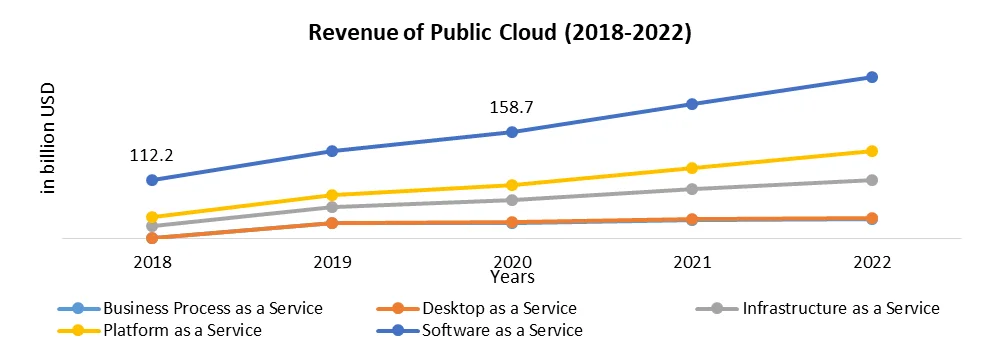
The private cloud segment is expected to gain popularity during the forecast period. The adoption of the private cloud is increasing and it offers of cost-effective tools for managing cloud applications, including data storage, monitoring, and security, the private cloud ensures minimal expenditure. Organizations leveraging the private cloud experience the benefits of cloud computing without compromising control, security, and customization. The advantages include the freedom to tailor software and hardware, strict adherence to regulatory standards, and enhanced access and security control, making the private cloud an appealing solution for financial entities seeking a balance between technological innovation and robust control mechanisms. Hence, these are the deployment type segment that dominates the Finance Cloud Market.

Finance Cloud Market Regional Insights:
North America region dominated the finance cloud market in the year 2025 and is expected to dominate during the forecast period. Financial cloud offers various benefits such as reducing CapEx spending, reducing IT management complexity, and improving data security due to these benefits the adoption of cloud services is increasing in BFSI services in this region. The Asia-Pacific region is anticipated to secure the second-largest market share. The Government of India is actively digitizing payment systems and enhancing financial inclusion through fintech initiatives such as Jan Dhan Yojana, Aadhaar, and the Unified Payments Interface (UPI). These strategic endeavors are driving an increased demand for financial services and technologies in the region. China, India, South Korea and Australia are embracing digital transformations which is expected to drive market growth in this region. The New Zealand Government maintains a 'Cloud First' policy through which it seeks to be open to the benefits of emergent technologies and act as a leader in cloud adoption.
Competitive Landscape:
As a global networking giant, Cisco stands at the forefront of the networking solutions market, offering a comprehensive range of hardware, software, and services across diverse industries. Its dominance is characterized by cutting-edge technology, driving connectivity and communication solutions worldwide. IBM, a multinational technology and consulting powerhouse, excels in cloud computing, artificial intelligence, and enterprise solutions. Its innovative approach drives digital transformation for businesses globally, making it a key player in the evolving tech landscape. Renowned for virtualization and cloud infrastructure, VMware plays a pivotal role in optimizing IT environments for businesses. Its innovative solutions empower organizations to enhance efficiency and agility in the rapidly evolving digital landscape. NEC, a major player in the global IT industry, focuses on providing comprehensive IT and network solutions, including infrastructure and services. With a commitment to technological excellence, NEC contributes to shaping the digital future. Specializing in SD-WAN solutions, Aryaka is a frontrunner in delivering cloud-based networking services. By enhancing connectivity and performance, Aryaka caters to the evolving needs of businesses seeking efficient and reliable networking solutions.
The objective of the report is to present a comprehensive analysis of the Finance Cloud Market including all the stakeholders of the Technology. The past and current status of the Technology with forecasted market size and trends are presented in the report with the analysis of complicated data in simple language. The report covers all the aspects of the Technology with a dedicated study of key players that includes market leaders, followers, and new entrants by region. PORTER, SVOR, and PESTLE analysis with the potential impact of micro-economic factors by region on the market have been presented in the report. External as well as internal factors that are supposed to affect the business positively or negatively have been analyzed, which will give a clear futuristic view of the Technology to the decision-makers.
The report also helps in understanding the Finance Cloud Market dynamics, and structure by analyzing the market segments and projecting the Finance Cloud Market size. Clear representation of competitive analysis of key players by type, price, financial position, product portfolio, growth strategies, and regional presence in the Finance Cloud Market makes the report an investor’s guide.
Finance Cloud Market Scope: Inquire before buying
| Finance Cloud Market | |||
|---|---|---|---|
| Report Coverage | Details | ||
| Base Year: | 2025 | Forecast Period: | 2026-2032 |
| Historical Data: | 2020 to 2025 | Market Size in 2025: | USD 48.29 Bn |
| Forecast Period 2026 to 2032 CAGR: | 19.5% | Market Size in 2032: | USD 168.06 Bn |
| Segments Covered: | by Solution | Financial Forecasting Financial Reporting and Analysis Security Governance, Risk and Compliances Others |
|
| by Service | Professional Services Managed Services |
||
| by Application | Revenue Management Wealth Management System Account Management Customer Management Others |
||
| by Deployment Type | Public Cloud Private Cloud Hybrid Cloud |
||
| by Organization Size | Small and Medium Enterprise (SME) Large enterprise |
||
| by Sub Domain | Banking and Financial Service Insurance |
||
Finance Cloud Market, by Region
North America (United States, Canada and Mexico)
Europe (UK, France, Germany, Italy, Spain, Sweden, Austria and Rest of Europe)
Asia Pacific (China, South Korea, Japan, India, Australia, Indonesia, Malaysia, Vietnam, Taiwan, Bangladesh, Pakistan and Rest of APAC)
Middle East and Africa (South Africa, GCC, Egypt, Nigeria and Rest of ME&A)
South America (Brazil, Argentina Rest of South America)
Finance Cloud Market, Key Players
North America:
1. Cisco Systems - United States
2. Juniper Networks - United States
3. IBM Corp. - United States
4. VMware - United States
5. Aryaka Networks Inc. - United States
6. Brocade Communications Systems Inc. - United States
7. AT&T - United States
8. Ciena Corporation - United States
9. Salesforce - United States
10. Oracle - United States
11. Microsoft - United States
12. Amazon - United States
13. Sage Intacct Inc. - United States
14. Alphabet Inc. - United States
15. Red Hat, Inc. - United States
16. Kamatera, Inc. - United States
17. Verizon - United States
18. Hewlett Packard Enterprise Development LP - United States
19. ServiceNow - United States
Europe:
1. Alcatel Lucent – France
2. SAP SE – Germany
3. Unit 4 - Netherlands
Asia-Pacific:
1. NEC Corp. – Japan
2. Alibaba Cloud - China
Frequently Asked Questions:
1] What segments are covered in the Global Finance Cloud Market report?
Ans. The segments covered in the Finance Cloud Market report are based on Solution, Service, Application, Component, Deployment Type, Organization Size, Sub-domain, and Region.
2] Which region is expected to hold the largest share of the Global Finance Cloud Market?
Ans. The North American region is expected to hold the Largest share of the Finance Cloud Market. The adoption of finance cloud in the United States and Canada is increasing because it improves data security, reduces IT management complexity, etc in BFSI services.
3] What is the market size of the Global Finance Cloud Market by 2032?
Ans. The market size of the Finance Cloud Market by 2032 is expected to reach USD 168.06 Bn.
4] What is the forecast period for the Global Finance Cloud Market?
Ans. The forecast period for the Finance Cloud Market is 2026-2032.
5] What was the market size of the Global Finance Cloud Market in 2025?
Ans. The market size of the Finance Cloud Market in 2025 was valued at USD 48.29 Bn.