
Automotive Logistics Market – Industry Structure Evaluation, Demand Drivers Analysis, Regional Growth Analysis and Identification, Competitive Positioning / Landscape Review & Global Market Size Forecast to 2034
Overview
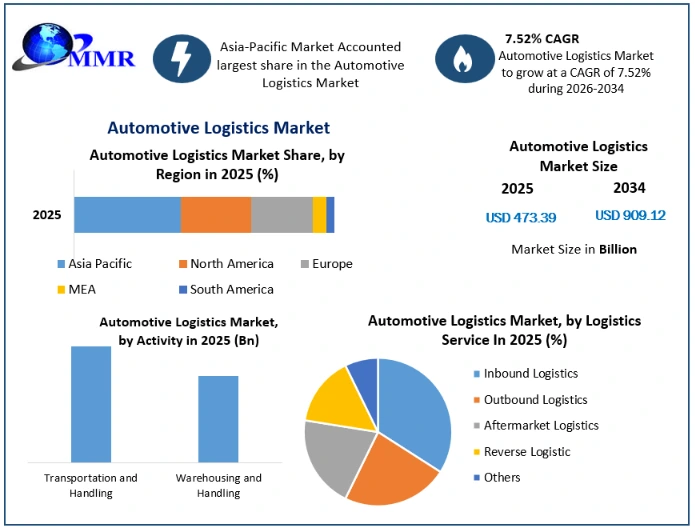
The Automotive Logistics Market size was valued at USD 473.39 Billion in 2025 and the total Automotive Logistics revenue is expected to grow at a CAGR of 7.52% from 2026 to 2034, reaching nearly USD 909.12 Billion.
Automotive Logistics Industry Snapshot
Automotive logistics refers to the systematic planning, implementation and control of the efficient flow and storage of raw materials, components, and finished vehicles within the automotive industry. The Automotive Logistics Market encompasses an intricate network of transportation, distribution, and supply chain management activities. It strategically optimizes the movement of goods, spanning from suppliers to manufacturers and, ultimately, to dealerships or end consumers within the automotive industry. This process involves coordination across various stages, including procurement, production, warehousing, and distribution, to ensure timely delivery, reduce costs, and enhance overall supply chain efficiency. Effective automotive logistics in meeting customer demands, minimizing lead times, and maintaining a competitive edge in the dynamic automotive market, where precision and reliability are paramount.
Automotive Logistics Market Growth Outlook
To know about the Research Methodology:-Request Free Sample Report
The global automotive industry is constantly growing, mainly due to an increase in vehicle production. The rising popularity of electric vehicles (EVs) and the demand for advanced technologies in cars. The need for efficient transportation and distribution processes is also on the increase with the globalization of supply chains, giving a boost to the automotive logistics sector which boosts Automotive Logistics Market growth. The improvement comes from integrating technologies such as the Internet of Things (IoT), artificial intelligence and blockchain, which enhance visibility, efficiency and security in the supply chain. As more people buy cars online and prefer direct-to-consumer models, flexible logistics solutions are becoming essential. There's an increasing focus on sustainability, driving the industry to adopt eco-friendly practices and reduce environmental impact. The industry is evolving with trends like autonomous vehicles, 3D printing and last-mile delivery solutions. Logistics providers are investing heavily in digitalization, automation and green technologies to create a more adaptable and responsive automotive logistics system that meets changing Automotive Logistics Market conditions and consumer preferences, ultimately driving industry growth.
Automotive Logistics Market Trend
Increasing emphasis on sustainability and eco-friendly practices within the supply chain.
The significant emphasis on sustainability and eco-friendly practices within the supply chain shift is driven by a growing global awareness of environmental issues, with increasing pressure from consumers, regulatory bodies, and industry stakeholders to adopt greener practices, particularly in an industry that contributes significantly to carbon emissions. The imperative to meet climate targets and adhere to stricter emission standards has compelled manufacturers and logistics providers in the supply chain to integrate eco-friendly measures, showcasing environmental responsibility. Consumers, increasingly environmentally conscious, are driving automakers and logistics providers to incorporate sustainability into supply chain practices as a competitive advantage. Technological advancements and innovative logistics solutions implement eco-friendly practices while maintaining efficiency, contributing not only to environmental conservation but also yielding cost savings and operational efficiency. In essence, this trend reflects a holistic response to regulatory demands, shifting consumer preferences, technological progress, and a broader global commitment to sustainable business practices, positioning the Automotive Logistics Market for enduring viability.
The strategic shift of the Increasing emphasis on sustainability and eco-friendly practices within the supply chain is a direct response to the significant challenges posed by climate targets, particularly within the dynamic landscape of the automobile industry. Recognizing logistics services as an essential lever, ongoing initiatives aim to reduce the environmental footprint of the automotive sector, specifically within the Automotive Logistics Market. The implementation of vital measures and the deployment of intelligent process management play integral roles in fostering a green supply chain, emphasizing which shape a more sustainable future.
Automotive Logistics Market Key Dynamics
Driver
Continual growth of The Global Automotive Industry to Boost Market Growth
The Automotive industry's evolution is propelled by dynamic factors such as technological advancements, regulatory shifts, market demands, interest rates and global events. In 2025, several transformative trends are poised to reshape the automotive landscape. The rise of electric vehicles (EVs) takes center stage, with major automakers investing substantially in accessible, affordable, and technologically advanced electric platforms. Governments worldwide incentivize EV adoption through subsidies and stringent emission standards. Sustainability has become a focal point in automotive manufacturing, driving efforts to reduce the carbon footprint through eco-friendly practices, which is expected to boost the Automotive Logistics Market growth. Connected vehicles, incorporating advanced infotainment systems and seamless connectivity, redefine cars as digital extensions of lives, presenting cybersecurity challenges. The integration of technology extends to autonomous driving, where significant advancements in advanced driver-assistance systems (ADAS) are expected in 2025. While fully autonomous vehicles are not ordinary, the industry is likely to witness more Level 3 and Level 4 autonomous vehicles, enhancing safety and reducing accidents. The growth of the global automotive sector, boosted by these transformative trends, remains the overarching growth driver of the Automotive Logistics Market.
The growth in the automotive sector inherently leads to increased vehicle production, necessitating the implementation of efficient logistics solutions to handle the transportation and distribution of raw materials, components, and finished goods. Technological advancements play a key role, with the industry incorporating innovations in manufacturing, design, and vehicle connectivity, thereby demanding sophisticated logistics systems to accommodate these transformative changes. Regulatory shifts, particularly in emissions standards and government incentives for electric vehicles, accentuate the importance of flexible logistics solutions in production and distribution processes. The evolving market landscape, marked by the increasing prevalence of electric vehicles, sustainability initiatives, and advancements in autonomous driving, presents challenges as well as opportunities that the logistics sector adeptly navigates. The Automotive Logistics Market is intricately tied to the continuous growth of the automotive industry, evolving in harmony with the dynamic developments within the global automotive landscape.
In the United Kingdom, automotive industry suppliers contribute significant added value through continuous innovation and technological advancements. The sector plays a fundamental role in the global automotive industry's growth, driving economic growth, and fostering a competitive landscape through cutting-edge manufacturing, research, and development initiatives.
Volatility and Unpredictability in Fuel Prices to hamper Automotive Logistics Market growth
The Automotive Logistics Market, dependent on extensive transportation networks, faces the direct and substantial effects of fluctuating fuel prices, posing challenges to the sector's operational efficiency and cost dynamics. The unpredictability of fuel costs poses a multifaceted challenge, affecting the financial stability of logistics providers and manufacturers alike. Sudden spikes in fuel prices lead to elevated operational expenses, disrupting carefully planned budgets and eroding profit margins. The continuous adjustments in fuel costs create an environment of uncertainty, making it challenging for companies to accurately forecast and plan their logistics expenditures. This unpredictability necessitates a constant reassessment of operational strategies, introducing an element of risk management to navigate the ever-changing fuel price landscape.
The automotive logistics industry heavy reliance on traditional fuel sources contributes to its vulnerability to Automotive Logistics Market fluctuations. As fuel prices are subject to geopolitical events, supply chain disruptions, and global economic conditions, the industry faces ongoing challenges in maintaining cost-effectiveness and financial stability. To address these concerns, stakeholders in the Automotive Logistics Market are increasingly exploring alternative energy sources, implementing fuel-efficient transportation modes, and optimizing routes to minimize fuel consumption. The restraint of fuel price volatility requires the industry to adopt innovative and sustainable practices, ensuring resilience in the face of unpredictable market conditions. Strategic measures, such as the integration of renewable energy solutions and the development of energy-efficient logistics infrastructures, become imperative for the long-term viability and competitiveness of the automotive logistics sector amidst the challenges posed by volatile and unpredictable fuel prices.
Automotive Logistics Market Segment Overview
Based on the Logistics Service, the market is segmented into Inbound Logistics, Outbound Logistics, Aftermarket Logistics, Reverse Logistics and Others. Outbound Logistics held the largest Automotive Logistics Market share in 2025. Outbound logistics is directly connected to meeting customer demand and market responsiveness. The efficient movement of finished vehicles from manufacturing plants to dealerships ensures that automakers respond quickly to consumer preferences and market demands. The automotive market is highly competitive, and consumers expect a wide range of vehicle models to be readily available at dealerships. Outbound logistics ensures that vehicles reach dealerships on time, minimizing delays and enabling dealers to maintain optimal inventory levels. The efficiency of the outbound logistics process contributes to the overall supply chain efficiency. Streamlining the distribution of vehicles reduces lead times, minimizes transportation costs, and enhances the competitiveness of automotive manufacturers in the market.
With the globalization of the automotive industry, outbound logistics has become essential for transporting vehicles to international markets. Establishing an efficient outbound logistics network allows manufacturers to increase their market reach and compete on a global scale. Dealerships are key partners in the automotive distribution network, and their satisfaction is crucial for manufacturers. Recognizing logistics services as a pivotal lever, ongoing initiatives aim to reduce the environmental footprint of the automotive sector, specifically within the Automotive Logistics Market. Many automotive manufacturers implement just-in-time manufacturing practices, where components are delivered precisely when needed in the production process. Efficient outbound logistics is essential for supporting this manufacturing strategy by ensuring a continuous and timely flow of finished vehicles.
Consumer preferences and Automotive Logistics Market trends change rapidly. Outbound logistics allows Automotive Logistics manufacturers to adapt to these changes by quickly distributing new models, variations, or features to dealerships, aligning their offerings with current market demands. A well-managed outbound logistics process contributes to a positive brand image. Consumers often associate a brand's reputation with the availability and delivery of its products. Reliable outbound logistics helps manufacturers maintain competitiveness and strengthen their brand position in the market.
Automotive Logistics Market Regional Insights
Asia Pacific dominated the Automotive Logistics Market with the largest market share and is expected to continue its dominance over the forecast period. The Asia Pacific region has emerged as the central hub of the global Automotive Logistics industry, solidifying its position as a leading force in the industry. This prominence is driven by multifaceted factors that collectively shape the landscape of automotive logistics. The region's formidable manufacturing infrastructure, particularly in countries such as China, Japan, and South Korea, where major automotive production facilities are located. These facilities significantly contribute to the global output of vehicles, establishing the region as a manufacturing powerhouse. The economic vitality of the Asia Pacific, coupled with rapid industrialization and technological advancements, has driven significant growth in the automotive sector, requiring a sophisticated logistics network to support the extensive supply chain.
The Asia Pacific region is characterized by a growing middle class, particularly in countries such as China and India. The region's strategic significance is emphasized by its integral role in the global automotive supply chain, showcasing its essential position within the Automotive Logistics Market Automakers strategically source components and parts from suppliers scattered across the Asia Pacific, promoting the consistent nature of the supply network. Geographical advantages, including a strategic location facilitating seamless transportation. Continuous investments in infrastructure development and transportation networks augment the efficiency of logistics operations, solidifying the region's essential role. The commitment to innovation and technology adoption in logistics processes positions Asia Pacific at the forefront of industry advancements.
Automotive Logistics Market Recent Industry Development
| Date | Company | Development | Impact |
|---|---|---|---|
| 23 June 2026 | CEVA Logistics | CEVA Logistics signed a three-year global Memorandum of Understanding (MoU) with electric vehicle manufacturer BYD to deliver end-to-end automotive supply chain and finished-vehicle distribution services across six continents. | The agreement enhances supply chain resilience, strengthens localized operations for international assembly plants, and expands low-carbon transport solutions for global EV distribution networks. |
| 12 June 2026 | DHL Supply Chain | DHL Supply Chain expanded its global automotive logistics operations through the implementation of advanced digital supply chain platforms and automation technologies across its logistics facilities. | This deployment improves real-time shipment visibility, increases operational efficiency, and builds supply chain resilience for OEM manufacturing and aftermarket parts networks. |
| 03 May 2026 | SONA VPC Korea | SONA VPC secured a multi-year automotive logistics partnership with a major international vehicle manufacturer to manage integrated Vehicle Processing Center (VPC) operations and final dealer distribution in South Korea. | The long-term contract ensures stable throughput capacity, optimizes localized yard management, and modernizes vehicle dispatch through mobile tracking systems. |
| 15 March 2026 | Kuehne+Nagel | Kuehne+Nagel expanded its global automotive supply chain operations by launching upgraded warehousing hubs and digital freight management systems dedicated to vehicle manufacturers and tier-1 suppliers. | The expansion accelerates cross-border component deliveries and optimizes inventory control for original equipment manufacturers experiencing shifts in vehicle assembly demand. |
| 15 January 2026 | CEVA Logistics | CEVA Logistics launched dedicated electric vehicle (EV) supply chain services incorporating hazardous-materials handling infrastructure for high-voltage battery transportation and specialized storage. | The specialized network mitigates supply chain risks in battery transit while positioning the company to capture growing market volume driven by global transport electrification. |
Automotive Logistics Market Scope: Inquire before buying
| Global Automotive Logistics Market | |||
|---|---|---|---|
| Report Coverage | Details | ||
| Base Year: | 2025 | Forecast Period: | 2026-2034 |
| Historical Data: | 2020 to 2025 | Market Size in 2025: | USD 473.39 Bn. |
| Forecast Period 2026 to 2034 CAGR: | 7.52% | Market Size in 2034: | USD 909.12 Bn. |
| Segments Covered: | by Activity | Transportation and Handling Warehousing and Handling |
|
| by Logistic Service | Inbound Logistics Outbound Logistics Aftermarket Logistics Reverse Logistic Others |
||
| by Mode of Transport | Road Transport Rail Transport Sea Transport Air Transport Others |
||
| by Distribution | Dealer Distribution Retail Distribution Export and Import Distribution Regional Distribution Centers Cross-Docking Facilities Others |
||
Automotive Logistics Market, by Region
North America (United States, Canada and Mexico)
Europe (UK, France, Germany, Italy, Spain, Sweden, Austria and the Rest of Europe)
Asia Pacific (China, South Korea, Japan, India, Australia, Indonesia, Malaysia, Vietnam, Taiwan, Bangladesh, Pakistan and the Rest of APAC)
South America (Brazil, Argentina Rest of South America)
Middle East & Africa (South Africa, GCC, Egypt, Nigeria and the Rest of ME&A)
Leading Companies in the Automotive Logistics Industry
Global
1. DHL Supply Chain (Bonn, Germany)
2. Kuehne + Nagel (Schindellegi, Switzerland)
3. DB Schenker (Essen, Germany)
4. DSV Panalpina (Hedehusene, Denmark)
North America
1. XPO Logistics (Greenwich, Connecticut, USA)
2. Ryder System, Inc. (Miami, Florida, USA)
3. Expeditors International (Seattle, Washington, USA)
4. Penske Logistics (Reading, Pennsylvania, USA)
5. UPS Supply Chain Solutions (Atlanta, Georgia, USA)
6. CH Robinson (Eden Prairie, Minnesota, USA):
7. J.B. Hunt Transport Services (Lowell, Arkansas, USA)
8. ArcBest Corporation (Fort Smith, Arkansas, USA)
Europe
1. Ceva Logistics (Baar, Switzerland)
2. DACHSER (Kempten, Germany)
3. BLG Logistics Group (Bremen, Germany)
4. Hellmann Worldwide Logistics (Osnabrück, Germany)
5. GEODIS (Levallois-Perret, France)
Asia Pacific
1. Nippon Express (Tokyo, Japan)
2. Kerry Logistics (Kwai Chung, Hong Kong)
3. Agility Logistics (Kuwait City, Kuwait)
Frequently Asked Questions:
1] What is the growth rate of the Global Automotive Logistics Market?
Ans. The Global Automotive Logistics Market is growing at a significant rate of 7.52% during the forecast period.
2] Which region is expected to dominate the Global Automotive Logistics Market?
Ans. Asia Pacific is expected to dominate the Automotive Logistics Market during the forecast period.
3] What was the Global Automotive Logistics Market size in 2025?
Ans: The Global Automotive Logistics Market size was USD 473.39 Billion in 2025.
4] Which are the top players in the Global Automotive Logistics Market?
Ans. The major top players in the Global Automotive Logistics Market are DHL Supply Chain (Bonn, Germany), Kuehne + Nagel (Schindellegi, Switzerland), DB Schenker (Essen, Germany), DSV Panalpina (Hedehusene, Denmark), XPO Logistics (Greenwich, Connecticut, USA), Ryder System, Inc. (Miami, Florida, USA) and Others.
5] What are the factors driving the Global Automotive Logistics Market growth?
Ans. Globalization of the automotive industry and rising vehicle sales and production are expected to drive market growth during the forecast period.