
Artificial Turf Market- Industry Structure Evaluation, Demand Drivers Analysis, Regional Growth Analysis and Identification, Competitive Positioning Review & Global Market Size Forecast to 2032
Overview
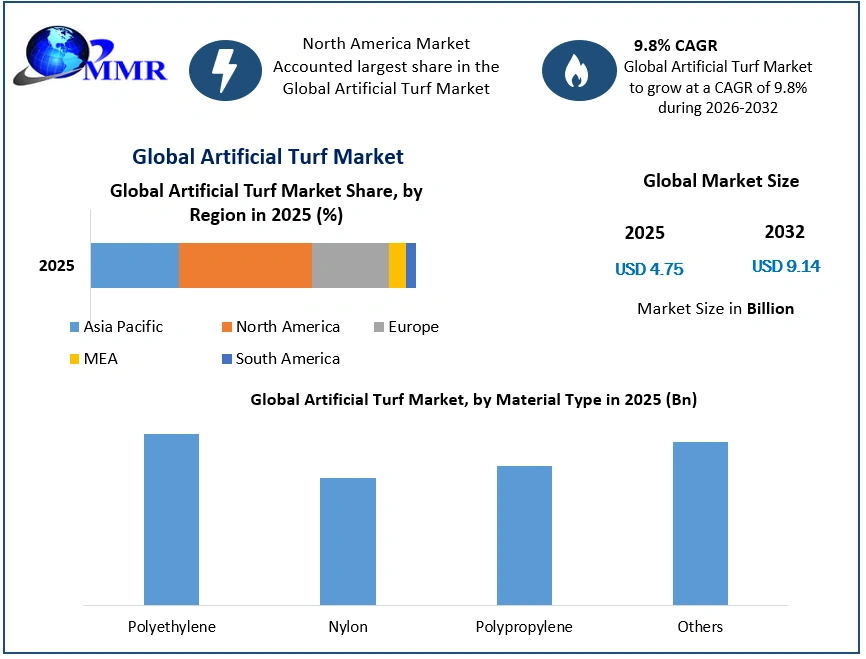
The Artificial Turf Market size was valued at USD 4.75 Billion in 2025 and the total Artificial Turf revenue is expected to grow at a CAGR of 9.8% from 2026 to 2032, reaching nearly USD 9.14 Billion by 2032.
Artificial Turf Market Overview:
Artificial turf is a surface of synthetic fibers made to look like natural grass. It is most often used in arenas for sports originally or commonly played on grass. However, it is now being used for residential lawns and commercial applications as well. The artificial grass market is growing quickly because it is driven by a combination of better manufacturing techniques combined with an increasing awareness of the longer-term environmental and economic benefits. Originally it was limited to larger sports clubs but now it is seen on many of the private lawns/gardens. There is no doubt at all that in busy schedules lives, time becomes more precious as people seek to juggle all their responsibilities.
Artificial grass needs very little maintenance and can free up a lot of time. Again, as the weather grows warmer there will be no more pressure on restricting water usage. Hose pipe restrictions can destroy a natural lawn, but artificial grass will not be affected. Another important benefit is that artificial grass is of such a material that actively helps the environment. As well as substantially reducing water usage and pollution from water run-off carrying chemicals into the drains is minimized.
The COVID-19 pandemic has affected economies and industries in various countries. The unprecedented rise in the number of COVID-19 cases and the subsequent lockdown of numerous manufacturing facilities influenced the growth of various markets. In the Middle East and Africa, the distribution network was significantly disrupted, which affected the sales of artificial turfs. According to Synthetic Grass Warehouse, artificial turf contractors are experiencing gains in sales of up to 30% from .
Sports field applications represented 63% of the installed turf in and are anticipated to remain the largest application segment over the forecast period. However, the use of turf in landscape applications is growing rapidly and is likely to create growth opportunities for the artificial turf market in the near future. The global marketplace is recovering from its losses. Manufacturers can overcome the demand and supply gap due to the revival of their operations.
Artificial turfs find the highest use in contact sports, such as soccer and rugby, which are two of the most popular games in and around Europe, thus contributing to the significant share held by the regional market. Many new artificial turfs are being set up for soccer and rugby grounds, with the most notable development being the usage of artificial turfs for the FIFA Women’s World Cup and in the FIFA World Cup.
There is high demand for artificial turf in the residential and commercial application sectors also. With various advantages, artificial turf has become a valid substitute for lawns. They are used in backyards, edgings, pavers, medians, and poolside areas and are used to create commercial and residential playgrounds, focusing on children's safety. Further, various developed and developing countries are experiencing rapid urbanization, leading to the significant growth of the construction sector globally, thereby fuelling demand for low-maintenance products, especially artificial turf.
To know about the Research Methodology :- Request Free Sample Report
Artificial Turf Market Dynamics:
Growing demand for Artificial Turf from the residential and commercial sector
The growing construction industry is driving the demand for artificial turf, which is used in artificial turfs for sports fields, stadiums, commercial gardens, and selected residential houses. For instance, Qatar is constructing eight stadiums for FIFA , which will require a high amount of artificial turf. Moreover, water-scarce regions are also adopting artificial turf, as they cannot grow natural grass easily. So, rising concern for water scarcity, globally, is also driving the growth of the artificial turf market. Another major factor responsible for the market growth is the fast-paced replacement of grass-surfaced sports arenas with artificial turf, due to its superior quality, easy replacement, and eco-friendly nature.
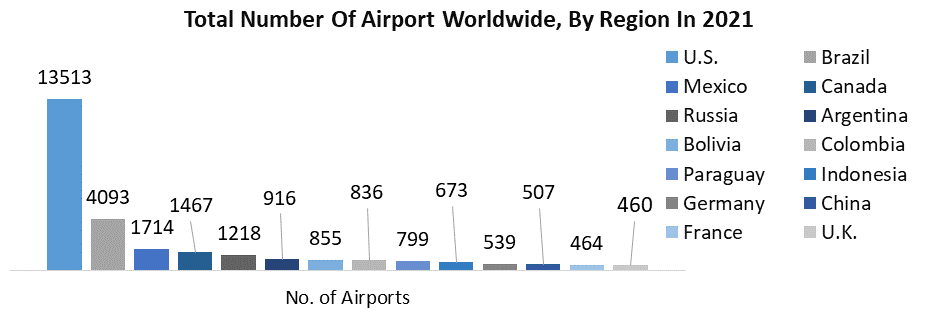
The use of synthetic grass has been widened in the areas like residential and commercial landscaping rather than athletic fields. Artificial turf has been widely used at airports. Some of the Astroturf/artificial grass can be integrated with optical fibers for runway lighting in the artificial landing surfaces for aircraft. Both the rubber granules and the synthetic fibers of artificial turf are subject to wear and can be washed into the environment. The rubber granulates from artificial turf infill constitute a significant source of rubber pollution. Fragments from the artificial reeds make their way into the environment as microplastic pollution in both marines as well as the soil environment.
Growing demand for landscaping and leisure to drive Artificial Turf Market
The leisure artificial turf is a composite entailing of man-crafted, grassy fibers and organic. The blades are green and are practical in dissimilar stack heights. This is structured in the same fashion as the tapet, it has a robust back and the blades are stitched on by a machine. With more and more areas across the globe being affected by drought maintaining a lush lawn has become an expensive affair. Also, the rising awareness of environmental degradation has led people to reduce the use of chemical-based fertilizers and pesticides. With designers and architects continuously finding different ways to use synthetic grass, it has managed to find its way into everyone’s life. Many have found uses for it in the form of wallpaper, or headrests for beds, among other things. Manufacturers have also found ways to weave in fiber optics into synthetic turf, essentially converting synthetic playing fields into huge jumbotrons.
High Installation Cost Restraint and Technological advancement
Rising technological advancement and innovations in Artificial turf gaining popularity among consumers. Technological advancement and continuous innovations are shaping the artificial turf market. This trend is being followed by the companies operating in the turf or grass industry to provide exceptional quality and real value for their customers with standout products including unmatched lifetime warranties, commitment to sustainability, and the industry's leading safety ratings. For instance, in February , SYNLawn, a US-based manufacturer of artificial grass unveiled its new category of product enhancements and offerings which will include soy content, additional color options, advanced drainage, and Super Yarn technology.
Super Yarn TM technology represents a significant step forward in the development of synthetic turf products. By combining three incredible features into one extruded grass yarn formulation, SYNLawn's Super Yarn technology transforms the turf industry. Super Yarn is the first of its kind artificial grass fiber, combining Sanitized antimicrobial technology with DualChillTM IR reflective technology and StatBlockTM anti-static technology at the molecular level.
Artificial Turf Market Segment Analysis:
Based on the Application, the Sports segment held the largest share of about 48% and dominated the Artificial Turf market in 2025. The segment is further expected to maintain its dominance in terms of value and volume at the end of the forecast period. In recent years, the use of artificial grass to replace natural grass is becoming increasingly predominant in the sports segment. Different sports pitches rapidly use one of the many different types of artificial grass because of the superior qualities it has over natural grass. It for instance does not require any sunlight or mowing and it can be used more often.
Rapidly growing adoption of artificial grass across various playing surfaces including football, golf, rugby, hockey, multi-purpose school sports field, and in several other sports areas is increasing the demand for Artificial turf. And, these factors rising the demand for Artificial Turf and drive the segment growth throughout the forecast period.
The replacement of natural grass with artificial turf in sports stadiums is expected to propel the growth of the artificial turf market. Artificial turf offers social and health benefits in terms of the capacity to sustain heavy use and accessibility of sports stadiums Stadium authorities are increasingly adopting plans to replace natural grass surfaces with synthetic turf to provide high-quality sports ground surfaces. For instance, according to The National Football League, a sports association in the United States, in April , Bank of America Stadium has done the transition from natural grass to artificial turf in time before the Carolina Panthers pre-season, which was scheduled in August .
The decision to the replacement of the natural grass with artificial field turf was made to guarantee a consistent surface for not only the Panthers but also for other events. This will be made even for the Charlotte Football Club of Major League Soccer, which will begin playing at BOA in , college football games, and concerts. Therefore, the replacement of natural grass with artificial turf in sports stadiums is driving the growth of the artificial turf market.
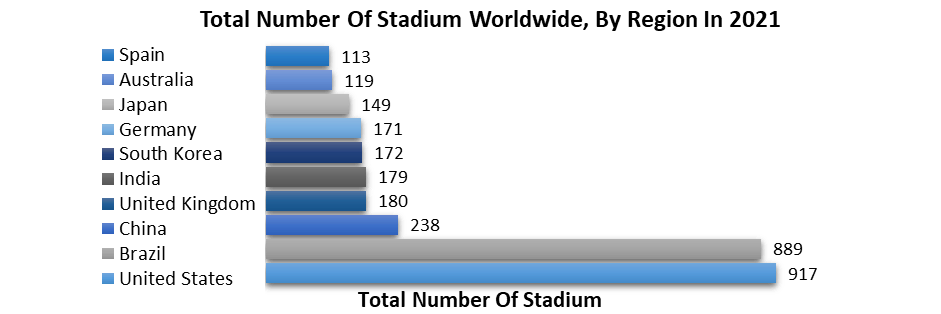
Synthetic fibers are used in place of natural grass worldwide, for realizing playgrounds, soccer fields, and even domestic gardens or recreational structures. Intensive use of artificial turf is currently observed in sports facilities, due to lower costs, higher sustainability in the recycling of materials, and advantages related to athletic practice and performance. Artificial turf is suitable for various sports, but it is commonly used for baseball, football, lacrosse, rugby, and soccer. Tepper Sports & Entertainment announced that they would shift away from grass to Field Turf ahead of the Carolina Panthers season. BC Place Stadium will also have a new turf field in Canada by the end of January . Moreover, artificial turf fields have sprung up in cities and villages in countries, such as India. Hence, the growing demand for artificial turf in the sports industry and an increasing number of stadiums using artificial turf are driving the global artificial turf market considerably.
In addition, the market growth is attributed to the introduction of high-quality artificial turf products by players approved by various associations, such as the Federation Internationale de Football Association (FIFA). Owing to minimum maintenance efforts and the growing demand for artificial turf from the sports and residential sectors, the artificial turf market is expected to witness high growth potential. The factors responsible for the growing demand for artificial turf in the sports sector include a remarkable rise in the number of sports events and unfavorable climatic conditions for the growth of natural grass. For instance, CCGrass installed artificial grass on a football field of Dingyuan County Sports Center, while Anhui obtained FIFA Quality Pro Certification in .
Artificial Turf Market Regional Insights:
The global Artificial Turf market has grown significantly in recent years as a result of shifting consumer preference for synthetic turf, which does not need sunlight and water to grow. The rapidly increasing construction industry, high demand from the sports sector, an increasing number of stadiums, parks, and gardens for children, rapid increase in interior and exterior decoration, and changing demographics are just a few of the important factors driving the global Artificial Turf market.
The North American Artificial Turf market held the largest share in terms of value and volume and dominated the market in 2025. The region is expected to grow at a CAGR of about xx% during the forecast period and maintain its dominance at the end of the forecast period. The use of AstroTurf and similar surfaces became widespread in the U.S. and Canada in the early 1970s, installed in both indoor and outdoor stadiums used for baseball and football. More than 11,000 artificial turf playing fields have been installed nationally. More than 1,200 were installed in the U.S. in alone, according to the industry group the Synthetic Turf Council. And the demand for artificial turf is continuously increasing in the region.
Increasing government investment in the up-gradation and construction of new schools, colleges, and universities is expected to drive the industry in North America. Moreover, the upcoming and under-construction corporate office projects are expected to drive the demand for synthetic grass from offices across the region. The region consists of countries such as the US and Canada, which are well-established and witnessing continuous growth. Moreover, the US has a well-established market for corporate offices. Moreover, the upcoming and under-construction projects are expected to drive the demand for artificial turf from offices across the country during the forecast period.
The European Artificial Turf market held a significant market share in 2024 and is expected to grow at a CAGR of about xx% during the forecast period. The high percentage is due to the wide adoption of the product among various end-users such as hospitality, airports, corporate offices, and others. The aviation sector is also supporting the industry across the region. The presence of many airports and the construction of new ones are expected to boost demand. The growth is attributed to the growing adoption of the product in commercial areas such as educational institutions, hotels, etc.
The United Kingdom is the largest market for artificial turf in Europe, with more than 5,000 artificial turf pitches in the country. France is also a major market for artificial turfs in Europe and has 1800 synthetic pitches, which account for 4% of all the pitches installed across France. Rugby is a major sport in France, and over the last six years, around 277 synthetic pitches have been installed among the 29 countries where rugby is played. In Germany, DFB (German Football Association) installed 1,000 synthetic mini-pitches to increase the popularity and develop football in Germany, right from the grass-root level. Luzhniki Olympic Complex is the largest sports complex in Russia and is home to as many as ten artificial turf pitches.

APAC's artificial turf market is expected to grow at the fastest growth rate during the forecast period. The growth is attributed to the rising construction activities across the region. The expansion of residential and commercial spaces leads to higher demand for green spaces such as lawns, backyards, community parks, and patios. However, the high cost of maintenance of natural grass is a major limitation in the region due to the lower disposable income among the population. As a result, several end-users are moving to artificial turf, which minimizes the maintenance cost and is highly durable.
Ecosystem: Artificial Turf Market

Artificial Turf Market Scope: Inquire before buying
| Artificial Turf Market | |||
|---|---|---|---|
| Report Coverage | Details | ||
| Base Year: | 2025 | Forecast Period: | 2026-2032 |
| Historical Data: | 2020 to 2025 | Market Size in 2025: | USD 4.75 Bn. |
| Forecast Period 2026 to 2032 CAGR: | 9.8% | Market Size in 2032: | USD 9.14 Bn. |
| Segments Covered: | by Material Type | Polyethylene Nylon Polypropylene Others |
|
| by Installation Type | Flooring Wall Cladding |
||
| by Infill Material | Rubber-based Plant-based Sand-based |
||
| by Application | Sports Leisure Landscaping Others |
||
Artificial Turf Market, by Region
North America (United States, Canada and Mexico)
Europe (UK, France, Germany, Italy, Spain, Sweden, Austria and Rest of Europe)
Asia Pacific (China, South Korea, Japan, India, Australia, Indonesia, Malaysia, Vietnam, Taiwan, Bangladesh, Pakistan and Rest of APAC)
Middle East and Africa (South Africa, GCC, Egypt, Nigeria and Rest of ME&A)
South America (Brazil, Argentina Rest of South America)
Artificial Turf Market, Key Players are:
The Artificial Turf Market is defined by innovation, collaboration, and strategic growth initiatives. Companies like Sport Group Holding GmbH, Global Syn-Turf, ForeverLawn, Dow Dupon, Shaw Industries are at the forefront of this industry, leveraging advancements in material science, automation, and sustainability. Through continued investments in R&D and product innovation, these companies aim to address the dynamic demands of key industries, ensuring their market leadership while driving the adoption of lightweight, high-strength, and eco-friendly composite solutions.
1. Sport Group Holding GmbH (Germany)
2. Global Syn-Turf (US)
3. ForeverLawn (US)
4. Dow dupont (US)
5. Shaw Industries (US)
6. Act Global (US)
7. Controlled Products (US)
8. Tigerturf (US)
9. Matrix Turf (US)
10. El Espartano (US)
11. Integriturf (US)
12. Challenger Industries Inc. (US)
13. Tarkett Group (France)
14. Tencate Grass (Netherlands)
15. SiS Pitches (UK)
16. Terraplas.com (UK)
17. Victoria PLC (Uk)
18. CoCreation Grass Co (China)
19. Creative Recreation Solutions (CRS) (Australia)
20. Nurteks Hali (Turkey)
21. Limonta (Italy)
FAQs:
1. What are the growth drivers for the Artificial Turf market?
Ans. The increasing automotive sector, increasing commercialization, growing building activity, rapidly changing customer preferences for customized automobiles, as well as increased demand for lightweight and fuel-efficient vehicles, are expected to be the major driver for the Artificial Turf market.
2. What is the major restraint for the Artificial Turf market growth?
Ans. The Stringent Regulations on Artificial Turf adoption are expected to be the major restraining factor for the Artificial Turf market growth.
3. Which region is expected to lead the global Artificial Turf market during the forecast period?
Ans. The North America market is expected to lead the global Artificial Turf market during the forecast period.
4. What was the Global Artificial Turf Market size in 2025?
Ans: The Global Artificial Turf Market size was USD 4.75 Billion in 2025.
5. What segments are covered in the Artificial Turf Market report?
Ans. The segments covered in the Artificial Turf market report are Material Type, Installation Type, Infill Material, Application, and Region.