
Acute Sinusitis Market Size by Type, Treatment, End User, Region – Revenue Pool Analysis, Margin Structure Assessment, Capital Flow Trends, Competitive Benchmarking & Forecast to 2032
Overview
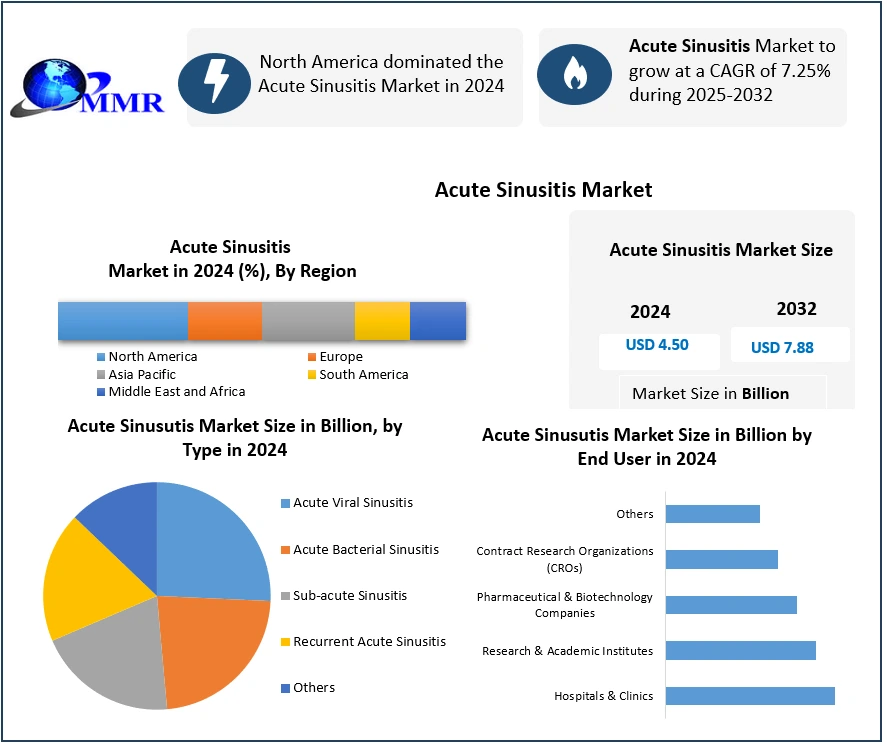
The Acute Sinusitis Market size was valued at USD 4.50 Bn in 2024, and the Acute Sinusitis market revenue is growing at a CAGR of 7.25% from 2025 to 2032, reaching USD 7.88 Bn by 2032.
Acute Sinusitis Market Overview
Acute sinusitis is a short-term inflammation of the sinuses, often caused by viral, bacterial, or fungal infections. It leads to symptoms such as nasal congestion, facial pain, headache, and fever. Most cases resolve with supportive care, though bacterial infections require antibiotics for effective treatment and symptom relief. The increasing prevalence of upper respiratory infections, rising pollution, and advancements in diagnostic and treatment methods drive the Acute Sinusitis Market. The sinusitis is found in acute or chronic sinusitis, with different germs like bacteria and viruses blocking the nasal cavities. Sinusitis can form complications like a brain abscess and meningitis.
 To know about the Research Methodology :- Request Free Sample Report
The presence of diagnostic treatment methods such as Blood tests, ciliary function tests, nasal cytology & allergy testing, sinus CT scans, and sinus MRIs is helping to reduce acute sinusitis. Healthcare service providers are focusing on the deployment of treatment for sinusitis. Acute Sinusitis Key players operating in the market are concentrating on the development of devices that improve intra-nasal drug delivery using innovative devices and help to reduce the side effects of antibiotics. Med-tech companies are boosting their R&D capacities to develop sinusitis treatment devices, which deploy bi-directional exhalation. Acute Sinusitis Key players include Pfizer, AbbVie, Sanofi, Novartis, GSK, Takeda, and device-focused firms such as ENTellus Medical and Intersect ENT. Innovations such as bi-directional nasal inhalers and drug-eluting sinus implants are driving the Acute Sinusitis Market. North America holds the largest share, followed by Europe, while Asia-Pacific is the fastest-growing region due to rising healthcare access and pollution-related sinus issues.
Acute Sinusitis Market Dynamics
Increasing Prevalence of Upper Respiratory Tract Infections to Create Acute Sinusitis Market Growth
The rising global incidence of upper respiratory tract infections (URTIs), which frequently progress to acute sinus infections when untreated. Factors such as increased air pollution from industrial emissions and vehicular traffic, fluctuating climate patterns leading to seasonal allergies, and high population density in urban areas have intensified the spread of respiratory illnesses. Urban lifestyles characterized by increased indoor crowding, reduced exposure to natural environments, and higher stress levels weaken immune responses, making individuals more susceptible. The heightened health awareness, supported by public health campaigns, is encouraging earlier diagnosis and treatment. Advancements in antibiotics, intranasal corticosteroids, and combination therapies have significantly improved patient recovery rates, strengthening the Acute Sinusitis Market demand. The expansion of healthcare facilities in emerging economies also supports wider treatment access, amplifying the growth potential.
Development of Advanced Diagnostic Tools to Create Acute Sinusitis Market Opportunity
Modern tools such as AI-powered diagnostic imaging, real-time symptom analysis apps, and point-of-care testing kits are enabling faster and more accurate detection in the Acute Sinusitis Market, improving early diagnosis and patient management. Telemedicine platforms are bridging the gap for patients in rural or underserved regions, allowing timely consultations without the need for in-person visits. Targeted drug delivery systems, such as mucoadhesive nasal sprays and nanoparticle-based formulations, are enhancing therapeutic efficacy by directly targeting inflamed sinus tissues. There is a rising consumer preference for holistic, non-invasive, and natural remedies, including saline irrigation, essential oil inhalation, and herbal anti-inflammatory products. This growing demand is encouraging pharmaceutical companies and wellness brands to expand their portfolios, while partnerships between med-tech and pharmaceutical firms are accelerating innovation in both diagnosis and treatment.
Misuse and Overprescription of Antibiotics to Create Acute Sinusitis Market Restraint
Many acute sinusitis cases are viral and do not require antibiotics, yet they are prescribed unnecessarily, accelerating global antibiotic resistance. This resistance not only diminishes the effectiveness of standard treatments but also increases the risk of prolonged illness and complications. In low- and middle-income countries, inadequate healthcare infrastructure, limited physician training, and over-the-counter antibiotic availability worsen the problem. The poor patient awareness about treatment adherence leads to incomplete medication courses, fueling resistance. The prolonged use of intranasal corticosteroids or oral decongestants can also cause adverse effects such as nasal dryness, mucosal thinning, and systemic side effects, discouraging consistent treatment.
Acute Sinusitis Market Segment Analysis
Based on Type, Acute Viral Sinusitis is expected to dominate the Acute Sinusitis Market over the forecast period. The majority of sinus infections originate from viral upper respiratory tract infections, such as the common cold, which trigger inflammation and blockage of the sinus passages. This category’s dominance is driven by high transmission rates during seasonal peaks, such as winter and early spring, and by urbanization-related factors like increased indoor crowding and air pollution. Acute viral sinusitis cases typically resolve within 7–10 days without the need for antibiotics, which makes over-the-counter remedies, nasal irrigation, and corticosteroid sprays the primary management approaches. Its large patient pool fuels steady demand for symptomatic relief products, telemedicine consultations, and preventive healthcare services. Public awareness campaigns promoting hygiene and early symptom management further strengthen the visibility and growth of the Acute Sinusitis Market. The broad adoption of rapid diagnostic tools allows healthcare providers to differentiate viral from bacterial cases more efficiently, reducing unnecessary antibiotic prescriptions.
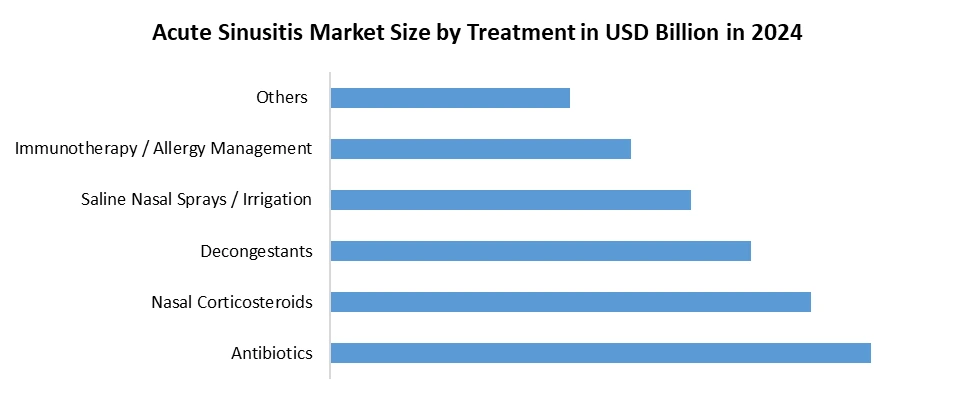
Based on the Treatment of Sinusitis, Antibiotics held the largest Acute Sinusitis Market Share in 2024. Physicians prescribe antibiotics such as amoxicillin-clavulanate, doxycycline, or fluoroquinolones to target bacterial pathogens, reduce inflammation, and prevent complications like chronic sinusitis or orbital cellulitis. The continued dominance of this segment is reinforced by patient demand for fast recovery, healthcare providers caution to avoid untreated bacterial progression, and well-established insurance reimbursement policies for antibiotic prescriptions. the availability of broad-spectrum antibiotics and fixed-dose combinations in both branded and generic forms makes them widely accessible across developed and emerging markets. Pharmaceutical companies are also innovating with targeted formulations and extended-release versions to improve compliance and reduce dosing frequency. Although global health authorities advocate for prudent antibiotic use, especially given rising antimicrobial resistance, the clinical necessity of antibiotics in confirmed bacterial cases ensures their Acute Sinusitis Industry leadership.
Acute Sinusitis Market Regional Insights
North America dominated the Acute Sinusitis Market in 2024 and is expected to grow at the highest CAGR over the forecast period. The high disease prevalence, advanced healthcare infrastructure, and strong Acute Sinusitis Market access for therapeutic products. In the United States alone, acute sinusitis is one of the most frequently diagnosed upper respiratory tract conditions, affecting approximately 31 million Americans annually, with roughly one in seven adults experiencing an episode each year. The condition ranks among the top reasons for physician consultations in primary care and is a major driver of antibiotic prescriptions. Seasonal spikes, particularly during winter months, amplify case numbers due to increased viral infections and allergen exposure.
The region benefits from widespread access to diagnostic tools such as CT scans, nasal endoscopy, and rapid point-of-care testing, enabling timely and accurate differentiation between viral and bacterial cases. North America’s robust pharmaceutical market ensures easy availability of both branded and generic antibiotics, nasal corticosteroids, decongestants, and saline irrigation products, supporting comprehensive treatment approaches. The patient awareness campaigns, telemedicine adoption, and insurance coverage contribute to early intervention and reduced complication risks.
Environmental factors such as urban air pollution, indoor allergens, and fluctuating climate conditions further elevate sinusitis incidence rates. The U.S. and Canada witness significant research investments in novel drug delivery systems, AI-powered diagnostics, and non-invasive treatment options. With high per-capita healthcare spending, strong physician networks, and a proactive approach to respiratory disease management, North America is expected to maintain its dominant position in the acute sinusitis market for the foreseeable future, influencing global treatment trends and product innovation strategies.
Acute Sinusitis Market Competitive Landscape
The competitive landscape of the North American Acute Sinusitis Treatment Market is led by Pfizer Inc. and GlaxoSmithKline plc (GSK), both of which maintain a significant share through extensive product portfolios and strong distribution channels. Pfizer holds a prominent position due to its wide array of antibiotics and anti-inflammatory medications frequently prescribed for bacterial sinusitis. Its strategic focus on combining prescription drugs with over-the-counter (OTC) offerings, such as decongestants and analgesics, allows Pfizer to serve both clinical and consumer markets effectively. Their investments in research and development (R&D) to enhance drug efficacy, patient compliance, and formulation innovation further solidify their presence.
Pfizer’s collaborative ventures and acquisitions also support pipeline expansion and enhance access across retail pharmacies and healthcare providers.GSK, on the other hand, maintains a strong foothold with its broad line of respiratory and anti-infective therapies, including popular antibiotics such as Augmentin, which are commonly prescribed for acute sinusitis. GSK’s advantage lies in its integration of patient-centric digital tools, telemedicine compatibility, and its growing biologics and intranasal therapies portfolio. The company continually invests in respiratory-focused R&D and leverages data-driven approaches to optimize treatment outcomes. Its partnerships with healthcare systems and e-pharmacy platforms allow GSK to expand its Acute Sinusitis Market penetration in urban and remote areas.
Key Development in the Market
• FDA approval of XHANCE (fluticasone propionate) nasal spray by Optinose for the treatment of chronic rhinosinusitis without nasal polyps in adults. This marks the first and only medication approved for this large patient group, addressing a significant unmet need in ENT care. The approval was supported by the landmark ReOpen clinical trial program, which demonstrated statistically significant symptom reduction, decreased sinus inflammation, and fewer acute exacerbations compared to placebo. XHANCE’s proprietary Exhalation Delivery System enables targeted steroid deposition in deep sinus areas unreachable by standard sprays, offering improved efficacy for difficult-to-treat cases.
• In early 2025, Pfizer advanced rimegepant sulfate ODT into Phase III clinical trials for the treatment of rhinosinusitis. This orally dissolving tablet targets the calcitonin gene-related peptide (CGRP) receptor, a pathway associated with inflammation and pain modulation, aiming to reduce sinus-related symptoms effectively. The formulation offers convenient, rapid administration without the need for water, improving patient compliance.
Key Trends of the Market
1. Shift Toward Non-Antibiotic and Microbiome-Based Therapies
There is a growing trend toward developing non-antibiotic treatments, such as nasal microbiome therapies and immunomodulators, to combat rising antibiotic resistance. Companies are increasingly investing in biologics and live biotherapeutic products that restore nasal microbial balance and reduce recurrence rates of acute sinusitis. This reflects a broader market movement toward sustainable, targeted treatments that go beyond symptom relief and minimize antimicrobial overuse.
2. Integration of AI and Digital Tools in Diagnosis and Treatment
Artificial intelligence is being integrated into sinusitis management through AI-powered diagnostic platforms that differentiate bacterial from viral infections, helping to prevent unnecessary prescriptions. Additionally, digital health solutions such as symptom trackers and telemedicine platforms are enabling early diagnosis and better treatment adherence. This trend supports precision medicine and enhances clinical efficiency, especially in primary care and urgent care settings.
Acute Sinusitis Market Scope: Inquire before buying
| Global Acute Sinusitis Market | |||
|---|---|---|---|
| Report Coverage | Details | ||
| Base Year: | 2024 | Forecast Period: | 2025-2032 |
| Historical Data: | 2019 to 2024 | Market Size in 2024: | USD 4.50 Bn. |
| Forecast Period 2025 to 2032 CAGR: | 7.25% | Market Size in 2032: | USD 7.88 Bn. |
| Segments Covered: | by Type | Acute Viral Sinusitis Acute Bacterial Sinusitis Sub-acute Sinusitis Recurrent Acute Sinusitis Others |
|
| by Treatment | Antibiotics Nasal Corticosteroids Decongestants Saline Nasal Sprays / Irrigation Immunotherapy / Allergy Management Others |
||
| by End User | Hospitals & Clinics Research & Academic Institutes Pharmaceutical & Biotechnology Companies Contract Research Organizations (CROs) Others |
||
Acute Sinusitis Market, by Region
North America (United States, Canada, Mexico)
Europe (United Kingdom, France, Germany, Italy, Spain, Sweden, Russia, the Rest of Europe)
Asia Pacific (China, South Korea, Japan, India, Australia, Indonesia, Malaysia, Philippines, Thailand, Vietnam, Rest of Asia Pacific)
Middle East and Africa (MEA) (South Africa, GCC, Nigeria, Rest of MEA)
South America (Brazil, Argentina, Colombia, Chile, Rest of South America)
Acute Sinusitis Key Players are
North America
1. Pfizer, Inc.
2. Johnson & Johnson
3. Abbott Laboratories
4. Medtronic plc
5. OptiNose US, Inc.
6. Olympus Corporation
7. Medline Industries
8. Hikma Specialty USA Inc.
9. AdvaCare Pharma
10. Kenvue Brands
Europe
1. Sanofi S.A.
2. Novartis AG
3. GlaxoSmithKline plc (GSK)
4. Bayer AG
5. AstraZeneca plc
6. Bristol-Myers Squibb
7. Bionorica SE
8. Fresenius Kabi AG
Asia-Pacific
1. Sun Pharmaceutical Industries Ltd.
2. Dr. Reddy’s Laboratories Ltd.
3. Cipla Ltd.
4. Teva Pharmaceutical Industries Ltd.
5. Aurobindo Pharma Ltd.
Frequently Asked Questions:
1] What segments are covered in the Acute Sinusitis Market report?
Ans. The segments covered in the Market report are based on the Type of Sinusitis, Treatment of Sinusitis, and End User.
2] Which region is expected to hold the highest share in the Acute Sinusitis Market?
Ans. The North America region is expected to hold the highest share in the Market.
3] What is the market size of the Acute Sinusitis Market by 2032?
Ans. The Acute Sinusitis Market size of the Market by 2032 is USD 7.88 Bn.
4] What is the forecast period for the Acute Sinusitis Market?
Ans. The forecast period for the Market is 2025-2032.
5] What was the market size of the Acute Sinusitis Market in 2024?
Ans. The market size of the Market in 2023 was USD 4.50 Bn.