
Farrier Products Market - Industry Structure Evaluation, Demand Drivers Analysis, Regional Growth Analysis and Identification, Competitive Positioning Review & Global Market Size Forecast to 2032
Overview
Global Farrier Products Market size was valued at USD 193.14 Million in 2025 and the total Farrier Products revenue is expected to grow at a CAGR of 5.6 % from 2025 to 2032, reaching nearly USD282.83 Million.
Farrier Products Market Overview
The Farrier Products Market is a dynamic and evolving industry, driven by the demand for quality products and services in the equine industry. Farriers play a crucial role in maintaining the health and well-being of horses by providing hoof care and shoeing services. The market for farrier products includes a wide range of tools, equipment, and supplies used by farriers in their day-to-day work. The market has experienced steady growth. The increasing popularity of horse-related activities such as horse racing, equestrian sports, and leisure riding has contributed to the demand for farrier services and products. The growing awareness among horse owners about the importance of regular hoof care and the impact of proper shoeing on horse performance has further fuelled the market growth.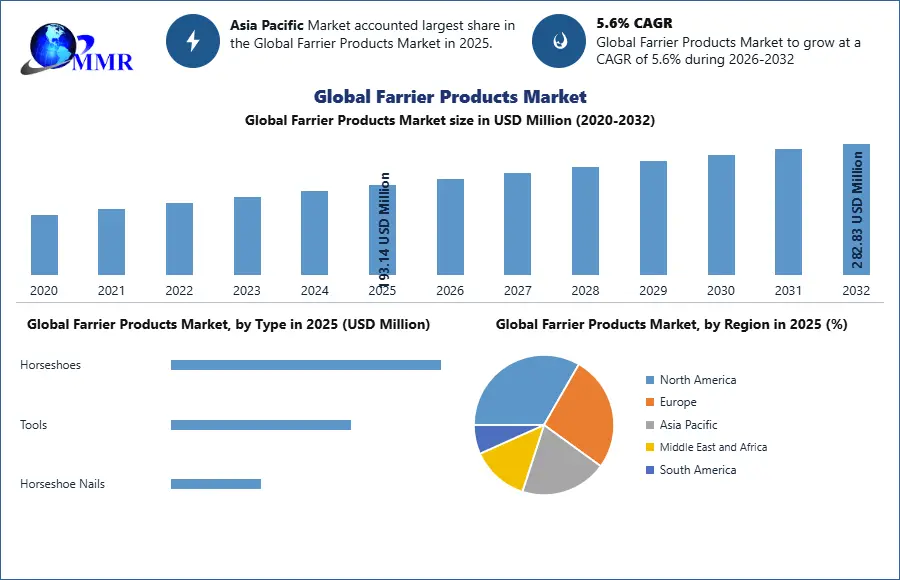 To know about the Research Methodology :- Request Free Sample Report
One of the key factors driving the farrier products market is the continuous innovation and development of new and advanced products. Manufacturers are constantly introducing improved tools and equipment that offer better performance, durability, and efficiency. These advancements not only enhance the work of farriers but also contribute to the overall health and comfort of the horses.
Geographically, the demand for farrier products varies across regions. Different countries have their own preferences and requirements when it comes to farrier tools and equipment. For example, regions with a higher concentration of horse racing activities may have a greater demand for specialized racing plates and related products. Similarly, regions with a strong equestrian culture may prioritize products that cater to specific disciplines such as dressage or show jumping.
In terms of distribution channels, the farrier products market utilizes a combination of online and offline channels. Online platforms provide convenience and accessibility for customers to browse and purchase a wide range of farrier products. E-commerce platforms and specialized online retailers play a significant role in reaching a global customer base. Offline retail establishments such as equestrian supply stores, farrier supply shops, and agricultural equipment retailers also contribute to the dissemination of farrier products, especially at the local level.
Farrier Products Market Research Methodology
The research on the farrier products market involved the use of both primary and secondary data sources to collect relevant information. The study examined all possible factors influencing the market in-depth and validated the findings through primary research. The impact of inflation, economic downturns, regulatory & policy changes, and other variables was factored into the market forecast to provide valuable conclusions.
To estimate the Farrier Products industry size and forecast, the bottom-up approach and multiple data triangulation methodologies were utilized. The percentage splits, market shares, and breakdowns of the segments were derived based on weights assigned to each segment's utilization rate and average sale price. The country-wise analysis of the overall market and its sub-segments was based on the percentage adoption or utilization of the given market size in the respective region or country.
The major players in the farrier products industry were identified through secondary research based on indicators such as market revenue, price, services offered, advancements, mergers, and acquisitions. Extensive primary research was conducted to verify and confirm the crucial numbers arrived at after comprehensive market engineering and calculations for market statistics, market size estimations, market forecasts, market breakdown, and data triangulation
External and internal factors that were expected to affect the farrier products market positively or negatively were analyzed to give decision-makers a clear view of the industry's future. The report also provided a clear representation of competitive analysis of key players by price, financial position, growth strategies, and regional presence in the market.
Farrier Products Market Dynamics:
Farrier Products Market Drivers
The growing popularity of horse-related activities, such as horse racing, equestrian sports, and recreational riding, has fuelled the demand for farrier services and products. Horse owners' rising awareness regarding the importance of regular hoof care and proper shoeing's impact on horse well-being has further propelled Farrier Products market growth.
Continuous innovation and development of new and advanced farrier products are driving factors in the market. Manufacturers are constantly introducing improved tools and equipment that offer enhanced performance, durability, and efficiency.
The demand for farrier products may vary across different regions due to unique preferences and requirements. For example, regions with a higher concentration of horse racing activities may have a greater demand for specialized racing plates and related products. Similarly, regions with a strong equestrian culture may prioritize products that cater to specific disciplines like dressage or show jumping.
The demand for farrier products is positively influenced by factors such as a growing horse population, increasing awareness of proper hoof care, and ongoing product innovation.
Farrier Products Market Restraints
The Farrier Products Market faces certain restraints that impact its growth and potential. These include safety concerns, high costs, and maintenance and repair challenges. Safety concerns arise due to the nature of the products used in farrier services, such as sharp tools and equipment.
High costs also act as a restraint in the market. Quality farrier tools and equipment often come at a higher price point due to their durability and specialized features. This limit the market potential for farrier products, particularly for customers on a tight budget. Manufacturers and suppliers need to strike a balance between quality and affordability to cater to a wide range of customers.
Maintenance and repair requirements are another factor that pose challenges in the farrier products market. Farrier tools and equipment need regular maintenance to ensure their effectiveness and longevity. Manufacturers address this restraint by providing guidance on maintenance practices and offering reliable repair services.
Certain regulatory restrictions or guidelines imposed by governing bodies or associations impact the farrier products market. These regulations may include requirements for product standards, certifications, or licensing for farriers.
Farrier Products Market Opportunities
The Farrier Products Market has the potential to expand its distribution and reach a broader audience through the growing popularity of e-commerce platforms. Manufacturers should leverage e-commerce sales to effectively and affordably promote their products worldwide. By utilizing online channels, they tap into a larger customer base and increase market penetration.
As the use of smart devices such as smartphones and tablets become more prevalent, people are becoming accustomed to purchasing smart products. Farrier products market manufacturers capitalize on this trend by providing goods that work seamlessly with a variety of smart devices. This includes digital tools, apps, or software solutions that enhance the efficiency and convenience of farrier services. Farrier products, such as portable hoof care tools or lightweight shoeing equipment, cater to the needs of horse owners and professionals who travel frequently with their horses.
Farrier Products Market Trends
In the Farrier Products Market, several market trends are shaping the industry landscape. One notable trend is the increasing demand for lightweight and durable materials in farrier products. Customers seek farrier tools and equipment that offer enhanced durability and protection for efficient and reliable use. Manufacturers are responding to this trend by incorporating lightweight and robust materials such as high-grade steel and advanced alloys.
Another trend observed in the farrier products industry is the growing preference for customization options. Customers are seeking farrier tools and equipment that be tailored to their specific wants and needs. Manufacturers are addressing this trend by offering customization options such as interchangeable parts, adjustable features, and personalized branding.
Sustainability and eco-friendliness are also gaining traction in the farrier products market. Manufacturers are recognizing this trend and are incorporating sustainable practices into their production processes. This includes using eco-friendly materials, implementing energy-efficient manufacturing methods, and reducing waste generation. By offering sustainable farrier products, manufacturers attract environmentally conscious customers and align with their values.
Farrier Products Market Segment Analysis:
In 2025, the Horseshoes segment dominates the global Farrier Products Market due to its essential role in equine hoof protection, performance enhancement, and injury prevention. Horseshoes account for the largest market share as they are continuously required across racing, sports, leisure riding, and working horse applications. Increasing participation in equestrian sports and rising awareness regarding hoof health are further accelerating demand for advanced steel, aluminum, and therapeutic horseshoes. Additionally, innovations such as lightweight alloy shoes and customized orthopedic horseshoes are strengthening segment growth.
The Tools segment holds the second-largest share, supported by the growing number of professional farriers and expanding hoof care services worldwide. Essential tools such as rasps, anvils, hammers, hoof knives, and hoof stands witness stable demand because they are required for regular trimming, balancing, and shoe fitting procedures. The increasing adoption of mobile farrier services and technologically improved ergonomic tools is also supporting market expansion.
The Horseshoe Nails segment shows steady growth owing to its recurring replacement demand and direct dependency on horseshoe installation cycles. Advanced nail designs with improved grip, reduced hoof damage, and better fitting compatibility are gaining popularity among professional farriers. Although smaller than horseshoes in market share, the segment remains highly important due to frequent consumption and consistent replacement needs in equine maintenance activities

Farrier Products Market Regional Insights:
North America is a significant farrier products market, with the United States and Canada playing a crucial role in the region. The demand for farrier products in North America is driven by the presence of a substantial horse population and a strong equestrian culture. The region has a well-established farrier industry, with skilled professionals offering hoof care and shoeing services. The increasing awareness among horse owners about the importance of proper hoof care and its impact on horse health and performance is driving the demand for farrier products in the region.
Europe also represents a significant farrier products market, with countries like the UK, Germany, France, and Italy leading the industry. The region's rich equestrian heritage and the presence of prestigious horse events drive the demand for farrier services and products. The increasing focus on horse welfare and performance further fuels the market growth in Europe.
Asia Pacific is a substantial farrier products market, with countries such as China, Japan, South Korea, and India playing a significant role. The growing popularity of horse racing, equestrian sports, and recreational riding in the region drives the demand for farrier services and products. The rising disposable income and the expanding middle-class population contribute to the market growth in Asia Pacific.
Middle East and Africa region is an emerging farrier products market, with countries like the UAE, Saudi Arabia, and South Africa witnessing growth in the industry. The region's increasing interest in equestrian activities, along with the development of equestrian facilities and events, drives the demand for farrier products. The growing awareness of horse care and welfare further fuels the market growth in the Middle East and Africa.
South America is an emerging market, with Brazil being the largest market in the region. The growing interest in equestrian activities, such as horse racing and recreational riding, is fuelling the demand for farrier services and products. The region's expanding middle-class population and rising disposable income contribute to the growth of the farrier products market in South America.

Farrier Products Market Recent Developments
- In January 2026, Royal Kerckhaert Horseshoe Factory acquired Farrier Product Distribution (FPD), strengthening its distribution network across the U.S. and Canada. The acquisition expanded Kerckhaert’s “House of Brands” portfolio, including Liberty Nails, Diamond, Vettec, Hoofjack, and Save Edge products, enhancing its market leadership in farrier supplies.
- In 2025, Royal Kerckhaert Horseshoe Factory introduced the new Tölt Horseshoe, specifically designed for Icelandic horses. The product gained industry attention after being used successfully during the 2025 World Championship for Icelandic Horses in Switzerland, highlighting the company’s focus on specialized equine performance solutions.
- In May 2025, Mustad Hoofcare announced price adjustments across several farrier product lines due to rising steel and aluminum tariffs. The company stated that increasing raw material and transportation costs were impacting horseshoes, nails, and hoofcare tools globally.
- In 2025, Farrier Product Distribution expanded its product portfolio with new launches including Kerckhaert Prime Fit horseshoes, Liberty Combo Slim HardTop Nails, and RazorStar abrasive belts. The company also strengthened its hoofcare offerings through Vettec and Plexus product developments.
- In June 2024, Farrier Product Distribution launched new Kerckhaert Trek thicker horseshoes and introduced FootPro brass hammers and carbide studs to improve durability and traction performance for professional farriers.
- In April 2024, Royal Kerckhaert Horseshoe Factory introduced the Steel Comfort Sport horseshoe series, designed to improve breakover, movement coordination, and tendon pressure reduction for sports horses.
Farrier Products Market Scope: Inquire before buying
| Global Farrier Products Market | |||
|---|---|---|---|
| Report Coverage | Details | ||
| Base Year: | 2025 | Forecast Period: | 2026-2032 |
| Historical Data: | 2020 to 2025 | Market Size in 2025: | 193.14 USD Million |
| Forecast Period 2026-2032 CAGR: | 5.6% | Market Size in 2032: | 282.83 USD Million |
| Segments Covered: | by Type | Horseshoes Regular Shoe Rim Shoe Bar Shoe Egg Bar Shoe Heart Bar Shoe Others Tools Hoof Pick Hoof Testers Hoof Stand Pullers Others Horseshoe Nails Hoof Pads & Snow Pads Hoof Care Products Pins Others |
|
| By Price Range | Low Medium High |
||
| By Material | Steel Aluminum Plastic Composite Materials Rubber Others |
||
| By Distribution Channel | Online Retail E-Commerce Platforms Specialty Stores Veterinary Supply Stores Direct Sales |
||
| By End User | Professional Farriers Veterinary Clinics Equestrian Centers Horse Owners |
||
Farrier Products Market by Region:
North America (United States, Canada, and Mexico)
Europe (UK, France, Germany, Italy, Spain, Sweden, Austria, and the Rest of Europe)
Asia Pacific (China, South Korea, Japan, India, Australia, Indonesia, Malaysia, Vietnam, Rest of APAC)
Middle East and Africa (South Africa, GCC, Egypt, Nigeria, and the Rest of ME&A)
South America (Brazil, Argentina Rest of South America)
Farrier Products Key Players
- Mustad Hoofcare Group
- Kerckhaert International
- Diamond Farrier Company
- St. Croix Forge
- Farnam Horse Products
- Absorbine
- Shoof International
- Vettec
- Equilox International Inc.
- Werkman Hoofcare
- Life Data Labs
- NC Tool Company
- GE Forge & Tool
- Jim Blurton
- Centaur Forge
- Jon Atkinson Tools
- Derek Gardner (DG) Farrier Products
- Pathfinder Farrier Products Co.
- Polyflex Horseshoes
- Castle Plastics
Others
n.