
Global Cutaneous T Cell Lymphoma Market Size by Type, Treatment, End-user and Region – Segment-Level Market Assessment, Growth Opportunity Analysis, Competitive Mapping & Forecast to 2030
Overview
Cutaneous T Cell Lymphoma Market size was valued at USD 3.26 Bn. in 2023 and the total Cutaneous T Cell Lymphoma revenue is expected to grow by 4.8 % from 2024 to 2030, reaching nearly USD 4.53 Bn.
Cutaneous T Cell Lymphoma Market Overview:
The Cutaneous T cell lymphoma is a type of cancer that begins in white blood cells called T cells. T cells’ primary function is to fight infection in the body. Cutaneous T cell lymphoma starts in lymph tissue which is present throughout the body, such as in the spleen, tonsils, bone marrow, intestines, and skin. In Cutaneous T cell lymphoma, the T cells develop abnormalities that make them attack the skin. Most skin (cutaneous) lymphomas are T-cell lymphomas. Cutaneous T cell lymphoma causes scaly patches or bumps called lesions or tumors.
The cancer is also known as lymphoma of the skin. Mycosis fungoides and Sézary syndrome are two types of Cutaneous T cell lymphoma that cause life-threatening medical complications. So early diagnosis and better treatment give promise against the disease. Although Cutaneous T cell lymphoma is rare cancer, it is a challenging disease to manage, and early diagnosis and better treatment options give hope to patients. Ongoing research and development drive the Market.
Cutaneous T Cell Lymphoma Market Scope and Research Methodology:
The Cutaneous T Cell Lymphoma market is relatively small due to its less prevalence but it is expected to grow in the coming years due to increasing awareness, better diagnostic tools, and new treatment options. The research methodology for the market involves primary and secondary research. Primary research involves collecting data directly from the hospitals, including patients, physicians, and key opinion leaders. This is done through surveys and interviews. Where Secondary research is done by gathering data from medical journals, and published reports which give a better understanding of the market, its size, trends, and growth potential.
The data collected through primary and secondary research is then analysed and used to make informed predictions about the future of the market. This includes analysing market trends, growth drivers, challenges, and opportunities. To know about the Research Methodology :- Request Free Sample Report
Cutaneous T Cell Lymphoma Market Dynamics:
Drivers:
Promising Therapeutics Pipeline the Cutaneous T cell lymphoma Market
Cutaneous T cell lymphoma is a rare type of cancer that mainly affects the skin. Cutaneous T cell lymphoma cases rising globally in the last few years, which driving the Cutaneous T cell lymphoma market is growing. As more cases of Cutaneous T cell lymphoma occur, there is a greater need for improved treatments which driving the market. Patients and healthcare professionals are becoming more aware of Cutaneous T cell lymphoma, which increases the demand for early detection and treatment. Developed and developing countries are increasing their healthcare facilities, which is also contributing to the growth of the market. Governments and healthcare organizations are investing in better healthcare infrastructure, making advanced diagnostic tools and treatment options more accessible to patients with Cutaneous T cell lymphoma.
Restraints:
Delay in CTCL Diagnostics Lead to Slower Growth of Market
The high cost of Cutaneous T cell lymphoma treatment hinders market growth, and treatments are inaccessible for patients due to their expensive prices, particularly in developing countries. This lack of affordability prevents patients from accessing the treatment.
Another restraint is the lack of effective treatments for Cutaneous T cell lymphoma. While new treatments are being developed, there is still a long way to go before they become widely available and accessible to all patients. This lack of treatment limits the growth of the market. Moreover, the adverse side effects associated with some Cutaneous T cell lymphoma treatments also add a limitation to the market growth.
Cutaneous T Cell Lymphoma Market Segment Analysis:
Based on Type, the Cutaneous T Cell Lymphoma market is segmented into Mycosis Fungoides and Sezary Syndrome. The market is dominated by the Mycosis Fungoides segment and is expected to continue its dominance during the forecast period. According to the National Institutes of Health’s recent publication, Mycosis Fungoides account for 65% of all Cutaneous T cell lymphoma cases. This type of lymphoma is characterized by the accumulation of malignant T-cells in the skin, which causes scaly, itchy patches and plaques that leads to a progression of tumours. Followed by Sezary Syndrome in the market. This type of lymphoma is more aggressive than MF and involves malignant T-cells circulating in the blood. Sezary Syndrome accounts for a smaller portion of Cutaneous T cell lymphoma cases compared to MF, but it still denotes a noteworthy market share.
Based on treatment, Targeted therapy is dominating the market in 2023 and is expected to continue its dominance during the forecast period. The treatment of Cutaneous T Cell Lymphoma is a complex process that requires a personalized approach, as different patients may respond differently to different treatments. Radiation therapy and chemotherapy account for an equal share in the treatment domain. These treatments are used in combination with other therapies, such as targeted therapy or immunotherapy, to increase their efficacy.
The market for T cell lymphoma with more effective treatments such as targeted therapy, and early diagnosis are expected to boost the market within the forecast period. However, t cell Lymphoma is a rare type of disease, so the development and research for the market are slower than the other type of cancer market, there advanced treatments are likely to be dominant for the market in the future.
Regional Insights:
North America dominated the market in 2023 and is expected to continue its dominance during the forecast period. A recent study published by the American Cancer Society in 2023, states that lymphoma cases accounted for approx. 80000 in the U.S. Out of these, 5% were Cutaneous T cell lymphomas. The high risk of Cutaneous T cell lymphomas creates a need for effective treatment, which has driven the growth of the market in North America.
Asia-Pacific region is projected to grow at a high growth rate during the forecast period. The region accounts for 60% of the world's population and half of the global cancer burden. Lack of awareness and late diagnosis are major factors for the incidence of Cutaneous T Cell Lymphoma in the Asia Pacific region. For instance, in India, the Tata Memorial Centre has established a dedicated Cutaneous Lymphoma Clinic to provide complete care for patients with Cutaneous T Cell Lymphoma. Followed by European countries and the MEA region.
Competitive Landscape
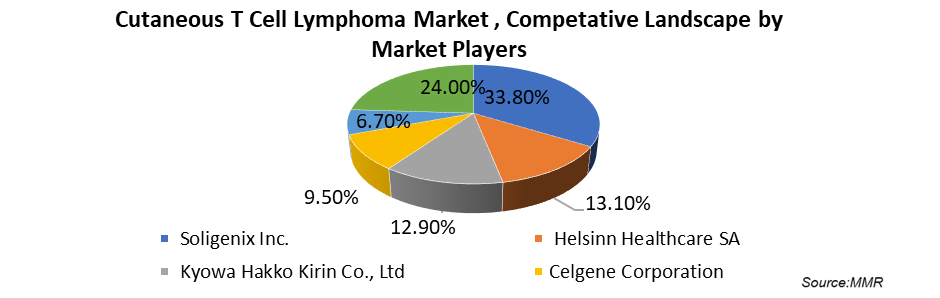
The Market is highly competitive, with several major players competing for market share. Some of the key players in the market include Celgene Corporation, Helsinn Healthcare SA, Kyowa Hakko Kirin Co., Ltd, Merck & Co. Inc., Seattle Genetics, Soligenix Inc., Actelion Pharmaceuticals Ltd., Eisai Co., Ltd., Seagen Inc., EUSA Pharma, Topotarget A/S, Bavarian Nordic, Takeda Pharmaceutical Company Limited.
Market leaders are designing new drugs and therapies which aim to produce better immunological drugs for better treatment, such as Celgene Corporation is a pharmaceutical company that makes cancer and immunology drugs having the ability to treat different cancers, including Cutaneous T Cell Lymphoma. For instance, its major product is Revlimid shows results against Cutaneous T Cell Lymphoma. Additionally, Helsinn is expanding its portfolio of cancer treatments to cure an unmet patient need in Cutaneous T Cell Lymphoma, based on their experience in oncology drug designing.
Cutaneous T Cell Lymphoma Market Scope: Inquire before buying
| Cutaneous T Cell Lymphoma Market | |||
|---|---|---|---|
| Report Coverage | Details | ||
| Base Year: | 2023 | Forecast Period: | 2024-2030 |
| Historical Data: | 2018 to 2023 | Market Size in 2023: | USD 3.26 Bn. |
| Forecast Period 2024 to 2030 CAGR: | 4.8 % | Market Size in 2030: | USD 4.53 Bn. |
| Segments Covered: | by Type | Mycosis Fungoides (MF) Sezary Syndrome (SS) |
|
| by Treatment | Radiation Therapy Chemotherapy Immunotherapy Targeted therapy Other Treatments |
||
| by End-user | Hospitals Diagnostic Centres Clinics |
||
Cutaneous T Cell Lymphoma Market, by Region
North America (United States, Canada and Mexico)
Europe (UK, France, Germany, Italy, Spain, Sweden, Austria and Rest of Europe)
Asia Pacific (China, South Korea, Japan, India, Australia, Indonesia, Malaysia, Vietnam, Taiwan, Bangladesh, Pakistan and Rest of APAC)
Middle East and Africa (South Africa, GCC, Egypt, Nigeria and Rest of ME&A)
South America (Brazil, Argentina Rest of South America)
Cutaneous T Cell Lymphoma Market, Key Players
1. Celgene Corporation
2. Helsinn Healthcare SA
3. Kyowa Hakko Kirin Co., Ltd
4. Merck & Co. Inc.
5. Seattle Genetics
6. Soligenix Inc.
7. Actelion Pharmaceuticals Ltd.
8. Eisai Co., Ltd.
9. Seagen Inc.
10. EUSA Pharma
11. Topotarget A/S
12. Bavarian Nordic
13. Takeda Pharmaceutical Company Limited
Frequently Asked Questions:
1] What segments are covered in the Global Cutaneous T Cell Lymphoma Market report?
Ans. The segments covered in the Market report are based on Type, Treatment, End users and Region.
2] Which region is expected to hold the highest share in the Global Market?
Ans. The North America region is expected to hold the highest share of the Market.
3] What is the market size of the Global Cutaneous T Cell Lymphoma Market by 2030?
Ans. The market size of the Market by 2030 is expected to reach USD 4.53 Bn.
4] What is the forecast period for the Global Market?
Ans. The forecast period for the Cutaneous T Cell Lymphoma Market is 2024-2030.
5] What was the market size of the Global Market in 2023?
Ans. The market size of the Market in 2023 was valued at USD 3.26 Bn.