
Cumene Market by Catalyst Type, Application, and Region - Global Market Size Estimation, Industry-Wide Analysis, Competitive Landscape Assessment & Long-Term Forecast to 2032
Overview
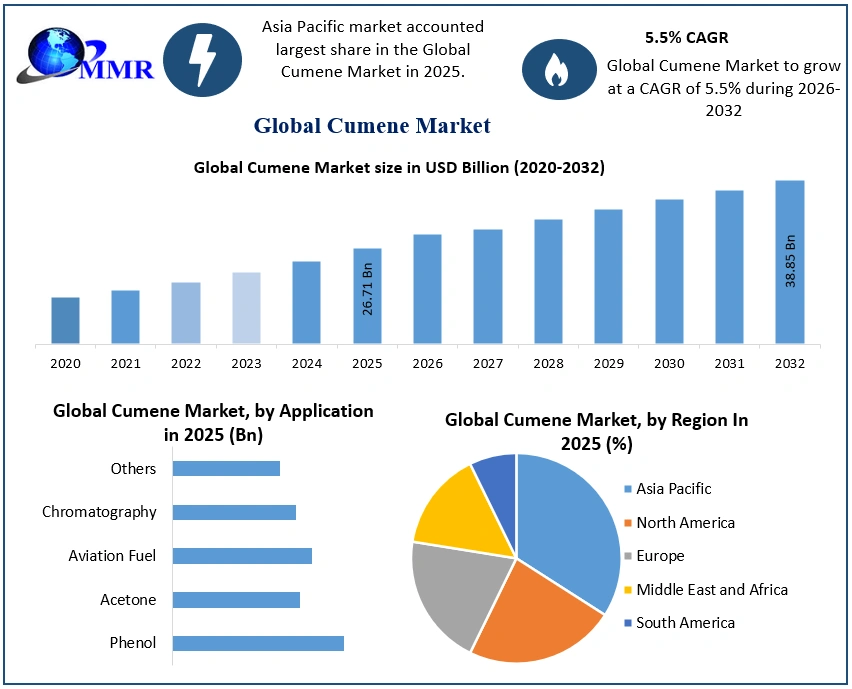
The Cumene Market size was valued at USD 26.71 Billion in 2025 and the total Cumene revenue is expected to grow at a CAGR of 5.5% from 2026 to 2032, reaching nearly USD 38.85 Billion by 2032.
Cumene market overview
Cumene is a chemical compound characterized by a benzene ring, a six-carbon structure with alternating single and double bonds, to which a propyl group is attached. In simpler terms, it is a molecular arrangement of carbon and hydrogen atoms. It is highly explosive white liquid with a boiling point of 152 Degree Celsius in crude oil and refine oil. Cumene is utilized in the synthesis of other chemicals, such as phenol and acetone, through a process called cumene hydroperoxide cleavage. It is also used as a solvent to thin paints, lacquers, and enamels.
Cumene works as a solvent for fats and resins, has applications in printing, and is involved in making rubber. It is commercially produced using Friedel–Crafts alkylation of benzene with propylene. Cumene manufacturers contribute around 22% of total benzene consumption. The initial way for producing cumene was by the liquid phase alkylation of benzene with sulfuric acid as a catalyst, however, due to the intricate neutralization and reuse procedures necessary, as well as corrosive environment issues, this approach has been substantially superseded. As a substitute, the catalyst was solid phosphoric acid supplemented by alumina.
The utilization of cumene resides as a chemical intermediate within the plastic manufacturing sector, making it a valuable foundational compound in chemical synthesis. During production of various plastics, BPA (bisphenol A), which is biggest market of phenol, is used to make poly carbonate and epoxy resins. It is formed from phenol and acetone. Cumene is also employed in the production of styrene, a key component in the manufacturing of plastics, resins, and synthetic rubber. Cumene is also used as a raw material in production of detergent. Royal Dutch Shell, Exxon Mobil, Total, BP, Sumitomo Chemical, Westlake Chemical, SABIC, BASF and The Dow Chemical are few key manufacturers of cumene.
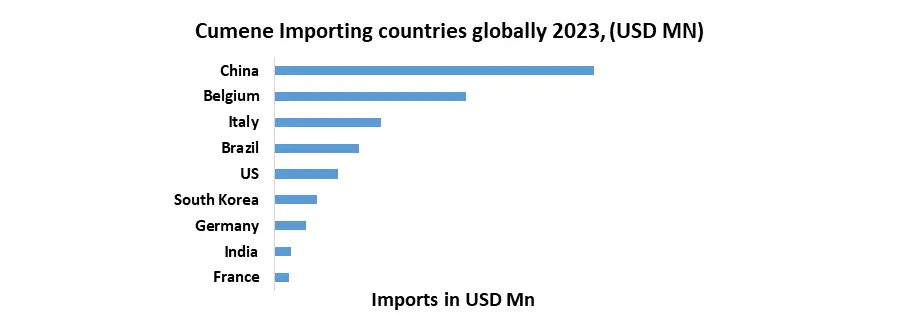
The cumene market in China is experiencing growth, attributed to the heightened demand for phenol in the plastics industry and significant acetone consumption. The market is expected to exceed 15,700 kilotons by year-end, signalling positive growth. The outlook for the cumene market in China is optimistic, driven by factors like increasing consumer demand, technological advancements, and strategic investments from key industry players like Shanghai Worldyang Chemical co., ltd, Nanjing Fred Technology Co., ltd, Chemlyte Solution.
North America is expected to continue being second largest revenue share following China. Companies like JX Nippon, Total S.A., The Dow Chemical Company are focusing on advancement in cumene market.
To know about the Research Methodology :- Request Free Sample Report
Cumene Market Dynamics:
Demand for Cumene from downstream industries
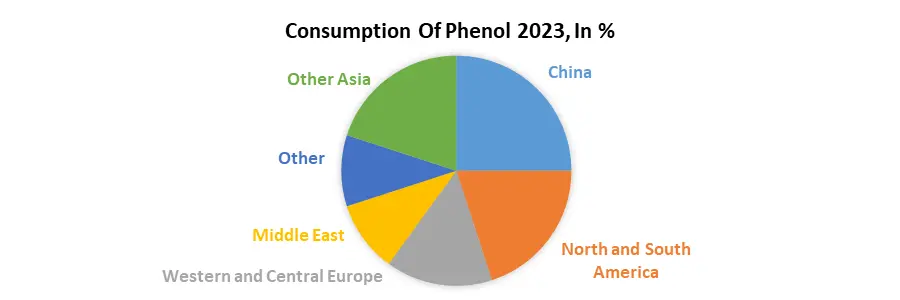
The primary drivers of cumene are the industries requiring phenol and acetone. Phenol is used in the production of plastics, resins, adhesives, and pharmaceuticals. Acetone is commonly used as a solvent and in the production of various chemicals. Phenol assumes a pivotal role across diverse industries with widespread applications. It is commonly utilized in various sectors, including but not limited to plywood manufacturing, window glazing, production of DVDs and CDs, fabrication of computers, sports equipment, construction of fiberglass boats, automotive components, circuit boards, and the manufacturing of flat-panel televisions.
Raw Material Prices
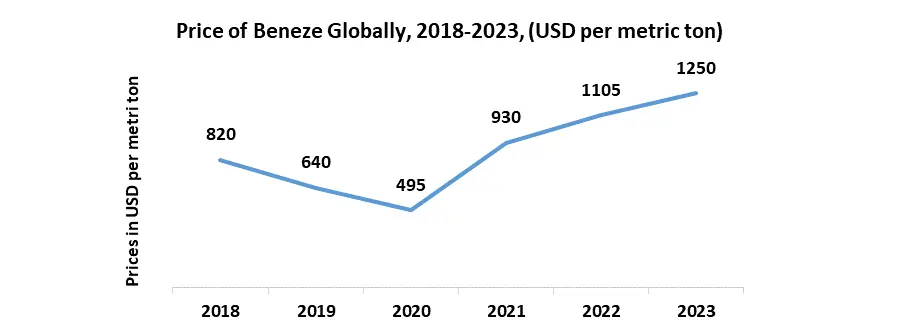
The production of cumene is dependent upon the availability and pricing of key raw materials, specifically benzene and propylene. Variations in the costs of these essential inputs have a direct bearing on the overall production expenses of cumene. The volatility within the petrochemical feedstock market further contributes to fluctuations in cumene prices, as the market is responsive to changes in the broader economic and geopolitical landscape affecting feedstock supply and pricing dynamics. The benzene market has experienced volatility attributed to multiple factors, including disruptions in supply chains, shifts in market sentiment, and the consequential effects of the COVID-19 pandemic. The interplay of these elements has contributed to fluctuations in market conditions, posing challenges and uncertainties within the benzene sector.
Regulation and Health related impact on Cumene Market
In response to a changing world, there is a growing global inclination towards eco-friendly practices as a cornerstone for sustainable and responsible development. Stricter environmental regulations drive demand for cumene, given its pivotal role in applications, including the synthesis of phenol and acetone—crucial components in compliance with stringent environmental standards. Government regulations on health and safety affect the cumene market. For instance, if certain products have serious side effects, it slows down the growth of the cumene market in the future. In humans, short-term inhalation exposure to cumene result in adverse effects such as headaches, dizziness, drowsiness, mild incoordination, and, in severe cases, unconsciousness. The lower explosive limit (LEL) for cumene stands at 0.9%, with the upper explosive limit (UEL) recorded at 6.5%
Certain chemicals like propylene, are subject to regulatory restrictions, impacting the demand dynamics for cumene. For instance, restrictions on the production of specific chemicals, like bisphenol-A (BPA), in certain countries like France, Canada, Belgium, Denmark, and Sweden result in a reduction in the demand for cumene.
Trends in Cumene Market
The increasing demand for paints and enamels across diverse industries including automotive, construction, and electronics has been a driving force behind the expansion of the cumene market. The increasing demand for paints and coatings in construction, spanning both residential and commercial sectors, stands as a pivotal driver propelling the augmented use of cumene. The Cumene Market exhibits a positive outlook, particularly within the paints and coatings industry on a global scale. The increasing application of cumene as a solvent in the formulation of paints, lacquers, and enamels, underscores its increasing significance within the paint industry, thus contributing to a rising demand for cumene.
The Asia-Pacific region is the largest producer of cumene, consisting more than 50% global cumene production.

The Asia-Pacific region asserts its dominance in the cumene market, leading in both consumption and production. The escalating demand is propelled by burgeoning industries, including automotive, consumer goods, cosmetics, and the robust economies of key players such as China, India, and South Korea. This surge in demand extends to cumene and its derivatives, prominently featuring its role in the paint industry. North America commands a leading position in the cumene industry, with robust market influence, while the Asia-Pacific region emerges as the fastest-growing, showcasing a notable Compound Annual Growth Rate (CAGR) for the cumene market
Cumene Market segment analysis
By Catalyst Type, Zeolite catalysts have revolutionized the production of cumene, with their high activity and selectivity to cumene enabling a simple, liquid phase process that replaced the older aluminium chloride and solid phosphoric acid. Recent research have been directed towards the utilization of wide-pore zeolites, including zeolite Y (faujasite-type), modernity, and zeolite beta. The incorporation of zeolite catalysts in cumene production has ushered in a more efficient single-step process, holding significant promise for substantial energy savings.

By Application, the Phenol segment is expected to register CAGR of 3.4%. Phenol holds extensive applications across diverse sectors, including but not limited to hardwood manufacturing, window panes, DVDs, electronics, sports equipment, fiberglass sailboats, automotive components, motherboards, and flat-panel displays. A pivotal utilization of Cumene lies in the production of phenol, signifying one of its paramount applications. The synthesis of Cumene hydroperoxide is achieved through the liquid-phase oxidation of cumene with oxygen molecules, subsequently undergoing catalytic degradation into phenol and acetone. The precision of the oxidation reaction mandates the use of pure cumene.
The market of phenol resides in the production of Bisphenol A (BPA), derived from phenol and acetone. BPA finds widespread application in the manufacturing of polycarbonate and epoxy resins, pivotal components with broad industrial usage. Given the extensive applications of polycarbonate and epoxy resins across various industries, phenol assumes a important role as an elemental product within the cumene industry. Phenol is also a key constituent in the formulation of phenolic sealants, integral in timber production, including plywood and wood composite board. Its involvement extends to the production of phenolic resins, contributing to the fabrication of heat-resistant elements for household appliances, table top and floor laminates, and industrial molds. Additionally, phenol serves as a significant intermediary in the synthesis of cleansers, agrochemicals, pharmaceuticals, and dyes.
Cumene Market Regional Insights:
China is poised to dominate the cumene market by the end of the forecast period, fuelled by a substantial demand for gasoline, jet fuels, and diesel within the country. China stands as one of the largest markets for domestic flight travellers, with a burgeoning civilian aircraft industry. Over the past six years, this sector has experienced steady growth, and Boeing Commercial Aircraft estimates predict that China witness commercial aircraft deliveries surpassing 8,500 by 2040. This surge in the aviation industry is expected to significantly enhance the demand for cumene, particularly in gasoline-based blends for aviation fuel.
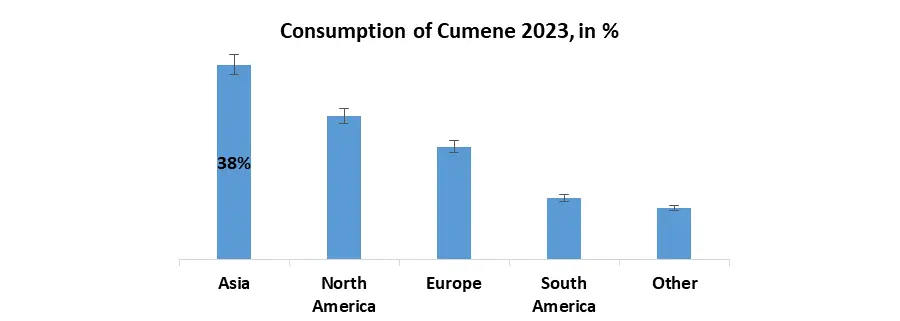
The CAGR of 5.2% during the forecasted period, China is expected to lead in the cumene market. Japan is expected to portray the CAGR of 5.4% within the same timeframe. In North America, the escalating pace of technological advancements serves as a catalyst, fostering market growth. The well-established automotive industry, coupled with a surging demand for lightweight vehicles, emerges as pivotal factors propelling the cumene market. The United States is expected to showcase CAGR of 5.6% in the cumene market.
Cumene Market Scope: Inquiry Before Buying
| Global Cumene Market | |||
|---|---|---|---|
| Report Coverage | Details | ||
| Base Year: | 2025 | Forecast Period: | 2026-2032 |
| Historical Data: | 2020 to 2025 | Market Size in 2025: | USD 26.71 Bn. |
| Forecast Period 2026 to 2032 CAGR: | 5.5% | Market Size in 2032: | USD 38.85 Bn. |
| Segments Covered: | By Catalyst Type | Aluminium Chloride Catalyst Solid Phosphoric Acid (SPA) Catalyst Zeolite Catalyst Other Catalyst Types |
|
| By Application | Phenol Acetone Aviation Fuel Chromatography Others |
||
Global Cumene Market, by Region
North America (United States, Canada and Mexico)
Europe (UK, France, Germany, Italy, Spain, Sweden, Austria and Rest of Europe)
Asia Pacific (China, South Korea, Japan, India, Australia, Indonesia, Malaysia, Vietnam, Taiwan, Bangladesh, Pakistan and Rest of APAC)
Middle East and Africa (South Africa, GCC, Egypt, Nigeria and Rest of ME&A)
South America (Brazil, Argentina Rest of South America)
Cumene Market, Key Players
1. Braskem
2. Cepsa
3. Chang Chun Group
4. CITGO
5. Domo Chemicals
6. Dow
7. INEOS
8. Koch Industries Inc.
9. Kumho P&B Chemicals Inc.
10. Prasol Chemicals Pvt. Ltd
11. Royal Dutch Shell PLC
12. SABIC
13. Versalis SpA
14. China Petrochemical Development Corporation
15. Georgia Gulf Corporation
FAQs:
1. Which is the potential market of Cumene in terms of the region?
Ans. China is expected to dominate the cumene market at the end of the forecast period.
2. What are the challenges for new market entrants?
Ans. The healthcare concerns associated with cumene are expected to restrain the overall market growth.
3. What is expected to drive the growth of the Cumene market in the forecast period?
Ans. Cumene is widely used in the manufacturing of phenol, which is one of its most important uses.
4. What is the projected market size & growth rate of the Cumene Market?
Ans. The Cumene Market size was valued at USD 26.71 Billion in 2025 and the total Cumene revenue is expected to grow at a CAGR of 5.5% from 2026 to 2032, reaching nearly USD 38.85 Billion by 2032.
5. What segments are covered in the Cumene Market report?
Ans. The segments covered are Catalyst Type, Application, and Region