
China Electric Vehicle Market - Industry Structure Evaluation, Demand Drivers Analysis, Growth Analysis and Identification, Competitive Positioning Review & Market Size Forecast to 2032
Overview
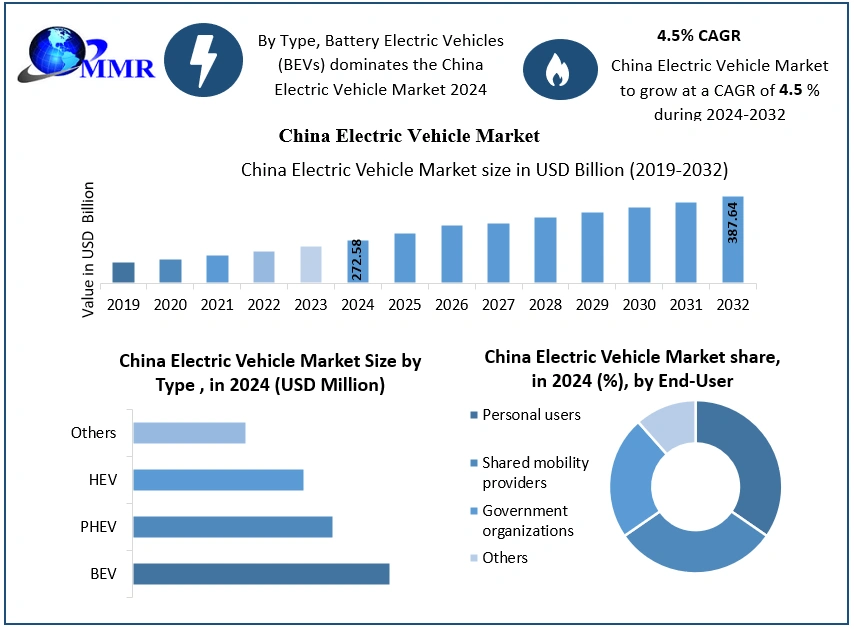
China Electric Vehicle Market size was valued at USD 272.58 Mn in 2024 and is expected to reach USD 387.64 Mn by 2032, at a CAGR of 4.5%.
An Electric Vehicle (EV) is a vehicle, drawing power from a battery and rechargeable externally. It includes all-electric vehicles and plug-in hybrid electric vehicles with both electric and internal combustion engine capabilities. China's electric vehicle market rapidly growing, establishing itself as the global leader in the industry. This rise is largely attributed to government support and policies aimed at reducing pollution and promoting sustainable transportation. China has implemented various incentives, subsidies, and ambitious targets for new energy vehicle (NEV) adoption, driving rapid expansion in both production and sales of electric vehicles. Domestically, companies such as BYD, NIO, and XPeng Motors have emerged as China Electric Vehicle Market key players, alongside traditional automakers investing significantly in electric vehicle technologies. The country's commitment extends beyond manufacturing, with extensive investments in charging infrastructure and advancements in battery technology, making China a major global player in the electric vehicle sector. The regulatory environment is continually evolving to address safety standards, subsidy policies, and environmental considerations.
 To know about the Research Methodology :- Request Free Sample Report
The report has given historical market size at actuals from 2019 to 2024. The estimated year is 2025 and the market is forecasted through 2032.
China Electric Vehicle Market Dynamics:
China's Strategic Focus On Core Technology, Particularly Battery Technology driving the growth of China Electric Vehicle Market
China's dominance in the electric vehicle (EV) market is underscored by its impressive growth, outpacing traditional automotive leaders like Germany and Japan. In 2023, China experienced an 82% surge in new EV sales, capturing nearly 60% of global EV purchases, surpassing early adopters like the U.S., Norway, and Scandinavian nations. The International Energy Agency notes that over half of the world's electric cars are now found in China, with the nation accounting for 35% of global EV exports in 2023. Two key Chinese automakers, BYD and Geely, stealthily emerged as EV giants by employing innovative strategies in adjacent industries, focusing on operational solutions, and doubling down on core technology.
China's unique approach involves experimenting in adjacent industries, as exemplified by BYD and Geely's early foray into electric buses and motorcycles. Unlike Tesla's direct "big banner" approach, Chinese companies operated quietly, tackling the challenges posed by buses and motorcycles to gain insights that shaped their eventual EV manufacturing strategies. Additionally, China tackled operational challenges head-on by collaborating with local groups and taxi companies. A notable example is the collaboration between EV producers and taxi companies to design optimal battery charging schedules, addressing concerns like short driving range and long charging times. Moreover, China strategically focused on core technology, recognizing the potential of battery technology. Chinese automakers leveraged their proximity to critical raw material supplies, such as rare earth, and collaborated broadly to strengthen their capabilities in EV manufacturing.
Limited Availability and Variety of EV Models in Chinese Markets Hinder the Market Growth
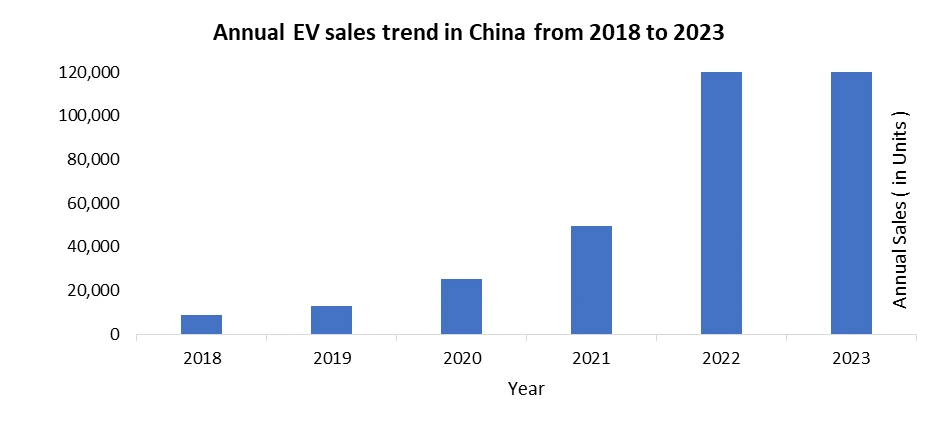
China electric vehicle market, experiencing significant growth, grapples with several challenges that could impact its trajectory. The transition from subsidies to market-driven demand poses a notable hurdle. Despite strong government support stimulating demand, the gradual cancellation of subsidies between 2020 and 2022 led to a temporary surge in battery electric vehicle (BEV) sales. However, this trend has since slowed, emphasizing the need for local EV brands to become more competitive and adapt to diverse consumer needs without relying on subsidies.
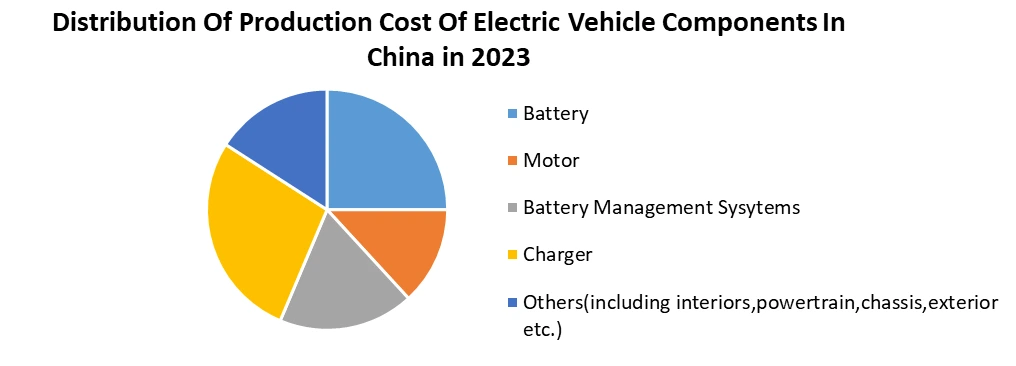
Intense competition among the multitude of carmakers in China has resulted in price wars, leading to unprecedented cuts in vehicle prices and negatively impacting the gross margins of domestic brands. This pricing pressure, exacerbated by trade conflicts and fluctuating battery resource costs, has prompted Chinese EV businesses to explore opportunities abroad, potentially facing obstacles related to local protectionism in other countries. Additionally, the uneven distribution of raw material reserves, particularly in cobalt, poses a significant risk to the EV battery supply chain. While China dominates global graphite mining, it has only a 1% share in cobalt mining, potentially increasing battery prices and affecting consumer demand for EVs. Low self-sufficiency in critical components like batteries, electric motors, and power semiconductors further compounds the challenges faced by the Chinese EV market.
Despite these hurdles, the Chinese government remains a crucial driving force behind the EV industry, implementing supportive policies, incentives, and national targets. However, the diverse political economies and unique circumstances across regions may lead to variations in the local implementation of these policies. Navigating these challenges will be crucial for sustaining and advancing China's position in the global electric vehicle landscape.
China Electric Vehicle Market Segment Analysis:
Based on Type, in 2024, Battery Electric Vehicles (BEVs) dominated the China Electric Vehicle market, driven by strong government subsidies, strict emission regulations, rapid expansion of charging infrastructure, and high adoption across passenger and commercial segments. Plug-in Hybrid Electric Vehicles (PHEVs) represent the second-largest segment, supported by consumer demand for extended driving range and flexibility in regions with uneven charging availability. Hybrid Electric Vehicles (HEVs) hold a moderate share, benefiting from fuel efficiency but facing slower growth due to policy emphasis on full electrification. Other electrified vehicle types remain limited in adoption, reflecting niche usage and lower policy support, resulting in minimal market contribution.
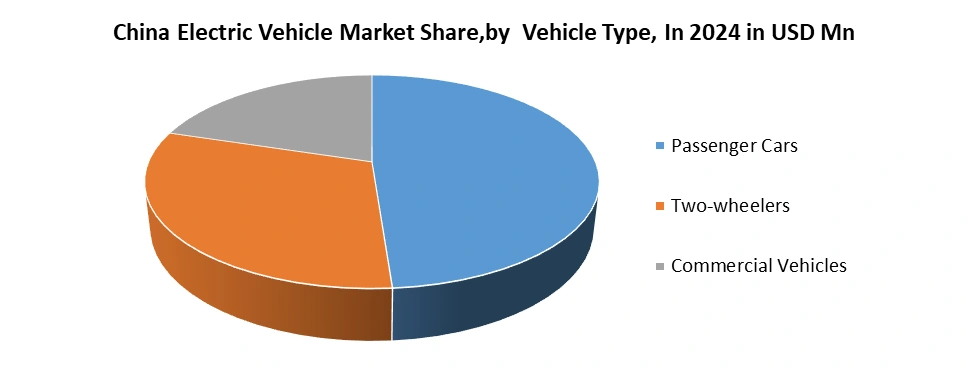
Based on Vehicle Type, in 2024, Passenger Cars dominated the China Electric Vehicle market, driven by strong private ownership, extensive model availability, and supportive government incentives for personal mobility. Two-wheelers account for a significant share, supported by affordability, urban commuting needs, and widespread adoption for short-distance travel. Commercial Vehicles represent a smaller but steadily growing segment, driven by electrification of buses, logistics vans, and municipal fleets to reduce operating costs and emissions.
China Electric Vehicle Market Regional Insights:
Beijing, as the capital, leads the way with its proactive approach, spearheading the implementation of new policies and incentives to boost EV usage. The city has made substantial investments in charging infrastructure, demonstrating a commitment to advancing sustainable transportation. Similarly, Shanghai plays a pivotal role in the electric vehicle sector, fostering an environment conducive to EV adoption. The local government has enacted supportive policies, encouraged the use of electric vehicles, while also hosting numerous EV manufacturers and research centers. Shenzhen, renowned for its early adoption of electric buses, stands out as a trailblazer in electric mobility. The city's dedication to electrifying public transportation has elevated awareness and acceptance of electric vehicles among its residents. Hangzhou follows suit, actively promoting electric vehicles through supportive policies and infrastructure development, aligning with broader national goals for clean energy and emissions reduction. Each city's distinctive efforts contribute collectively to China's ongoing commitment to sustainable and eco-friendly transportation solutions.
Ten Cities, a Thousand Electric Vehicles
| City | Local xEV Makers | Major Supplier | EV Type |
| Beijing | Beiqi Foton | Beiqi Foton | HEV/FCV bus |
| Jinghua Bus | Jinghua Bus | HEV/EV bus | |
| Beifang Neoplan | Beifang Neoplan | EV bus | |
| Shanghai | SAIC | Wanxiang Daewoo | EV bus |
| Sunwin | EV bus | ||
| SGM | HEV PV | ||
| Chongqin | Chang'an Auto | Chang'an Auto | HEV PV |
| Hengtong Auto | Hengtong Auto | ||
| Hangzhou | Wanxiang EV | Wanxiang EV | HEV PV |
| Xiamen Kinlong | Xiamen Kinlong | ||
| Wuhan | Dongfeng | Dongfeng | HEV bus |
| Shenzhen | BYD | BYD | HEV PV |
| Wuzhoulong | Wuzhoulong | HEV bus | |
| Changchu | FAW | FAW Car | HEV PV |
| FAW Fengyue | HEV PV | ||
| Jinan | Zhongtong Auto | Zhongtong Auto | HEV/EV bus |
| Beiqi Foton | Beiqi Foton | ||
| Dalian | FAW | FAW Bus | HEV bus |
| Hefei | Ankai Auto | Ankai Auto | HEV bus |
| Chery | Chery | ||
| Nanchang | Anyuan Bus | Anyuan Bus | HEV bus |
| Kunming | Beiqi Foton | ||
| Changsha | Zhuzhou CSR Times | Zhuzhou CSR Times | HEV bus |
China Electric Vehicle Market Scope: Inquire before buying
| China Electric Vehicle Market | |||
|---|---|---|---|
| Report Coverage | Details | ||
| Base Year: | 2024 | Forecast Period: | 2025-2032 |
| Historical Data: | 2019 to 2024 | Market Size in 2024: | USD 272.58 Mn. |
| Forecast Period 2025 to 2032 CAGR: | 4.5% | Market Size in 2032: | USD 387.64 Mn. |
| Segments Covered: | by Type | BEV PHEV HEV Others |
|
| by Vehicle Type | Two-wheelers Passenger Cars Commercial Vehicles |
||
| by End User | Shared mobility providers Government organizations Personal users Others |
||
China Electric Vehicle Market, Key Players:
1. BYD
2. SAIC-GM Wuling
3. NIO
4. Xpeng
5. Li Auto
6. Geely
7. Byton
8. Zhiji Automobile Technology Co., Ltd.
9. Xiaomi
10. GAC International Co., Ltd.
11. Others
FAQs:
1] What segments are covered in the China Electric Vehicle Market report?
Ans. The segments covered in the China Electric Vehicle Market report are based on Type, Vehicle Type, End User.
2] What is the market size of China Electric Vehicle Market by 2032?
Ans. The market size of China Electric Vehicle Market by 2032 is USD 387.64 Mn.
3] What is the growth rate of China Electric Vehicle Market?
Ans. The Global China Electric Vehicle Market is growing at a CAGR of 4.5% during forecasting period 2025-2032.
4] What was the market size of China Electric Vehicle Market in 2024?
Ans. The market size of China Electric Vehicle Market in 2024 was USD 272.58 Mn.