
Canned Seafood Market Size by Product Type, Distribution channel, End User and Region - Segment-Level Market Assessment, Growth Opportunity Analysis, Competitive Mapping & Forecast to 2030
Overview
Canned Seafood Market size was valued at US$ 32.36 Bn US$ in 2023 and is expected to reach 42.02 Bn in 2030. The Global Canned Seafood Market is expected to grow at a CAGR of 3.8% through the forecast period.
Canned Seafood Market Overview
In the world of Millennials, people are becoming more health-conscious but due to busy work life, they can’t have healthy and nutritious food. To address this problem canned food came into the market. Due to its high nutritious properties, Canned Seafood is highly consumed by the customers. Canned Seafood is rich in essential fatty acids, proteins, minerals, and vitamins and contains low bad cholesterol. Fresh seafood is packed in an air-tight container and using the canning process sterilization can be done. The canning process prevents microbial contamination and also extends the shelf life of the product. Ready-to-eat food has surged the growth of the canned seafood market. Among consumers, Tuna and bluefish are highly preferred for a balanced diet.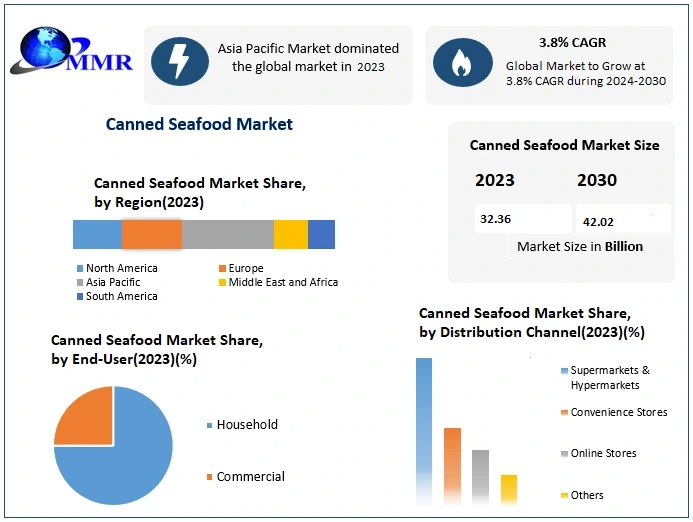 To know about the Research Methodology :- Request Free Sample Report
Canned Seafood Market Dynamics
Rising Awareness about the Health Benefits Offered by Canned Seafood: Rising awareness about the health benefits offered by the canned seafood product help to increase the growth rate of the canned seafood market. Canned seafood contains essential fatty acids like Omega 3 fatty acid which is important for health. Canned seafood product reduces the risk of heart disease and breast cancer and helps to improve mental health. In addition, the demand for exotic marine food items is on the rise which will boost the market. By understanding consumers’ preference, providing healthy and tasty canned seafood items help to increase the demand for canned seafood products. Thus, increasing the growth rate of the canned seafood market over the forecast period.
Increasing Popularity for Ready-To-Eat and Preservative-Free Food: The growing demand for seafood products that should have a higher shelf life and can be Ready-to-eat primarily surged the growth of the seafood canned market. Ready-to-eat food items are alternatives to regular food, which can be consumed at any time. From the study, it is found that most the consumers are willing to spend on ready-to-eat food which saves their timing. The process of canning does not require any kind of chemical additives to preserve the product. Thus, the increasing popularity of ready-to-eat and preservative-free food will surge the growth of the canned seafood market.
Increasing Sales of the Canned Seafood: The factors such as changing consumer preferences, convenience, and the responsiveness of the industry to emerging trends are majorly driving the sales of the canned seafood. The emphasis on sustainable fishing practices and eco-friendly packaging in the canned seafood industry is majorly resonating with environmentally conscious consumers. Canned Seafood Companies are actively promoting sustainability initiatives, which are not only attracting a specific segment of consumers but also enhancing their overall market appeal. These are highly driving increased sales among environmentally aware shoppers. Companies are increasingly responding to the demands of consumers by introducing innovative products that cater to their specific preferences. Brands such as Scout Canning have seen revenues jump over 80% in 2023.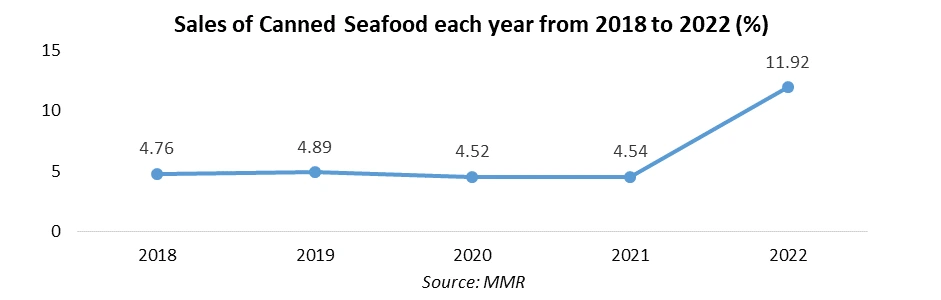 Challenges faced by Canned Seafood Market:
High price and popularity of minimally processed food: Lower and middle-income levels of the population in developing countries are unable to afford canned seafood products. In addition to that, growing awareness of the adverse health effects due to the consumption of highly processed foods gives rise to increasing demand for minimally processed food. The canning process uses high temperature and pressure which might change the properties of the final product. From the study, it is found that consumers’ buying behavior changes towards natural and minimally processed food. So, some of these factors will hamper the growth of the canned seafood market.
Rising Sustainability and Overfishing: Modern consumers are increasingly becoming more conscious about the environmental impact of their food choices. There is increasing preference for sustainably sourced products, and consumers also often seek certifications such as MSC (Marine Stewardship Council) to ensure that the seafood they purchase is harvested responsibly. Canned seafood brands that cannot demonstrate sustainability are expected to lose their market share to those that align with these consumer values.
Trends in the Canned Seafood Market
Rising Popularity of Flavored Tuna Varieties: This trend in the market not only caters to changing taste preferences but also aligns with the broader consumer demand for convenience, innovation, and premiumization in the food industry. The trend of flavored tuna is characterized by a fusion of culinary influences from across the world. Inspired by global cuisines, companies are increasingly introducing varieties of tuna that incorporate diverse flavors and ingredients.
Focus on Sustainable Packaging Solutions: Sustainability is majorly extending beyond sourcing practices to packaging. The canned seafood market is witnessing this trend towards sustainable packaging solutions, such as biodegradable materials and eco-friendly designs. Brands are actively communicating their commitment to the reduction of environmental impact through packaging innovations, resonating with environmentally conscious consumers.
Rise of Plant-Based Seafood Alternatives: As the demand for plant-based alternatives is gaining momentum, the market is witnessing the emergence of plant-based seafood products. These innovative offerings cater to consumers looking for options such as sustainable and cruelty-free. Plant-based tuna and salmon alternatives are becoming more prevalent, addressing concerns related to both environmental and ethical, which is also driving the canned plant-based tuna market and canned salmon market.
Canned Seafood Market Regional Insights
Asia Pacific Canned Seafood Market dominated the market with the market share of around 46.2% in 2023. In addition, the high demand for seafood and ready-to-eat products in the region is expected to drive the growth of the regional market over the forecasted period. Also, the presence of the major key players makes the Asia Pacific region dominated the market. Canned Seafood Suppliers ensure a consistent and reliable availability of canned seafood products, which contributes in an increase in consumer adoption. They offer a diverse range of products including fish, shellfish, and other seafood options, often prepared in different styles or with added flavors.
European Canned Seafood Market was the second largest market with the share of around 32.8% in 2023. The Europe region is well-known for its rich cultural diversity and culinary traditions. The regional market caters to this diversity by offering a wide range of products that align with various preferences. From Spanish-style canned tuna to Portuguese sardines, the market reflects the influence of local cuisines, which contributes to its vibrancy and appeal. The European Canning Fish Market also significantly influence the market for canned seafood. Canned fish is one of the popular and convenient food sources that is widely consumed across the region.
Canned Seafood Market Segment Analysis
Based on Product: The market is divided into Tuna, Salmon, Sardines, Prawns, Shrimp and other seafood. The Tuna segment held the largest Canned Seafood Market share and is expected to grow at a CAGR of 8.4% during the forecast period because of its high protein content. Tuna contains high Omega 3 fatty acids which help to improve health and reduce blood pressure, reduce depression, and help to improve the immune system. Shrimp also contains Omega 3 fatty acids and is known to reduce the risk of heart disease, stroke, and dementia.
The shrimp segment is expected to grow rapidly during the forecast period. This is attributed to the growing canned shrimp market because of shrimp’s high nutritional value and low-fat content coupled with the high concentration of easily digestible protein. In addition, the use of product across multiple cuisines by high-end restaurants increases the demand for canned shrimp and are anticipated to increase the growth rate of the canned seafood market. Moreover, the increasing health benefits such as vitamins, proteins, low bad cholesterol, and minerals offered by Salmon fish are anticipated to generate promising opportunities for key players in the market.
Based on Distribution channel: The market is divided into Supermarkets & Hypermarkets, Convenience Stores, Online Stores, and Others. Supermarkets & Hypermarkets holds the largest market share and is expected to grow at a CAGR of 9.5% during the forecast period because of its packaging and processed fish and seafood. Online stores offer an amazing experience of buying canned seafood products with a lot of discounts, easy home delivery, and safe packaging which is anticipated to increase the growth rate of the market.
Canned Seafood Market Competitive Landscape
As per the study, the market is highly competitive with huge number of players in the Canned Seafood industry. The top 10 companies holds 81.82% of the share in the market. There are many Canned Seafood companies that have established themselves as leaders through extensive distribution networks, brand recognition and a wide product portfolio. Canned Seafood competitors are constantly introducing new products to meet changing consumer preferences and to cater to niche markets.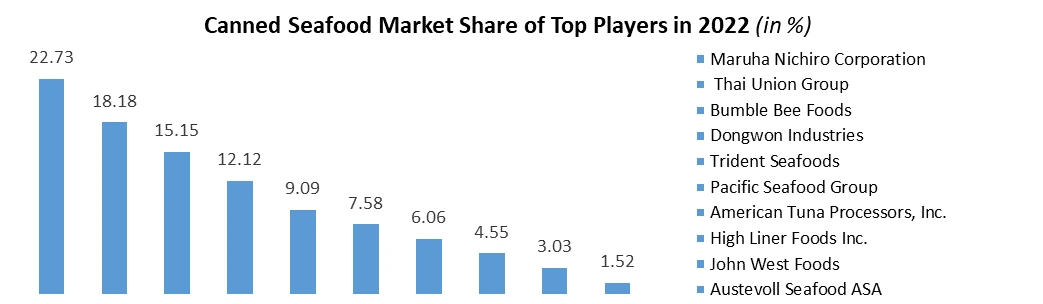
Canned Seafood Market Scope: Inquiry Before Buying
| Canned Seafood Market | |||
|---|---|---|---|
| Report Coverage | Details | ||
| Base Year: | 2023 | Forecast Period: | 2024-2030 |
| Historical Data: | 2018 to 2023 | Market Size in 2023: | US$ 32.36 Bn. |
| Forecast Period 2024 to 2030 CAGR: | 3.8% | Market Size in 2030: | US$ 42.02 Bn. |
| Segments Covered: | by Product Type | Tuna Salmon Sardines Prawns Shrimp other seafood |
|
| by Distribution channel | Supermarkets & Hypermarkets Convenience Stores Online Stores Others |
||
| by End User | Households Commercial |
||
Canned Seafood Market by Region
North America (United States, Canada and Mexico)
Europe (UK, France, Germany, Italy, Spain, Sweden, Austria and Rest of Europe)
Asia Pacific (China, South Korea, Japan, India, Australia, Indonesia, Malaysia, Vietnam, Taiwan, Bangladesh, Pakistan and Rest of APAC)
Middle East and Africa (South Africa, GCC, Egypt, Nigeria and Rest of ME&A)
South America (Brazil, Argentina Rest of South America)
Canned Seafood Key Players
North America
1. Bumble Bee Seafoods (U.S)
2. StarKist Co. (U.S)
3. Tradient Seafoods (U.S)
4. American Tuna, Inc. (U.S)
5. Wild Planet Foods (U.S)
6. The Fish & Meat Co.(U.S)
7. Capital Fish Company (U.S)
8. Icicle Seafoods Inc (U.S)
9. Universal Canning Inc (U.S)
10. Tri Marine Group (U.S)
11. Trident Seafoods Corporation (U.S)
12. Brunswick Seafood (Canada)
13. The Calvo Group (Guam)
14. Royal Greenlands (Greenland)
15. Scout Canning (US)
Europe
1. Connors Bros Ltd. (U.K)
2. LDH (La Doria) Ltd (Italy)
3. Nueva Pescanova (Spain)
4. Marine Harvest (Norway)
Asia Pacific
1. Dongwon Industries (South Korea)
2. Sajo Industries (South Korea)
3. Simon Peter Fish & Meat Company (India)
4. SANTHI Fisheries (India)
5. Metarch Exports (India)
6. Nippon Suisan Kaisha Ltd.(Japan)
7. Maruha Nichiro Corporation (Japan)
8. Thai Union Group (Thailand)
South America
1. AquaChile (Chile)
Frequently Asked Questions:
1] What segments are covered in the Global Canned Seafood Market report?
Ans. The segments covered in the Market report are based on the Product Type , Distribution channel and End User.
2] Which region is expected to hold the highest share in the Global Canned Seafood Market?
Ans. The Asia Pacific region is expected to hold the highest share in the Market.
3] What is the market size of the Global Canned Seafood Market by 2030?
Ans. The market size of the Market by 2030 is expected to reach US$ 42.02 Bn.
4] What is the forecast period for the Global Canned Seafood Market?
Ans. The forecast period for the Market is 2024-2030.
5] What was the market size of the Global Canned Seafood Market in 2023?
Ans. The market size of the Market in 2023 was valued at US$ 32.36 Bn.